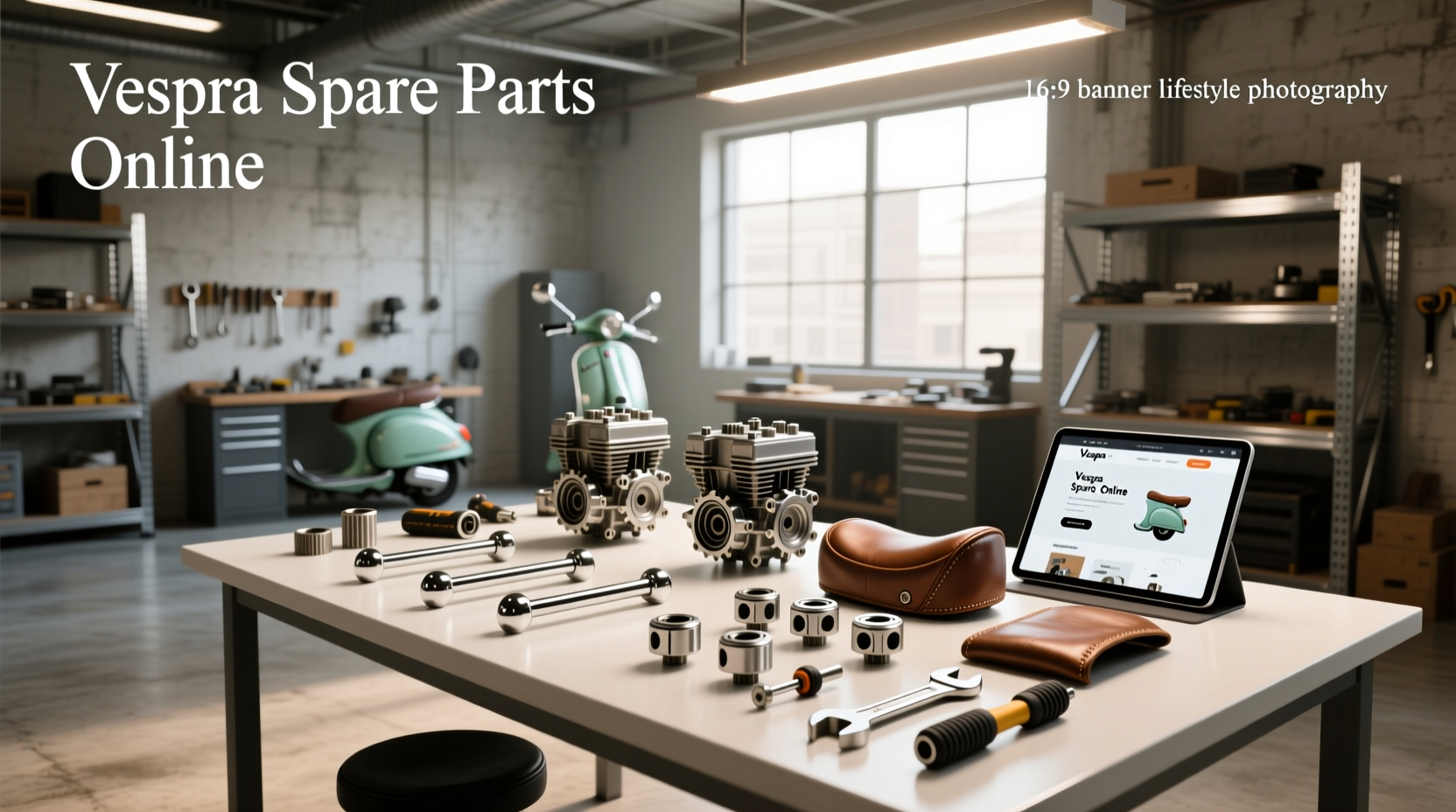
If you're searching for vespa spare parts online, you're likely maintaining, repairing, or restoring a beloved scooter. Whether it's a vintage PX model or a modern GTS, finding the right components can make the difference between a smooth ride and costly downtime. This guide breaks down everything you need to know—where to buy, how to verify authenticity, what to watch for in pricing and shipping, and how to distinguish OEM from aftermarket parts—all based on real user needs and common pain points surfaced in search data.
Why Sourcing Vespa Spare Parts Online Can Be Tricky
Unlike mass-market motorcycles, Vespas have a niche but passionate global following. That means parts availability varies widely depending on your location, model year, and whether you're restoring an original or modifying for performance. Many users report confusion over terms like 'genuine,' 'OEM,' 'aftermarket,' and 'compatible.' Some sellers use these interchangeably, which can lead to mismatched or low-quality components.<\/p>
One major challenge is identifying trustworthy suppliers. While official dealers like Vespa.com offer factory-certified parts, they may not carry rare or discontinued items. Third-party retailers often fill this gap—but quality control isn’t always consistent. Users frequently encounter issues such as delayed shipping, incorrect part numbers, or non-returnable sales, especially when ordering from overseas warehouses.<\/p>
Understanding Part Types: OEM, Genuine, Aftermarket, and Reproduction<\/h2>
Before diving into where to shop, it's essential to understand the differences between part categories. Each has pros and cons that affect fit, durability, and value.<\/p>
🏭 OEM (Original Equipment Manufacturer)<\/h3>
OEM parts are produced by the same company that made the original component installed at the factory. For example, a carburetor made by Dell'Orto for Piaggio qualifies as OEM if it carries matching serials and specifications. These parts ensure perfect compatibility and meet strict manufacturing tolerances.<\/p>
The benefit? Longevity and reliability. The downside? Higher cost and limited availability outside authorized channels.<\/p>
✅ Genuine Vespa Parts<\/h3>
Genuine parts are branded and distributed directly through Piaggio or its network of dealers. They may be manufactured by third parties under license but must meet Piaggio’s quality standards. You’ll typically see packaging with holograms, barcodes, and part traceability.<\/p>
These are ideal for warranty work or preservation-class restorations where authenticity matters. However, genuine doesn’t always mean 'made by Piaggio'—just that it meets their specs.<\/p>
🔧 Aftermarket Parts<\/h3>
Aftermarket refers to components made by independent companies designed to replace original ones. Brands like SIP Scootershop, Malossi, or Polini produce high-performance alternatives used in tuning circles. These can offer improved airflow, better materials, or enhanced aesthetics.<\/p>
While many aftermarket parts are excellent, others cut corners. Watch out for vague descriptions like 'fits most 125cc models' without specifying engine codes or VIN ranges. Always cross-reference with exploded diagrams before buying.<\/p>
🧩 Reproduction & NOS (New Old Stock)<\/h3>
For vintage Vespa owners, reproduction parts are common. These are newly made copies of obsolete components—such as chrome plating kits, badges, or rubber seals—produced because originals are no longer available.<\/p>
NOS parts are unused originals found in old inventory. They’re highly sought after for concours-level builds but come at premium prices. Be cautious: some sellers mislabel reproductions as NOS to inflate value.<\/p>
Where to Buy Vespa Spare Parts Online: Trusted Sources Compared<\/h2>
Based on search results and user feedback, several platforms dominate the U.S. market for Vespa parts. Here's a breakdown of key players, their strengths, and potential drawbacks.<\/p>
| Vendor<\/th> | Stock Range<\/th> | Authenticity Verification<\/th> | Shipping Policy<\/th> | Returns<\/th> |
|---|---|---|---|---|
| Vespa.com<\/td> | Limited to current models<\/td> | Guaranteed genuine<\/td> | Free 14-day returns<\/td> | U.S. only<\/td> |
| Scooterwest<\/td> | 300,000+ SKUs<\/td> | Mixed (labels clearly)<\/td> | Fast domestic shipping<\/td> | 30 days<\/td> |
| Scooterworks USA<\/td> | Vintage focus<\/td> | Detailed categorization<\/td> | Free over $200<\/td> | 30 days<\/td> |
| Racing Planet USA<\/td> | Broad selection<\/td> | Inconsistent labeling<\/td> | $9.99 flat rate<\/td> | 14 days<\/td> |
| EasyParts.com<\/td> | Exploded diagrams included<\/td> | Genuine filters available<\/td> | Varies by region<\/td> | Check per order<\/td> |
🛒 Official Channels: Vespa.com and Piaggio Network<\/h3>
The safest option for modern scooters is purchasing directly from Vespa.com<\/a>1<\/a>. Their parts catalog includes detailed fitment data and links to local dealers. If you own a post-2000 model, this should be your first stop.<\/p>
📍 Independent Retailers: Scooterwest, Scooterworks, Monster Scooter Parts<\/h3>
These U.S.-based shops specialize in both vintage and modern parts. Scooterwest, for instance, stocks over 300,000 items and clearly labels whether a part is OEM, reproduction, or aftermarket. Customer reviews highlight fast response times and knowledgeable staff2<\/a>.<\/p>
Scooterworks USA focuses heavily on restoration projects, offering manuals, oils, tubes, and hard-to-find electrical connectors. Their 'Vintage Vespa Parts' section is one of the most comprehensive online3<\/a>.<\/p>
🌐 International Options: EasyParts.com and SIP Scootershop<\/h3>
European-based sites like EasyParts.com<\/a> provide interactive exploded views of every Vespa model since 1946. This visual lookup system helps prevent mismatches—especially useful for complex assemblies like transmissions or suspension systems4<\/a>.<\/p>
🔍 How to Verify Compatibility Before Buying<\/h2>Even experienced mechanics sometimes order the wrong part due to subtle variations across model years. A carburetor from a 1978 Vespa Rally 200 might look identical to one from a 1975 model—but internal jetting or mounting brackets could differ.<\/p>
To avoid errors:<\/p>
- Use your VIN or frame number<\/strong> to confirm exact model designation<\/li>
- Check engine displacement and code<\/strong> (e.g., PLF1T, PLM1T)<\/li>
- Consult exploded diagrams<\/strong> whenever possible<\/li>
- Cross-reference part numbers<\/strong> with multiple vendors<\/li>
Some retailers allow you to save your scooter profile (make, model, year), making future purchases easier. Platforms like EasyParts let you browse schematics interactively, clicking each component to reveal its part number and status (in stock, discontinued, etc.).<\/p>
📦 Shipping, Returns, and Import Considerations<\/h2>When buying vespa spare parts online<\/em>, especially from international sellers, consider logistics carefully.<\/p>
Domestic U.S. orders usually arrive within 3–7 business days, while European shipments may take 2–4 weeks. Customs fees can apply—even if the seller offers 'free shipping.' Always check whether duties are included or billed upon delivery.<\/p>
Return policies vary significantly. Some stores offer 30-day windows with free return shipping; others charge restocking fees or exclude electrical components. Make sure to read the fine print before checkout.<\/p>
💰 Price Ranges and Value Indicators<\/h2>Pricing transparency is inconsistent across platforms. A single item—like a speedometer bezel—can range from $11 to $40 depending on brand, finish, and origin.<\/p>
As a general rule:<\/p>
- OEM/genuine parts cost 20–50% more than aftermarket equivalents<\/li>
- Vintage or rare parts often sell at a premium, especially if NOS<\/li>
- Performance-oriented components (e.g., variators, exhausts) vary widely based on material and tuning level<\/li>
Watch for bundled kits—such as complete restoration packages—which can reduce per-item costs by up to 30%. But scrutinize contents: some kits include generic fasteners instead of correct-spec hardware.<\/p>
❗ Common Pitfalls to Avoid<\/h2>
Based on user reports and forum discussions, here are frequent mistakes made when buying online:<\/p>
❌ Assuming 'Compatible With' Means Exact Fit<\/h3>
Pricing transparency is inconsistent across platforms. A single item—like a speedometer bezel—can range from $11 to $40 depending on brand, finish, and origin.<\/p>
As a general rule:<\/p>
- OEM/genuine parts cost 20–50% more than aftermarket equivalents<\/li>
- Vintage or rare parts often sell at a premium, especially if NOS<\/li>
- Performance-oriented components (e.g., variators, exhausts) vary widely based on material and tuning level<\/li>
Watch for bundled kits—such as complete restoration packages—which can reduce per-item costs by up to 30%. But scrutinize contents: some kits include generic fasteners instead of correct-spec hardware.<\/p>
❗ Common Pitfalls to Avoid<\/h2>
Based on user reports and forum discussions, here are frequent mistakes made when buying online:<\/p>
Many listings claim compatibility with multiple models. Always double-check dimensions and mounting points. A brake light labeled 'fits all Vespa LX models' might not align properly with a 2009 versus a 2013 due to lens shape changes.<\/p>
❌ Ignoring Seller Feedback and Return History<\/h3>
On marketplaces like eBay, review seller ratings and return frequency. One-star feedback about 'wrong part sent' or 'no reply to messages' is a red flag.<\/p>
❌ Overlooking Packaging and Handling Details<\/h3>
Fragile items like instruments or plastic trims require secure packaging. If a seller doesn’t mention protective wrapping or insurance, ask before ordering.<\/p>
❌ Buying Performance Parts Without Tuning Knowledge<\/h3>
Upgraded air intakes or exhaust systems may require carburetor rejetting or ECU remapping. Installing them without adjustment can degrade performance or damage the engine.<\/p>
📋 Step-by-Step Guide: How to Order Vespa Spare Parts Online Safely<\/h2>
Follow this checklist to minimize risk and ensure you get the right part the first time:<\/p>
- Identify your scooter’s full model and year<\/strong> using the VIN or owner’s manual<\/li>
- Determine whether you need OEM, genuine, or aftermarket<\/strong> based on purpose (daily use vs restoration)<\/li>
- Search using a trusted retailer<\/strong> (e.g., Scooterwest, Scooterworks, Vespa.com)<\/li>
- Verify fitment via exploded diagram or part number<\/strong><\/li>
- Compare pricing and shipping costs across 2–3 vendors<\/strong><\/li>
- Review return policy and contact support if unsure<\/strong><\/li>
- Place order and keep confirmation email and tracking info<\/strong><\/li>
This process reduces guesswork and increases confidence in your purchase.<\/p>
🌐 Regional Differences in Availability and Support<\/h2>U.S. buyers face different challenges than those in Europe or Australia. North America receives fewer direct shipments from Italian manufacturers, so reliance on distributors is higher. This can delay availability of new parts or updates.<\/p>
In contrast, EU customers benefit from shorter shipping times and broader language support (Italian, French, German). However, export restrictions may limit availability of certain emissions-compliant components outside the region.<\/p>
🔚 Final Thoughts: Balancing Cost, Authenticity, and Convenience<\/h2>
Finding reliable vespa spare parts online<\/em> requires research, patience, and attention to detail. Start with official sources for critical components like brakes, suspension, and engine internals. Use specialized independents for vintage or hard-to-find pieces. And always verify compatibility—don’t rely solely on product titles or images.<\/p>
Whether you're replacing a worn cable or rebuilding a classic from the ground up, knowing where and how to buy makes all the difference.<\/p>
❓ Frequently Asked Questions<\/h2>Can I use aftermarket parts for safety-critical components?<\/strong>
It's generally recommended to use OEM or genuine parts for brakes, steering, suspension, and structural elements. Aftermarket versions may not undergo the same safety testing.<\/p>
How do I know if a part is discontinued?<\/strong>
Check with multiple suppliers and consult Vespa forums or owner clubs. Some parts are listed as 'last available' or 'final run' by reputable sellers.<\/p>
Are reproduction parts worth it for restorations?<\/strong>
Yes, if original NOS parts are unavailable or prohibitively expensive. High-quality reproductions from known brands maintain authenticity without breaking the bank.<\/p>
What should I do if I receive the wrong part?<\/strong>
Contact the seller immediately with photos and order details. Most reputable vendors will issue a return label or replacement promptly.<\/p>
Is there a master catalog for Vespa parts?<\/strong>
Yes—Piaggio’s official spare parts portal (piaggio.genuine-parts-catalogue.com<\/a>) allows searching by model and part number5<\/a>.<\/p>
It's generally recommended to use OEM or genuine parts for brakes, steering, suspension, and structural elements. Aftermarket versions may not undergo the same safety testing.<\/p>
Check with multiple suppliers and consult Vespa forums or owner clubs. Some parts are listed as 'last available' or 'final run' by reputable sellers.<\/p>
Yes, if original NOS parts are unavailable or prohibitively expensive. High-quality reproductions from known brands maintain authenticity without breaking the bank.<\/p>
Contact the seller immediately with photos and order details. Most reputable vendors will issue a return label or replacement promptly.<\/p>
Yes—Piaggio’s official spare parts portal (piaggio.genuine-parts-catalogue.com<\/a>) allows searching by model and part number5<\/a>.<\/p>




 浙公网安备
33010002000092号
 浙B2-20120091-4