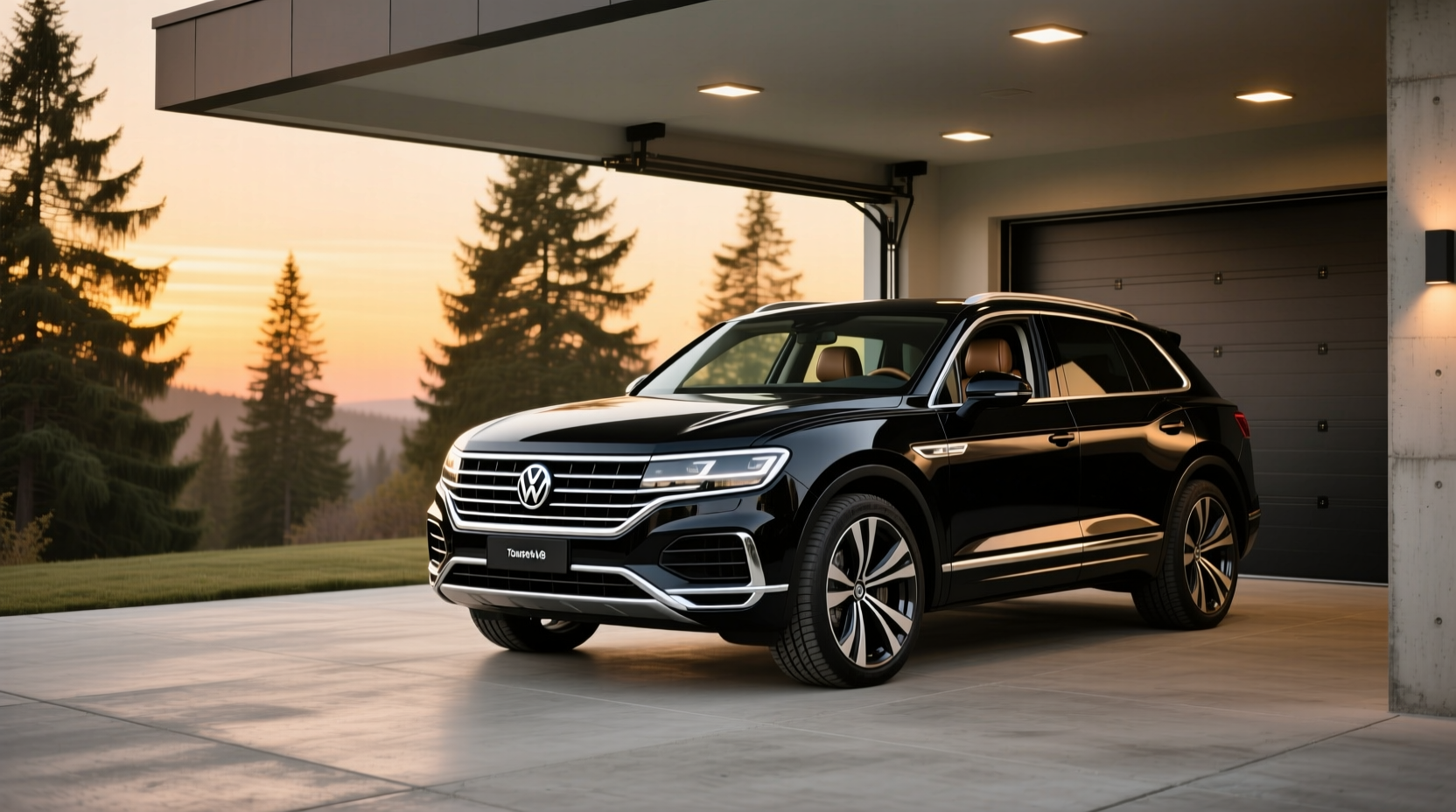
If you're searching for a VW Touareg V8 for sale, it's critical to understand the differences between model years, engine types, and potential reliability concerns before making a purchase. The first-generation Volkswagen Touareg (2003–2010) offered two distinct V8 engines: a 4.2L gasoline V8 and a later 4.2L TDI diesel V8, each with unique performance traits and maintenance needs. Knowing which version suits your driving habits—and how to evaluate its condition—can save thousands in repair costs down the road. This guide breaks down everything buyers need: engine specs, common failure points, market pricing, and inspection tips to avoid costly mistakes when purchasing a used VW Touareg V8.
Understanding the VW Touareg V8 Engine Options
The Volkswagen Touareg was never just a luxury SUV—it was engineered as a serious off-road and highway performer, especially in V8 configuration. Two primary V8 engines were offered across the first generation (7L/7P), and understanding their differences is essential when browsing listings labeled 'VW Touareg V8 for sale.'
1. 4.2L Gasoline V8 (2004–2006)
This naturally aspirated V8 produces 310 horsepower and 300 lb-ft of torque. It uses a timing belt (not chain), which requires replacement every 60,000 to 90,000 miles. Failure to service this on time can result in catastrophic engine damage due to interference design 1. Known internally as the AXQ engine code, this motor shares architecture with Audi’s 4.2L V8 but lacks direct fuel injection (FSI).
- Model Years: 2004–2006
- Horsepower: 310 hp @ 6,200 rpm
- Torque: 300 lb-ft @ 3,750 rpm
- Fuel Type: Premium gasoline recommended
- Maintenance Note: Timing belt service interval is critical
2. 4.2L FSI Gasoline V8 (2007–2009)
Introduced in the facelifted 2007 model year, this version features Fuel Stratified Injection (FSI), boosting output to 350 horsepower and 339 lb-ft of torque. It uses a more durable timing chain system, eliminating the need for periodic belt replacements—a major advantage over the earlier model.
- Model Years: 2007–2009
- Horsepower: 350 hp @ 6,800 rpm
- Torque: 339 lb-ft @ 3,500 rpm
- Fuel Type: Requires premium unleaded
- Engine Code: CGN or CGNC
- Key Feature: Timing chain instead of belt
3. 4.2L TDI Diesel V8 (European Market Only)
While not officially sold in North America, the 4.2L TDI V8 was available in Europe from 2004–2006. Producing around 340 horsepower and 553 lb-ft of torque, it was one of the most powerful diesel SUVs of its era. However, parts scarcity and emissions compliance make importing one complex today.
| Engine Type | Years | Horsepower | Torque | Timing System | Fuel Type |
|---|---|---|---|---|---|
| 4.2L V8 (AXQ) | 2004–2006 | 310 hp | 300 lb-ft | Belt | Gasoline |
| 4.2L FSI V8 (CGN) | 2007–2009 | 350 hp | 339 lb-ft | Chain | Gasoline |
| 4.2L TDI V8 | 2004–2006 (EU) | 340 hp | 553 lb-ft | Chain | Diesel |
Is the VW Touareg V8 Reliable? Key Issues by Model Year
Reliability varies significantly between the two gasoline V8 models. While both share robust VR-based V8 architecture, real-world ownership reveals several recurring problems.
Common Problems with 2004–2006 Models (AXQ Engine)
- Timing Belt Failures: If not replaced within 90,000 miles, failure often leads to bent valves or piston damage.
- Oil Consumption: Some units exhibit excessive oil burn (>1 qt per 1,000 miles), indicating worn valve seals or piston rings.
- Intake Manifold Flaps: Plastic actuators can break, causing rough idle or check engine lights.
- Catalytic Converters: Prone to clogging due to oil consumption or rich fuel mixture.
Issues with 2007–2009 FSI Models (CGN Engine)
- Direct Injection Carbon Buildup: FSI engines are prone to carbon deposits on intake valves, requiring walnut blasting every 60,000 miles.
- Fuel Injectors: High-pressure injectors may fail, leading to misfires and poor fuel economy.
- PCV System: Crankcase ventilation valves degrade, causing vacuum leaks and oil consumption.
- Water Pump & Thermostat: Electric units fail intermittently; monitor coolant flow during test drives.
Transmission and Drivetrain Considerations
All V8 Touaregs came with either a 6-speed automatic (ZF 6HP26) or an optional Tiptronic transmission. While generally durable, these require regular fluid changes (every 60,000 miles). Delayed servicing leads to harsh shifts, delayed engagement, or complete failure.
The Haldex all-wheel-drive system (Generation 4) also demands attention. Check for AWD warning lights and verify rear axle engagement using diagnostic tools. Worn couplings or pump failures reduce traction capability.
Pricing Trends for Used VW Touareg V8 Models
As of 2025, average asking prices for used VW Touareg V8s vary widely based on condition, mileage, and location:
- 2004–2006 4.2L V8: $3,000–$7,000
- 2007–2009 4.2L FSI V8: $5,000–$10,000
- Well-Maintained Examples: Can reach $12,000+ if low-mileage and documented service history
Prices reflect depreciation and perceived risk. Many buyers avoid these models due to reputation for high maintenance costs, despite strong engine durability when properly cared for.
Notably, complete engine assemblies for the 4.2L V8 are listed on eBay and specialty vendors ranging from $2,000 to $9,000 depending on core condition and labor inclusion. Rebuilt long blocks start around $4,000 with installation adding $1,500–$2,500 2.
What to Look for When Buying a VW Touareg V8 for Sale
Finding a trustworthy example requires more than checking Carfax and test driving. Follow this checklist before committing:
🔧 1. Verify Service History
Request full records. Pay special attention to:
- Timing belt replacement (for 2004–2006 models)
- Transmission fluid changes
- Intake cleaning (for FSI models)
- Cooling system flushes
🔍 2. Conduct a Pre-Purchase Inspection (PPI)
Have a specialist familiar with German vehicles perform a PPI. They should:
- Scan for stored fault codes (even if no CEL is lit)
- Inspect undercarriage for rust or prior collision damage
- Check suspension components (air springs wear out after 100k miles)
- Test all electronic functions (climate control, navigation, sensors)
⚙️ 3. Evaluate Engine Health
During startup, listen for:
- Loud ticking on cold start (could indicate lifter noise or low oil pressure)
- Excessive smoke (blue = oil burning, white = coolant leak)
- Rough idle or hesitation under load
Ask for a compression or leak-down test if possible. Healthy cylinders should read within 10% of each other.
🚚 4. Review Title and Ownership Status
Avoid salvage, flood-damaged, or rebuilt titles unless priced accordingly. These vehicles often have hidden structural or electrical issues that resurface later.
📍 5. Consider Regional Climate Impact
Cars from dry climates (Southwest U.S.) typically suffer less corrosion than those from snowy regions where road salt accelerates rust. Inspect wheel wells, frame rails, and brake lines carefully.
Newer Alternatives: Why the V8 Was Discontinued
Volkswagen phased out the V8 in favor of turbocharged V6 engines starting in 2011. The second-generation Touareg shifted focus toward efficiency and emissions compliance. Today’s models use supercharged 3.0L V6 or plug-in hybrid powertrains.
The decision stemmed from several factors:
- Rising fuel economy standards
- Higher production cost of large-displacement engines
- Shift toward downsized, turbocharged powerplants
- Dieselgate scandal impacting diesel development
Enthusiasts still value the original V8 for its linear power delivery and mechanical simplicity compared to modern forced-induction engines.
Where to Find a VW Touareg V8 for Sale
Popular platforms include:
- CarGurus: Offers price comparison tools and vehicle history filters
- eBay Motors: Wide selection, including project cars and parted-out examples
- Facebook Marketplace: Local deals, but higher risk of scams
- Specialty Forums: Sites like VWVortex or Reddit’s r/Volkswagen often list well-maintained builds
When evaluating online listings, watch for red flags:
- Vague descriptions ('runs good' without details)
- Photos taken in dark garages or at night
- Missing VIN or refusal to provide service records
- Price significantly below market average
FAQ: Common Questions About Buying a VW Touareg V8
- ❓ Is there a diesel V8 Touareg?
- Yes, but only sold in Europe and select markets. The 4.2L TDI V8 produced 340 hp and was available from 2004–2006. It was not offered in North America due to emissions regulations.
- ❓ How much horsepower does a 2009 Touareg V8 have?
- The 2009 VW Touareg V8 uses the 4.2L FSI engine producing 350 horsepower and 339 lb-ft of torque. This is the highest-output gasoline V8 in the first-gen Touareg lineup.
- ❓ Are VW Touareg V8 engines reliable?
- They can be, if maintained properly. The 2007–2009 FSI models are generally more durable due to the timing chain. However, neglected timing belts (in 2004–2006 models), carbon buildup, and cooling system neglect lead to most failures.
- ❓ What should I budget for maintenance on a used Touareg V8?
- Expect $1,000–$2,500 annually depending on age and condition. Major services include transmission fluid ($300), coolant flush ($400), intake cleaning ($600), and potential suspension repairs ($1,000+ for air springs).
- ❓ Can I tow with a VW Touareg V8?
- Yes. All V8 models have a towing capacity of 7,700 lbs when equipped with the factory hitch. Their robust V8 engines and full-time AWD make them capable for boat or trailer towing, provided brakes and cooling systems are in good condition.




 浙公网安备
33010002000092号
 浙B2-20120091-4