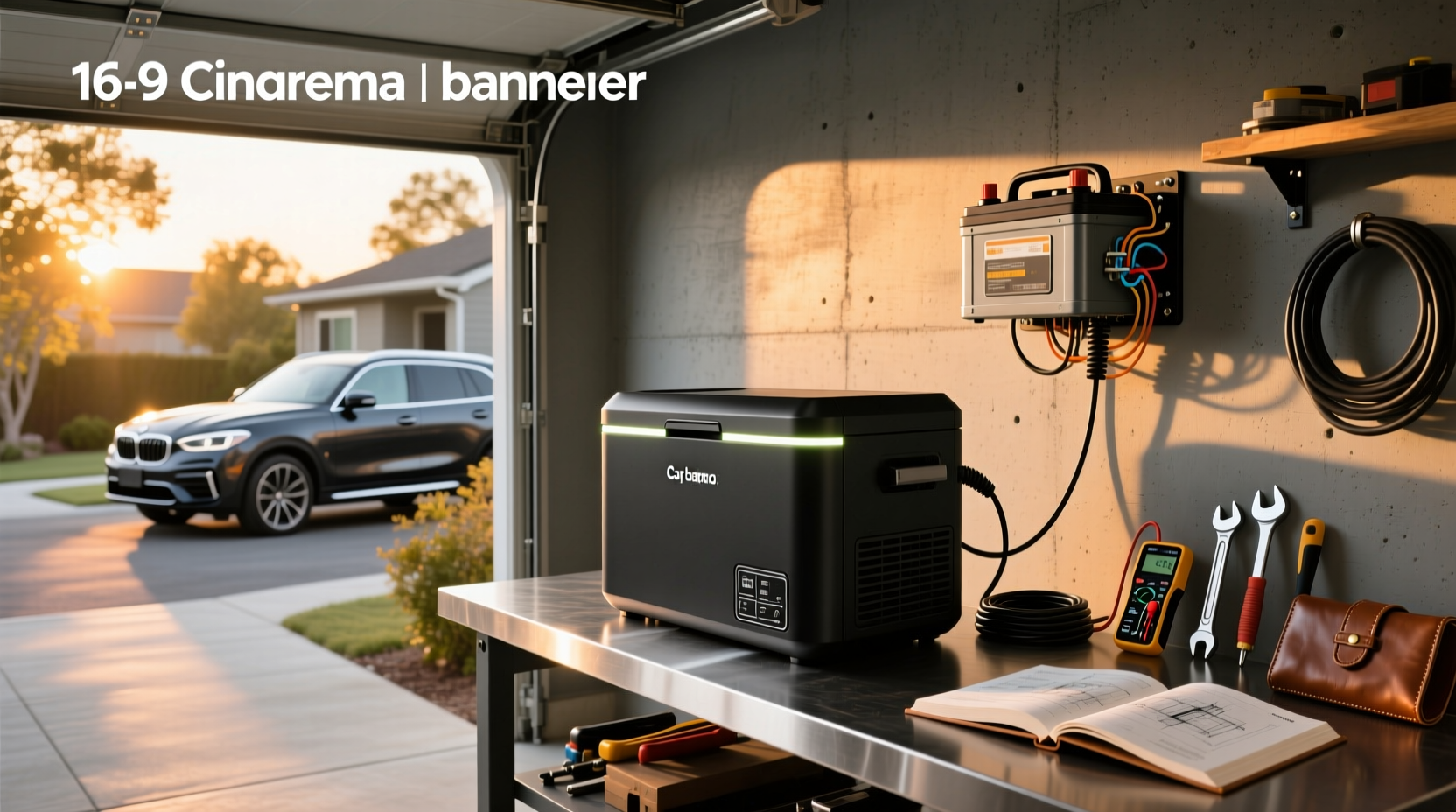
Yes, a portable refrigerator can run on a car battery using a 12V DC power source, making it ideal for camping, road trips, and emergency backup cooling ⚡. These fridges are designed to operate efficiently on low voltage and can be powered directly from your vehicle’s battery or a secondary deep-cycle lithium or AGM battery. However, running a fridge off a standard starting battery without proper safeguards risks draining the battery and leaving you stranded. Understanding power draw, battery capacity (measured in amp-hours), and duty cycles is essential to avoid damage and ensure reliable performance in off-grid scenarios ✅.
What Is a Car Battery Fridge?
A “car battery fridge” typically refers to a portable 12V compressor refrigerator that can be powered by a vehicle's electrical system or an external battery pack. Unlike traditional household refrigerators that require AC power, these units use DC power, allowing them to run directly from a car’s cigarette lighter socket, hardwired connection, or standalone lithium battery ⚡. They are commonly used in:
- Camping and overlanding adventures 🏕️
- Road trips with perishable food storage needs 🚗
- Emergency preparedness during blackouts 🔌
- Mobile work environments like food trucks or service vans 🛠️
These fridges differ significantly from older thermoelectric (Peltier) coolers, which are less efficient and struggle in hot climates. Modern 12V compressor models offer dual-voltage operation (AC/DC), precise temperature control, and energy-efficient compressors that make them viable for extended off-grid use.
How Does a 12V Fridge Work on a Car Battery?
Portable 12V fridges use a small compressor system similar to home units but optimized for low-power operation. When connected to a car battery via a DC port or direct wiring, the fridge draws current to run the compressor, fan, and control electronics. The actual power consumption depends on several factors:
- Temperature setting: Lower temps increase runtime demand ❄️
- Ambient temperature: Hot environments force the unit to work harder ☀️
- Fridge load: A full fridge retains cold better than an empty one 🧊 \li>
- Duty cycle: Compressors don’t run continuously; they cycle on/off based on internal temp 🔄
Most quality 12V fridges consume between 30–60 watt-hours per day under normal conditions. For example, a 40W fridge running at a 30% duty cycle uses roughly 12W average power, equating to about 1 amp per hour at 12 volts. This means a 100Ah (amp-hour) battery could theoretically power such a fridge for around 50 hours before reaching 50% depth of discharge—a safe threshold for lead-acid batteries.
Can You Safely Run a Fridge Off Your Car Battery?
The short answer is yes—but only under controlled conditions. Running a fridge directly from your vehicle’s starter battery while the engine is off poses a real risk of draining the battery below the level needed to restart the engine. Most vehicles require at least 11.8V to start, and prolonged discharging below 12.2V damages lead-acid batteries over time ❗.
To safely power a fridge from a car battery, consider these best practices:
- Use a dual-battery system: Install a secondary deep-cycle battery dedicated to auxiliary loads like fridges, lights, and chargers. A battery isolator or DC-DC charger ensures the alternator charges both batteries while driving but prevents backflow to the starter battery when parked 🔧.
- Monitor voltage: Use a battery monitor or built-in display to track voltage levels. Set low-voltage cutoffs (e.g., 11.8V for lead-acid, 10.5V for lithium) to prevent over-discharge ⚠️.
- Choose lithium batteries: Lithium iron phosphate (LiFePO4) batteries can be discharged up to 80–100% without damage and maintain stable voltage throughout discharge, unlike AGM or flooded lead-acid batteries which degrade quickly past 50% DoD ✨.
- Hardwire instead of using cigarette sockets: Cigarette lighter ports are often fused at 10A and may not support sustained high-current draw. Direct wiring through a fuse block provides safer, more reliable power delivery 🔗.
How Long Will a Fridge Run on a Car Battery?
This is one of the most frequently asked questions: “How long will a refrigerator run on a battery?” The answer varies widely depending on battery type, fridge efficiency, ambient conditions, and usage patterns.
| Battery Type | Capacity (Ah) | Usable Energy (Wh) | Estimated Runtime (40W Fridge) |
|---|---|---|---|
| Lead-Acid (Flooded/AGM) | 100Ah | 600Wh (50% DoD) | ~15 hours |
| Lithium (LiFePO4) | 100Ah | 1,200Wh (100% DoD) | ~30 hours |
| Lithium (LiFePO4) | 200Ah | 2,400Wh | ~60 hours |
| Car Starter Battery (typical) | 60Ah | 360Wh (max 50% DoD) | ~9 hours |
For instance, a ICECO JP Pro portable freezer with a magnetic battery attachment can run on a removable LiFePO4 pack, offering flexibility for mobile use 1. Similarly, systems like BLUETTI MultiCooler integrate a 42qt fridge with a detachable battery capable of up to three days of cooling under optimal conditions.
Common Misconceptions About Car Battery Fridges
Several myths persist about running fridges on car batteries. Clarifying these helps users make informed decisions:
- Myth: Any 12V fridge can run indefinitely on a car battery.
Reality: Without a secondary battery or solar charging, even efficient fridges will drain a starter battery within hours to days, risking vehicle immobilization. - Myth: All 12V fridges are created equal.
Reality: Efficiency varies drastically. Thermoelectric models may draw constant power and cool poorly, while compressor-based units cycle efficiently and perform well in heat. - Myth: You can plug a fridge into the cigarette lighter forever.
Reality: Many OEM sockets are not rated for continuous load. Prolonged use can blow fuses or damage wiring. - Myth: Solar isn't necessary if you drive daily.
Reality: Short drives may not fully recharge a deeply discharged auxiliary battery, especially in winter or city traffic with frequent stops.
Choosing the Right Battery for Your Portable Fridge
Selecting the right battery involves balancing cost, weight, lifespan, and usability:
- AGM (Absorbent Glass Mat): Affordable and spill-proof, AGM batteries are a popular upgrade over flooded lead-acid. They tolerate deeper discharges (down to 50%) and have longer lifespans (~3–5 years). However, they are heavy and lose capacity in cold weather.
- Lithium (LiFePO4): More expensive upfront but superior in performance. Lithium batteries offer higher usable capacity, faster charging, lighter weight, and longer cycle life (2,000+ cycles). They also support pass-through charging, meaning you can power devices while recharging the battery.
- Starter Batteries: Never recommended as primary power sources for fridges. Designed for short bursts of high current, they degrade rapidly under deep cycling.
When sizing a battery, calculate total daily energy consumption:
Formula: (Fridge Watts × Hours Used Per Day) = Watt-Hours Needed
Add 20% buffer for inefficiencies and aging components.
Example: A 45W fridge running 8 hours/day = 360Wh. A 100Ah 12V lithium battery stores 1,200Wh—enough for over 3 days under this load.
Best Practices for Using a Fridge on a Car Battery
To maximize reliability and battery life, follow these guidelines:
- Pre-cool the fridge before departure: Fill it with cold items or ice packs so the compressor doesn’t work excessively upon startup.
- Minimize door openings: Every time the lid opens, cold air escapes and warm air enters, increasing workload.
- Insulate the unit: Place the fridge in a shaded area or use a reflective cover to reduce heat absorption.
- Use a PWM or MPPT solar charge controller: If relying on solar panels, ensure compatibility with your battery chemistry for efficient charging.
- Install a low-voltage disconnect (LVD): Automatically cuts power when battery voltage drops too low, protecting both battery and vehicle.
Alternatives to Running a Fridge Directly on a Car Battery
If you’re concerned about battery drain or lack space for a dual-battery setup, consider alternatives:
- Detachable battery packs: Some fridges come with integrated or optional removable lithium batteries (e.g., EcoFlow Glacier Classic with 298Wh battery). These can be charged separately and swapped out.
- Solar-powered setups: Combine a portable fridge with a foldable solar panel (100W–200W) to maintain charge during daylight.
- Hybrid AC/DC operation: Use grid power when available (campgrounds, garages) and switch to battery when off-grid.
- Thermoelectric coolers for light use: While inefficient, they suffice for short trips or beverage chilling where extreme cooling isn’t required.
Applications Beyond Camping: Emergency Backup and Home Use
The concept of battery-powered refrigeration extends beyond recreation. In areas prone to power outages, having a fridge with backup battery capability preserves food safety. Some experimental designs, like those explored by FirstBuild (a GE subsidiary), envision refrigerators with built-in battery buffers that automatically engage during blackouts 2.
While mainstream home fridges don’t yet include integrated batteries due to cost and size constraints, pairing a standard mini-fridge with a UPS (uninterruptible power supply) or portable power station offers temporary protection. However, typical household refrigerators consume 100–800 watts, far exceeding what most batteries can sustain for more than a few hours.
Key Factors to Evaluate Before Buying a Car Battery Fridge
Before purchasing, assess these critical aspects:
- Power source compatibility: Ensure the fridge supports 12V/24V DC and optionally AC input.
- Energy efficiency rating: Look for models with low wattage consumption and high insulation ratings.
- Battery integration: Does it have a built-in battery, or do you need to buy one separately?
- Portability: Consider weight, handles, wheels, and mounting options.
- Temperature range: Freezer models should reach -15°C (5°F); coolers typically go down to 0–10°C (32–50°F).
- User reviews: Check forums like Reddit (r/overlanding, r/DIY) for real-world feedback on reliability and power draw claims.
Final Thoughts: Is a Car Battery Fridge Worth It?
For anyone spending time off-grid—whether camping, overlanding, or preparing for emergencies—a portable fridge powered by a properly configured battery system is a valuable investment. It enhances comfort, food safety, and convenience. However, success depends on understanding electrical fundamentals and planning accordingly. Avoid cutting corners with inadequate batteries or improper wiring. Instead, invest in quality components, monitor usage, and design a system that matches your intended application.
Frequently Asked Questions (FAQ)
- Can a refrigerator run on a car battery?
- Yes, but only safely if using a deep-cycle auxiliary battery or lithium pack. Running a fridge directly off a starter battery risks draining it too low to restart the engine.
- How long will a 12V fridge run on a 100Ah battery?
- A 40W fridge can run approximately 15 hours on a 100Ah lead-acid battery (at 50% depth of discharge) or up to 30 hours on a 100Ah lithium battery (at 100% DoD), depending on ambient conditions and usage.
- What are the disadvantages of a 12V fridge?
- Disadvantages include potential battery drain if not managed properly, limited runtime without solar or secondary charging, higher initial cost compared to coolers, and added complexity in installation and monitoring.
- Is there a refrigerator that works without electricity?
- No true refrigerator operates without any energy input. However, some propane-powered absorption refrigerators (common in RVs) don’t require grid electricity. Battery-powered compressor fridges still need stored electrical energy.
- Can I use a portable power station to run a fridge?
- Yes, many portable power stations (like BLUETTI, EcoFlow, or Anker) include AC outlets and sufficient capacity to run 12V-compatible fridges for extended periods, especially when paired with solar panels.




 浙公网安备
33010002000092号
 浙B2-20120091-4