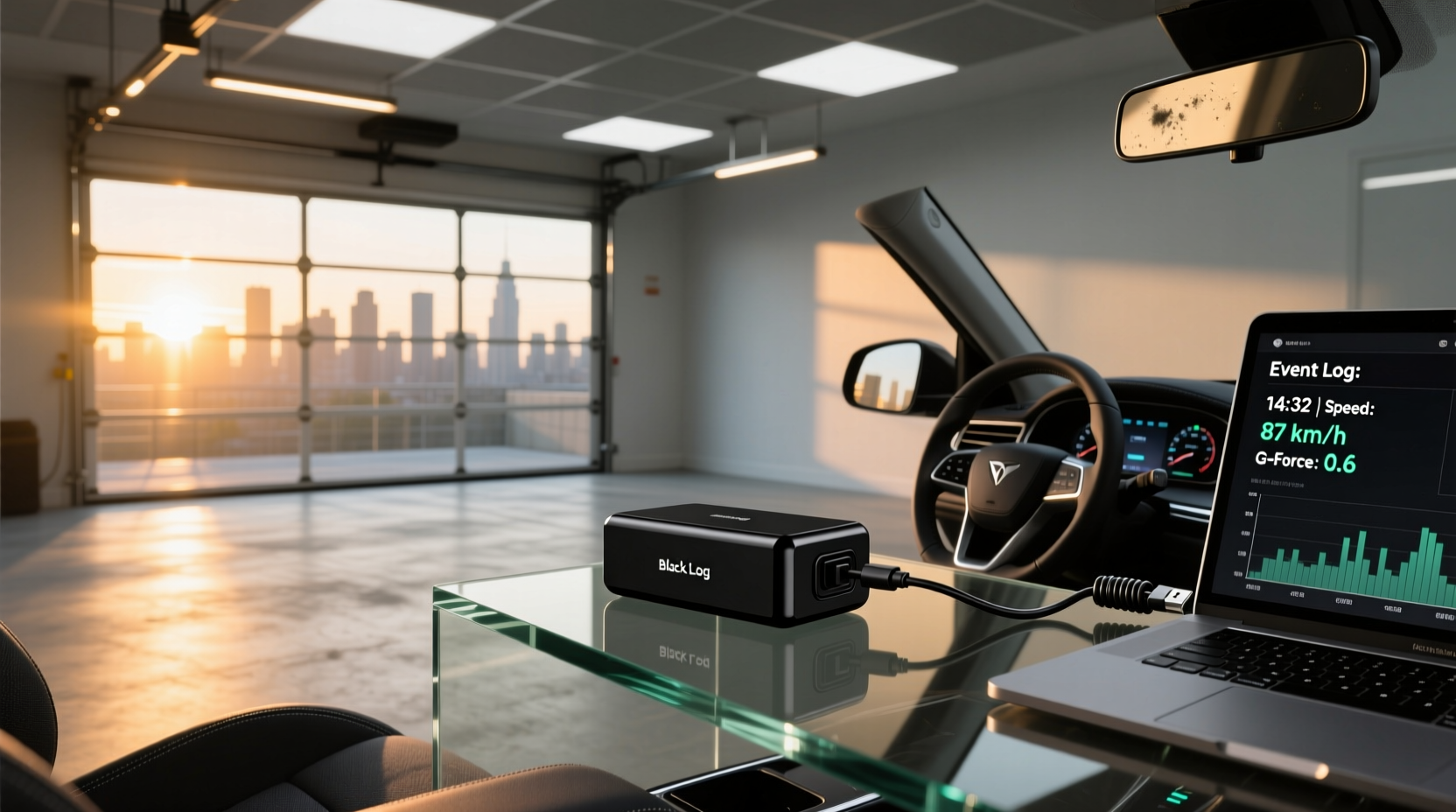
✅ If you've searched what is a car blackbox or wondered whether your vehicle records crash data, you're not alone. Millions of cars on the road today contain a device commonly known as a car black box—officially called an Event Data Recorder (EDR). These devices automatically capture critical information like speed, braking force, seatbelt use, and airbag deployment in the seconds before and during a collision. Understanding how EDRs work, where they're located, and what data they store can be crucial for insurance claims, legal cases, and even improving vehicle safety. This guide breaks down everything you need to know about automotive black boxes—including which vehicles have them, how to check, privacy concerns, and their role in dash cams versus OEM-installed systems.
What Exactly Is a Car Black Box?
The term car black box typically refers to an Event Data Recorder (EDR), a small electronic module built into most modern vehicles. Despite the name, it’s not always black and doesn’t resemble an aircraft flight recorder. Instead, it's usually integrated within the vehicle’s airbag control unit or powertrain control module 1.
Its primary function? To passively record real-time data during specific triggering events—most commonly, collisions. Unlike dash cameras that continuously film the road ahead, EDRs only activate under certain conditions, such as sudden deceleration or airbag deployment.
🔍 Key data points recorded by factory-installed EDRs include:
- Vehicle speed at impact
- Throttle position
- Brake application status
- Steering angle
- Airbag deployment timing
- Seatbelt usage
- Engine RPM
- Delta-V (change in velocity)
This data is stored in non-volatile memory, meaning it persists even if the battery dies after a crash. It can later be retrieved using specialized tools by law enforcement, insurers, or accident reconstruction experts.
Do All Cars Have a Black Box? Which Models Include EDRs?
📌 Not every car has a black box—but most do. Since 2014, nearly all new passenger vehicles sold in the United States are equipped with EDRs. According to the National Highway Traffic Safety Administration (NHTSA), over 99% of light-duty vehicles manufactured after 2013 include some form of event data recording capability 2.
🚗 Major automakers that routinely install EDRs include:
- General Motors (GM)
- Ford
- Toyota
- Honda
- BMW
- Mercedes-Benz
- Mitsubishi
- Hyundai/Kia
While there's no universal mandate requiring EDRs globally, many manufacturers have adopted them voluntarily due to their value in diagnosing crashes and improving safety systems. In Europe, a new regulation effective July 6, 2024, requires all new type-approved vehicles to include Advanced Driver Distraction Monitoring systems and event recording functions, further expanding black box-like technology across the continent 3.
How Can I Check If My Car Has a Black Box?
❓ Many drivers don't know whether their vehicle includes an EDR. Here’s how to find out:
1. Check Your Owner’s Manual
📘 Look up “event data recorder,” “black box,” or “accident data” in the index. Most manuals will disclose whether your model has one and explain its purpose.
2. Visit NHTSA’s Public Database
🌐 The NHTSA maintains a searchable database listing which models have EDRs and what data they record: nhtsa.gov/edr. You can search by year, make, and model.
3. Contact Your Dealer or Manufacturer
📞 Call your local dealership service department with your VIN. They can confirm whether your specific trim level includes an EDR.
4. Look for Physical Indicators
🔧 Some vehicles display a label near the driver’s side door jamb or on the EDR module itself stating “This vehicle is equipped with an Event Data Recorder.”
⚠️ Note: Presence of a dash cam does not mean your car has a factory EDR—and vice versa. Aftermarket cameras serve different purposes and are not standardized.
Dash Cam vs Factory Black Box: Key Differences
🛒 While both devices relate to vehicle data collection, understanding the distinction between a dash cam and a factory-installed black box (EDR) is essential.
| Feature | Factory Black Box (EDR) | Dash Camera |
|---|---|---|
| Data Type | Numeric sensor data (speed, brake, etc.) | Video footage + audio |
| Recording Trigger | Crash events only | Continuous or motion/G-sensor triggered |
| Storage Duration | Seconds before/during crash | Hours to days (loop recording) |
| Accessibility | Requires special tool/software | User-accessible via SD card |
| Legal Admissibility | High (standardized format) | Variable (depends on chain of custody) |
| Privacy Control | Limited; governed by state laws | Full user control |
| Cost | Included in MSRP | $20–$600+ |
✨ In short: An EDR tells investigators what happened mechanically, while a dash cam shows what happened visually. Many drivers now use both for maximum protection.
What Events Trigger a Car Black Box?
⚡ EDRs don’t record constantly. They monitor vehicle dynamics in real time but only save data when predefined thresholds are met. Common triggers include:
- Sudden deceleration (e.g., front-end collision)
- Airbag deployment
- Severe lateral impact (side collision)
- Roll-over detection
- Hard braking combined with high speed
The exact threshold varies by manufacturer. For example, GM systems may trigger at a delta-V of 5 mph or more, while Toyota units might require higher force. Once activated, the EDR captures data from up to 20 seconds before the event and several seconds after.
Who Can Access Black Box Data?
🔐 Access to EDR data is regulated. Under federal law (49 CFR Part 563), vehicle owners retain ownership of the data. However, access rules vary by jurisdiction:
- Law Enforcement: Must obtain consent or a warrant in most states.
- Insurance Companies: May request data with owner permission.
- Vehicle Manufacturers: Cannot access data remotely without authorization.
- Private Individuals: Can retrieve data using affordable OBD-II readers and software (e.g., Bosch CDR Tool).
📍 As of 2023, 18 U.S. states have laws specifically governing EDR data privacy, including California, Texas, and New York. Always verify local regulations before sharing or retrieving data.
Benefits of Having a Car Black Box
✅ There are several advantages to having an EDR-equipped vehicle:
1. Accident Accountability
In multi-vehicle crashes, EDR data helps establish fault objectively—especially useful when witness accounts conflict.
2. Improved Safety Design
Automakers analyze aggregated EDR data to refine airbag algorithms, crumple zones, and active safety features.
3. Faster Insurance Claims
Clear data reduces disputes over speed or braking, potentially expediting settlements.
4. Legal Protection
If falsely accused of reckless driving, EDR logs can prove compliance with traffic laws.
Potential Concerns and Privacy Issues
❗ Despite benefits, some drivers worry about:
1. Data Misuse
Fear that insurers could raise premiums based on near-miss events—even though EDRs don’t record non-triggering trips.
2. Unauthorized Retrieval
After an accident, unscrupulous parties might attempt to extract data without consent. Always secure your vehicle post-crash.
3. Lack of Transparency
Many owners aren’t informed about EDR presence at time of purchase. Dealerships aren’t required to disclose unless asked.
4. Cybersecurity Risks
As vehicles become more connected, future EDRs with telematics could face remote hacking risks—though current standalone modules are isolated.
Aftermarket Black Boxes and Dash Cams
🛒 Beyond factory EDRs, many drivers install aftermarket black box dash cams. These offer enhanced functionality:
- 📹 Front/Rear Recording: Dual-channel coverage
- 🌙 Night Vision: Infrared or low-light sensors
- 📶 Wi-Fi & GPS: Tag location and speed metadata
- 🅿️ Parking Mode: Monitors vehicle when parked
- 🔊 Audio Recording: Captures车内 sounds
- 🌐 Cloud Connectivity: Real-time alerts and remote viewing
📍 Popular features found in products priced from $25–$600 include over 170° field of view, motion sensing, loop recording, and G-sensors. Brands like BlackboxMyCar offer integrated solutions combining wireless CarPlay with built-in dash cams.
🛠️ When choosing an aftermarket system, consider:
- Resolution (1080p minimum, 4K preferred)
- Storage type (supports 256GB+ microSD)
- Power source (hardwired vs. cigarette lighter)
- Weather resistance (for parking mode reliability)
- App integration (iOS/Android compatibility)
Can You Disable or Remove a Car Black Box?
🔧 Technically, yes—but strongly discouraged. Disconnecting or tampering with an EDR may violate state laws, void warranties, or interfere with airbag functionality since the module often shares circuitry.
🚫 Additionally, removing the EDR could be interpreted as evidence tampering in litigation. If privacy is a concern, focus on controlling who accesses the data rather than disabling the device.
Black Box Data in Legal Cases
⚖️ EDR information is increasingly used in personal injury lawsuits and criminal investigations. Courts generally accept the data as reliable if properly extracted and authenticated.
📌 Example: In a rear-end collision case, EDR data showing the lead vehicle was stopped and the following vehicle braked less than 0.5 seconds before impact can strongly support negligence claims.
📎 To preserve evidence:
- Secure the vehicle immediately after a crash
- Contact a qualified technician for data download
- Document chain of custody
- Store original files securely
Future Trends: Smart Black Boxes and V2X Integration
🚀 The next generation of automotive data recorders will likely integrate with Vehicle-to-Everything (V2X) networks, enabling real-time transmission of crash data to emergency services.
🌐 Features expected within 5–10 years:
- Automatic crash notification with GPS coordinates
- Integration with ADAS (Advanced Driver Assistance Systems)
- Driver behavior analytics (for fleet management)
- Over-the-air firmware updates
- Enhanced encryption for data security
🏭 Automakers like BMW and Volvo are already testing AI-powered systems that combine camera feeds, radar data, and EDR logging for holistic incident analysis.
Common Misconceptions About Car Black Boxes
❌ Let’s clarify some widespread myths:
Myth 1: “Black boxes record audio or video”
No. Factory EDRs collect only technical data. Audio/video comes from aftermarket dash cams.
Myth 2: “They’re always recording”
False. EDRs buffer data temporarily but only save it upon a qualifying event.
Myth 3: “Dealers can see my driving habits”
Not true. Dealers cannot access EDR data without physical connection and proper tools—and only with authorization.
Myth 4: “All black boxes are the same”
Data formats and trigger thresholds vary significantly between brands and models.
Final Checklist: What You Should Know About Your Car’s Black Box
📋 Before making decisions about your vehicle’s data system, ask yourself:
- Does my car have an EDR? (Check manual or NHTSA site)
- What data does it record?
- Who legally owns the data?
- Have I given consent for data retrieval?
- Should I supplement with a dash cam?
- Am I aware of my state’s privacy laws?
By answering these questions, you gain better control over your vehicle’s digital footprint and ensure your rights are protected.
Frequently Asked Questions (FAQs)
- ❓ Do all cars have black boxes?
- No, but nearly all vehicles made after 2014 in the U.S. come equipped with an Event Data Recorder (EDR). Check your owner’s manual or the NHTSA database to confirm.
- ❓ Is it good to have a black box in your car?
- Yes, especially for objective crash data. It helps determine fault, supports insurance claims, and contributes to safer vehicle design.
- ❓ How do I check if my car has a black box?
- Review your owner’s manual, visit NHTSA.gov, contact your dealer with your VIN, or look for warning labels near the door jamb.
- ❓ What events trigger a car black box?
- Triggers include airbag deployment, sudden deceleration, hard braking, or impacts exceeding manufacturer-set thresholds (usually equivalent to hitting a wall at 5+ mph).
- ❓ Can police access black box data without permission?
- In most U.S. states, law enforcement needs a warrant or owner consent to retrieve EDR data, though exceptions exist in severe criminal cases.




 浙公网安备
33010002000092号
 浙B2-20120091-4