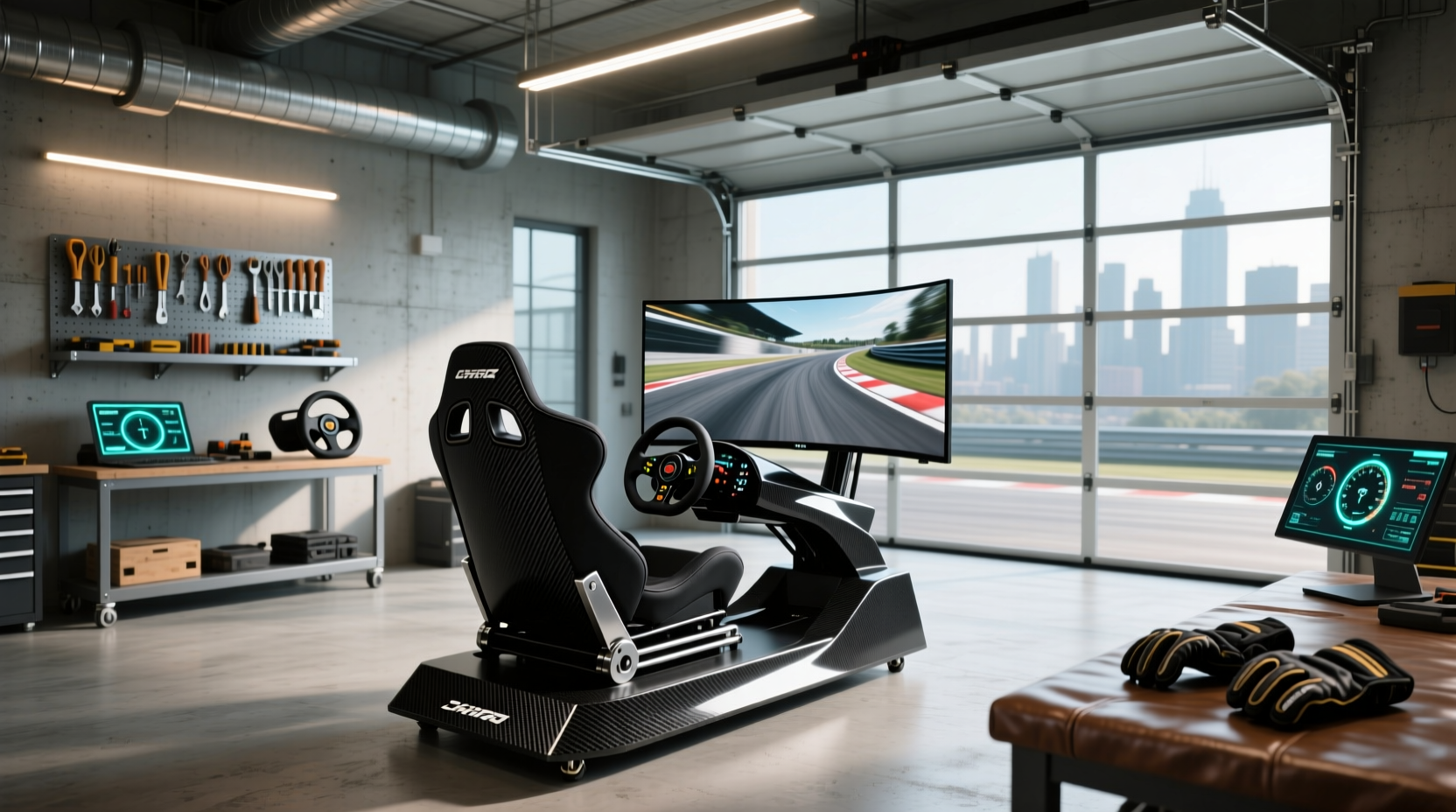
For sim racing enthusiasts seeking immersive experiences without breaking the bank, finding the cheapest full motion racing simulator that still delivers realistic feedback is a top priority. While high-end 6DOF (six degrees of freedom) platforms can cost tens of thousands, more budget-friendly options exist—starting around $1,500—for those willing to research trade-offs in build quality, software compatibility, and motion fidelity. This guide breaks down what defines a true full motion simulator, explores the lowest-cost models available today, compares DIY versus pre-built systems, and outlines key considerations like actuator type, control software, VR integration, and space requirements. Whether you're building your first rig or upgrading from static seating, understanding these factors helps avoid costly mistakes and ensures you get the best value for your investment.
What Defines a Full Motion Racing Simulator?
A full motion racing simulator replicates real-world vehicle dynamics by moving the driver’s seat or cockpit in multiple directions based on in-game telemetry data. Unlike basic vibration seats or tilt systems, a true full motion platform provides movement across at least three axes: heave (up/down), surge (forward/backward), and sway (side-to-side). When combined with pitch (tilt forward/back), roll (lean left/right), and yaw (rotation around vertical axis), this creates a 6-degree-of-freedom (6DOF) system capable of mimicking acceleration, braking, cornering, suspension bounce, and road surface feedback.
The core component enabling this is the motion platform, typically built using electric linear actuators or hydraulic cylinders controlled by specialized software such as SimTools, DBox, or proprietary firmware. These systems interpret game physics data via plugins and translate it into synchronized physical movements. The realism depends not only on hardware precision but also on tuning accuracy, latency, and range of motion.
It's important to distinguish between full motion and motion cueing devices. Some products marketed as 'motion simulators' are actually passive systems—like spring-loaded seats or rotating bases—that rely on user weight shifts rather than active actuation. True full motion requires powered movement in all relevant axes, which significantly increases both complexity and cost.
Understanding Price Ranges and Market Options
When searching for the cheapest full motion racing simulator, prices vary widely depending on configuration, brand, and whether the system is pre-assembled or requires self-building. Based on current market availability:
- Budget Tier ($1,500–$3,000): Entry-level 3DOF or 6DOF kits, often sold as DIY packages with aluminum frames and brushed DC actuators. Examples include open-source designs or smaller brands offering compact platforms.
- Mid-Range ($3,000–$7,000): Pre-built or semi-assembled 6DOF systems from established sim racing companies. These usually feature improved rigidity, better control boards, and smoother motion profiles.
- Premium Tier ($7,000+): Commercial-grade simulators with industrial actuators, advanced filtering algorithms, and full cockpit integration. Brands like DOF Reality, SimCraft, and Racemore dominate this segment.
The lowest-priced functional 6DOF systems currently available start around $1,800–$2,200 when purchased as DIY kits. For example, certain Chinese manufacturers offer complete motion platforms with Arduino-based controllers and generic actuators through global marketplaces like Alibaba.com 1. However, these often lack detailed documentation, long-term support, and may require significant technical skill to assemble and tune properly.
Difference Between DIY and Pre-Built Systems
One of the biggest cost drivers is whether you choose a DIY motion simulator kit or a fully assembled unit. Each has distinct advantages and drawbacks:
| Factor | DIY Kits | Pre-Built Systems |
|---|---|---|
| Cost | ✅ Lower upfront cost (can save 30–50%) | ❌ Higher price due to labor and warranty |
| Assembly Time | ❌ Requires 20–60 hours of work | ✅ Ready to use out of box |
| Customization | ✅ High flexibility in size, materials, and layout | ❌ Limited to manufacturer specs |
| Support & Warranty | ❌ Minimal or none; community forums only | ✅ Professional customer service and repair options |
| Motion Quality | ⚠️ Depends on builder skill and component selection | ✅ Consistently tuned and tested |
If minimizing cost is the primary goal, a DIY approach offers the clearest path to obtaining a low-cost full motion simulator. However, success hinges on mechanical aptitude, access to tools, and willingness to troubleshoot software integration issues.
Key Components That Impact Cost and Performance
To evaluate any affordable full motion racing simulator, it's essential to understand the major components and their impact on both price and realism:
Actuators and Drive System ⚙️
The type of actuator used directly affects smoothness, noise level, and longevity. Common types include:
- Brushed DC Linear Actuators: Found in budget systems; inexpensive but prone to wear, higher backlash, and less precise control.
- Brushless DC or Servo Motors: Used in mid-to-high-end platforms; offer quieter operation, faster response, and better position feedback.
- Hydraulic Systems: Rare in consumer setups due to complexity and maintenance needs; mostly seen in commercial installations.
Cheaper platforms often use off-the-shelf actuators not designed for rapid cycling, leading to overheating during extended sessions. Look for units rated for continuous duty if planning frequent use.
Controller Board and Software Integration 🔧
The controller interprets game data and commands actuator movement. Open-source solutions like Arduino-based SimHub or SimTools are popular in DIY builds because they’re free and support many games. However, tuning curves, filtering noise, and reducing latency require time and patience.
Higher-end systems use proprietary firmware with optimized signal processing, resulting in more natural motion cues. Compatibility with popular titles (e.g., iRacing, Assetto Corsa, Gran Turismo) should be verified before purchase.
Frame Material and Rigidity 🏭
A flexible frame undermines even the best actuators. Budget simulators sometimes use thin aluminum extrusions or welded steel tubing that can flex under load, causing imprecise motion and vibrations. Stiffness is critical for accurate force transmission and preventing resonance.
Look for triangulated designs, reinforced joints, and sufficient mounting points for cockpits or seats. A well-designed compact platform (e.g., 30” x 30”) made from quality materials may outperform a larger, flimsier one.
Size and Space Requirements 📍
Full motion platforms need clearance for full travel in all directions. Most 6DOF systems extend vertically by 6–12 inches and shift laterally by several inches. You’ll need at least 4 feet of clearance above and around the unit, especially if using VR headsets.
Smaller footprint designs help fit into tighter spaces but may sacrifice stroke length or payload capacity. Always measure your room dimensions before committing to a model.
Realistic Expectations: What Can You Actually Feel?
Even the most affordable full motion racing simulator won’t replicate G-forces like a professional centrifuge. Instead, it uses motion cueing—subtle tilts and accelerations—to trick the inner ear into perceiving movement. For instance:
- Braking triggers a backward tilt (pitch up)
- Acceleration causes forward lean (pitch down)
- Cornering induces roll toward the outside of the turn
This works best when paired with visual cues from a VR headset or triple-monitor setup. Without synchronized visuals, the brain may detect discrepancies, causing disorientation or simulator sickness.
Additionally, low-cost systems often have limited stroke lengths (e.g., ±5° roll, ±4” heave), which restricts the intensity of sensations. While sufficient for casual enjoyment, serious users may find them underwhelming compared to premium rigs.
Where to Buy and How to Save Money
Several channels offer budget full motion racing simulators, each with pros and cons:
- Global Marketplaces (e.g., Alibaba.com): ✅ Lowest prices for complete kits; ❌ Risk of poor QC, shipping delays, no local support.
- Specialty Sim Racing Retailers: Offer kits from known brands like Next Level Racing or Trak Racer; higher cost but better reliability.
- Open Source Communities: Forums like RaceDepartment host DIY project plans and BOMs (bill of materials); ideal for tech-savvy builders aiming for ultra-low costs.
To reduce expenses:
- Buy components separately during sales events.
- Use existing PC power supplies instead of dedicated amplifiers.
- Build a simple wooden base instead of metal framing.
- Start with 3DOF (surge, sway, heave) and upgrade to 6DOF later.
Common Pitfalls to Avoid ❗
Many buyers make assumptions that lead to disappointment. Here are common misconceptions:
- "All motion platforms feel the same": Motion quality varies drastically. Test videos or demos if possible.
- "More actuators = better motion": Six actuators don’t guarantee superior performance; alignment, control logic, and tuning matter more.
- "I can add motion to any seat": Heavy or oversized cockpits exceed payload limits (typically 250–400 lbs).
- "Setup is plug-and-play": Even pre-built units require calibration and software configuration.
Always check maximum payload, required input voltage, noise levels, and software compatibility before purchasing.
Alternatives to Full Motion Systems
If a true 6DOF platform exceeds your budget, consider alternatives that enhance immersion at lower cost:
- Vestibular Feedback Seats: Devices like the GSeat or Sofa Rider provide haptic feedback through internal motors. They simulate bumps and directional forces but don’t move the entire body.
- Tilting Platforms (2DOF): Only adjust pitch and roll; much cheaper (~$500–$1,200) and easier to install.
- Haptic Suits and Controllers: Add tactile feedback to hands and torso, improving overall sensory engagement.
These options won’t replace full motion but can bridge the gap until you’re ready to invest in a complete system.
Final Recommendations: Who Should Buy a Budget Full Motion Simulator?
The cheapest full motion racing simulator makes sense only for users who:
- Have intermediate-to-advanced mechanical and software skills (for DIY builds)
- Are committed to spending time tuning and maintaining the system
- Already own a compatible cockpit, seat, wheel, and PC setup
- Understand the limitations of small-scale motion cueing
If you prioritize convenience, long-term durability, or plan to use the simulator commercially, investing in a mid-range pre-built system is likely more cost-effective over time.
For those determined to go the budget route, starting with a proven DIY design from an active community, sourcing reliable actuators, and allocating time for testing will yield the best results. Prioritize stiffness, controller quality, and software compatibility over sheer size or advertised DOF count.
Frequently Asked Questions
- Can I build a full motion simulator for under $1,000?
- While theoretically possible using salvaged parts and open-source controllers, reliable 6DOF systems typically cost at least $1,500–$2,000 for new components. Sub-$1,000 builds often compromise safety, durability, or performance.
- Do cheap motion platforms work with VR?
- Yes, but synchronization is crucial. Latency above 20ms between visual and physical motion can cause nausea. Ensure your controller supports low-latency output and your PC can handle real-time data processing.
- How much space does a full motion simulator need?
- Plan for a minimum footprint of 4’ x 4’ with at least 6’ of ceiling clearance if using VR. Allow extra space for cable management and safe entry/exit.
- Are there monthly costs after buying a motion simulator?
- No recurring fees for hardware, but some advanced software (e.g., SimTools Pro) offers paid upgrades. Electricity usage is minimal—comparable to running additional gaming peripherals.
- Can I upgrade a 3DOF system to 6DOF later?
- Possibly, but only if the frame and controller support additional actuators. Most entry-level 3DOF kits aren’t designed for expansion. Check manufacturer specifications before assuming upgradability.




 浙公网安备
33010002000092号
 浙B2-20120091-4