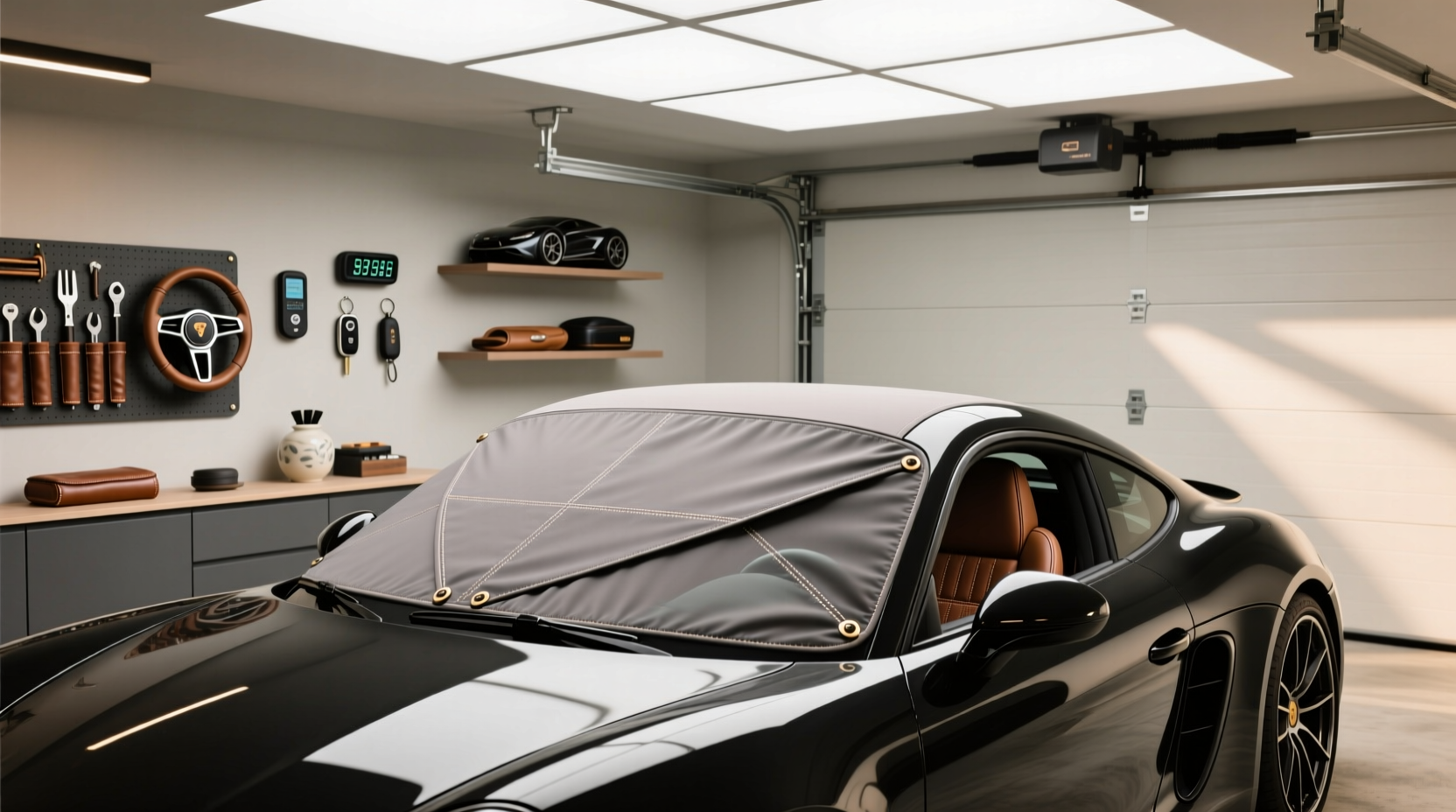
When searching for a custom car sunshade, the primary goal is simple: keep your vehicle cooler, shield the interior from UV damage, and ensure a precise fit. Unlike universal shades, a custom-fit or personalized sunshade is designed to match your windshield’s exact dimensions and curvature, offering superior coverage and efficiency. Whether you're looking for a promotional item with your logo, a handmade design from Etsy, or a durable cardboard-based solution, understanding material choices, fit accuracy, and long-term value is essential to making an informed decision.
What Is a Custom Car Sunshade?
A custom car sunshade is a tailored accessory designed to block sunlight through a vehicle’s windshield and front windows. Unlike generic, foldable models that may gap at the edges, custom versions are made to match the specific make, model, and year of a car. This ensures complete coverage, minimizing heat buildup and protecting dashboards from cracking or fading due to prolonged UV exposure.
These sunshades come in various forms—rigid cardboard panels, multi-panel folding designs, or even inflatable types—but all serve the same core purpose: temperature control and interior preservation. Some users opt for custom cardboard car sunshades with logo prints for branding purposes, while others seek personalization through photos or artwork.
Why Use a Custom-Fit Sunshade Instead of Universal?
While universal sunshades are widely available and often cheaper, they frequently suffer from poor edge sealing. Gaps allow direct sunlight to enter, reducing effectiveness. A study on solar heat gain in parked vehicles showed that even small openings can increase cabin temperatures by up to 15°F compared to fully sealed windshields 1.
✅ Advantages of custom-fit:
- Precise contour matching: Follows the curve of your windshield for full coverage
- Better insulation: Reduces interior temps by 30–50°F more effectively than ill-fitting alternatives
- Ease of use: Slides in and out without adjustment
- Durability: Less bending stress means longer lifespan
- Higher initial cost: Typically $25–$75+ depending on material and customization level
- Limited transferability: Not usable across different vehicle models
- Longer lead time: Especially if ordering online with print personalization
Materials Used in Custom Car Sunshades
The performance of any sunshade depends heavily on its construction material. Below are the most common types found in both retail and DIY applications:
Cardboard-Based Sunshades ✨
One of the most searched variations is the cardboard car sunshade, popularized by platforms like Etsy and Alibaba. These are typically corrugated or rigid paperboard sheets cut to size.
Pros:
- Low-cost production (as low as $1–$4 per unit in bulk)
- Lightweight and easy to store
- Ideal for one-time use or promotional giveaways
- Print-ready surface for logos or images
Cons:
- Limited durability—can warp in high heat or humidity
- No flexibility; breaks if folded incorrectly
- Poor resistance to moisture (condensation inside car can soften material)
Despite limitations, many users report success using interlocked cardboard layers or coating them with waterproof sealants for added resilience.
Foam-Core & Reflective Mylar Composites ⚙️
This is the industry standard for high-performance sunshades. It usually consists of a closed-cell foam layer sandwiched between two sheets of metallized polyester (Mylar). The reflective outer surface deflects sunlight, while the foam provides thermal insulation.
Benefits:
- Reflects up to 90% of incoming solar radiation
- Flexible enough to fold yet retains shape over time
- Resistant to UV degradation and moisture
- Commonly used in OEM and aftermarket precision-fit products
These materials are often used in professionally manufactured custom sunshades where longevity matters.
Tyvek and Synthetic Fabric Options 🌍
Tyvek, a high-density polyethylene fiber developed by DuPont, offers excellent tear resistance and weather protection. While less reflective than Mylar, it's breathable and doesn’t trap moisture.
Some brands offer custom printed Tyvek car sunshades for corporate events or fleet branding due to their durability and professional appearance.
| Material Type | Heat Reduction | Durability | Best For |
|---|---|---|---|
| Cardboard | Moderate (20–30°F) | Low | Promotions, short-term use |
| Foam + Mylar | High (40–60°F) | High | Daily drivers, long-term protection |
| Tyvek | Medium (25–35°F) | Medium-High | Branded giveaways, outdoor storage |
| Plastic/PVC Panels | Low-Medium | Medium | Rental fleets, temporary covers |
Customization Options: Logo, Photos, and Design Personalization
Many buyers search for terms like custom photo car sun shades or custom car sunshade with company logo. These are typically ordered in bulk for marketing campaigns, employee gifts, or school promotions.
Key considerations when adding graphics:
- Print method: Digital printing allows full-color images; screen printing suits large batches with single/multi-color logos
- Surface prep: Cardboard may require priming for sharp image reproduction
- Visibility: Ensure text/logo isn’t placed near the driver’s line of sight when shade is installed
- Minimum order quantity (MOQ): Varies from 25 to 500 units depending on supplier
For individual users, some print-on-demand services offer two-piece sets with custom photos starting around $25–$35. However, quality varies significantly based on substrate thickness and coating.
DIY vs. Pre-Made Custom Sunshades 🔧
Several forums, including Reddit threads under r/hondafit and r/cardboard, discuss how to make a cardboard cutout to cover a windshield. While possible, this approach has notable trade-offs.
DIY Approach (Using Cardboard or Foam Board)
Steps commonly shared online include:
- Trace the windshield outline using kraft paper or newspaper
- Transfer pattern onto cardboard or insulation board
- Cut using utility knife or box cutter
- Add reflective foil tape or spray-coat with UV-resistant paint
- Insert into windshield when parked
Pros:
- Nearly free if using recycled materials
- Total control over size and shape
- Satisfying project for hobbyists
Cons:
- Risk of inaccurate tracing leading to gaps
- Time-consuming process (often takes 2–3 hours)
- Inconsistent results—curved windshields are hard to replicate flat
- Safety concern: loose pieces can shift and obstruct view during startup
Pre-Made Custom Sunshades 🏭
Manufacturers use CAD modeling and laser cutting to produce exact fits. You provide your vehicle details, and receive a ready-to-use shade.
Advantages:
- Guaranteed fit and finish
- Built-in handles or tabs for easy removal
- Often include UV inhibitors and anti-static coatings
- Warranty or replacement policy available
If you park outdoors regularly or live in sunny climates (e.g., Arizona, Southern California), investing in a professionally made shade pays off in dashboard longevity.
Where to Buy Custom Car Sunshades
Based on current search trends, here are the main purchasing channels:
Etsy: Handmade & Unique Designs 👥
Etsy hosts numerous sellers offering handmade custom car sunshades, often made from layered cardboard or fabric composites. Prices range from $20–$65, with options for photo printing or artistic patterns.
Best for: Gift buyers, eco-conscious consumers, unique aesthetics
Alibaba & B2B Platforms 🌐
For bulk orders (typically 100+ units), Alibaba connects businesses with manufacturers producing custom cardboard auto windshield sun shades at low per-unit costs ($1–$5 each).
Best for: Corporate branding, promotional events, fleet managers
Specialty Print Shops (PrintGlobe, 4imprint, etc.) 📎
These companies specialize in branded merchandise. They offer full-color printing on foam-core or cardboard substrates with MOQs starting at 25 units.
Tip: Always request a physical sample before placing a large order to verify material quality and color accuracy.
Measuring Your Windshield for Accuracy 🔍
If ordering a custom shade, precise measurements are critical. Here’s how to do it correctly:
- Clean the windshield thoroughly to see edges clearly.
- Use a flexible measuring tape or string to trace the top, sides, and bottom curves.
- Mark key points: Top center height, side pillar width, base width.
- Compare with manufacturer templates—many suppliers provide downloadable PDF outlines by vehicle model.
- Double-check VIN-specific databases if unsure about model variations (e.g., sedan vs. wagon).
Even a 1-inch error can result in significant light leakage. Some vendors offer “fit guarantee” policies—if the shade doesn’t match, they’ll remake it at no cost.
Effectiveness: Do Custom Sunshades Really Work?
Multiple studies confirm that properly installed sunshades reduce interior temperatures significantly. In one test conducted by AAA, vehicles equipped with reflective sunshades had cabin temperatures averaging 33°F lower than unshaded cars after six hours in direct sunlight 2.
Additional benefits include:
- Reduced AC load at startup: Saves fuel and reduces engine strain
- Dashboard preservation: Prevents vinyl cracking and adhesive failure in infotainment systems
- Child/pet safety: Lowers risk of heatstroke when returning to the vehicle
- Theft deterrence: Obscures visibility into the cabin
Common Misconceptions About Custom Sunshades ❗
Despite widespread use, several myths persist:
- Myth: Any white cover reflects sunlight equally.
Reality: Surface finish matters—smooth, metallic coatings reflect far better than matte white paint. - Myth: Folding shades are always inferior to solid ones.
Reality: Multi-panel folding shades made with Mylar perform nearly as well as rigid models if properly aligned. - Myth: Sunshades damage windshields.
Reality: No evidence supports this; modern materials are non-abrasive and safe for glass and tint films.
Seasonal and Geographic Considerations 🌡️
Usage patterns vary by region:
- Sunny climates (Arizona, Nevada, Florida): Daily use recommended; consider dual-side reflection for morning/evening sun angles.
- Cold regions (Michigan, Canada): Can help prevent ice buildup by reducing daytime thaw-refreeze cycles.
- Urban areas: Useful for deterring break-ins by blocking view of valuables.
- Rural/camping use: DIY cardboard shades are popular among overlanders seeking lightweight, disposable solutions.
Maintenance and Storage Tips 🧼
To extend the life of your custom sunshade:
- Store flat or rolled loosely—avoid tight folds that crease foam cores
- Wipe clean with damp cloth; never machine wash
- Avoid leaving inside car during extreme heat (>140°F) for extended periods
- Check for warping every few months, especially in humid environments
When NOT to Use a Custom Sunshade
There are rare situations where usage may not be advisable:
- Cracked or chipped windshield: Pressure from insertion/removal could spread damage
- Vehicles with rain-sensing wipers: Some thick shades may interfere with sensor operation
- Autonomous driving systems: LIDAR or forward-facing cameras near the rearview mirror may be obstructed
- Leased vehicles with strict return conditions: Check lease agreement—some prohibit interior modifications or add-ons
Final Recommendations
Choosing the right custom car sunshade comes down to balancing purpose, budget, and frequency of use. For daily protection and maximum heat reduction, invest in a foam-core, Mylar-coated model tailored to your vehicle. For occasional use or promotional needs, cardboard variants offer a functional, low-cost alternative.
Always verify fit specifications, review material durability, and consider whether customization adds real value for your use case. Whether you buy from Etsy, a specialty printer, or manufacture your own, proper installation and maintenance will determine long-term effectiveness.
Frequently Asked Questions
- Can I make a custom car sunshade at home?
- Yes, using cardboard or foam board and a template traced from your windshield. However, achieving a perfect seal is difficult due to complex curves, and homemade versions lack UV-stable coatings. Best for temporary or experimental use.
- Do custom sunshades fit all car models?
- They are made for specific makes and models, but availability depends on demand. Common vehicles (Toyota Camry, Honda Civic) have many options; rare or older models may require special ordering or DIY solutions.
- Are cardboard sunshades reusable?
- Basic cardboard versions may degrade after 2–3 weeks of daily use, especially in humid or hot climates. Coated or laminated versions last longer but still fall short of foam-Mylar durability.
- How much cooler does a custom sunshade make a car?
- On average, interior temperatures are 30–60°F lower than in unshaded vehicles, depending on material, color, and exposure duration.
- Can I wash my custom car sunshade?
- No. Most are not water-resistant. Clean only with a dry or slightly damp cloth. Avoid submerging or scrubbing, which can damage reflective layers or warp materials.




 浙公网安备
33010002000092号
 浙B2-20120091-4