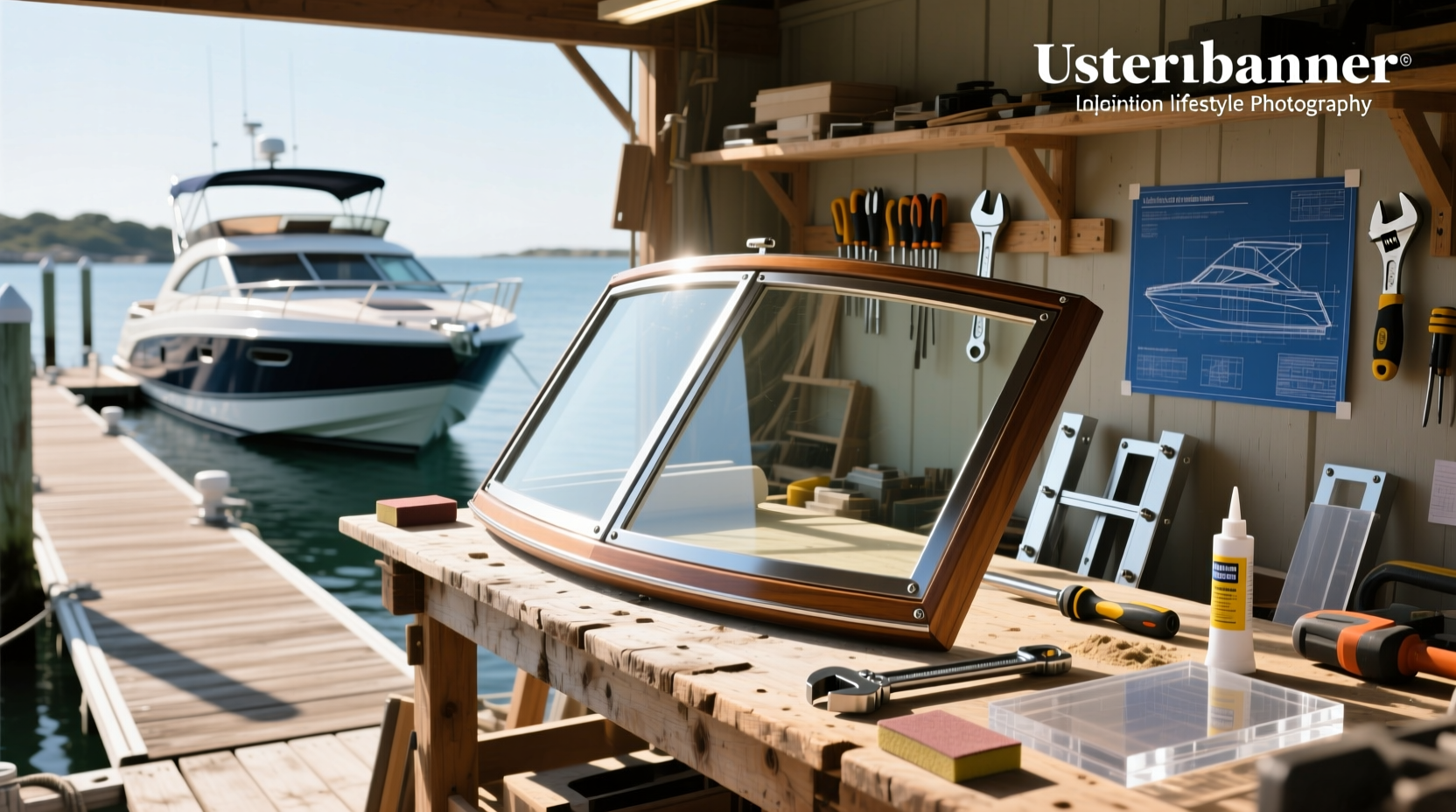
If you're searching for a cost-effective way to repair or upgrade your boat's windshield, building a DIY boat windshield frame is a practical solution that gives you full control over fit, material quality, and customization. Using marine-grade aluminum extrusions, proper sealants, and precise measurements, you can construct a weather-resistant, UV-stable frame that performs as well as factory units—often at a fraction of the cost. This guide walks through every step, from material selection to installation, helping you avoid common pitfalls like corrosion, leaks, and structural failure.
Why Build a DIY Boat Windshield Frame?
Boat owners often face high costs when replacing original equipment manufacturer (OEM) windshield frames. A pre-made marine window assembly can easily exceed $500—even over $1,000 for larger models 1. By choosing the DIY boat windshield frame route, you cut out markup and tailor the design to your vessel’s exact dimensions and aesthetic. This approach is especially valuable for older or custom boats where OEM parts are no longer available.
Additionally, a DIY project allows you to upgrade materials. For example, replacing corroded aluminum with 6063-T5 or 6061 marine-grade alloy improves longevity. You can also choose between anodized, powder-coated, or painted finishes to match your boat’s style while ensuring corrosion resistance in saltwater environments.
Understanding Boat Windshield Frame Materials
The foundation of any successful boat windshield frame DIY project is selecting the right material. Aluminum dominates the marine market due to its strength-to-weight ratio and natural corrosion resistance. However, not all aluminum is suitable for marine use.
Marine-Grade Aluminum Alloys
The most common alloys used in boat window frames are:
- 6063-T5: Known for excellent extrudability and surface finish, ideal for complex profiles. Often used in marine windows and frames 2.
- 6061-T6: Stronger than 6063, better suited for load-bearing applications. Frequently used in structural boat components.
- 5083-H321: Offers superior resistance to saltwater corrosion, commonly found in hulls and offshore structures.
For a DIY windshield frame, 6063 is typically sufficient unless the frame supports heavy glass or experiences high stress. Always verify the alloy type when purchasing extrusions—some suppliers may offer non-marine grades that degrade quickly in wet environments.
Alternative Materials: Stainless Steel and Fiberglass
While less common for DIY projects, stainless steel (particularly 316 grade) offers exceptional durability and polish retention. However, it’s heavier and more expensive than aluminum. Fiberglass-reinforced plastic (FRP) frames are sometimes used in molded enclosures but lack rigidity for large windshields.
Finding and Sourcing DIY Boat Windshield Frame Extrusions
One of the biggest challenges in a DIY boat windshield frame build is sourcing the correct profile. Unlike standard window frames, marine extrusions have integrated channels for rubber gaskets, glass retention, and drainage.
Where to Buy Marine Aluminum Extrusions
Several suppliers offer off-the-shelf or customizable aluminum profiles:
- Wellste: Specializes in boat windshield frame extrusions made from 6061, 6063, and 5083 alloys. Offers custom bending and cutting services 3.
- Bomon Marine: Produces precision aluminum frames with wall thicknesses from 0.125" to 2.5", suitable for curved or flat installations.
- Alibaba.com: Hosts numerous Chinese manufacturers offering low-cost extrusions and complete window kits. Ideal for bulk orders or custom shapes, though lead times and quality control vary.
When ordering, specify:
- Profile cross-section (T-slot, U-channel, etc.)
- Wall thickness (minimum 0.062" recommended)
- Bend radius (if curved)
- Surface finish (anodized, painted, bare)
Designing Your Custom Windshield Frame
A successful boat windshield frame DIY starts with accurate measurements and thoughtful design. Follow these steps:
Step 1: Measure the Opening
Use a flexible curve ruler or cardboard template to capture the exact shape of the existing opening. Note all radii, angles, and mounting points. If removing an old frame, clean the area thoroughly and inspect for rot or delamination in fiberglass surrounds.
Step 2: Choose Frame Style
Common styles include:
- Fixed Frame: Glass is permanently sealed; simplest to build.
- Sliding Window: Requires track system and weatherstripping.
- Hinged or Venting: Allows airflow; needs hinges and latches.
Step 3: Plan Mounting Method
Most DIY frames are bonded using marine adhesive sealants like 3M 5200 or Sikaflex 291. Mechanical fasteners (stainless screws) can supplement bonding but should not carry primary load. Ensure the hull material (fiberglass, aluminum, wood) can support the attachment method.
| Frame Type | Material Needed | Sealant Required | Tools |
|---|---|---|---|
| Fixed | 6063 Aluminum Extrusion | Sikaflex 291 | Miter saw, clamps, caulking gun |
| Sliding | Dual-track extrusion | Butyl tape + silicone | Drill, router, level |
| Hinged | Reinforced corners | 3M 5200 Fast Cure | Welding kit (optional), hinge drill bit |
Building the Frame: Step-by-Step Process
With materials and design ready, begin construction:
Step 1: Cut and Assemble the Frame
Use a fine-tooth miter saw or CNC cutter to achieve clean 45° or 90° joints. For curved sections, order pre-bent extrusions or use a tube bender. Join corners with:
- Internal aluminum brackets
- Marine epoxy
- TIG welding (for advanced builders)
Clamp the frame during curing to maintain alignment.
Step 2: Prepare for Glass Installation
Cut tempered glass or polycarbonate to size (allow 1/8" clearance). Polycarbonate is lighter and shatter-resistant but scratches more easily. Use a rubber gasket or VHB tape to cushion the glazing.
Step 3: Seal and Install
Apply a continuous bead of marine sealant along the bonding surface. Press the frame into place and secure with temporary fasteners or weights. Allow 24–72 hours for full cure depending on product specs.
Common Mistakes to Avoid in DIY Boat Windshield Frames
Even experienced DIYers make errors that compromise performance. Watch for these:
Mistake 1: Using Non-Marine Sealants
Standard silicone fails under UV exposure and constant moisture. Always use marine-grade polyurethane or polysulfide sealants designed for underwater use.
Mistake 2: Inadequate Drainage
Trapped water causes pressure buildup and leaks. Ensure weep holes are included in the frame design, especially for horizontal members.
Mistake 3: Poor Fit Due to Measurement Errors
A 1/16" gap can prevent proper sealant adhesion. Double-check templates and test-fit before final assembly.
Mistake 4: Ignoring UV Protection
Uncoated aluminum oxidizes; clear-anodized finishes degrade. Opt for powder coating or paint with UV inhibitors.
Finishing and Maintenance Tips
Once installed, protect your investment:
- Inspect sealant annually for cracking or shrinkage.
- Clean with mild soap and freshwater—avoid abrasive cleaners.
- Re-torque mechanical fasteners every two years.
- Apply wax to painted or coated surfaces to extend life.
If refinishing old aluminum frames, remove oxidation with a conversion coating before repainting. Brush blasting followed by powder coating yields the longest-lasting results 4.
Cost Comparison: DIY vs. Pre-Made Frames
Building your own frame typically costs 40–60% less than buying a replacement. For example:
- Pre-made sliding cabin window: $800–$1,200
- DIY equivalent: $300–$500 (extrusions, glass, sealant, hardware)
Shipping and tooling fees from overseas suppliers can add $100–$300, so factor this into budgeting. Local fabrication shops may charge $75–$125/hour for labor if you need help cutting or welding.
When Not to Attempt a DIY Boat Windshield Frame
While rewarding, some situations call for professional help:
- Complex curvature: Highly contoured windshields require specialized tooling.
- Structural integration: If the frame supports a hardtop or radar arch, engineering validation is critical.
- Lack of tools or skills: Without access to welding, precise cutting, or lifting equipment, safety and quality suffer.
In these cases, consider semi-DIY options—order a pre-assembled frame and install it yourself.
Environmental and Regional Considerations
Boat usage varies by climate. In tropical regions, UV degradation accelerates, making UV-stable coatings essential. In cold climates, thermal expansion differences between glass and metal can stress seals. Choose sealants rated for wide temperature ranges (-40°F to 185°F).
Saltwater environments demand higher corrosion resistance. Use 5083 aluminum or 316 stainless fasteners in coastal areas. Freshwater boaters have more flexibility but should still avoid untreated metals.
Conclusion
A DIY boat windshield frame is a smart, cost-efficient solution for boat owners seeking durability and customization. With careful planning, marine-grade materials, and attention to sealing details, you can build a frame that matches or exceeds OEM performance. Focus on accurate measurements, proper bonding techniques, and long-term maintenance to ensure years of reliable service. Whether restoring a classic vessel or upgrading a fishing boat, this project empowers you to take control of both form and function.
Frequently Asked Questions
- Can I use regular aluminum for a boat windshield frame?
- No. Regular aluminum lacks corrosion resistance and may fail in marine environments. Always use marine-grade alloys like 6063-T5 or 5083-H321.
- What sealant should I use for bonding a DIY boat windshield frame?
- Use marine polyurethane sealants such as 3M 5200 or Sikaflex 291. These remain flexible and adhere well to aluminum and fiberglass.
- How long does a DIY boat windshield frame last?
- With proper materials and installation, expect 10–15 years. Regular inspection and resealing can extend lifespan.
- Can I paint an aluminum boat windshield frame?
- Yes, but only after proper surface preparation. Remove oxidation, apply a conversion coating, then use marine-grade epoxy primer and topcoat.
- Are there kits available for DIY boat windshield frames?
- Some suppliers offer partial kits with extrusions and gaskets, but full kits are rare. Most builders source components individually based on custom designs.




 浙公网安备
33010002000092号
 浙B2-20120091-4