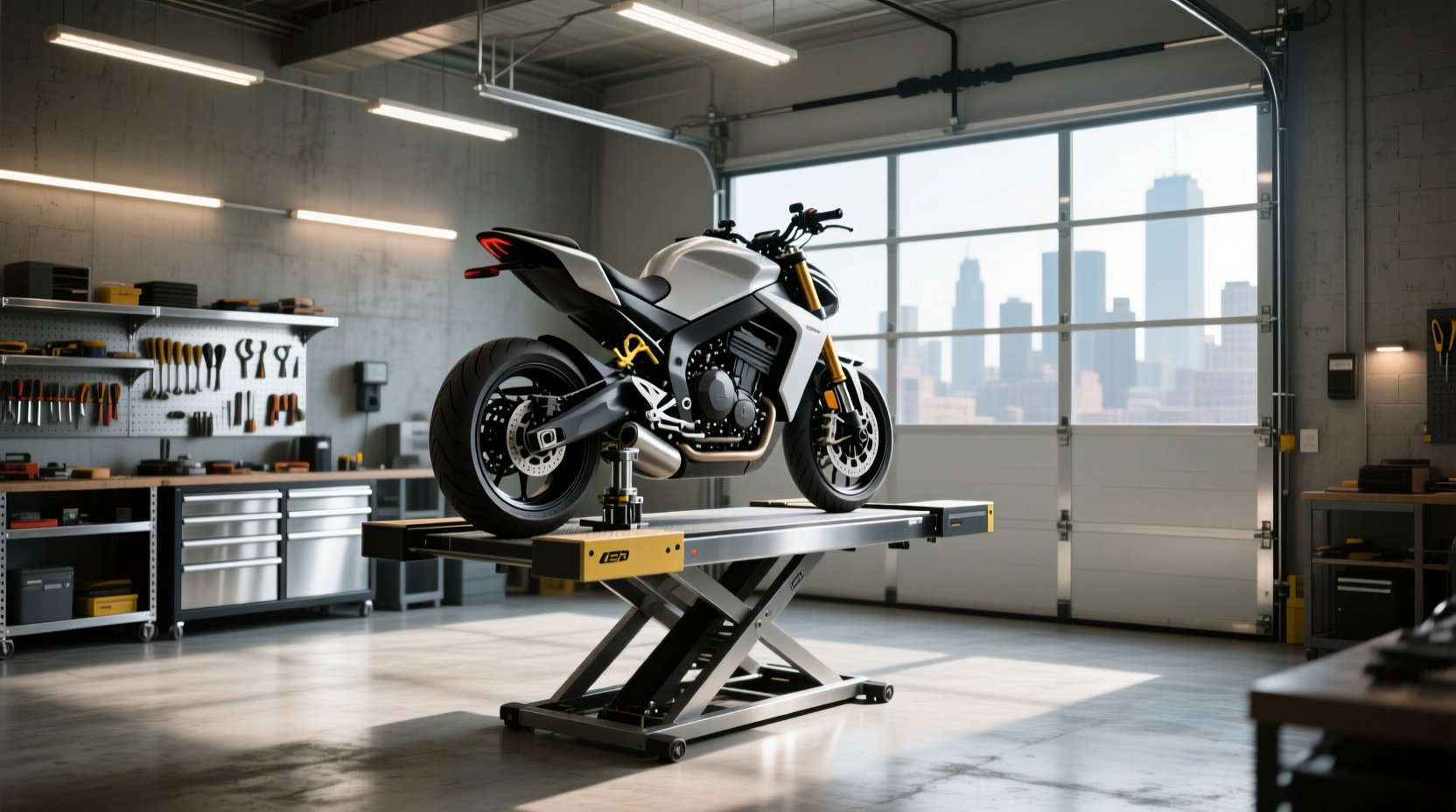
When searching for a reliable way to service heavy motorcycles safely and efficiently, many riders and mechanics turn to an electric motorcycle lift table. These hydraulic scissor lifts offer hands-free operation, consistent lifting power, and improved ergonomics compared to manual jacks. With standard load capacities like 700 kg (about 1,543 lbs), they support most touring bikes, choppers, trikes, and even some lightweight ATVs. Choosing the right model involves evaluating lifting height, platform size, power source, safety mechanisms, and workspace compatibility—factors that directly impact usability and long-term value in both home garages and professional workshops.
Why Use an Electric Motorcycle Lift Table?
🔧 Using an electric-powered lift simplifies maintenance tasks such as oil changes, tire removal, chain adjustments, and undercarriage inspections. Unlike floor jacks or paddock stands, which require precise positioning and don’t elevate the bike fully, a scissor-style lift raises the entire motorcycle off the ground, allowing full access to wheels and chassis. This is especially useful for larger machines that are difficult to stabilize manually.
The shift from pneumatic or manual systems to electric hydraulic motorcycle lift tables has been driven by consistency and ease of use. An electric pump delivers steady pressure without relying on compressed air, making it ideal for facilities without robust air supply infrastructure. Additionally, operators can control lift speed and stopping points more precisely, reducing the risk of sudden drops or over-pressurization.
Key Features to Evaluate
Before investing in a lift, consider these core specifications that determine performance and suitability:
Lifting Capacity (e.g., 700 kg / 1,543 lb)
✅ Most commercial-grade electric motorcycle lifts support between 450 kg and 750 kg. A 700 kg capacity covers nearly all production motorcycles, including Harley-Davidsons, BMW GS models, Gold Wings, and large adventure bikes. However, if you work with trikes, sidecars, or modified cruisers, verify actual vehicle weight before purchase. Exceeding rated capacity compromises structural integrity and voids warranties.
Always check dry weight vs. wet weight—the latter includes fluids, fuel, and accessories, often adding 10–15% more mass. For example, a bike listed at 380 kg may weigh over 430 kg when fully fueled. When in doubt, choose a lift with at least 20% higher capacity than your heaviest expected load.
Maximum Lifting Height (Typically 1,100–1,300 mm)
📏 Elevated clearance determines how much room you have underneath the bike. Standard max heights range from 1,100 mm to 1,300 mm (approximately 43–51 inches). At 1,200 mm, most users can stand comfortably beneath the motorcycle for exhaust, suspension, or brake work.
Keep in mind that taller lifts require greater ceiling clearance. In residential garages with low overhead space, ensure there’s enough vertical room—not just for the lifted bike but also for any added components like fairings or luggage racks. Measure total vehicle height at maximum lift and compare it to your garage’s interior dimensions.
Platform Dimensions and Wheel Chocks
📐 Platform length and width affect stability and compatibility. Typical platforms measure around 220 cm long and 70–75 cm wide. Narrower designs suit sportbikes and dirt bikes, while wider bases accommodate wide-tire cruisers or dual-sport models with footpegs extended outward.
Integrated wheel chocks prevent forward/backward movement during elevation. Some models feature adjustable or pneumatic clamps that secure the front wheel automatically. Manual chocks require tightening via hand knobs but are generally more durable and less prone to air system failures. Consider whether your primary use case benefits from automation or prefers mechanical simplicity.
Power Source: Electric vs. Pneumatic vs. Manual
⚡ While this guide focuses on electric motorcycle lift tables, understanding alternatives helps clarify advantages:
- Electric Hydraulic: Powered by a 12V or 230V motor-driven pump; offers smooth, quiet operation. Ideal for shops without air compressors.
- Pneumatic (Air-Powered): Requires compressed air to drive the hydraulic system. Faster cycle times but dependent on external air supply.
- Manual Hydraulic: Operated via hand pump; lower cost but physically demanding for repeated use.
For consistent workflow and reduced labor strain, electric models are preferred in professional environments. Home users benefit from plug-and-play convenience, though voltage requirements (110V vs. 230V) must match local electrical standards.
Safety Mechanisms You Shouldn’t Skip
❗ No lift should be operated without built-in safety redundancies. Look for these critical features:
- Mechanical Safety Locks: Physical pins or locking bars engage automatically at multiple height intervals. They prevent uncontrolled descent if hydraulic pressure fails.
- Overload Valves: Prevent system damage by releasing excess pressure when limits are exceeded.
- Non-Slip Surfaces: Textured steel or rubberized coatings keep tires from shifting during ascent/descent.
- Emergency Stop Button: Instantly cuts power and holds position during unexpected events.
Certifications like CE marking indicate compliance with European safety directives. While not legally binding outside EU regions, they reflect adherence to design and testing benchmarks. Always inspect weld quality, frame thickness, and pivot joint construction—especially for budget models sourced internationally.
Workspace Integration: Garage Fit & Mobility
📍 Installing a lift requires planning beyond specs. Consider:
Drive-On Clearance and Ramp Design
Most electric scissor lifts have a low starting height (around 160–200 mm) to allow easy roll-on access. Integrated ramps reduce tripping hazards and improve alignment. Ensure the approach angle isn’t too steep for smaller-wheeled scooters or low-clearance bikes.
If floor space is limited, look for foldable ramp options or removable extensions. Some units include caster wheels for repositioning, though permanent installations often anchor the lift to concrete for stability.
Floor Requirements and Anchoring
🛠️ Scissor lifts concentrate significant force through small base contact points. They should only be used on level, reinforced concrete floors (minimum 15 cm thick). Uneven or cracked surfaces increase tipping risks and uneven wear on hydraulic cylinders.
Anchoring kits (included or optional) bolt the lift to the floor, preventing lateral movement during loading or servicing. In rented spaces or temporary setups, evaluate whether anchoring is permitted—and if not, whether mobile alternatives exist without sacrificing safety.
Common Misconceptions About Electric Lifts
❌ Despite growing popularity, several myths persist about electric motorcycle lift tables:
- Myth: “Electric means faster lifting.”
Reality: Speed depends more on pump flow rate than power type. Many electric models rise in 20–30 seconds—similar to pneumatic versions. - Myth: “Higher capacity always means better.”
Reality: Oversized lifts take up unnecessary space and cost more. Match capacity to real-world usage. - Myth: “All 700 kg lifts are interchangeable.”
Reality: Two lifts rated for 700 kg may differ in build quality, materials, warranty, and safety features. Always compare technical details, not just headline numbers.
Buying Considerations: New vs. Used, Brand vs. Generic
🛒 Purchasing decisions often come down to budget versus longevity. Here’s how to assess value:
New Lifts from Reputable Suppliers
🏭 Brands like GHM, KAWORK, and RP-TOOLS offer CE-certified electric motorcycle lifts with documented support networks and spare parts availability. Prices typically range from €1,500 to €2,100 for 700 kg models. Benefits include:
- Warranty coverage (usually 12 months on parts)
- Technical documentation in multiple languages
- Compliance with regional safety regulations
- Easier troubleshooting and repair guidance
Used or Generic Models (e.g., from Alibaba or eBay)
🌐 Marketplaces list numerous low-cost options, sometimes under $1,000. While tempting, these carry risks:
- Limited or no customer service
- Absence of third-party safety certification
- Potential need for custom adapters or voltage converters
- Long shipping times and import fees
If considering a generic model, request detailed photos of weld joints, hydraulic lines, and control boxes. Ask for test videos showing full lift cycles. Verify return policies and whether replacement components (like seals or motors) are available locally.
Maintenance Tips for Longevity
🧼 To extend the life of your electric motorcycle lift table:
- Inspect monthly: Check for fluid leaks, loose bolts, worn hoses, and damaged wiring.
- Lubricate pivot points: Apply grease every 3–6 months to hinges and linkage arms.
- Test safety locks weekly: Engage mechanical stops at various heights to confirm proper function.
- Use clean hydraulic oil: Replace fluid per manufacturer schedule (typically every 2–3 years) to prevent contamination.
- Avoid side loading: Never push or pull the bike laterally while elevated—this stresses the frame and scissor mechanism.
Store the lift with the platform lowered to relieve pressure on seals and cylinders. In humid climates, apply rust inhibitor to exposed metal surfaces.
Alternatives for Limited Spaces or Budgets
🔄 If a full-size electric lift isn't feasible, consider these substitutes:
- Central Stand Systems: Mechanical lifts that raise the bike from its center stand point. Compact and affordable, but limited lift height.
- Rear Wheel Lifts: Elevate only the rear wheel for chain or tire service. Less stable for full repairs.
- Portable Hydraulic Jacks: Mobile and inexpensive, but lack integrated safety features and require additional stands.
Each alternative sacrifices either accessibility, safety, or convenience. Assess frequency of use—if you perform major maintenance more than four times a year, a dedicated lift usually pays for itself in time saved and injury prevention.
Regional Differences and Voltage Compatibility
🌍 Electrical standards vary globally. In North America, most lifts operate on 110–120V single-phase power. In Europe, Asia, and Australia, 220–240V is standard. Confirm input voltage before ordering, especially when importing.
Voltage mismatch can damage the pump motor or create fire hazards. Transformers may help, but they must handle the surge current during startup (often 3–5x running amperage). Consult an electrician if unsure.
Additionally, plug types and circuit requirements differ. Some high-capacity lifts require dedicated 15–20A circuits to avoid tripping breakers during operation.
Final Decision Checklist
📋 Before purchasing an electric motorcycle lift table, ask yourself:
| Factor | Checklist Item | Yes/No |
|---|---|---|
| Weight Capacity | Does it exceed my heaviest bike's wet weight by 20%? | |
| Lift Height | Is max height sufficient for underbody access? | |
| Floor Space | Will it fit with safe clearance around all sides? | |
| Electrical Supply | Do I have correct voltage and circuit capacity? | |
| Safety Features | Does it include mechanical locks and overload protection? | |
| Warranty & Support | Is service available locally or online? |
Answering “yes” to all ensures a safer, more effective investment.
Frequently Asked Questions
Below are common questions users have after researching electric motorcycle lift tables:
- Can I use an electric motorcycle lift table for ATVs?
Some 700 kg lifts accommodate light ATVs or side-by-sides, provided the wheelbase fits the platform and weight stays within limits. However, ATV-specific lifts often have wider decks and longer ramps designed for staggered tire placement. - How do I know if my garage floor can support a lift?
Assess concrete thickness (minimum 15 cm), absence of cracks, and levelness. If uncertain, consult a structural engineer. Avoid installing on epoxy-coated or floating slabs without verification. - Are electric lifts louder than pneumatic ones?
Electric pumps produce moderate humming during operation—similar to a power tool. Pneumatic systems are quieter during lift but noisy when the compressor runs. Overall noise levels are comparable in typical workshop settings. - What happens if there's a power outage while the bike is lifted?
Mechanical safety locks should remain engaged. Never rely solely on hydraulic pressure. Always confirm locks are active before working under the bike. - Can I modify a lift to increase its capacity?
No. Altering structural components or using aftermarket pumps voids safety certifications and creates serious hazard risks. Always use equipment within factory-rated specifications.




 浙公网安备
33010002000092号
 浙B2-20120091-4