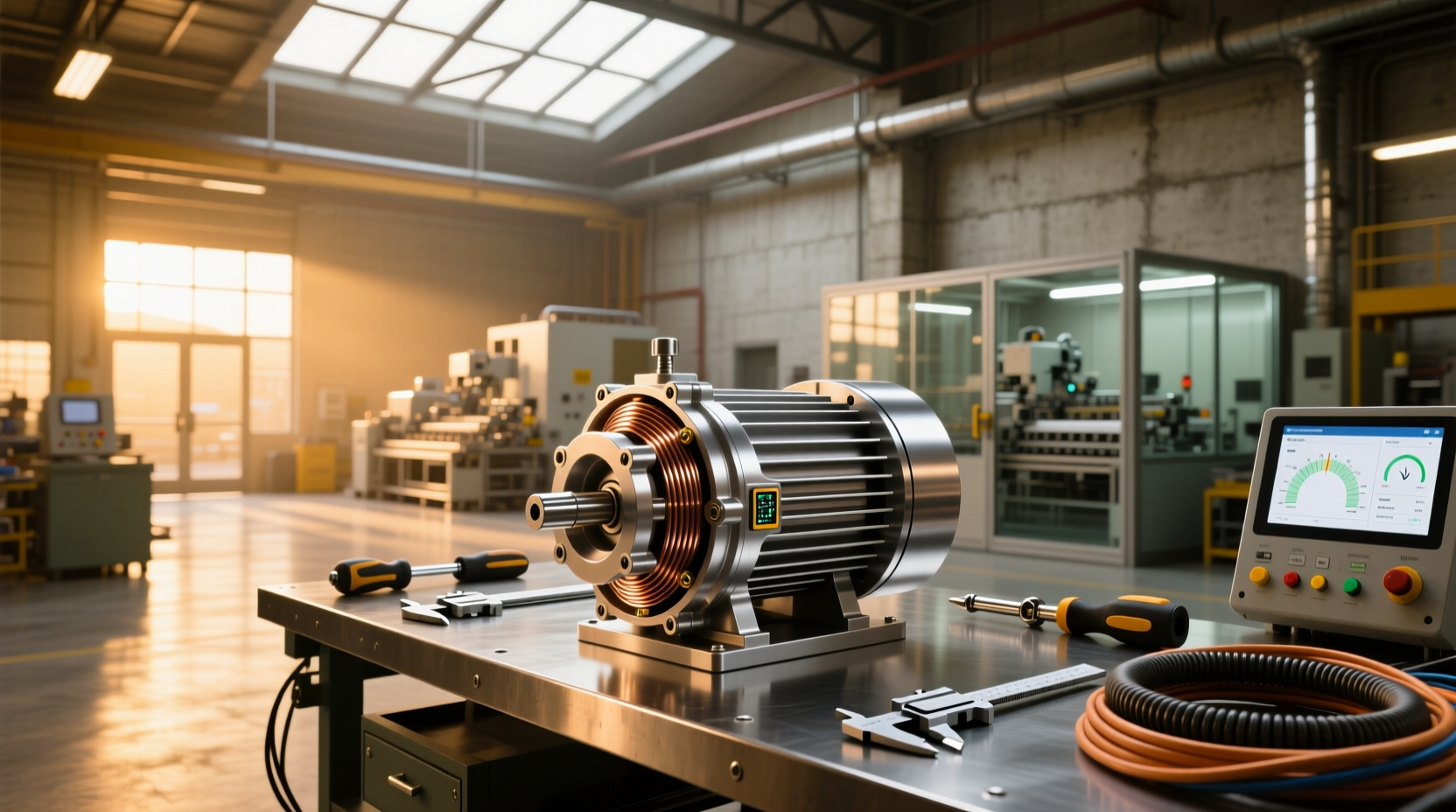
When searching for an electric piston motor, many users quickly discover that the term often refers to a linear actuator or electric linear cylinder—not a traditional combustion-style piston. This confusion is common in DIY automation, robotics, and industrial upgrades where people seek compact, precise motion control without hydraulics or pneumatics ⚙️. The real question isn’t just “what is an electric piston motor?” but rather: how do you select the right electric linear actuator for force, stroke, speed, and durability needs? ✅ Understanding this distinction—and knowing key specs like load capacity (N or lbs), stroke length (mm/in), voltage (12V/24V DC), and duty cycle—can prevent costly mismatches in home automation, medical devices, or factory equipment.
What Is an Electric Piston Motor? Clarifying the Terminology
The phrase electric piston motor doesn’t describe a standard motor type like a brushless DC or stepper motor. Instead, it's commonly used to refer to a linear actuator—a device that converts rotational motion from an electric motor into straight-line push or pull movement via a rod (the 'piston'). These are also known as electric cylinders, electromechanical actuators, or mini linear actuators when small in size 🔧.
Unlike hydraulic or pneumatic pistons that use fluid pressure, electric piston systems rely on a motor-driven lead screw or ball screw mechanism inside a sealed housing. When powered, the motor turns the screw, which moves a nut attached to the output rod, creating linear motion. This design offers precise position control, quiet operation, and no need for air compressors or hydraulic pumps 🌐.
Because of their compact size and ease of integration, these units are widely used in:
- Automated furniture (e.g., lift tables, adjustable beds)
- Robotics arms and animatronics
- Window openers and smart ventilation systems
- Industrial valves, clamps, and locking mechanisms
- Medical equipment (e.g., hospital beds, patient lifts)
- Diy Arduino or Raspberry Pi projects requiring motion
Key Specifications to Evaluate Before Buying
Selecting the right electric piston-style actuator requires understanding several technical parameters. Misjudging any one can result in premature failure, insufficient performance, or safety risks ❗.
1. Load Capacity (Static & Dynamic Force)
This is the maximum weight the actuator can move (dynamic) or hold (static), usually measured in newtons (N) or pounds-force (lbf). For example, a 200N actuator can lift about 45 lbs. Always include a safety margin—choose a unit rated for at least 1.5x your expected load to account for friction, misalignment, or shock forces.
📌 Note: Exceeding dynamic load limits strains the motor and gear train; exceeding static load may cause back-driving or mechanical damage.
2. Stroke Length
Stroke refers to how far the rod extends from the body, typically ranging from 10 mm (0.4") to over 800 mm (31"). Common mini actuators offer strokes of 2", 4", 6", or 12". Longer strokes increase overall retracted length, so ensure there’s enough space in your setup. Some multi-stage telescopic models extend further while staying compact when retracted.
3. Speed (mm/sec or in/sec)
Speed depends on motor RPM and screw pitch. Typical speeds range from 2 mm/sec (very slow, high-force) to over 150 mm/sec (fast, lower force). High-speed models (e.g., 6"/sec) are great for quick movements but generate more heat and wear. If precision positioning is needed, slower actuators with micro-stepping controllers are better.
4. Voltage & Power Supply Compatibility
Most small electric piston motors run on 12V or 24V DC, making them compatible with batteries or standard power supplies. Confirm your available voltage source matches the actuator rating. Using a higher voltage than specified can burn out the motor; lower voltage reduces torque and speed.
5. Duty Cycle
Duty cycle defines how long the actuator can operate before needing a cooldown period. It’s expressed as a percentage (e.g., 20% = 1 minute on, 4 minutes off). Continuous-duty models (100%) can run indefinitely but are larger and more expensive. Overheating due to excessive cycling shortens lifespan.
6. Built-in Limit Switches & Position Feedback
Premium models include internal limit switches that stop the motor at full extension and retraction, preventing damage. Some offer potentiometers or Hall effect sensors for real-time position feedback—critical for closed-loop control systems. Without these, external sensors or manual calibration are required.
7. IP Rating (Ingress Protection)
If used outdoors or in wet/dusty environments, check the IP rating. IP65 means dust-tight and protected against water jets; IP67 adds temporary submersion resistance. Non-sealed actuators may fail prematurely in harsh conditions.
| Spec | Typical Range | What to Watch For |
|---|---|---|
| Force | 5–5000 N | Match to actual load + safety margin |
| Stroke | 10–800+ mm | Check retracted vs extended space |
| Speed | 2–150 mm/s | Faster ≠ better; affects heat and control |
| Voltage | 12V or 24V DC | Match power supply exactly |
| Duty Cycle | 10%–100% | Avoid continuous use on low-duty models |
| IP Rating | None to IP67 | Required for outdoor/moisture exposure |
Common Applications and Use Cases
Understanding where electric piston motors excel helps determine if they’re suitable for your project.
Home Automation & Furniture
Electric linear actuators quietly raise desks, open windows, or adjust TV mounts. A 12V model with moderate force (150–300N) and 6"–12" stroke works well here. Look for smooth, quiet operation and built-in limit switches to prevent jams.
Industrial Machinery
In factories, actuators automate clamping, sorting, or lifting tasks. Here, durability, repeatability, and feedback systems matter most. Models with reinforced housings, stainless steel rods, and encoder options are preferred. Duty cycles should support continuous operation.
Robotics and Animatronics
Hobbyists building robots or special effects props often use mini linear actuators. Compact size (e.g., 30mm stroke), lightweight design, and PWM speed control compatibility are key. Waterproofing may be needed for outdoor displays.
Medical and Assistive Devices
Adjustable beds, patient lifts, and mobility aids require reliable, smooth-moving actuators. Safety certifications (like ISO 13485) and low-noise operation are essential. Self-locking designs prevent unintended movement during power loss.
Automotive & RV Modifications
Some custom vehicles use electric actuators for hidden compartments, pop-up roofs, or automatic steps. 12V compatibility with car batteries makes integration easier. Ensure wiring includes fuses and relays to protect the vehicle’s electrical system.
Alternatives to Electric Piston Motors
While electric linear actuators solve many motion challenges, alternatives exist depending on application needs.
Pneumatic Cylinders
Use compressed air to generate motion. Pros: very fast response, high force in small package. Cons: require air compressor, noisy, less precise, harder to control mid-stroke. Best for repetitive industrial tasks like pressing or stamping.
Hydraulic Cylinders
Offer extreme force (thousands of pounds) and stability under heavy loads. Used in construction equipment and industrial presses. Downsides: messy (oil leaks), complex maintenance, environmental concerns. Not practical for small-scale or indoor use.
Manual or Spring-Loaded Mechanisms
For simple, infrequent adjustments, levers, cams, or gas springs may suffice. No power needed, but lack automation and consistency.
Servo Motors with Linkages
A rotary servo combined with a crank or four-bar linkage can simulate linear motion. Offers fine control and feedback but requires mechanical design expertise. Suitable for lightweight, high-precision robotic joints.
How to Size an Electric Actuator Properly
Mis-sizing leads to failure. Follow these steps:
- Define the Motion Task: Is it pushing, pulling, lifting, or holding? What direction and angle?
- Calculate Required Force: Include gravity, friction, and acceleration. Use free-body diagrams if necessary.
- Determine Stroke Needed: Measure distance between start and end points.
- Set Speed Requirements: How fast must the movement complete?
- Assess Environment: Indoor/outdoor? Moisture? Dust? Temperature extremes?
- Power Availability: Battery, AC adapter, vehicle system?
- Control Needs: On/off only? Variable speed? Position sensing?
Once gathered, match these requirements to product specs. Avoid overspending on features you don’t need—but never compromise on load capacity or environmental protection.
Where to Buy Electric Piston Motors
These components are available globally through industrial suppliers and online marketplaces. Reputable sources include:
- Alibaba.com: Wide variety of OEM and ODM options, especially for bulk purchases. Useful for custom stroke lengths, voltages, or IP ratings 1.
- SMC USA: Known for high-quality pneumatic and electric automation components, including miniature actuators 2.
- Rose + Krieger: European supplier offering modular linear technology with precision engineering 3.
- McMaster-Carr: U.S.-based distributor with same-day shipping and detailed filtering by technical specs 4.
For hobbyists, AliExpress and eBay offer affordable mini actuators, though quality varies. Always check seller ratings and reviews, especially for critical applications.
Common Misconceptions About Electric Piston Motors
Several myths persist among first-time buyers:
- Myth: They’re the same as hydraulic pistons. Reality: No fluid involved. Operation is cleaner and quieter but generally lower peak force.
- Myth: Any 12V actuator works with a car battery. Reality: Voltage spikes and surges in automotive systems can damage electronics. Use regulated power or surge protectors.
- Myth: More speed is always better. Reality: High speed reduces effective force and increases wear. Match speed to task.
- Myth: All actuators can be used vertically. Reality: Orientation affects load distribution and lubrication. Check manufacturer guidelines.
Troubleshooting Common Issues
Even well-chosen actuators can fail prematurely if misused.
No Movement or Weak Output
- Check power supply voltage and connections.
- Verify no physical obstruction is blocking the rod.
- Ensure the load isn’t exceeding specifications.
Overheating
- Operating beyond duty cycle.
- Excessive load or frequent cycling.
- Lack of ventilation in enclosed spaces.
Noisy Operation
- Worn gears or lead screw.
- Misalignment causing binding.
- Low lubrication (some models require periodic servicing).
Inaccurate Positioning
- Lack of feedback sensor.
- Backlash in the screw mechanism.
- Flex in mounting structure.
Regular inspection and proper installation go a long way toward reliability.
Final Considerations Before Purchase
Before buying an electric piston motor (i.e., linear actuator), ask:
- ✅ Is the force rating sufficient with a safety margin?
- ✅ Does the stroke fit within my space constraints?
- ✅ Is the speed appropriate for the task?
- ✅ Will it operate in the intended environment (temperature, moisture)?
- ✅ Do I need position feedback or limit switches?
- ✅ Can my power source deliver stable voltage?
- ✅ Is the mounting style compatible (clevis, threaded, flange)?
Ignoring even one factor can lead to poor performance. Take measurements, calculate loads, and consult datasheets carefully.
Frequently Asked Questions
Q: What is an electric piston called in technical terms?
A: It’s typically referred to as an electric linear actuator or electromechanical cylinder. The moving rod mimics a piston, but motion is generated by a motor-driven screw mechanism.
Q: How do I size an electric actuator for my project?
A: Determine required force, stroke length, speed, duty cycle, and environmental conditions. Choose a model that meets or exceeds these with a safety margin, especially for load and temperature.
Q: What’s the alternative to a hydraulic cylinder?
A: Electric linear actuators are the most common replacement, offering clean, precise, and programmable motion without hydraulic fluid or pumps.
Q: What are the disadvantages of linear actuators?
A: Limited peak force compared to hydraulics, potential overheating under continuous load, and higher initial cost than basic mechanical solutions.
Q: Can I use an electric piston motor with Arduino?
A: Yes, many mini linear actuators work with Arduino using motor driver shields (like L298N). Add limit switches or feedback sensors for safer control.




 浙公网安备
33010002000092号
 浙B2-20120091-4