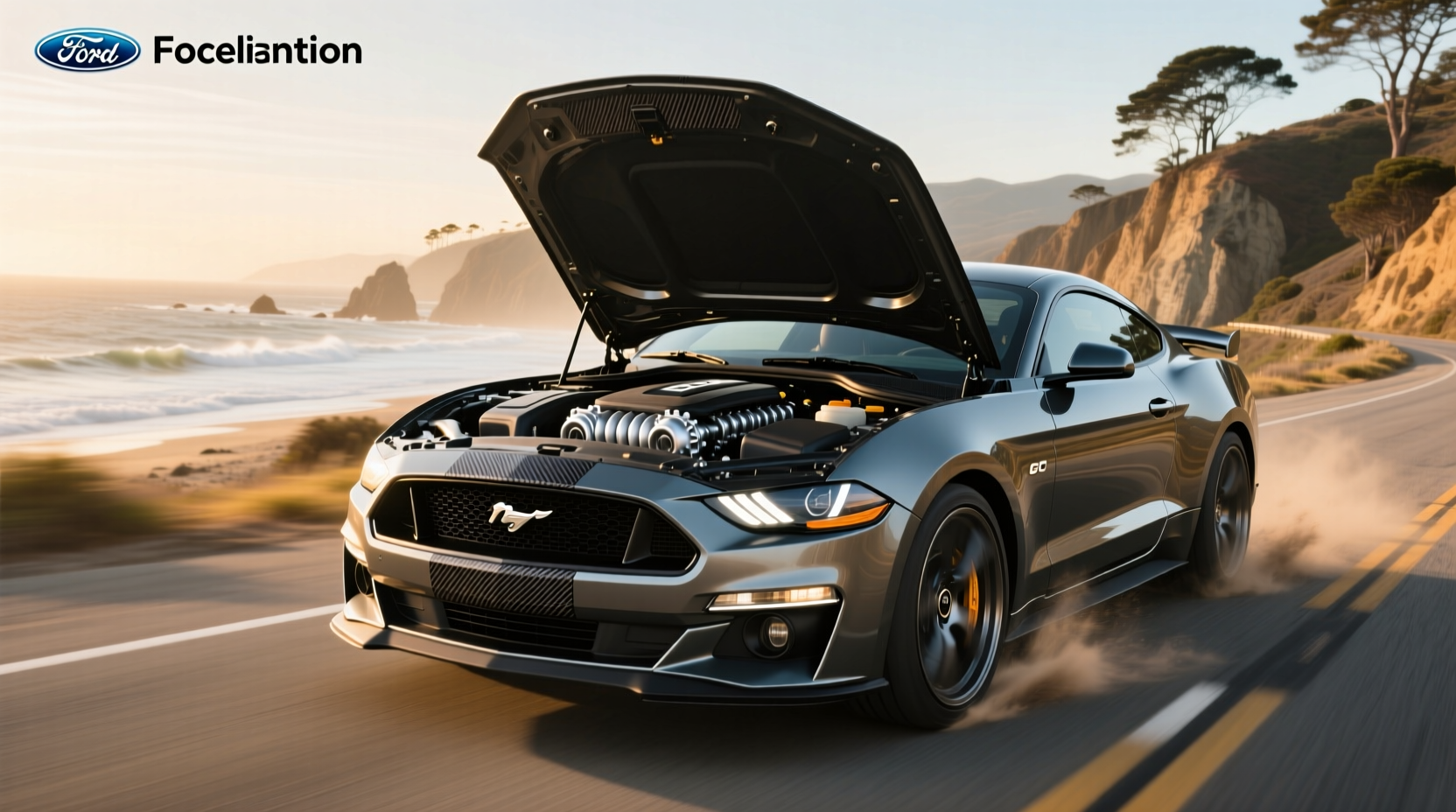
The Ford EcoBoost engine in the Mustang has redefined what a four-cylinder performance car can be. Since its debut in the 2015 model year, the 2.3L turbocharged inline-4 EcoBoost variant of the iconic Ford Mustang has offered a compelling alternative to V8 power—balancing strong acceleration, improved fuel efficiency, and everyday drivability1. For buyers searching for a high-performance yet practical sports car, understanding how this engine performs under real-world conditions is essential. This guide dives deep into the technology behind the EcoBoost Mustang, compares it with V8 models, evaluates long-term reliability concerns, and answers frequently asked questions from current and prospective owners.
Understanding the Ford EcoBoost Engine Technology
Ford's EcoBoost technology combines three key innovations: turbocharging, direct fuel injection, and twin-independent variable camshaft timing (Ti-VCT)2. These features allow smaller-displacement engines to produce power and torque comparable to larger naturally aspirated units while improving fuel economy and reducing emissions.
In the case of the Mustang’s 2.3L EcoBoost engine, these engineering choices result in an output that competes surprisingly well against traditional muscle car expectations. The base configuration delivers between 310 and 330 horsepower depending on the model year and trim level, with peak torque ranging from 350 to 365 lb-ft. This makes it one of the most powerful factory-produced four-cylinder engines available in a production car.
⚙️ Key Components of the 2.3L EcoBoost:
- Twin-scroll turbocharger: Reduces lag and improves throttle response by separating exhaust pulses.
- High-pressure direct fuel injection: Enhances combustion efficiency and cooling within the cylinder.
- Port and direct dual injection (from 2021 onward): Helps reduce carbon buildup on intake valves—a known issue in earlier direct-injection-only engines.
- Aluminum block and heads: Contribute to weight savings without sacrificing durability.
This blend of advanced engineering allows the EcoBoost Mustang to achieve mid-to-high four-second 0–60 mph times while returning up to 32 mpg on the highway—figures that would have been unthinkable for a sporty coupe just two decades ago.
Ford Mustang EcoBoost vs. V8: Performance Comparison
One of the most common questions potential buyers ask is: "Which is better—the 2.3L EcoBoost or the 5.0L Coyote V8?" The answer depends heavily on driving priorities such as daily usability, track use, sound preference, and maintenance tolerance.
| Feature | Mustang 2.3L EcoBoost | Mustang 5.0L V8 (Coyote) |
|---|---|---|
| Horsepower (approx.) | 310–330 hp | 450–480 hp |
| Torque | 350–365 lb-ft | 420–420+ lb-ft |
| 0–60 mph (est.) | 4.8–5.2 seconds | 4.0–4.5 seconds |
| Fuel Economy (combined) | 24–26 mpg | 19–22 mpg |
| Engine Sound | Refined, quieter; enhanced via audio system | Raw, aggressive V8 rumble |
| Maintenance Complexity | Moderate (turbo, intercooler, DI system) | Lower (naturally aspirated, proven design) |
| Starting MSRP (varies by year) | $30,000–$35,000 | $37,000–$42,000+ |
⚡ While the V8 clearly wins in raw power and emotional appeal, the EcoBoost holds its own in real-world acceleration thanks to immediate turbo torque available at low RPMs. It also offers better traction off the line due to more linear power delivery and reduced front-end lift.
However, enthusiasts who value the visceral experience of a large-displacement engine—the growl at idle, the throaty exhaust note under load—often lean toward the V8. Ford even includes an active valve exhaust and simulated engine sound through the speakers in EcoBoost models to compensate, but purists notice the difference.
Model Year Evolution: Changes Across Generations
The 2.3L EcoBoost engine has undergone several refinements since its introduction in the sixth-generation S550 Mustang (2015–2023) and continued into the S650 generation (2024–present). Knowing which years brought meaningful updates helps avoid early adopter pitfalls.
2015–2017 Models: First Generation Refinement
These early versions used a single-port direct-injection system, making them prone to carbon buildup on intake valves over time—especially if short-trip driving dominates usage patterns. Oil consumption was occasionally reported above normal levels in some units, though not widespread enough to prompt a recall.
🔧 Maintenance Tip: Regular induction service (carbon cleaning) every 30,000 miles can help prevent performance degradation.
2018–2020 Updates: Power Increase & Cooling Improvements
Ford increased output to 310 hp (from 305 hp), upgraded the intercooler, and improved thermal management. Transmission tuning for the 10-speed automatic became smoother, enhancing drivability in stop-and-go traffic.
🚗 Real-World Insight: Owners noted better high-speed stability and reduced heat soak during spirited driving compared to earlier models.
2021–2023: Introduction of Dual Injection System
A major upgrade came in 2021 when Ford introduced port + direct fuel injection—a move aimed at mitigating carbon deposit issues. This change significantly improved long-term reliability and reduced the need for frequent cleanings.
✅ Why It Matters: If you're considering a used EcoBoost Mustang, prioritize 2021 and newer models for lower maintenance risk and better longevity.
2024–Present (S650 Platform): New Era, Same Core Engine
The latest Mustang retains the evolved 2.3L EcoBoost engine with minor calibration tweaks. Structural rigidity improvements and updated suspension geometry enhance handling, allowing drivers to exploit the engine’s capabilities more effectively.
🌐 Note: European and Australian markets receive slightly different tuning due to emissions regulations, sometimes resulting in marginally lower power outputs.
Common Concerns and Reliability Analysis
No engine is perfect, and the EcoBoost Mustang has faced scrutiny over perceived reliability issues. Let’s separate myths from verified problems using owner reports, service data, and technical bulletins.
Are EcoBoost Engines Reliable?
Overall, yes—the 2.3L EcoBoost is considered reliable when properly maintained. However, its complexity introduces more failure points than a simple naturally aspirated engine.
📌 Known Issues by Category:
- Turbocharger Failures: Rare before 100,000 miles but can occur due to oil coking if oil changes are delayed. Using full-synthetic oil and changing it every 7,500 miles minimizes risk.
- Intercooler Piping Leaks: Some 2015–2017 models experienced cracked plastic intercooler tubes under boost. Replacement kits were issued via TSB (Technical Service Bulletin).
- Fuel Injectors: Direct injectors operate under high pressure; failures are uncommon but costly to replace. Carbon accumulation affects spray pattern over time.
- PCV System: In humid climates, moisture buildup can lead to sludge formation. Regular inspection recommended.
🔍 Independent surveys like those from Consumer Reports and J.D. Power show the EcoBoost Mustang scoring near or above average for reliability among sports cars, especially in post-2020 models.
Misconceptions About Turbocharged Engines
Many criticisms stem from outdated assumptions about turbos being fragile or expensive to repair. Modern turbochargers are designed to last 150,000+ miles under normal conditions. The key is consistent maintenance—not avoiding turbos altogether.
❗ Myth: "EcoBoost engines burn oil."
Reality: A small amount of oil consumption (<0.5 qt per 1,000 miles) is normal in any turbo engine. Excessive burning usually indicates worn piston rings or PCV issues, not inherent design flaws.
Total Cost of Ownership: Fuel, Insurance, Maintenance
While the EcoBoost Mustang starts cheaper than the V8, total ownership cost should factor in insurance premiums, depreciation, and scheduled servicing.
📊 Estimated 5-Year Ownership Costs (National Average):- Fuel: $3,800 (EcoBoost) vs. $5,200 (V8)
- Insurance: ~$4,500 (both trims, varies by driver)
- Maintenance: $1,600 (EcoBoost) vs. $1,300 (V8)
- Depreciation: Similar rates (~18% loss per year)
🛒 The EcoBoost comes out ahead primarily due to better fuel economy and lower initial purchase price. However, unscheduled repairs—like turbo replacement ($2,500–$4,000)—can erase savings if maintenance is neglected.
Who Should Buy the EcoBoost Mustang?
The ideal buyer profile for the EcoBoost Mustang includes:
- First-time sports car owners seeking manageable power and good visibility.
- Daily commuters wanting fun-to-drive dynamics without excessive fuel costs.
- Track-day enthusiasts on a budget who appreciate strong mid-range torque and lighter front end for better turn-in.
- Urban drivers benefiting from quieter cabin noise and easier parking compared to bulkier V8s.
📍 Conversely, those prioritizing maximum straight-line speed, towing capability, or classic muscle car character may find the V8 more satisfying despite higher running costs.
Performance Upgrades and Tuning Potential
One of the biggest appeals of the EcoBoost platform is its extensive aftermarket support. Even mild modifications yield noticeable gains.
🔧 Popular Modifications:- Handheld tuner (e.g., COBB Accessport): Adds 30–50 hp and improves throttle mapping.
- Downpipe and cat-back exhaust: Reduces backpressure and enhances turbo spool.
- Intercooler upgrade: Critical for sustained performance in hot climates or track use.
- Brace and suspension upgrades: Improve chassis stiffness and cornering precision.
📈 With bolt-on mods, 400+ wheel horsepower is achievable reliably. However, pushing beyond requires internal engine work and proper cooling solutions.
⚠️ Caution: Aggressive tuning without adequate cooling or fuel system upgrades increases risk of detonation and engine damage.
International Variants and Regional Differences
The EcoBoost Mustang is sold globally, but specifications vary:
- Europe: Lower compression ratio and detuned output to meet Euro 6 emissions; manual transmission remains popular.
- Australia/New Zealand: Right-hand drive conversions; some dealers offer localized suspension tuning.
- Asia: Limited availability; often imported privately with gray-market status.
🌐 Buyers importing vehicles should verify compatibility with local emissions standards and ensure software supports regional OBD-II requirements.
Frequently Asked Questions (FAQ)
- Is the Ford 2.3L EcoBoost Mustang faster than the V6?
- Yes. The EcoBoost produces significantly more horsepower and torque than the discontinued 3.7L V6 Mustang, offering quicker acceleration and better responsiveness.
- Does the EcoBoost engine require premium fuel?
- Ford recommends premium (91 octane or higher) for optimal performance and knock prevention, though the engine can run on regular unleaded in emergencies—with reduced power and efficiency.
- How often should I service my EcoBoost Mustang?
- Follow the manufacturer schedule: oil changes every 7,500 miles or 12 months, air filter every 30,000 miles, and coolant flush every 100,000 miles. Add induction service every 30,000–50,000 miles for pre-2021 models.
- Can I tow with the EcoBoost Mustang?
- No. The Mustang is not rated for towing. Its suspension, braking, and transmission systems are optimized for performance driving, not load hauling.
- Why does my EcoBoost make a whistling noise?
- This is typically the turbo spool-up sound, especially under acceleration. It’s normal. However, sudden hissing could indicate a boost leak—have it inspected if accompanied by reduced performance.
In conclusion, the Ford EcoBoost engine in the Mustang represents a smart fusion of modern efficiency and accessible performance. While it doesn’t replace the emotional thrill of a V8, it offers a balanced, capable, and technologically sophisticated driving experience that suits a wide range of drivers. By understanding its strengths, limitations, and maintenance needs, buyers can make informed decisions that align with their lifestyle and performance expectations.
1 2




 浙公网安备
33010002000092号
 浙B2-20120091-4