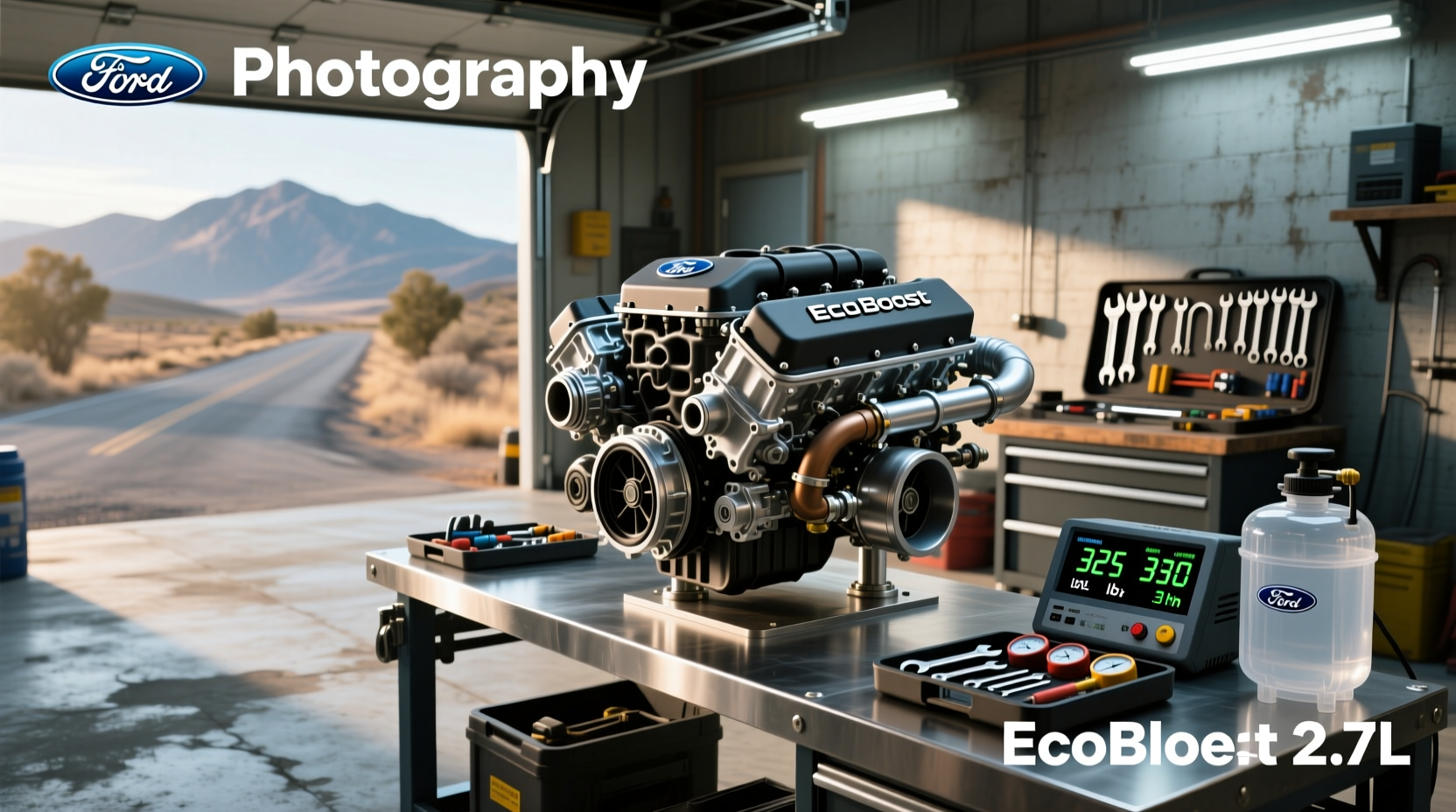
🔍 Looking for reliable, up-to-date Ford 2.7L EcoBoost specs? You're not alone. Thousands of truck and SUV buyers research this compact yet powerful twin-turbo V6 to understand its horsepower, torque, fuel efficiency, and long-term durability—especially in the F-150 and Bronco. This comprehensive guide delivers accurate, model-year-specific details on power output, engine design, known weaknesses like intake valve cracking, oil pan durability, and how later revisions have improved reliability. Whether you’re comparing it to the 3.5L EcoBoost or deciding between trims, this article gives you the facts needed to make an informed decision.
Understanding the Ford 2.7L EcoBoost V6 Engine
The Ford 2.7L EcoBoost V6 is a high-efficiency, twin-turbocharged gasoline engine engineered for strong performance without sacrificing fuel economy. Introduced in 2015 as part of Ford’s broader EcoBoost family, this compact 'Nano' V6 was designed to deliver near-V8 power from a smaller displacement platform. It's used across several Ford models including the F-150 pickup truck, Expedition SUV, and the Bronco. Despite its size, the 2.7L consistently produces over 300 horsepower and up to 415 lb-ft of torque, making it a popular choice among drivers who want both capability and efficiency.
⚙️ Key engineering features include:
- Compacted Graphite Iron (CGI) block: Provides exceptional strength while reducing weight compared to traditional cast iron.
- Twin-scroll turbochargers: Reduce lag and improve throttle response. \li> Dual overhead cams (DOHC) with variable cam timing for optimized airflow.
- Direct and port fuel injection (PDFI): A dual-injection system that enhances combustion efficiency and reduces carbon buildup.
This combination allows the 2.7L EcoBoost to punch well above its weight class, particularly when towing or hauling. However, real-world ownership reveals nuances beyond the brochure numbers—especially regarding long-term reliability and service costs.
Ford 2.7L EcoBoost Horsepower and Torque by Model Year
Power output has evolved across generations. Below is a detailed breakdown of horsepower and torque ratings by model year and application:
| Model Year | Vehicle Application | Horsepower | Torque (lb-ft) | Fuel Type |
|---|---|---|---|---|
| 2015–2017 | F-150 | 325 hp | 375 | Regular Gasoline |
| 2018–2020 | F-150 | 325 hp | 400 | Regular Gasoline |
| 2021–2023 | F-150 / Expedition | 325 hp | 415 | Premium Recommended |
| 2024–Present | F-150 / Bronco | Up to 330 hp | 415 | Premium Fuel for Max Output |
⚡ As shown, torque increased significantly starting in 2018 due to revised turbo tuning and cooling systems. The jump to 415 lb-ft coincided with updated calibration that rewards the use of premium fuel, especially in higher-output variants like the Bronco Badlands or F-150 XLT/Platinum trims. While regular unleaded is acceptable, sustained use of 87-octane can reduce performance and potentially increase knock sensor activity over time.
Fuel Efficiency and Real-World MPG
One major reason buyers choose the 2.7L EcoBoost over larger engines is fuel economy. Official EPA estimates vary slightly by vehicle type and drivetrain:
- F-150 RWD, 10-speed auto: 20 mpg city / 26 mpg highway / 22 mpg combined
- F-150 4x4: 19 mpg city / 24 mpg highway / 21 mpg combined
- Bronco 4x4: 18 mpg city / 22 mpg highway / 20 mpg combined
- Expedition 4x4: 18 mpg city / 24 mpg highway / 20 mpg combined
📊 In real-world driving, many owners report achieving mid-20s on the highway under light loads, especially with careful throttle management. City driving typically stays in the low-20 range unless frequently towing. Compared to the naturally aspirated 5.0L V8 (15–17 mpg combined), the 2.7L offers a clear advantage in daily usability and refueling frequency.
⛽ Tip: Use cruise control on highways and avoid rapid acceleration to maximize fuel savings. Also ensure your tire pressure is maintained at factory specs—underinflated tires can drop efficiency by 1–3 mpg.
Common Issues and Reliability Concerns
Despite strong performance, the 2.7L EcoBoost has faced criticism over certain design choices. Understanding these helps avoid costly surprises down the road.
Intake Valve Cracking (2021–2023 Models)
❗ A significant concern emerged in late 2022 when Ford issued a recall affecting certain 2.7L engines built between October 2020 and February 2023. The issue involved potential cracking of the intake valves, which could lead to loss of compression, misfires, or even internal engine damage if fragments enter the combustion chamber.
🔧 Affected vehicles include:
- F-150 pickups (model years 2021–2023)
- Expedition and Navigator SUVs
- Some Police Interceptor Utility vehicles
✅ If you own one of these models, check your VIN at Ford’s official recall portal1 to see if your engine is impacted. Dealerships perform inspections and replace valves free of charge under the recall program.
Plastic Oil Pans and Leaks
📍 Early versions of the 2.7L (2015–2017) used a plastic lower oil pan, which proved prone to cracking—especially during off-road use or after improper jack placement. While not a widespread failure, multiple forum reports from F-150 and Bronco owners describe leaks developing after minor impacts or routine maintenance.
🛠️ Solution: Later models switched to a reinforced composite or aluminum design. If you’re buying used, inspect underneath for signs of seepage around the pan gasket. Consider replacing with an upgraded steel pan if planning serious trail use.
Carbon Buildup on Intake Valves
Although the 2.7L uses port and direct injection (PDFI), some carbon accumulation still occurs over time, particularly in stop-and-go driving. Unlike port-only engines, the direct injectors spray fuel behind the intake valves, meaning they don’t get cleaned during operation.
🧼 Prevention: Perform induction cleaning every 50,000 miles or sooner if experiencing rough idle or hesitation. Some mechanics recommend walnut blasting for severe cases.
First vs Second Generation: What Changed?
The 2.7L EcoBoost underwent meaningful updates between its first and second generation, primarily focused on durability and thermal management.
First Gen (2015–2017)
- Initial launch in F-150 lineup
- 325 hp, 375 lb-ft torque
- Used plastic oil pan
- No major recalls, but early adopters reported occasional turbo lag and cooling system sensitivity
Second Gen (2018–Present)
- Torque increased to 400+ lb-ft
- Stronger oil pan materials
- Enhanced intercooling and oil cooling systems
- Adoption in Bronco and more Expedition trims
- Introduction of intake valve cracking issue (mostly post-2020)
📌 Verdict: The second-gen engine delivers better performance and refinement, but introduced new risks. The 2024 models appear to have addressed earlier valve problems through metallurgical improvements and stricter quality control.
How Long Does the 2.7L EcoBoost Last?
With proper maintenance, most 2.7L EcoBoost engines should exceed 150,000 miles. Many fleet operators and private owners report reaching 200,000+ miles with only routine servicing.
🔧 Key factors influencing lifespan:
- Oil change intervals: Stick to 5,000–7,500 miles using full-synthetic 5W-30 or specified grade.
- Air filter condition: Dirty filters strain the turbos and reduce efficiency.
- Cooling system health: Monitor coolant levels and replace every 100,000 miles.
- Driving habits: Avoid redline excursions and prolonged idling, especially after hard runs.
⚠️ Note: Turbochargers are generally durable but sensitive to oil degradation. Always let the engine idle for 30–60 seconds before shutdown after heavy load or high-speed driving to allow turbo cool-down.
Comparison: 2.7L vs 3.5L EcoBoost
Many shoppers debate whether to go with the 2.7L or step up to the 3.5L twin-turbo V6. Here's how they compare:
| Feature | 2.7L EcoBoost | 3.5L EcoBoost |
|---|---|---|
| Displacement | 2.7L V6 | 3.5L V6 |
| Horsepower | 325–330 hp | 375–450 hp |
| Torque | 380–415 lb-ft | 470–625 lb-ft |
| Towing Capacity (F-150) | Up to 9,000 lbs | Up to 14,000 lbs |
| Fuel Economy (combined) | ~21 mpg | ~19 mpg |
| Starting Price Impact | $0–$1,000 extra | $2,000+ premium |
🚚 Bottom line: Choose the 2.7L if your towing needs are under 8,000 pounds and fuel economy matters. Opt for the 3.5L if you regularly haul heavy trailers, boats, or fifth wheels. The larger engine also offers more headroom for future upgrades or aftermarket tuning.
Maintenance Tips for Longevity
To keep your 2.7L running smoothly, follow these best practices:
- Use high-quality synthetic oil and change every 7,500 miles (or 5,000 under severe conditions).
- Inspect undercarriage periodically, especially after off-roading, to catch oil pan or skid plate damage early.
- Replace air and cabin filters annually or every 15,000 miles.
- Flush the cooling system every 100,000 miles to prevent corrosion.
- Check for software updates—Ford occasionally releases PCM recalibrations to optimize fuel delivery and boost control.
Is the 2.7L EcoBoost Right for You?
The answer depends on your priorities:
- ✅ Good for: Daily drivers, light to moderate towing, fuel-conscious users, urban commuters, off-road adventurers (with protection).
- ❌ Not ideal for: Heavy-duty towing (>9,000 lbs), frequent trailer hauling, those wanting maximum resale value (3.5L often commands higher prices).
👥 Community consensus from forums like r/f150 and Bronco Nation suggests the 2.7L is a solid all-around engine, praised for responsiveness and efficiency. However, some advise avoiding 2021–2023 models unless the intake valve inspection has been completed.
Frequently Asked Questions
- ❓ How much horsepower does the Ford 2.7L EcoBoost have?
- The Ford 2.7L EcoBoost produces between 315 and 330 horsepower depending on model year and trim. Most F-150 and Bronco models make 325 hp, with newer versions reaching 330 hp when running on premium fuel.
- ❓ Is the 2.7L EcoBoost a V6 engine?
- Yes, the 2.7L EcoBoost is a twin-turbocharged V6 engine. It features a 90-degree V configuration with dual overhead cams and compacted graphite iron construction for strength and reduced weight.
- ❓ What year of the 2.7 EcoBoost should I avoid?
- Models from 2021 to early 2023 may be affected by a recall related to intake valve cracking. Always verify if the vehicle has undergone inspection or repair under Ford’s recall program before purchasing used.
- ❓ How reliable is the Ford 2.7L EcoBoost engine?
- Generally reliable with proper maintenance. Early models had plastic oil pans prone to cracking; later models improved durability but introduced intake valve concerns. With regular care, expect 150,000–200,000 miles of service.
- ❓ Can the 2.7L EcoBoost tow effectively?
- Yes, the 2.7L EcoBoost can tow up to 9,000 pounds when properly equipped. It’s suitable for small campers, utility trailers, and boats, though heavier loads are better handled by the 3.5L EcoBoost.




 浙公网安备
33010002000092号
 浙B2-20120091-4