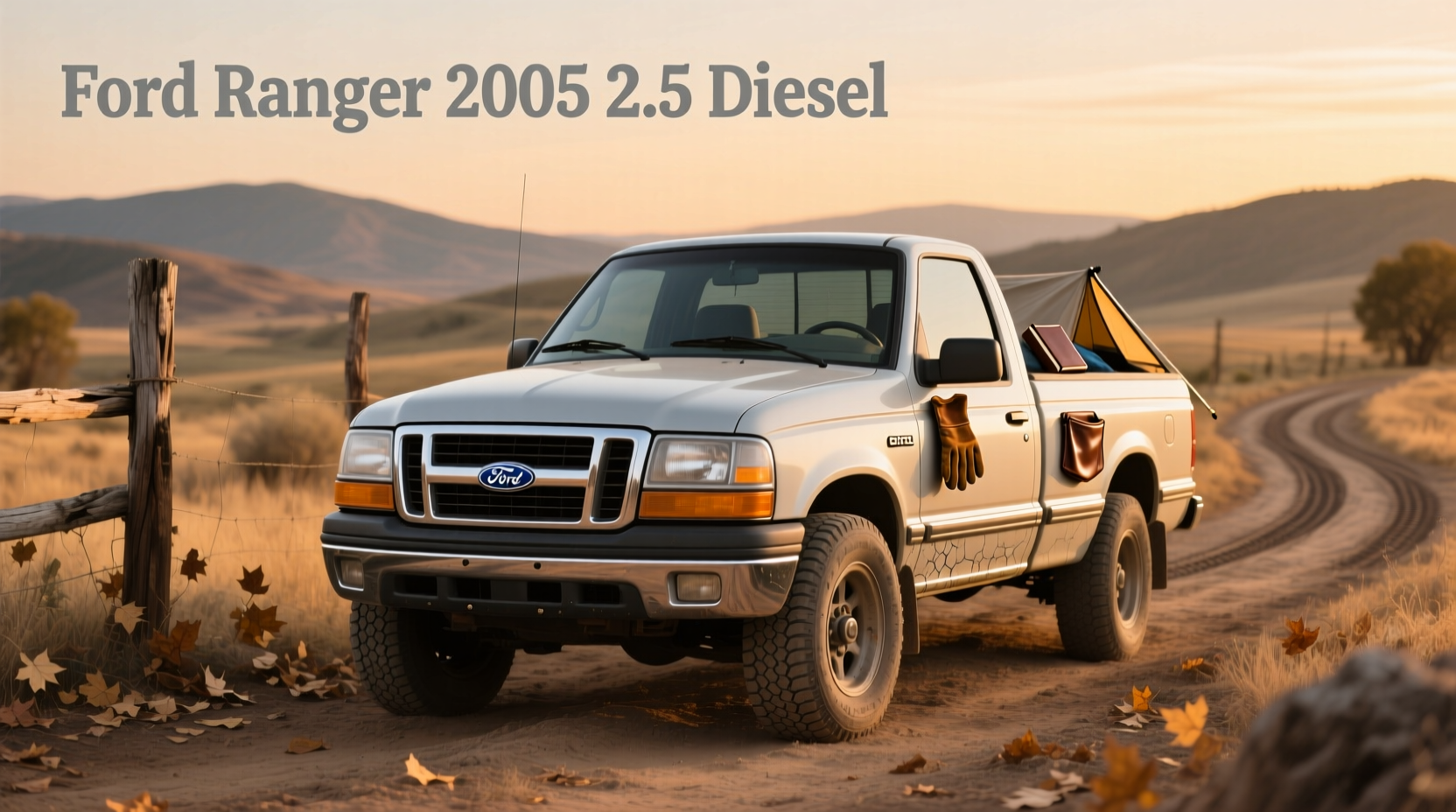
If you're researching the Ford Ranger 2005 2.5 diesel engine, you're likely evaluating its reliability, common mechanical issues, or considering a purchase of a used model. This in-depth guide covers everything owners and potential buyers need to know—from power delivery and fuel efficiency to known faults like limp mode caused by MAP sensor failures 🛠️, maintenance best practices, and how it compares to later Duratorq variants. Understanding these factors is crucial for making an informed decision about ownership, repairs, or upgrades.
Understanding the 2005 Ford Ranger 2.5L Diesel Engine
The 2005 Ford Ranger marked a pivotal update in Ford’s global midsize truck lineup, especially with the introduction of the 2.5-liter turbo-diesel engine equipped with common rail direct injection ✅. This wasn’t just a minor upgrade—it represented a shift toward more efficient, cleaner-burning diesel technology that improved both performance and emissions compliance across international markets 🌍.
This engine, often referred to as part of the Duratorq TDCi family (though early versions differ slightly from later models), replaced older indirect injection diesel units. It delivered approximately 143 horsepower and up to 243 lb-ft of torque, available at low RPMs (~1,800 rpm), which made it well-suited for light commercial use, towing, and off-road driving ⚙️1.
Unlike North American Rangers of the era, this version was primarily sold outside the U.S.—in regions such as Europe, Africa, Australia, and South America—where diesel pickups dominate due to fuel economy and durability demands 📍. The 2.5L I4 diesel became a staple in fleets and personal use alike, praised for its simplicity and ease of repair compared to modern high-pressure systems.
Key Specifications of the 2005 Ford Ranger 2.5 Diesel
Before diving into real-world performance, let's outline the core technical details of this engine and vehicle configuration:
| Specification | Details |
|---|---|
| Engine Type | 2.5L Inline-4 Turbo Diesel (Common Rail) |
| Power Output | 143 hp @ 3,500 rpm |
| Torque | 243 lb-ft @ 1,800 rpm |
| Aspiration | Turbocharged with Intercooler |
| Fuel System | Common Rail Direct Injection |
| Transmission Options | 5-speed manual (standard), some later auto variants |
| Fuel Economy (Combined) | 9.8–10.9 L/100km (~22–24 mpg US) |
| Engine Oil Capacity | 7.0 liters (5W-30 recommended) |
| Drive Options | RWD or 4x4 |
| Body Styles | Single Cab, King Cab, Double Cab |
These specs highlight a balance between usable power and efficiency, particularly important for users relying on the Ranger for daily work or rural transport needs 🚚. While not designed for high-speed autobahn runs, the engine excels in low-end pulling ability and long-term dependability when maintained properly.
Performance and Real-World Driving Experience
Owners frequently describe the 2.5 diesel Ranger as “unexciting but trustworthy.” It won’t win drag races, but it gets the job done reliably. Acceleration from 0–60 mph takes roughly 12–14 seconds depending on load and transmission type, which is acceptable for a utility-focused pickup ⏱️.
On highways, the engine cruises comfortably around 100–110 km/h (60–70 mph), though pushing beyond that requires sustained high RPMs and increases noise levels inside the cabin. However, wind and road noise are generally well-contained for a vehicle of this class, especially in higher trim XLT models ✨.
The five-speed manual gearbox is widely regarded as precise and durable, with short throws and smooth engagement. Paired with the broad torque curve, it allows drivers to stay in optimal power bands without constant shifting—a benefit in hilly terrain or when carrying heavy loads.
Reliability: Is the 2005 Ford Ranger 2.5 Diesel a Good Engine?
Yes—the 2.5L diesel engine in the 2005 Ford Ranger has earned a strong reputation for longevity, particularly when serviced regularly 🔧. Many examples have surpassed 300,000 km (186,000 miles) with only routine maintenance. There are documented cases of Rangers exceeding 400,000 km (250,000 miles) on the original engine 2.
One reason for this resilience lies in its design lineage. The 2.5L can be viewed as a bored-out evolution of the proven 2.3L diesel unit, which had already demonstrated robustness in earlier Ford vehicles. Engineers retained much of the simple mechanical architecture while upgrading the fuel system to common rail for better control and efficiency.
However, reliability isn’t guaranteed—it depends heavily on usage patterns and maintenance history. Vehicles used in stop-and-go city driving without sufficient warm-up periods may suffer from soot buildup in the EGR system or DPF (if fitted in later compliance versions). Regular oil changes using correct-grade lubricants (typically 5W-30 meeting Ford WSS-M2C913-D1 spec) are essential to prevent premature wear.
Common Problems and Known Faults
No engine is immune to issues, and the 2005 2.5 diesel Ranger has several recurring problems reported across forums, service centers, and owner groups 👥. Being aware of these helps avoid costly surprises.
MAP Sensor Failure Leading to Limp Mode
One of the most frequent complaints involves the Manifold Absolute Pressure (MAP) sensor failing and triggering limp mode—a safety feature that limits engine power to prevent damage ❗.
Symptoms include sudden loss of acceleration, reduced top speed (often capped at 60 mph), and illuminated check engine lights. Some owners attempt cleaning the sensor, but replacement is usually required for a permanent fix 🧼.
A YouTube case study from a Mazda BT-50 owner (which shares the same platform and engine) confirmed that replacing the faulty MAP sensor resolved the issue completely 3. Given the shared components, this applies directly to the Ford Ranger 2.5 diesel of the same era.
EGR and Intake System Clogging
The Exhaust Gas Recirculation (EGR) valve and intake manifold are prone to carbon buildup over time, especially in vehicles used mainly for short trips. This restricts airflow, reduces performance, and can cause rough idling or stalling.
Preventive measures include periodic decarbonizing services or manual cleaning during major services. Using high-quality diesel fuel with detergents also helps minimize deposits.
Fuel Injector Issues
While the common rail injectors offer precision, they’re sensitive to poor fuel quality. In regions where ultra-low sulfur diesel (ULSD) isn't consistently available, injector failure rates increase significantly.
Signs of failing injectors include misfires, excessive smoke (especially white or blue), and increased fuel consumption. Reconditioned or OEM replacements are recommended; cheap aftermarket units often fail prematurely.
Timing Belt Maintenance
The 2.5L diesel uses a timing belt rather than a chain, which must be replaced at manufacturer-recommended intervals—typically every 120,000–150,000 km (75,000–93,000 miles). Skipping this service risks catastrophic engine damage if the belt snaps.
It’s advisable to replace the water pump, tensioners, and idler pulleys at the same time since labor costs make doing them separately inefficient.
Maintenance Tips for Longevity
To maximize the life of your 2005 Ford Ranger 2.5 diesel, follow these practical guidelines:
- Change oil every 10,000–15,000 km (6,000–9,000 miles), using Ford-approved 5W-30 synthetic or semi-synthetic oil ✅.
- Inspect air and fuel filters regularly, especially in dusty environments. Replace every 30,000 km under normal conditions.
- Use premium diesel whenever possible to reduce injector fouling and improve combustion efficiency 🛢️.
- Allow the engine to idle for 30–60 seconds after hard driving before shutdown to protect the turbocharger.
- Check glow plugs annually, particularly in colder climates, to ensure reliable cold starts.
- Flush the cooling system every 5 years to prevent corrosion and overheating.
Keeping detailed service records not only ensures consistency but also adds resale value if you decide to sell later 📎.
Aftermarket Upgrades and Modifications
Many owners seek ways to improve performance or comfort. Common modifications include:
- ECU remapping: Can increase power output by 20–30%, but should be done cautiously to avoid stressing drivetrain components.
- Upgraded exhaust systems: Reduce backpressure and enhance engine breathing, leading to slight gains in efficiency and sound.
- All-terrain tires: Improve grip off-road but may slightly reduce fuel economy.
- Snorkels: Beneficial for those driving in wet or dusty conditions, protecting the air intake.
- LED lighting and auxiliary lamps: Improve nighttime visibility and safety.
When modifying, always consider the impact on warranty (if applicable), emissions compliance, and insurance coverage. Some changes may void local inspection approvals.
Buying a Used 2005 Ford Ranger 2.5 Diesel: What to Check
If you're considering purchasing a used model, perform a thorough inspection focusing on these key areas:
- Service History: Look for consistent maintenance records, especially timing belt replacement.
- Test Drive Behavior: Pay attention to unusual noises, hesitation, smoke from the exhaust, or warning lights.
- Underhood Inspection: Check for oil leaks around the valve cover, turbocharger, and rear main seal.
- Check Engine Light Diagnostics: Use an OBD2 scanner to read stored codes—even if the light isn’t on.
- Body and Frame Condition: Inspect for rust, especially in wheel arches and suspension mounting points.
- Gearbox and Clutch Feel: Ensure smooth shifting and no slippage under load.
- Differential and Axle Seals: Listen for whining noises indicating wear.
A pre-purchase inspection by a qualified mechanic familiar with Ford diesels is highly recommended. It could save hundreds in hidden repair costs.
How It Compares to Other Ranger Engines
The 2005 2.5 diesel predates the more advanced Duratorq TDCi engines introduced in later generations. Here’s how it stacks up:
- vs. 2.2L Diesel (2011+): The newer 2.2L offers similar torque but better refinement, quieter operation, and improved emissions. However, some argue the 2.5L is mechanically simpler and easier to repair in remote areas.
- vs. 3.0L V6 Diesel: The larger engine provides significantly more power and towing capacity but comes with higher fuel consumption and complexity. Ford discontinued the 3.0L in some markets due to tightening emissions regulations.
- vs. Gasoline Models: The 2.5 diesel offers far superior fuel economy and low-end torque, making it ideal for hauling and extended highway use.
Your choice depends on priorities: simplicity and ruggedness favor the 2.5L, while comfort and emissions compliance lean toward newer units.
Regional Differences and Availability
The 2005 Ford Ranger 2.5 diesel was never officially sold in the United States, meaning imports require compliance checks for registration 🌐. In contrast, it was widely distributed in:
- Europe (especially UK, Germany, Spain)
- Australia and New Zealand
- South Africa
- Latin America (Argentina, Brazil, Mexico)
Specifications vary slightly by region—for example, European models meet Euro III emissions standards, while others may lack certain emission controls. Always verify VIN-specific details through official Ford documentation or dealership portals.
Frequently Asked Questions (FAQ)
Here are answers to some of the most commonly asked questions about the Ford Ranger 2005 2.5 diesel engine:
- Is the Ford 2.5 diesel engine reliable?
- Yes, the 2.5L diesel engine is known for durability and longevity, especially when maintained with regular oil changes and timely servicing. Many engines exceed 300,000 km with proper care.
- What causes limp mode in a 2005 Ford Ranger 2.5 diesel?
- Limp mode is often triggered by a faulty MAP sensor, EGR malfunction, or fuel system issues. A diagnostic scan will identify the specific fault code for accurate repair.
- How often should the timing belt be changed?
- The timing belt should be replaced every 120,000–150,000 km (75,000–93,000 miles). Include the water pump and tensioners during replacement for cost efficiency.
- Can I use biodiesel or alternative fuels in this engine?
- Short-term use of low-concentration biodiesel blends (B5 or B10) is generally safe, but prolonged use may degrade seals and fuel lines. Pure biodiesel or waste oils are not recommended.
- Does the 2005 Ranger 2.5 diesel have a DPF?
- No, the 2005 model typically does not include a Diesel Particulate Filter (DPF), simplifying maintenance and reducing risk of regeneration-related issues.




 浙公网安备
33010002000092号
 浙B2-20120091-4