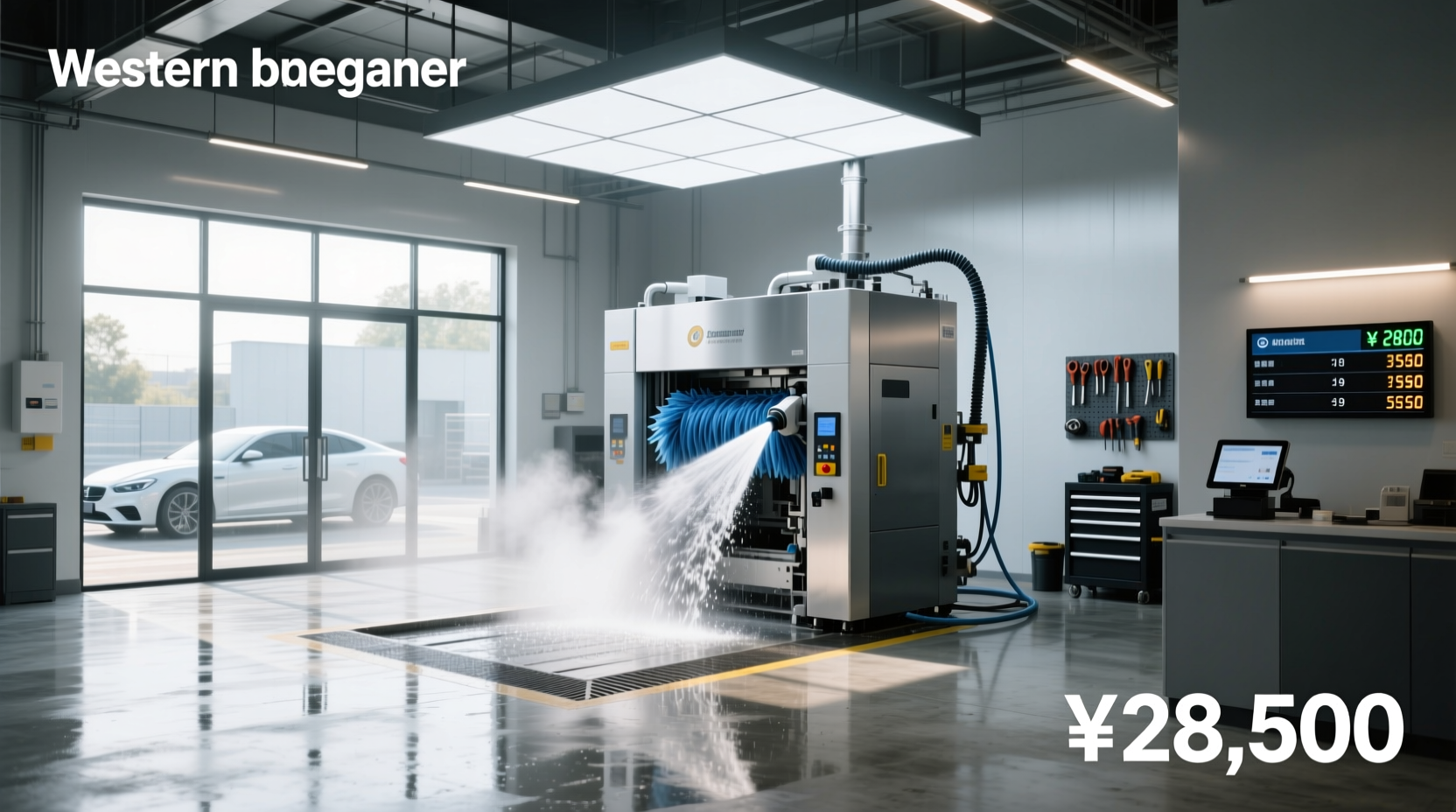
When researching the fully automatic car washing machine price, it’s essential to understand that costs vary significantly based on type, capacity, technology, and region. A basic portable unit may cost under $200, while a full-scale commercial touchless system can exceed $150,000. The average price for a mid-range automatic rollover or tunnel wash system ranges between $30,000 and $80,000, depending on features like brushless cleaning, water recycling, and smart controls ✅.
This guide breaks down everything you need to know about pricing, types, installation requirements, maintenance, and long-term value so you can make an informed decision whether you’re a business owner, fleet operator, or enthusiast looking to automate vehicle cleaning 🧼.
Types of Fully Automatic Car Washing Machines
Not all automatic car wash systems are created equal. Understanding the different types helps clarify why prices differ so widely ⚙️.
1. Portable Automatic Car Washers
These compact units are self-contained, often battery-powered or plug-in electric models designed for home garages or mobile detailing services 🏠.
- Average Price: $150–$600
- Power Source: 12V/24V DC or 110V AC
- Water Supply: Self-suction from bucket or connected hose
- Pressure Range: 50–120 bar (725–1,740 psi)
- Use Case: Small garages, personal use, light-duty cleaning
While not fully automated in the industrial sense, they’re marketed as “automatic” due to built-in pumps and timers. These are often listed under queries like 'portable automatic car wash machine price' and dominate online marketplaces such as Alibaba.com 🔍.
2. Rollover (Wrap-Around) Systems
In this setup, a movable carriage wraps around a stationary vehicle using rotating brushes and high-pressure sprayers 🚗.
- Average Price: $30,000–$70,000
- Space Required: ~15 ft x 20 ft minimum
- Wash Time: 5–8 minutes per car
- Maintenance Needs: Brush replacement, sensor calibration
- Ideal For: Standalone car wash businesses, service stations
Rollover systems offer a balance between automation and affordability. They require foundation work, drainage, and electrical upgrades but don’t need conveyor systems.
3. Tunnel (Conveyor) Wash Systems
These are high-throughput installations where cars move through multiple stages: pre-soak, detergent, scrubbing, rinse, wax, and dry 🌐.
- Average Price: $80,000–$150,000+
- Cars per Hour: 30–120 vehicles
- Stages: 4–7 zones with automated control panels
- Optional Features: Water reclamation, odor control, undercarriage spray
- Best Suited For: High-volume locations, urban areas, franchise operations
Tunnel systems represent the highest level of automation and come with significant infrastructure demands including plumbing, wastewater treatment, and zoning permits.
4. Touchless (Brushless) Car Wash Machines
Using only high-pressure water jets and chemical solutions, these systems avoid physical contact, reducing paint damage risk ✨.
- Average Price: $50,000–$120,000
- Water Pressure: Up to 1,500 psi
- Chemical Dependency: Higher than brush-based systems
- Energy Use: High (requires industrial-grade pumps)
- Customer Perception: Seen as safer for modern clear-coat finishes
Popular in regions with harsh winters or salty roads, touchless systems minimize wear on moving parts but consume more water and energy ⚡.
Key Factors Influencing Fully Automatic Car Washing Machine Price
The final cost isn’t just about the machine—it includes several interrelated components 📊.
🔧 1. Level of Automation
True “fully automatic” means minimal human intervention beyond driving in and out. Systems with AI-driven sensors, license plate recognition, and app-based payments command premium pricing. Semi-automatic versions requiring attendant input are cheaper but less efficient over time.
🏭 2. Build Quality & Materials
Industrial-grade stainless steel frames and UV-resistant polymers increase durability and corrosion resistance, especially important in coastal or humid climates. Lower-cost machines may use mild steel coated with paint, which degrades faster when exposed to detergents and moisture.
💧 3. Water Efficiency & Recycling Capability
Machines equipped with water reclamation systems (filtering and reusing up to 85% of water) add $10,000–$25,000 to initial costs but reduce operating expenses and environmental impact. In drought-prone areas like California or Australia, these features may be legally required or incentivized.
⚡ 4. Power Requirements
High-pressure pumps and drying fans demand three-phase electricity (380V–480V), which may require utility upgrades. If your site lacks this infrastructure, installation costs rise significantly—often by $5,000–$15,000.
📍 5. Geographic Location & Import Duties
Prices vary globally due to shipping, tariffs, and local labor rates. For example:
- India: ₹80,000–₹800,000 (~$1,000–$10,000) for small portable units; larger systems start at ₹1.5 million ($18,000)
- USA: $30,000+ for commercial-grade rollover systems
- Europe: €40,000–€120,000 for CE-certified tunnel washes
Import duties on Chinese-made machines (common on Alibaba.com) range from 5% to 25%, depending on country and trade agreements 🌍.
🧰 6. Installation & Site Preparation
Don’t overlook hidden costs:
- Flooring: Epoxy coating or trench drains: $3,000–$10,000
- Plumbing: Dedicated lines and grease traps: $2,000–$7,000
- Electrical: Panel upgrades and conduit: $4,000–$12,000
- Permits: Zoning, environmental, and fire codes: Varies by municipality
These can add 20%–40% to the base machine price 🚚.
Operational Costs Beyond the Initial Purchase
The upfront fully automatic car washing machine price is only part of the picture. Ongoing expenses affect profitability and sustainability ⏱️.
🔋 Energy Consumption
A typical tunnel wash uses 15–30 kWh per hour of operation. At $0.12/kWh, that’s $1.80–$3.60 per hour. Over a year (operating 10 hours/day), electricity alone could cost $6,500–$13,000.
🧴 Chemicals & Detergents
Monthly spending on foaming agents, tire dressings, waxes, and degreasers ranges from $300–$1,200 depending on volume and brand quality.
🛠️ Maintenance & Repairs
Annual maintenance contracts typically cost 5%–10% of the machine’s value. Expect regular replacements for:
- Seals and hoses
- Sensors and proximity switches
- Brush filaments (in brush systems)
- Pump diaphragms
Downtime reduces revenue—factor in lost income during repairs.
👥 Labor Savings vs. Skill Requirements
While automation reduces staffing needs, technicians must be trained to handle software interfaces, mechanical faults, and safety protocols. Some manufacturers offer remote diagnostics, reducing service delays.
Where to Buy and How to Compare Quotes
Most buyers search terms like 'fully automatic car wash machine price in India' or 'portable automatic car wash machine price', leading them to platforms like Alibaba.com or regional suppliers. Here’s how to evaluate options fairly 🛒.
| Feature | Low-Cost Option | Mid-Range System | Premium Industrial |
|---|---|---|---|
| Base Price | $150–$1,000 | $30,000–$70,000 | $80,000–$150,000+ |
| Automation Level | Semi-auto / manual feed | Full auto with sensors | AI-guided, app-integrated |
| Build Material | Plastic / painted steel | Galvanized or SS frame | Full stainless steel |
| Water Reuse | No | Optional (+$10K) | Standard |
| Warranty | 6–12 months | 1–2 years | 2–3 years |
| Support Availability | Email only | Phone + field tech | Nationwide service network |
When comparing quotes, ensure each includes:
- Detailed scope of supply (what’s included)
- Installation timeline
- Training provisions
- After-sales support response times
- Availability of spare parts
Avoid vendors who quote low base prices but exclude critical components like water filters or control software.
Common Misconceptions About Pricing
Many assume lower-priced machines save money—but hidden issues arise ❗.
Misconception 1: All 'Automatic' Machines Are Equal
Marketing labels like “automatic” or “smart” don’t guarantee performance. Always verify the degree of automation: Does it require someone to trigger each stage? Can it detect vehicle size?
Misconception 2: Cheaper Machines Save Money Long-Term
Inexpensive units often break down faster, lack technical support, and consume more water and power. Total cost of ownership (TCO) may be higher despite lower sticker price.
Misconception 3: One-Size-Fits-All Installation
Site conditions vary. What works in a dry warehouse won’t function in a flood-prone lot. Custom engineering may be needed.
How to Choose the Right Machine for Your Needs
Ask yourself these questions before investing 👥:
- What’s your expected daily volume? Under 20 cars/day? A portable or rollover system suffices. Over 50? Consider a tunnel wash.
- Do you have space and proper drainage? Measure clearance height, width, and floor slope. Most systems need a 1% grade for runoff.
- Is water reuse mandatory locally? Check municipal regulations—some cities fine non-compliant operators.
- Can your electrical system handle the load? Consult an electrician before ordering.
- Are financing or leasing options available? Some suppliers offer payment plans or equipment leasing.
Also consider future scalability. Will you add vacuum stations or interior detailing later?
Frequently Asked Questions (FAQ)
- ❓ What is the average price of a fully automatic car washing machine?
- The average price ranges from $30,000 to $80,000 for commercial systems. Portable home-use models start under $200.
- ❓ How much does it cost to set up a fully automatic car wash?
- Total setup cost—including machine, site prep, utilities, and permits—can range from $50,000 to $200,000 depending on scale and location.
- ❓ Are fully automatic car wash machines worth the investment?
- For high-traffic locations, yes. Break-even typically occurs within 18–36 months if utilization exceeds 60%.
- ❓ Can I install a fully automatic car wash machine myself?
- No. Professional installation is required due to electrical, plumbing, and structural requirements. DIY attempts void warranties and pose safety risks.
- ❓ Where can I find reliable suppliers of automatic car wash machines?
- Reputable suppliers include manufacturers listed on Alibaba.com with verified credentials, trade exhibitions, and industry associations like the International Carwash Association.




 浙公网安备
33010002000092号
 浙B2-20120091-4