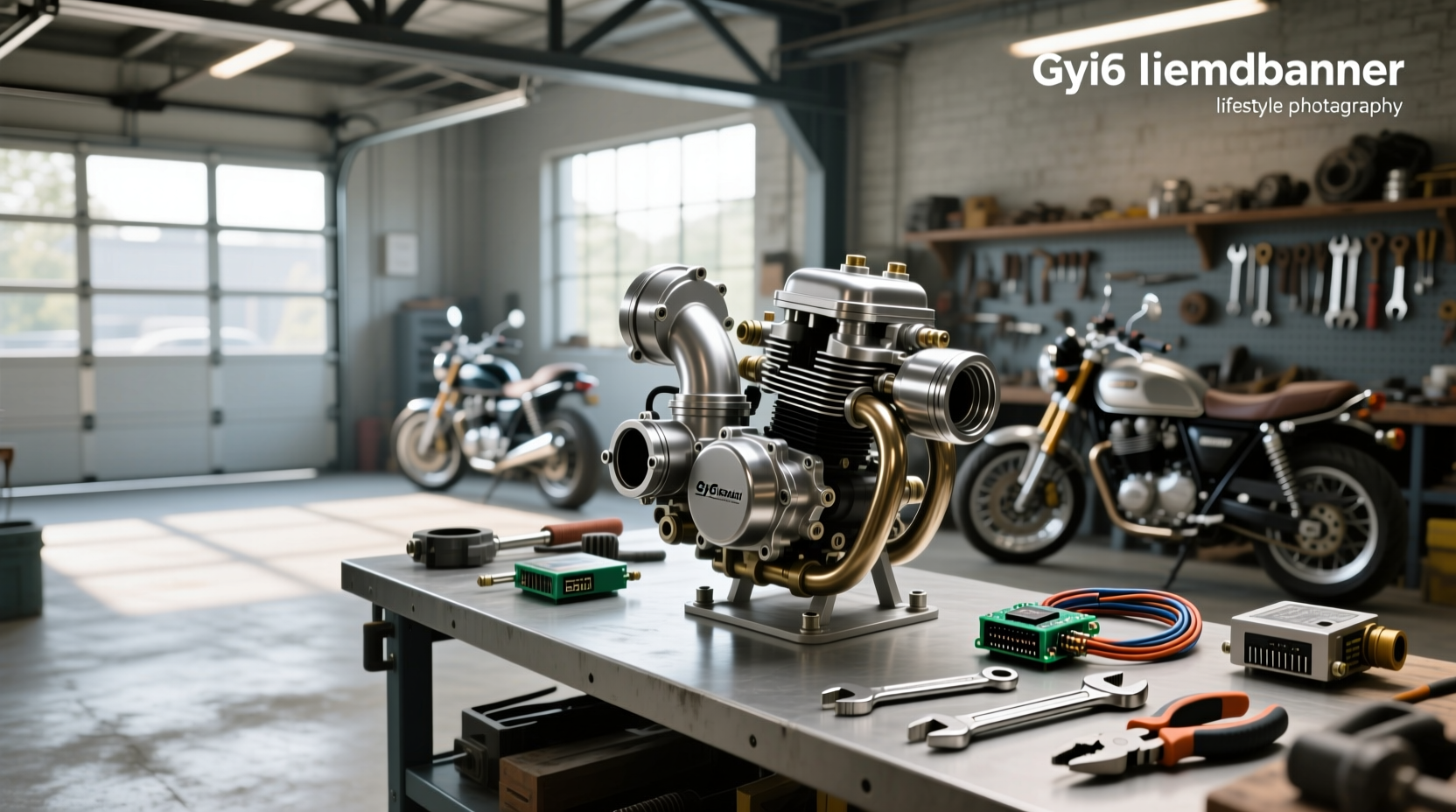
If you're searching for a reliable way to improve performance, fuel efficiency, and cold-start reliability on your GY6-powered scooter or mini bike, converting from a carburetor to a GY6 fuel injection kit might be the most impactful upgrade you can make. Modern electronic fuel injection (EFI) systems designed for GY6 engines—especially 150cc and 171cc variants—offer plug-and-play installation, auto-tuning capabilities, and better throttle response compared to outdated carb setups 1. This guide breaks down everything you need to know before making the switch: compatibility, components included, installation process, cost considerations, and real-world benefits based on user feedback and technical testing.
What Is a GY6 Fuel Injection Kit?
A GY6 fuel injection kit replaces the traditional carburetor system with an electronically controlled fuel delivery setup. These kits typically include critical components such as:
- Throttle body with integrated sensor
- Fuel injector(s)
- Electronic Control Unit (ECU)
- Fuel pump and regulator
- Intake manifold (often aluminum)
- Wiring harness
- Fuel lines and return line
- Ignition coil and CDI box (in some models)
These systems are engineered specifically for the GY6 engine platform—a generic designation used across many Chinese-made scooters like those from Jonway, TaoTao, Ruckus clones, and others powered by 125cc to 171cc four-stroke engines.
Why Upgrade from Carburetor to EFI on a GY6 Engine?
The GY6 platform has long relied on carburetors due to their simplicity and low cost. However, carburetors come with well-documented drawbacks that become more apparent over time or under certain conditions.
Common Issues with Carbureted GY6 Engines ⚠️
- Hard Cold Starts: Especially in colder climates, carburetors often require choke adjustments and multiple kicks or cranks.
- Poor Fuel Atomization: Leads to inconsistent air-fuel mixtures, reduced power, and increased emissions.
- Altitude Sensitivity: As elevation changes, so does air density—carburetors don’t self-adjust, leading to lean or rich running conditions.
- Frequent Tuning Needed: Jetting must be adjusted based on temperature, altitude, and wear.
- Vapor Lock & Flooding: Common issues in hot weather or after shutdowns.
By contrast, a modern GY6 EFI conversion kit addresses all these limitations through precise electronic metering of fuel based on real-time sensor data—including throttle position, intake air temperature, engine RPM, and ambient pressure.
Key Components of a Typical GY6 EFI System ✅
To understand what you’re getting (or should look for), it helps to break down each part of a complete fuel injection setup:
1. Throttle Body ⚙️
This is where airflow enters the engine and is regulated by a butterfly valve connected to the throttle cable. Most aftermarket kits use 32mm or 34mm throttle bodies made from die-cast aluminum. The size affects airflow capacity and responsiveness. Larger isn't always better—it depends on engine displacement and tuning goals.
2. Fuel Injector 🌐
The injector sprays pressurized fuel into the intake stream in fine mist form. Quality matters here: OEM-style injectors rated around 180–220 cc/min are typical for 150–171cc engines. Look for units with proper sealing and resistance to ethanol-blended fuels.
3. ECU (Engine Control Unit) 🔧
The brain of the system. Some kits offer basic pre-programmed ECUs, while advanced versions provide auto-tune functionality—meaning they learn and adjust fuel maps dynamically using oxygen sensor feedback. This is especially useful if you modify your exhaust or air intake later.
4. Wiring Harness & Sensors 📎
A full harness connects all sensors (TPS, IAT, MAP, crank position) to the ECU. Plug-and-play designs aim to minimize splicing. Check whether the harness matches your existing ignition system or requires replacement.
5. Fuel Delivery System 🚚
Since EFI operates at higher pressures than gravity-fed carbs, these kits include an inline electric fuel pump capable of delivering 3–5 psi. A fuel rail and return line help maintain consistent pressure. Kits may also include a modified fuel tank or adapter to mount the pump inside.
6. Intake Manifold 🏭
Machined aluminum manifolds ensure a secure seal between the throttle body and cylinder head. Some kits include velocity stacks or tuned runners to enhance mid-range torque.
| Component | Purpose | Aftermarket Options |
|---|---|---|
| Throttle Body | Controls airflow into engine | 32mm, 34mm, billet aluminum |
| Fuel Injector | Sprays atomized fuel | 180–220cc/min, multi-port |
| ECU | Manages fuel and spark timing | Pre-set or auto-tune capable |
| Fuel Pump | Pressurizes fuel supply | In-tank or inline, 3–5 psi |
| Wiring Harness | Connects all electrical components | Plug-and-play vs universal |
Compatibility: Which GY6 Engines Work With EFI Kits? 🔍
Not all GY6 engines are created equal. While the term “GY6” refers broadly to a family of single-cylinder, overhead cam, four-stroke engines, there are variations in cylinder head ports, ignition systems, and mounting points.
Most GY6 fuel injection kits are designed for:
- QMJ157FMI-3 / QMB139 engines (common 150cc)
- 171cc big bore variants (e.g., 63mm bore)
- Engines with standard CV carb mounting pattern
However, verify the following before purchasing:
- Cylinder Head Port Size: Must match the intake manifold flange diameter (usually 38mm–40mm).
- Ignition Type: Does your scooter use AC or DC CDI? Some EFI kits require DC power for the fuel pump and ECU.
- Space Constraints: Scooter frames vary; measure clearance for the throttle body and fuel pump routing.
- Fuel Tank Design: Some kits require drilling the tank to install the pump, while others include external mounts.
For example, the Rolling Wrench ProBld Auto-Tune EFI system explicitly supports both 150cc and 171cc engines regardless of original harness type, provided the physical fitment allows it 1.
Installation Process: Can You DIY a GY6 EFI Conversion? 🛠️
Yes—but success depends on mechanical skill level and kit design. Here’s a general step-by-step overview:
Step 1: Remove Old Carburetor System
- Drain fuel line
- Disconnect throttle cable and vacuum lines
- Unbolt carburetor and intake boot
- Clean cylinder head port surface
Step 2: Mount New Intake Manifold
- Install gasket and secure manifold with bolts
- Ensure no debris enters combustion chamber
Step 3: Install Throttle Body & Injector
- Attach throttle body to manifold
- Connect fuel lines to injector and rail
- Secure wiring connectors
Step 4: Set Up Fuel Pump
- Mount pump inside or outside fuel tank
- Use filter before pump inlet
- Route return line back to tank (prevents vapor lock)
Step 5: Connect Electrical System
- Wire ECU to battery (typically needs switched +12V)
- Ground all components properly
- Plug in TPS, MAP, and other sensors
- Verify ignition coil compatibility
Step 6: Final Checks & Startup
- Prime fuel system (turn key on/off several times)
- Check for leaks
- Start engine—may take a few attempts
- Let ECU adapt over first 10–15 minutes of operation
Some kits, like the Rolling Wrench Plug & Play EFI, simplify this by including labeled harnesses and eliminating the need for laptop tuning 1.
Performance Benefits After Installing EFI ✨
Users consistently report noticeable improvements post-conversion:
- Smoother Idle: No more stalling at stoplights.
- Better Throttle Response: Immediate acceleration without hesitation.
- Improved Cold Starts: Starts reliably even below 40°F (4°C).
- Higher Fuel Efficiency: Optimized mixture reduces waste—some see 10–15% gains.
- Reduced Maintenance: No jets to clean or float levels to set.
- Altitude Compensation: Automatically adjusts for mountain riding.
Additionally, EFI systems reduce hydrocarbon emissions, which can help pass local smog checks where applicable.
Cost vs. Value: How Much Do GY6 EFI Kits Cost? 💰
Pricing varies significantly depending on features and brand reputation:
- Basic universal kits: $80–$150 (often lack full harness or quality pumps)
- Mid-range plug-and-play systems: $250–$400
- High-end auto-tune kits (e.g., Rolling Wrench): $675+
While premium kits cost more upfront, they often save time and frustration during installation. Cheaper kits may require additional purchases (e.g., separate ECU, custom wiring) and lack technical support.
Also consider labor: If you're not comfortable with electrical work, factor in professional installation (~$100–$200).
Common Pitfalls & What to Avoid ❗
Despite the advantages, some users encounter problems. Here are frequent issues and how to prevent them:
1. Poor Fuel Pump Placement
Mounting the pump too far from the tank or without proper support leads to cavitation and premature failure. Always follow manufacturer guidelines for orientation and fuel line routing.
2. Incompatible ECU Firmware
Some ECUs expect specific sensor types (e.g., analog vs digital TPS). Verify compatibility with your engine’s existing sensors or be prepared to replace them.
3. Leaking Fuel Lines
Use high-pressure EFI-rated hoses—not standard rubber fuel line. Clamp securely and inspect regularly.
4. Incorrect Throttle Cable Adjustment
Too much slack causes delayed response; too tight risks idle creep. Adjust until smooth transition from closed to open throttle.
5. Ignoring Battery Health
EFI systems draw more current than carbureted setups. A weak battery may cause ECU resets or poor starting. Test voltage and charging system output before and after install.
Where to Buy a Reliable GY6 Fuel Injection Kit 🛒
You’ll find options on platforms like AliExpress, eBay, and specialty shops. However, prioritize vendors who offer:
- Detailed product specs (not just photos)
- Technical support via email or phone
- Clear return policy
- User reviews with real installation videos
Specialty tuners like Rolling Wrench have gained credibility through YouTube demonstrations and documented builds 1, though prices reflect that expertise.
Frequently Asked Questions (FAQs)
- Can I convert any GY6 scooter to fuel injection?
- Most 150cc and 171cc GY6 engines can be converted, but verify physical fitment, electrical compatibility, and fuel tank modifications required. Smaller displacements (like 50cc) rarely benefit due to complexity vs gain.
- Do I need to tune the ECU after installation?
- It depends on the kit. Pre-programmed ECUs usually run out-of-box. Auto-tune systems adapt over time. Programmable ECUs require external software and a laptop for calibration.
- Will EFI improve my gas mileage?
- Yes, typically by 10–15%, because fuel is delivered more precisely, reducing waste during idle and partial throttle operation.
- Are GY6 EFI kits street legal?
- Legality varies by region. In the U.S., modifying emissions equipment may violate EPA regulations unless the kit is CARB-certified. Check local laws before installing.
- Can I revert back to a carburetor later?
- Yes, but only if you kept original parts. Some installations involve permanent changes like drilling the fuel tank.




 浙公网安备
33010002000092号
 浙B2-20120091-4