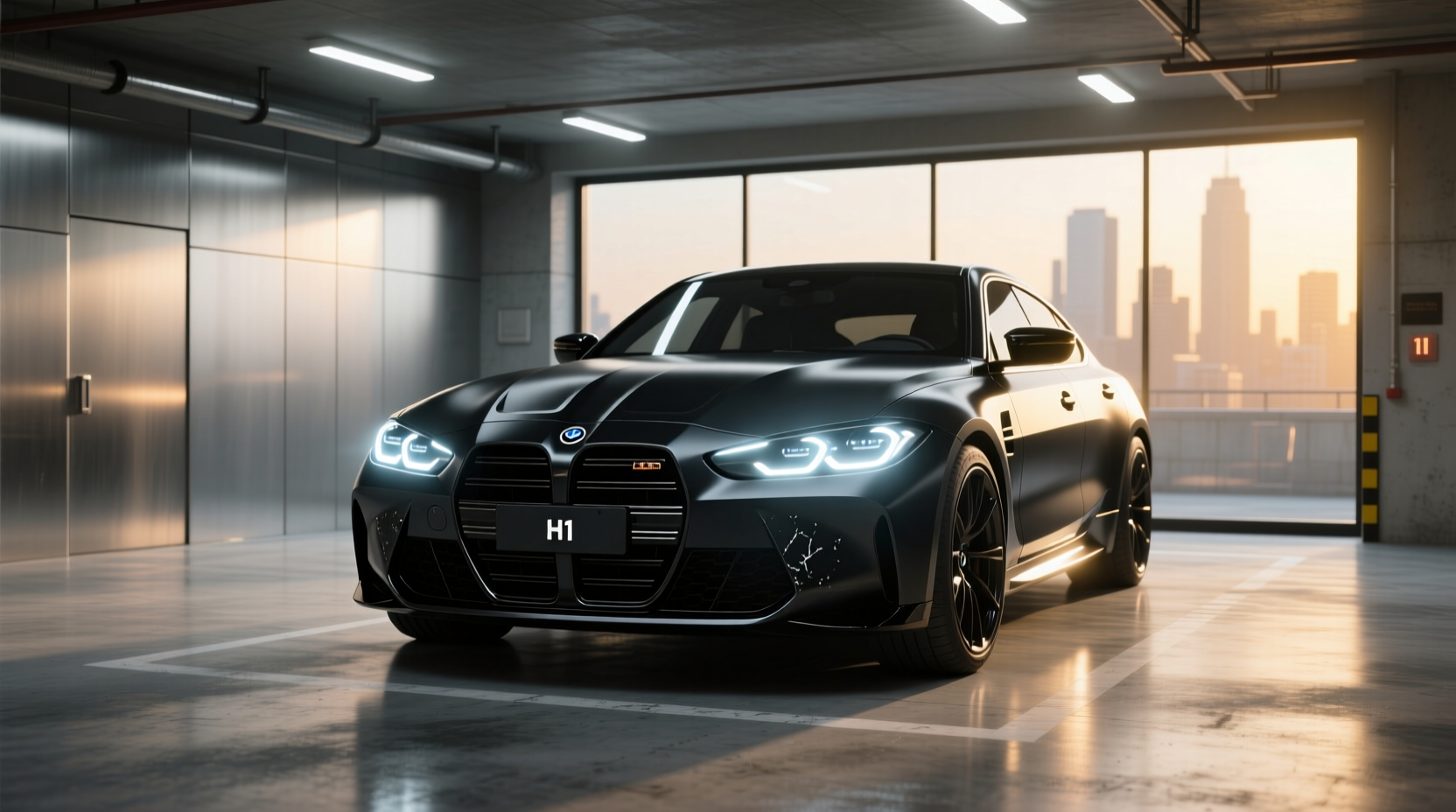
Upgrading to an H1 LED headlight bulb can significantly improve nighttime visibility, energy efficiency, and longevity compared to traditional halogen lamps. However, many drivers face challenges with fitment, electrical compatibility, and beam pattern accuracy when making the switch. This comprehensive guide explains everything you need to know about H1 LED headlights—including performance factors, installation pitfalls, CAN bus errors, heat management, and whether your vehicle’s reflector or projector housing supports LED retrofitting.
What Is an H1 LED Headlight Bulb?
The H1 bulb is a single-beam halogen lamp introduced in 1959, still widely used today in high-beam applications across various vehicles, especially European and Asian models like certain Hyundai, Kia, and commercial vans such as the Hyundai H1 Starex. An H1 LED headlight replaces the original filament-based design with light-emitting diodes (LEDs), offering higher lumen output, lower power draw, and longer service life.
Unlike dual-filament bulbs (like H4), H1 bulbs are designed for one function only—typically high beam. That means if your car uses separate bulbs for low and high beams, upgrading just the H1 will only affect high-beam performance unless you also replace the low-beam unit (often H7).
Why Upgrade to H1 LED Headlights?
Many drivers consider switching from halogen to LED H1 headlight bulbs for several practical reasons:
- Brighter illumination: Modern LEDs can produce up to 3,000–6,000 lumens per bulb, far exceeding the ~1,400 lumens of standard H1 halogens.
- Improved safety: Enhanced road coverage helps detect obstacles earlier, especially on unlit roads.
- Lower power consumption: Drawing around 20–40W vs. 55W for halogens reduces strain on the alternator.
- Longer lifespan: Quality LED units last 30,000–50,000 hours versus 450–1,000 hours for halogens.
- Better aesthetics: Cooler color temperatures (5000K–6500K) provide a modern, xenon-like white or daylight appearance.
However, these benefits come with important caveats: not all LED upgrades are road-legal, some trigger error messages, and poor thermal design can lead to premature failure.
Key Factors When Buying H1 LED Headlight Bulbs
Selecting the right H1 LED headlight conversion kit involves more than just brightness claims. Consider these critical aspects before purchasing:
⚡ Power Draw and Electrical Compatibility
While most H1 LED bulbs consume less power than halogens, some models may still cause issues due to inrush current or inconsistent load detection. Vehicles equipped with CAN bus systems monitor bulb functionality by measuring resistance and wattage. A mismatch can result in ‘bulb out’ warnings even when the LED works perfectly.
Solution: Look for kits labeled “CAN bus compatible” or include external resistors/diagnostic cancelers. These simulate the expected load and prevent false alerts.
🔧 Physical Size and Heat Sink Design
One of the biggest hurdles in installing H1 LED bulbs in projector or reflector housings is physical clearance. Many LED designs feature large heat sinks or fans that won’t fit behind tight headlight assemblies.
Tips:
- Check if the product specifies “mini” or “compact” design.
- Verify whether it uses fan cooling (noisy but effective) or passive heatsinks (quieter, bulkier).
- Measure available space behind your headlight before ordering.
✨ Lumen Output and Color Temperature
Manufacturers often exaggerate lumen ratings. True output depends on driver efficiency, thermal regulation, and LED chip quality. Realistic expectations:
- High-quality H1 LED: 4,000–6,000 lumens total (per bulb)
- Standard halogen H1: ~1,400 lumens
Color temperature affects both appearance and usability:
- 3000K–4300K: Warm white to neutral; better fog penetration
- 5000K–6000K: Pure white; closest to daylight, optimal for contrast
- 6500K+: Bluish tint; reduced visibility in rain/fog despite perceived 'brightness'
Aim for 5000K–6000K for balanced performance.
⚙️ Beam Pattern and Optics Matching
This is crucial: LEDs do not automatically produce correct beam patterns in halogen-designed housings. Halogen bulbs emit light from a precise filament location, which projectors and reflectors are engineered to focus. Most LED replacements use multiple chips arranged around a base, creating scattered light that causes glare and hotspots.
Risks:
- Blinding oncoming drivers
- Reduced usable light on the road
- Non-compliance with DOT/ECE regulations
If your headlights were not factory-equipped with LEDs, consider that retrofitting may compromise safety and legality—even if the bulb fits mechanically.
Common Installation Issues and How to Avoid Them
Even experienced DIYers encounter problems when installing H1 LED headlight bulbs. Here are frequent issues and solutions:
📍 Fuse Blowing After Installation
Some users report blown fuses after installing H1 LEDs, particularly on high-beam circuits. Possible causes include:
- Inrush current surge: LEDs draw peak current at startup, potentially tripping older fuses.
- Short circuit from improper wiring: Damaged insulation or contact with metal housing.
- Overpowered driver module: Poorly regulated internal drivers exceeding voltage tolerance.
Prevention:
- Use time-delay (slow-blow) fuses rated slightly higher than stock (e.g., 15A instead of 10A), but never exceed circuit rating.
- Double-check polarity during installation.
- Choose reputable brands with stable drivers.
✅ CAN Bus Error Messages
Digital vehicles (especially post-2010 models) perform bulb checks via CAN bus communication. Since LEDs draw less power, the system interprets this as a failed bulb.
Solutions:
- Purchase kits with built-in error correction.
- Add external load resistors (though they generate heat and should be mounted safely).
- Disable warnings via OBD2 scanner (not recommended long-term).
🛒 Choosing Between Plug-and-Play and Decoder-Based Kits
Most modern H1 LED headlight conversion kits offer plug-and-play connectivity—meaning they connect directly to the factory socket without rewiring. But verify:
- Socket type: H1 has a two-pin base (P14.5s), but ensure pin spacing matches.
- Voltage range: Should support 9–32V DC for automotive use.
- Decoder inclusion: Some kits require additional modules for signal decoding in sensitive vehicles.
Are H1 LED Headlights Legal?
In most countries, including the U.S. and EU, aftermarket LED bulbs installed in halogen housings are not compliant with federal motor vehicle safety standards (FMVSS 108) or ECE regulations.
Regulatory facts:
- Headlight legality depends on the entire assembly—not just the bulb.
- Only headlight units certified as LED systems meet regulatory requirements.
- Using LED retrofits in halogen housings often results in excessive glare and improper cutoffs.
While enforcement varies, modified lighting can cause you to fail vehicle inspections or receive citations. For full compliance, opt for OEM-style LED headlight assemblies rather than bulb swaps.
Best Practices for Installing H1 LED Headlights
To maximize performance and reliability, follow these steps:
- Confirm bulb type: Ensure your vehicle actually uses H1 bulbs (common in high beams; low beams often use H7).
- Inspect headlight housing: Clean lenses and check for moisture or cracks before installation.
- Test-fit the LED: Insert without powering to verify clearance for heat sink and wire routing.
- Ground the negative terminal: Prevent short circuits by disconnecting the battery first ⚡.
- Align the LED chips: Position directional LEDs to match the original filament orientation for optimal beam focus.
- Secure wiring: Use zip ties to prevent movement and contact with hot engine parts.
- Reconnect and test: Operate high beams and check for flickering, error codes, or uneven output.
Top Alternatives to Retrofitting H1 LED Bulbs
If retrofitting proves problematic, consider safer, more effective alternatives:
🏭 Factory LED Headlight Assemblies
Replacing the entire headlight unit with an OEM or approved aftermarket LED assembly ensures proper optics, alignment, and regulatory compliance. Though more expensive, it delivers superior performance and avoids glare issues.
🌐 Hybrid HID/LED Systems
For enthusiasts seeking maximum output, hybrid systems combine HID for low beams and LED for high beams. Requires professional installation and proper shielding to remain street-legal.
🧼 High-Performance Halogen Bulbs
Sometimes the simplest solution works best. Upgraded halogen bulbs (e.g., +100% brightness variants) offer modest gains without risking compatibility or legality.
| Feature | Halogen H1 | LED H1 (Retrofit) | OEM LED Assembly |
|---|---|---|---|
| Average Brightness | ~1,400 lm | 4,000–6,000 lm | 5,000–8,000 lm |
| Lifespan | 500–1,000 hrs | 30,000–50,000 hrs | 10,000–15,000+ hrs |
| Power Consumption | 55W | 20–40W | Varies |
| Beam Accuracy | Optimized for housing | Often poor | Factory-optimized |
| Legal Compliance | Fully compliant | Rarely compliant | Fully compliant |
| Installation Difficulty | Easy | Moderate to difficult | Difficult (requires removal) |
Debunking Common Myths About H1 LED Headlights
❌ Myth: 'More Lumens Always Means Better Visibility'
False. Excessive brightness without proper beam control creates glare and reduces contrast. Effective lighting prioritizes focused distribution over raw output.
❌ Myth: 'All Plug-and-Play LEDs Are Safe'
Not true. Even plug-and-play units can overload circuits or interfere with CAN bus systems depending on vehicle sensitivity.
❌ Myth: 'If It Fits, It's Legal'
No. Legal status depends on certification, not mechanical fit. A bulb that screws in doesn’t mean it meets safety standards.
When NOT to Install H1 LED Headlight Bulbs
Certain situations make LED retrofits unsuitable or risky:
- Your headlights use projector lenses designed for halogen filaments: Mismatched focal points degrade beam quality.
- You drive in areas with strict emissions/lighting inspections: Non-compliant mods may fail inspection.
- Vehicle has adaptive lighting or auto-leveling systems: LEDs may disrupt sensor feedback loops.
- Limited rear clearance behind headlight housing: Overheating leads to early failure.
- Budget-focused purchase: Cheap LEDs often lack thermal protection and accurate beam alignment.
Final Recommendations
Switching to an H1 LED headlight bulb can enhance visibility and reduce maintenance—but only if done correctly. Prioritize optical compatibility, electrical stability, and long-term reliability over marketing claims. Whenever possible, consult a qualified technician or choose complete LED headlight assemblies for guaranteed performance and compliance.
Remember: brighter isn’t always better. The goal is safe, controlled illumination that improves driving confidence without compromising safety for others on the road.
Frequently Asked Questions
Can I install H1 LED bulbs in my halogen headlights?
You can physically install many H1 LED bulbs in halogen housings, but doing so may create unsafe glare and violate lighting regulations. The beam pattern is unlikely to match the original design, reducing effectiveness and increasing risk to other drivers.
Why do my H1 LED bulbs cause error messages?
Modern vehicles monitor bulb operation through resistance and power draw. LEDs consume less power than halogens, causing the system to detect a ‘failed bulb.’ Using CAN bus-compatible kits or adding load resistors usually resolves this issue.
What is the brightest legal H1 LED headlight?
True legality requires the entire headlight assembly to be certified for LED use. No standalone H1 LED retrofit bulb is officially certified under FMVSS 108 or ECE rules. For legal brightness, replace the whole headlight unit with a factory LED version.
Do H1 LED headlights need cooling fans?
Some do, especially high-output models. Fan-cooled LEDs manage heat more effectively but can fail over time. Passive (fanless) designs rely on aluminum heat sinks and are quieter but require adequate airflow. Choose based on installation space and environment.
How long do H1 LED headlight bulbs last?
Quality H1 LED bulbs typically last between 30,000 and 50,000 hours under ideal conditions. Real-world lifespan depends on heat dissipation, voltage stability, and build quality. Poor ventilation or cheap components can reduce life to under 10,000 hours.




 浙公网安备
33010002000092号
 浙B2-20120091-4