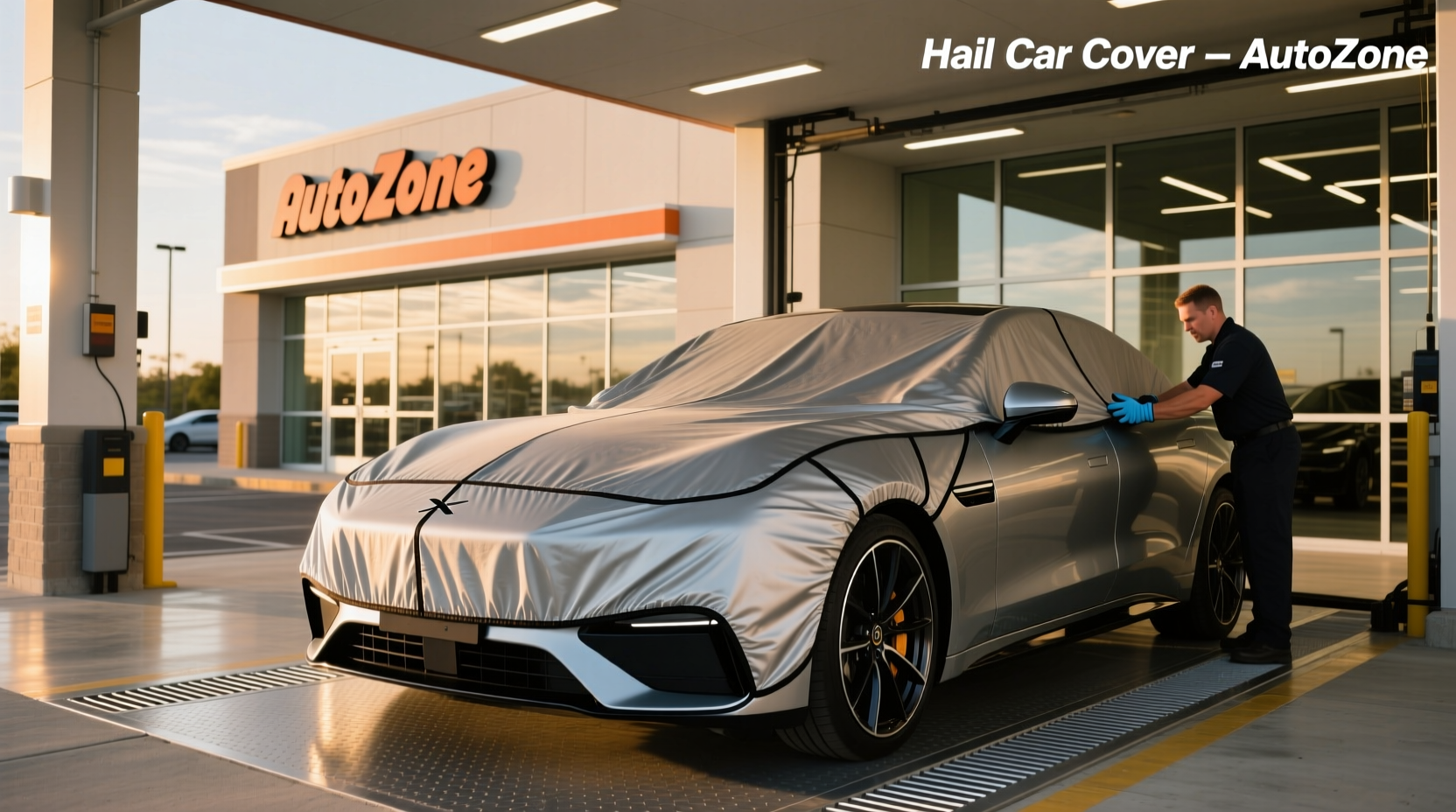
When severe weather strikes, especially in regions prone to sudden hailstorms—like Texas, Colorado, or the Midwest—protecting your vehicle becomes urgent. A properly designed hail car cover from AutoZone or similar retailers can reduce dents and surface damage during unexpected storms. But not all car covers are created equal. While basic waterproof tarps may shield against rain, only multi-layered, padded models with impact-resistant materials provide meaningful defense against falling ice. This guide breaks down exactly how hail protection works, what features matter most, where to find reliable products—including availability at AutoZone—and practical steps to safeguard your car before, during, and after a storm.
Why Hail Damage Is a Serious Threat to Vehicles
Hailstorms can escalate quickly, dropping ice chunks ranging from pea-sized (about 0.25 inches) to golf ball or even baseball diameter (>2.5 inches). According to the National Oceanic and Atmospheric Administration (NOAA), hail causes over $1 billion in annual auto and property damage in the U.S. alone1. Larger hailstones fall at speeds exceeding 100 mph, enough force to crack windshields, dent hoods, and compromise paint integrity.
Unlike scratches or minor dings, hail damage often requires professional repair through paintless dent repair (PDR) techniques, which can cost hundreds to thousands of dollars depending on severity. Insurance typically covers it under comprehensive policies, but filing repeated claims may raise premiums. Preventative measures like using a dedicated hail-resistant car cover make financial and practical sense for drivers in high-risk zones.
Do Hail Car Covers Actually Work?
The short answer is: yes—but only if they’re specifically engineered for impact absorption. Standard all-weather car covers made from thin polyester or vinyl offer little to no protection against hail. They might prevent water intrusion or UV fading, but won’t stop dents.
Effective hail protection relies on three key design elements:
- Padding thickness: At least 5–6mm of foam or quilted material to absorb kinetic energy
- Outer shell durability: Materials like military-grade Oxford fabric or reinforced PVC that resist tearing
- Secure fit: Elastic hems, straps, or anchors to prevent flapping or displacement in wind
Independent tests show that quality padded covers reduce visible denting by up to 80% compared to unprotected vehicles2. However, no cover guarantees 100% protection against large hail (over 2 inches), so timing and placement still matter.
AutoZone Hail Car Cover Availability: What You Can Expect
As of 2024, AutoZone does not carry specialized hail protection systems as a standard inventory item across its store network. 🔧 While AutoZone offers general-purpose car covers labeled for outdoor use, these are typically single-layer, non-padded models designed primarily for dust, sun, and light moisture resistance—not impact protection.
If you're searching for “hail car cover AutoZone” hoping to buy one locally, here’s what to know:
- 🛒 In-store selection: Most physical locations stock universal-fit covers made from polypropylene or laminated fabric. These lack sufficient padding for hail events.
- 🌐 Online offerings: AutoZone’s website allows filtering by size and weather resistance, but none list impact-absorbing layers or hail-specific testing.
- 📍 Regional variations: Stores in states with frequent hail (e.g., Oklahoma, Nebraska) may occasionally stock heavier-duty versions seasonally, but this isn't guaranteed.
For true hail defense, customers usually need to look beyond AutoZone to specialty brands or online suppliers.
Top Alternatives to AutoZone for Hail Protection Covers
If your local AutoZone doesn’t carry padded hail blankets, several alternatives deliver proven performance:
The Hail Protector System ✨
This patented frame-and-blanket system uses a semi-rigid dome structure covered with a thick, shock-absorbing fabric layer. It’s designed for quick deployment (under 60 seconds) and offers some of the highest user satisfaction ratings for actual hail events. Available in six sizes, it fits sedans, SUVs, and trucks.
Aroba EVOII and Goodyear Anti-Hail Covers 🏭
These are fully flexible padded covers with 5–6mm foam interlayers and durable outer shells. The Aroba EVOII model includes reflective strips for visibility and heat reflection, while Goodyear’s version emphasizes UV resistance and secure belt fastening. Both are marketed explicitly for hail zones and sold through European and North American distributors.
Military-Grade Oxford Cloth Covers ⚙️
Some third-party manufacturers use 1680D ballistic nylon or multi-layer Oxford cloth with internal foam padding. Look for terms like “5-layer construction,” “shock dispersion,” or “impact-rated.” These tend to be heavier and more expensive but offer better real-world results than generic covers.
| Feature | AutoZone General Cover | Specialty Hail Cover |
|---|---|---|
| Padding Thickness | None or minimal (1–2mm) | 5–6mm foam or quilted layer |
| Material Type | Polyester/vinyl blend | Oxford cloth, PVC-coated fabric |
| Impact Resistance | No | Yes (tested up to golf ball hail) |
| Wind Stability | Moderate (may flap) | High (straps/elastic anchoring) |
| Average Price | $30–$60 | $90–$250+ |
| Best Use Case | Daily outdoor parking (dust/sun) | Storm preparedness, hail-prone areas |
How to Use a Hail Car Cover Effectively: Timing and Technique
Even the best hail cover won’t help if deployed too late. Here’s how to maximize protection:
Monitor Weather Forecasts Proactively ⏱️
Use apps like NOAA Weather Radar, AccuWeather, or local news alerts to track developing storm cells. Hail is most common between spring and early summer, particularly in the late afternoon. Set notifications when severe thunderstorm warnings are issued within 30 miles of your location.
Deploy Before the Storm Hits ⚡
Once hail is forecasted, act immediately. Deploying a cover takes 5–10 minutes depending on size and experience. Don’t wait until hail starts falling—working outdoors during icy precipitation is dangerous and ineffective.
Ensure Full Coverage and Secure Fit 🔍
Make sure the cover extends fully over the roof, hood, trunk, and sides. Gaps leave vulnerable spots. Use included straps, hooks, or wheel anchors to keep it in place. Avoid loose draping, which increases wind lift and reduces impact buffering.
Avoid Using Towels or Blankets as Substitutes ❗
Some suggest using moving blankets secured with bungee cords. While better than nothing, cotton or wool fabrics compress easily under impact and don’t disperse force. They also absorb water, adding weight and increasing risk of scratching paint. Purpose-built padded covers remain superior.
Common Misconceptions About Hail Protection
Several myths persist about protecting cars from hail. Understanding them helps avoid false confidence:
- Myth: Any thick car cover stops hail damage. Reality: Without dedicated padding and structural resilience, most covers fail under impact.
- Myth: Parking under trees protects your car. Reality: Falling branches increase risk, and leaves/debris can trap moisture leading to corrosion.
- Myth: Garage doors block all hail. Reality: If your garage has windows or weak roofing, debris can still enter. Detached garages may not withstand strong winds accompanying storms.
- Myth: Smaller hail isn’t damaging. Reality: Pea-sized hail (0.25") can chip paint; marble-sized (0.5") can cause shallow dents, especially on curved surfaces.
DIY vs. Commercial Hail Protection: Is It Worth Building Your Own?
Some resourceful owners attempt DIY hail shields using plywood, pool noodles, or layered foam mats. While creative, homemade solutions pose challenges:
- Difficulty achieving full coverage without gaps
- Bulkiness and storage issues
- Lack of aerodynamic stability in high winds
- Potential to scratch paint if not lined properly
Commercial systems benefit from years of field testing and optimized materials. Unless you have engineering skills and access to industrial fabrics, off-the-shelf products are more reliable.
What to Do If You’re Caught Off Guard During a Hailstorm
Sometimes, there’s no time to deploy a cover. In such cases:
- Seek shelter in an enclosed garage, parking structure, or covered lot immediately.
- If driving, pull over safely and wait out the storm. Do not stop under highway overpasses—this blocks traffic and creates hazards.
- Use floor mats or towels inside the cabin to protect occupants if the windshield cracks.
- Afterward, inspect body panels carefully. Small dents may not be visible from a distance but can lead to rust if paint is compromised.
Cost vs. Value: Is a Hail Car Cover a Smart Investment?
A quality hail cover ranges from $90 to over $200. Compare that to average PDR repair costs:
- Minor hail damage (5–10 dents): $300–$600
- Moderate damage (10–20 dents): $600–$1,200
- Severe damage (widespread): $1,500+ or replacement panels
For residents in hail-prone regions, a single avoided repair pays for the cover. Additionally, maintaining a pristine finish preserves resale value and avoids insurance claim history.
Final Tips for Choosing the Right Hail Protection Solution
Before purchasing any hail car cover, consider these factors:
- Vehicle size and shape: Measure your car’s length, width, and height. Choose a cover rated for your class (sedan, SUV, truck).
- Storage space: Padded covers are bulky. Ensure you have room in your garage or trunk.
- Deployment speed: Opt for designs that can be installed solo in under 5 minutes.
- Care instructions: Check if the cover is machine washable or requires spot cleaning.
- Warranty and return policy: Reputable brands offer at least a 1-year warranty against material defects.
Frequently Asked Questions (FAQ)
Can I use a regular car cover for hail protection?
No. Standard covers lack padding and impact resistance. Only covers specifically labeled as "hail-resistant" with cushioned layers offer meaningful protection.
Does AutoZone sell padded hail protection covers?
Generally, no. AutoZone focuses on general-purpose outdoor covers. For true hail defense, consider specialty brands available online or through automotive safety suppliers.
How long does it take to install a hail protector?
Most systems take 3–7 minutes once practiced. Quick-deploy models like The Hail Protector claim setup in under a minute with practice.
Are inflatable or rigid hail shelters better than fabric covers?
Rigid shelters (like pop-up domes) offer excellent protection but require more storage space. Fabric-based padded covers balance effectiveness, portability, and cost for most users.
Will a hail cover prevent all damage?
No cover provides 100% protection, especially against very large hail (over 2 inches). However, quality covers significantly reduce the number and severity of dents.




 浙公网安备
33010002000092号
 浙B2-20120091-4