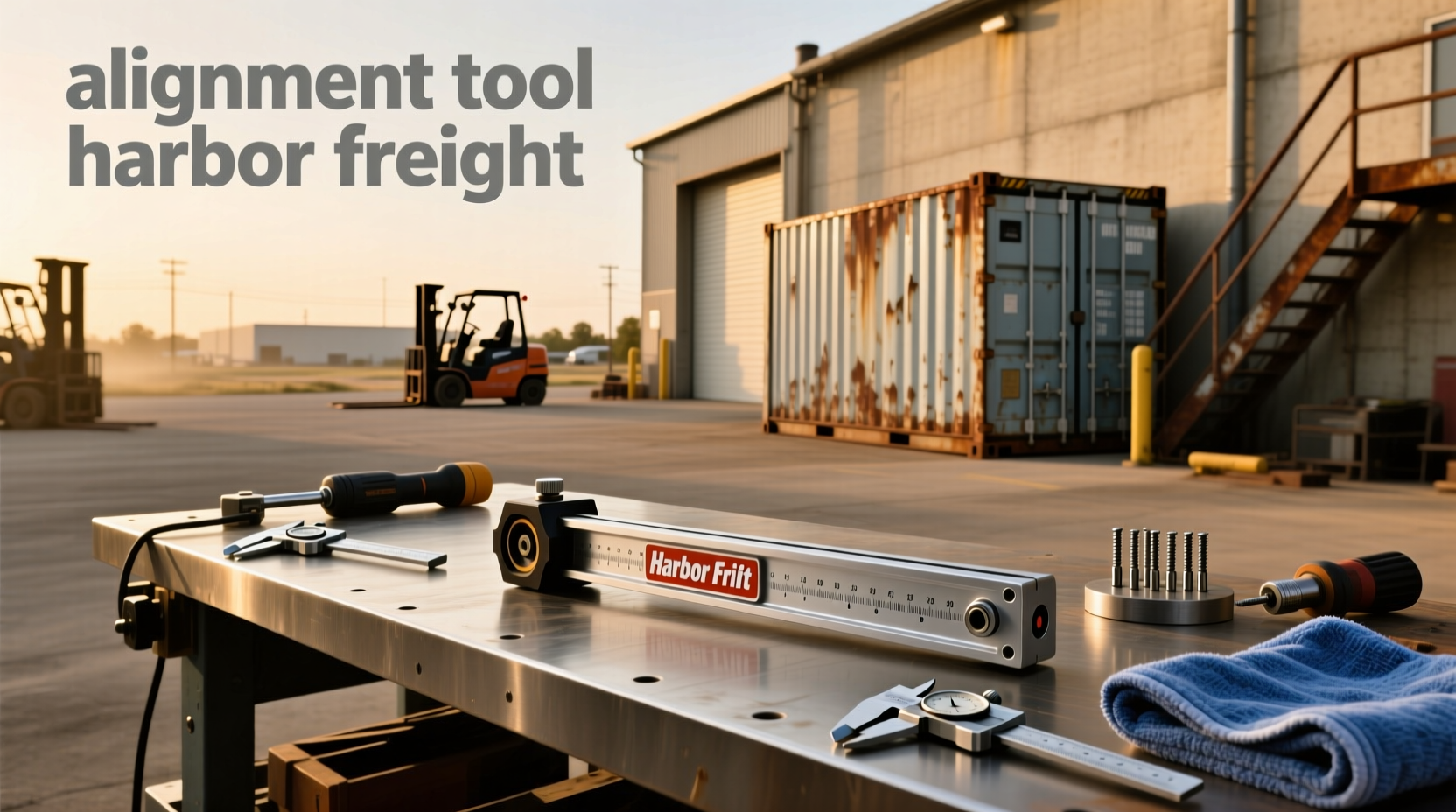
If you're searching for an affordable way to check or adjust your vehicle's wheel alignment at home, alignment tool Harbor Freight options may have caught your attention. These budget-friendly solutions can help measure toe, camber, and caster angles without requiring professional equipment. But do they deliver reliable results? In short, yes — some Harbor Freight alignment tools can provide usable data for basic adjustments, especially when paired with proper setup and technique. However, their accuracy, durability, and ease of use vary significantly compared to higher-end models from specialty brands.
Understanding Wheel Alignment Basics
Before diving into specific tools, it’s essential to understand what wheel alignment involves and why precise measurement matters. A vehicle’s wheels must be aligned according to manufacturer specifications to ensure even tire wear, stable handling, and optimal fuel efficiency. The three primary angles measured during alignment are:
- Toe: The direction the front or rear of the tires point relative to the vehicle’s centerline (inward = toe-in, outward = toe-out).
- Camber: The vertical tilt of the wheel when viewed from the front (positive = top leans out, negative = top leans in).
- Caster: The forward or backward tilt of the steering axis, affecting steering feel and returnability.
Improper alignment often leads to symptoms like uneven tire wear, pulling to one side, or a crooked steering wheel. While most drivers take their vehicles to professional shops for alignment services, DIY enthusiasts increasingly look for cost-effective ways to monitor or correct these settings themselves — which is where tools like those sold at Harbor Freight come into play.
What Kind of Alignment Tools Does Harbor Freight Offer?
Harbor Freight is known for offering low-cost mechanical tools under its Central Machinery brand and various imported tool lines. While the retailer doesn’t always prominently feature dedicated wheel alignment systems on its main site, many customers find compatible products such as:
- Magnetic camber gauges
- Digital angle finders with magnetic bases
- Simple toe plates and string alignment kits
- Used or refurbished professional-grade alignment heads (rarely)
These items are typically priced between $15 and $60, making them accessible for occasional users. Some third-party sellers also list Harbor Freight-compatible accessories online, though authenticity and calibration cannot always be guaranteed.
Common Features of Harbor Freight Alignment Tools
Based on user reports and product teardowns, typical characteristics include:
| Feature | Description |
|---|---|
| 📏 Measurement Type | Analog dials or digital displays for inclination (camber/caster), sometimes with laser guides for toe |
| 🧲 Mounting Method | Magnetic base for attachment to brake rotors or rims |
| 🔧 Build Quality | Plastic housings, lightweight aluminum or steel components |
| 🎯 Accuracy Claimed | ±0.1° to ±0.5° depending on model |
| 💰 Price Range | $14–$60 USD |
| 🔋 Power Source | Battery-powered (for digital models); none needed for analog |
While not lab-grade instruments, these tools can serve as entry-level solutions for checking general alignment conditions or verifying post-adjustment results after suspension work.
How Do Harbor Freight Tools Compare to Professional Equipment?
To assess whether Harbor Freight alignment tools are sufficient, it helps to compare them against industry-standard devices used in automotive shops. Professional systems like Hunter, Bosch, or John Bean setups use high-resolution sensors, turn plates, and computerized software to calculate all four wheels simultaneously with sub-0.1° precision.
In contrast, Harbor Freight-style tools usually offer manual readings for one wheel at a time. There’s no automatic compensation for rim runout, and measurements depend heavily on correct sensor placement and surface cleanliness.
Accuracy and Repeatability Concerns
One major limitation of budget tools is repeatability — getting the same reading across multiple tests under identical conditions. Users report variations of up to 0.5° between consecutive measurements when using lower-cost magnetic gauges, especially if the magnet shifts slightly or the rotor has rust buildup.
A study by a DIY automotive forum found that among 12 inexpensive digital inclinometers (similar to those sold at Harbor Freight), only 5 maintained consistency within 0.2° across five trials on a leveled surface1. This suggests that while useful for rough estimates, they shouldn’t be relied upon for fine-tuning performance suspensions or tracking subtle changes over time.
Practical Use Cases: When Can You Use a Harbor Freight Alignment Tool?
Despite limitations, there are realistic scenarios where these tools add value:
✅ Scenario 1: Pre-Purchase Inspection
If you’re evaluating a used car and suspect poor alignment, a portable magnetic camber gauge lets you quickly check both front wheels. Significant differences (e.g., one side showing -2.0° and the other -0.8°) suggest possible damage or misadjustment.
✅ Scenario 2: Post-Suspension Installation Check
After replacing control arms, struts, or tie rods, you can use a toe plate kit or digital gauge to verify approximate alignment before driving to a shop. This reduces stress on new parts and prevents excessive tire scrubbing.
✅ Scenario 3: Track Day Preparation
Racers on a tight budget might use a calibrated digital angle finder to set baseline negative camber (e.g., -2.5°) before heading to the circuit, then rely on professional gear for final tuning.
❌ When Not to Rely on Budget Tools
- Setting precise caster values for daily drivers requiring exact steering geometry.
- Diagnosing complex handling issues involving dynamic alignment changes.
- Replacing a full alignment service when selling a vehicle or meeting safety inspection standards.
Tips for Getting Reliable Results with Affordable Tools
If you decide to go the Harbor Freight route, follow these best practices to improve accuracy:
📍 1. Clean Surfaces Thoroughly
Any debris, rust, or grease on the rotor or rim will prevent the magnetic base from sitting flush. Use a degreaser and wire brush to clean contact points before attaching the gauge.
🔧 2. Calibrate Before Each Use
Place the tool on a known-flat surface (like a machined block or granite countertop) and reset the zero point. For dual-axis tools, rotate 180° and average any offset to minimize internal bias.
⚙️ 3. Use Turn Plates for Toe Adjustment
Without free-rolling wheels, steering load distorts toe measurements. You can build DIY turn plates using plywood, lazy Susans, and grease, or purchase budget kits that mimic this function.
⏱️ 4. Take Multiple Readings
Measure each wheel at least three times, removing and reattaching the tool between readings. Discard outliers and use the median value for decision-making.
📊 5. Cross-Check with Other Methods
Supplement magnetic gauge data with string alignment techniques or tape-measure toe checks (measuring front vs. rear distance between tire sidewalls). Consistent results across methods increase confidence.
User Feedback and Common Complaints
Online reviews reveal mixed experiences with Harbor Freight-style alignment tools. Positive feedback often highlights affordability and basic functionality:
“I used the $20 digital camber gauge to set my lifted truck’s front end after installing new coils. Got it close enough to drive safely to the alignment shop.” — DIY Mechanic Forum
However, recurring criticisms include:
- Weak magnets failing to hold position on vertical surfaces
- Lack of calibration certificates or adjustment screws
- Poor battery life in digital models
- No instructions for compensating for rim offset or hub-centric vs. lug-centric mounting
Some users report needing to modify the tools — adding stronger magnets or 3D-printed brackets — to achieve consistent contact.
Alternatives to Consider
If Harbor Freight’s offerings seem too limited, several mid-tier brands provide better balance between cost and reliability:
- SPC Performance: Offers adjustable magnetic camber gauges with rugged construction (~$65).
- Longacre: Race-proven analog and digital gauges used in grassroots motorsports (~$70–$120).
- VEVOR: Budget-conscious but more consistently built than generic Harbor Freight units (~$40–$50).
- Autosolo: Known for compact magnetic tools with good LCD visibility (~$90).
These alternatives often feature better sealing against moisture, replaceable batteries, and clearer leveling bubbles — small improvements that enhance usability over time.
Final Verdict: Should You Buy an Alignment Tool from Harbor Freight?
The answer depends on your expectations and intended use. If you need a temporary solution to perform basic checks or assist with rough alignment tasks, a Harbor Freight tool can be a practical choice. They’re particularly suitable for:
- Home mechanics doing infrequent suspension work
- Emergency field repairs where portability matters
- Educational purposes or learning alignment principles
However, if you demand repeatable, shop-grade accuracy or plan to perform regular alignments on multiple vehicles, investing in a higher-quality tool makes more sense. Harbor Freight models should be seen as supplemental rather than standalone diagnostic equipment.
Frequently Asked Questions
- Can I do a full wheel alignment with a Harbor Freight tool?
- No single tool from Harbor Freight provides complete alignment capability. You’d need multiple accessories (camber gauge, toe plates, turn plates) and significant setup effort to approximate a full alignment. Even then, caster measurement remains challenging without specialized fixtures.
- Are Harbor Freight alignment tools accurate enough for daily drivers?
- They can get you in the ballpark, but not within factory tolerances consistently. Most OEM specs allow only ±0.1° to ±0.3° variance. Budget tools may drift beyond that range due to environmental factors or minor positioning errors.
- How can I test if my Harbor Freight alignment tool is giving correct readings?
- Compare it against a known level surface or cross-check with another gauge. You can also visit a shop and ask for a printout, then measure the same wheels at home to see how closely your tool matches.
- Do I need special training to use these tools?
- No formal training is required, but understanding suspension geometry and proper measurement sequence improves results. Misinterpreting camber vs. caster or neglecting steering center position leads to incorrect adjustments.
- Will using a cheap alignment tool damage my tires or suspension?
- Not directly. However, inaccurate adjustments based on faulty readings could cause rapid tire wear or unstable handling. Always double-check critical settings and avoid aggressive driving until verified professionally.




 浙公网安备
33010002000092号
 浙B2-20120091-4