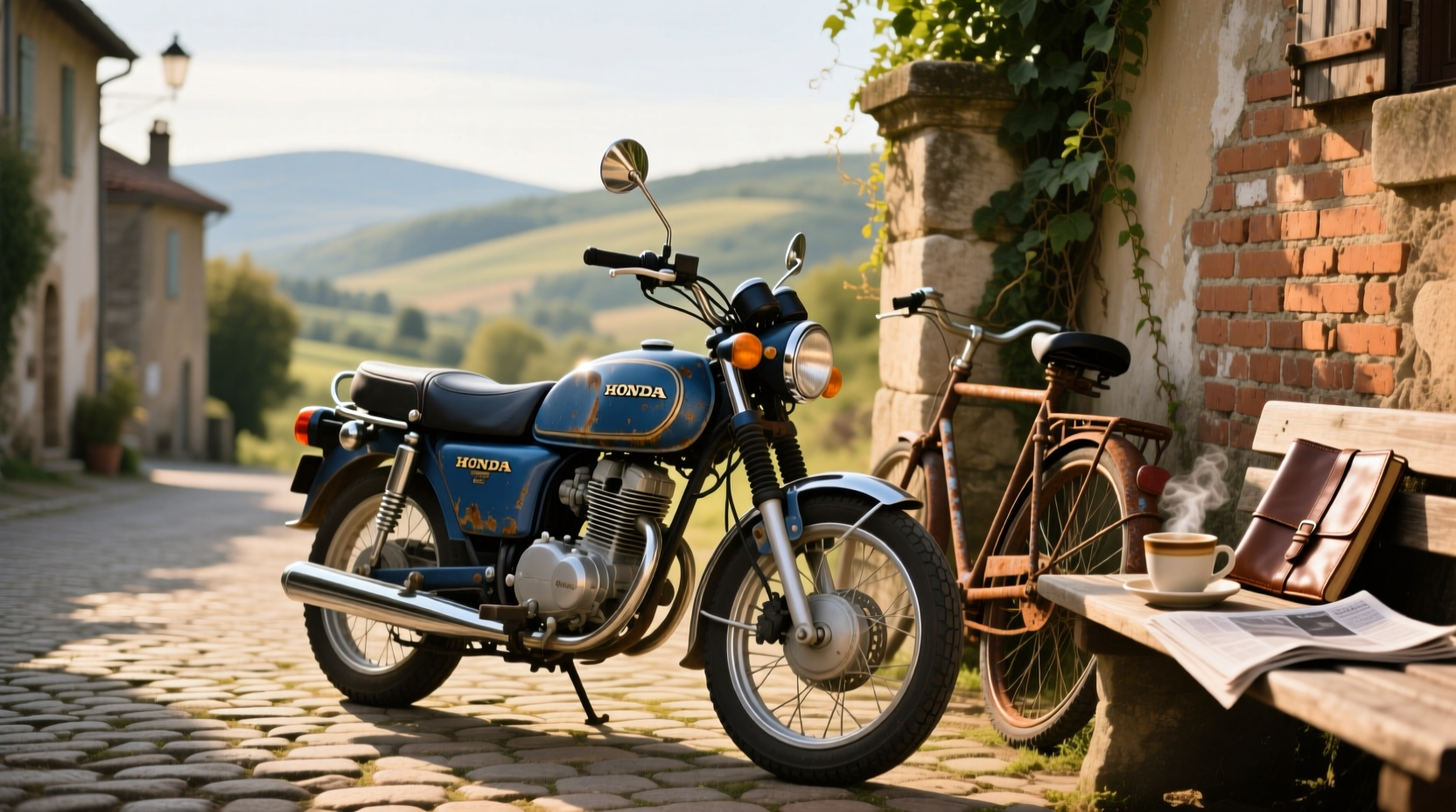
If you're searching for information on the Honda Dream 125 old model, you're likely considering purchasing a used or classic commuter motorcycle known for durability and fuel efficiency. This comprehensive guide covers everything buyers and enthusiasts need to know about the older generation Honda Dream 125, including engine specifications, performance metrics, regional variations, maintenance tips, and how it stacks up against modern iterations like the 2024–2025 models. Whether you're evaluating a secondhand unit in Southeast Asia or sourcing parts for restoration, understanding the key differences between vintage and updated versions is crucial for making an informed decision.
Understanding the Honda Dream 125 Legacy
The Honda Dream series has been a staple in global markets since the mid-20th century, evolving from small-displacement two-stroke machines into reliable four-stroke commuters. The Honda Dream 125 old model, particularly those produced before 2015, refers primarily to air-cooled, carbureted variants sold across Thailand, Indonesia, Myanmar, India, and other developing economies where affordability and ease of repair are essential.
These motorcycles were designed with simplicity in mind: single-cylinder engines, manual transmissions, chain drive, and minimal electronics. Unlike today’s PGM-FI (Programmed Fuel Injection) equipped models, earlier Dreams relied on constant-velocity (CV) carburetors, which made them easier to service but slightly less efficient under varying conditions.
Engine Specifications of the Older Honda Dream 125
One of the most frequently searched queries related to this bike is "what's the engine size of a Honda Dream 125?". For the older generation, the answer remains consistent:
- Displacement: 124 cc (often rounded to 125cc)
- Engine Type: Single-cylinder, 4-stroke, SOHC
- Cooling System: Air-cooled
- Bore x Stroke: 52.3 mm × 57.9 mm
- Compression Ratio: ~10:1
- Fuel System: Keihin or Mikuni-type CV carburetor
- Ignition: CDI (Capacitor Discharge Ignition)
- Starter: Kick start with optional electric starter (varies by market)
This configuration delivers approximately 8.5–9.0 horsepower at 7,500 rpm and around 9.5 Nm of torque at 6,000 rpm. While not powerful by modern standards, it provides smooth acceleration ideal for city commuting and light highway use.
| Feature | Old Model (Pre-2015) | New Model (Post-2020) |
|---|---|---|
| Engine Type | Carbureted 4-stroke | PGM-FI 4-stroke |
| Cooling | Air-cooled | Air-cooled |
| Power Output | ~8.7 HP | ~9.2 HP |
| Emissions Standard | Euro 2 equivalent | Euro 3+ |
| Top Speed | 85–90 km/h (53–56 mph) | 95–100 km/h (59–62 mph) |
| Maintenance Complexity | Low | Moderate |
Reliability and Real-World Performance
❓How reliable is the Honda Dream 125?
The old model Dream 125 has earned a reputation for exceptional longevity when maintained properly. Many units in countries like Cambodia, Vietnam, and the Philippines have logged over 60,000 kilometers (37,000 miles) without major engine work. Common factors contributing to long life include:
- Simple mechanical design with few failure points
- Durable internal components (forged connecting rods, hardened camshafts)
- Easy access to spare parts through OEM and aftermarket channels
- Widespread mechanic familiarity across rural and urban areas
However, real-world reliability depends heavily on usage patterns and maintenance history. Bikes used in stop-and-go traffic with infrequent oil changes may develop carbon buildup or worn valve guides. Over time, carburetor jets can clog due to poor fuel quality—a frequent issue in regions without standardized gasoline filtration.
Common Problems with the Honda Dream 125 Old Model
Despite its reputation, no machine is immune to wear. Here are the most commonly reported issues based on owner forums and repair logs:
1. Carburetor Deterioration ⚙️
After 5+ years of service, rubber diaphragms and plastic floats inside the carburetor degrade, leading to flooding or lean running. Symptoms include hard starting, stalling at idle, or surging RPMs. Rebuilding kits cost under $20 and are widely available.
2. Clutch Slippage 🔧
Due to frequent low-speed operation, the wet multi-plate clutch wears faster than expected. Riders often report slipping under load after 30,000 km if oil isn’t changed regularly. Using JASO MA-certified 10W-40 oil helps extend clutch life.
3. Electrical Gremlins ✨
Older wiring harnesses lack weatherproofing. Moisture ingress leads to corroded connectors, especially near the headlamp and ignition switch. Installing dielectric grease on terminals prevents future issues.
4. Exhaust Rusting 🌍
The stock muffler uses thin steel tubing that rusts quickly in humid climates. Aftermarket stainless options improve lifespan significantly.
5. Bearing Wear (Wheel & Swingarm) 🛠️
Without regular greasing, pivot points dry out. A telltale sign is a clunking noise during acceleration/deceleration. Servicing every 15,000 km prevents costly replacements.
Regional Variants and Market Differences
The Honda Dream 125 old model wasn't sold uniformly worldwide. Regional adaptations affect availability, pricing, and compatibility:
- Thailand: Sold as the Dream Neo, featuring chrome accents and dual seats; typically includes electric starter.
- India: Marketed under different names (e.g., CB Shine), with modified exhaust systems to meet local noise regulations.
- Myanmar: Units imported via unofficial channels often lack VIN traceability; verify ownership documents carefully.
- Philippines: Known as the Wave Alpha 125, mechanically identical but styled differently.
When importing or buying internationally, confirm whether the model matches your region’s road legality requirements. Some older Dreams do not meet current emission standards in stricter jurisdictions like the EU or California.
Value Retention and Pricing Trends 💰
Used prices vary widely depending on condition, location, and demand. As of 2024, average resale values for functional pre-2015 Honda Dream 125 units are:
- Southeast Asia: $350–$600 USD
- North America (imported): $900–$1,400 USD
- Europe (private sale): €700–€1,100
Premiums apply for bikes with full service records, original paint, and upgraded lighting or tires. Restoration projects using donor engines from Alibaba.com-listed suppliers (1) can cost $180–$300 for complete short blocks, though authenticity varies.
Maintenance Tips for Longevity 🧼
To keep your old model Dream 125 running smoothly for decades, follow these best practices:
- Change Engine Oil Every 1,500 km: Use high-quality semi-synthetic 10W-40 with JASO MA rating.
- Clean Air Filter Monthly: Especially important in dusty environments.
- Inspect Spark Plug Quarterly: Replace NGK DPR8E every 8,000 km.
- Lubricate Chain Weekly: Prevents premature sprocket wear.
- Check Valve Clearance Annually: Typical spec is 0.05 mm intake / 0.07 mm exhaust.
- Store Indoors When Possible: Protects electrical system and finish.
Upgrades and Aftermarket Modifications 🔗
Owners often seek ways to improve comfort or efficiency. Popular upgrades include:
- LED Lighting Kit: Reduces electrical load and improves visibility.
- Performance Carburetor: Keihin PE22 offers better throttle response.
- Silicone Wiring Harness: Resists heat and moisture degradation.
- Custom Seat: Enhances ride comfort for taller riders.
- Digital Tachometer: Adds modern instrumentation without altering stock appearance.
Note: Any modification affecting emissions may void registration eligibility in regulated markets.
Comparison with Newer Honda Dream Models (2021–2025)
Recent launches in Cambodia and Myanmar feature updated styling and fuel injection. Key differences:
- Fuel Delivery: New models use PGM-FI, improving cold starts and fuel economy (~70 mpg vs ~55 mpg).
- Braking: Some variants now offer front disc brakes instead of drum.
- Design: Modern angular bodywork replaces rounder classic lines.
- Price: MSRP around $2,260 USD, nearly 4x the value of older used units.
While newer versions offer technological advantages, purists argue the charm and simplicity of the old model remain unmatched. Additionally, DIY repairs are far more accessible without needing diagnostic tools for EFI systems.
Frequently Asked Questions (FAQ)
Below are answers to some of the most common questions users have about the Honda Dream 125 old model:
- What is the top speed of a Dream 125 old model?
- The maximum speed of the older Honda Dream 125 is typically between 85–90 km/h (53–56 mph), depending on terrain, rider weight, and maintenance condition.
- Can I replace the carburetor with a fuel-injected system?
- Technically possible but not recommended. Retrofitting PGM-FI requires ECU integration, sensors, and fuel pump installation—costly and complex for minimal gains.
- Are spare parts still available for the old Honda Dream 125?
- Yes. OEM components are still manufactured in Thailand and Indonesia. Aftermarket alternatives are widely available online and in local markets.
- Is the Honda Dream 125 suitable for long-distance riding?
- It’s best suited for short to medium commutes. Extended rides may cause discomfort due to basic suspension and seat ergonomics.
- How does the Dream 125 compare to the Super Cub?
- They share similar engines and reliability, but the Dream has a larger frame, more legroom, and slightly higher power output. The Super Cub excels in ultra-lightweight maneuverability.




 浙公网安备
33010002000092号
 浙B2-20120091-4