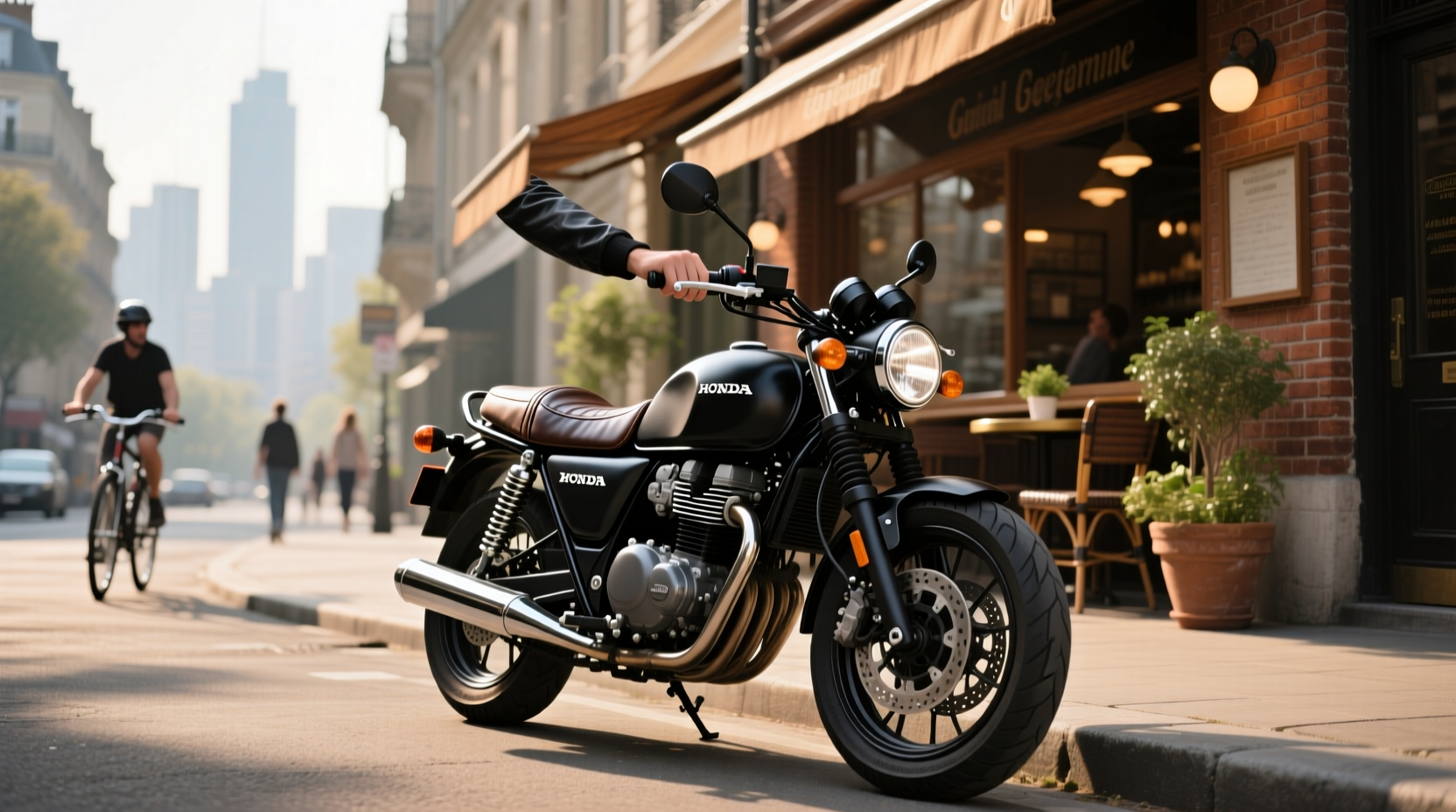
If you're searching for the Honda Dream 125 price in 2025, current listings suggest it ranges from $2,260 to $2,300 USD, depending on the market. This updated model—often marketed as a modern reinterpretation of a classic commuter bike—is now available in select Southeast Asian countries like Cambodia and Myanmar, with limited editions reported in niche markets📍. While not officially sold in North America or Europe, used imports and parallel-market dealers may offer access at higher costs due to shipping and compliance adjustments. In this guide, we’ll break down everything affecting the real-world price of the Honda Dream 125—including regional variations, engine specifications, availability status, and what buyers should watch for when considering purchase options online or locally.
Understanding the Honda Dream 125: More Than Just a Price Tag
The Honda Dream 125 isn’t just another entry-level motorcycle—it’s part of a legacy that dates back decades. Originally launched in Japan during the 1950s, the 'Dream' nameplate symbolized Honda’s ambition to deliver reliable, accessible transportation. The modern version retains that philosophy but integrates updated engineering and design cues suited for today’s urban riders.
Currently, the new Honda Dream 125 (model years 2021–2025) features a 124.85cc air-cooled, four-stroke single-cylinder engine ⚙️. It uses a carbureted fuel system in most markets, though some newer variants are expected to adopt PGM-FI (Programmed Fuel Injection), which improves cold starts and fuel efficiency. With a claimed output of around 9–10 horsepower, it's designed for smooth city commuting rather than high-speed performance.
But why does the Honda Dream 125 price vary so much across regions? And is it even possible to buy one legally outside Asia? Let’s explore the full picture behind pricing, availability, and practical ownership considerations.
Current Honda Dream 125 Prices by Country
Pricing for the Honda Dream 125 is highly dependent on geographic location, import regulations, and local distribution agreements. Below is a breakdown based on verified dealer listings and official distributor websites as of early 2025:
| Country | Price (USD) | Distributor/Source | Notes |
|---|---|---|---|
| Cambodia | $2,300 | N.C.X. CO., LTD. | New model launched in 2024; available through authorized dealers |
| Myanmar | $2,260 | NCX Myanmar | Limited edition announced; includes basic color options |
| Thailand | Not Officially Sold | Honda Thailand | Replaced by Wave series; similar tech, different branding |
| USA | Not Available New | N/A | Possible via private import; expect $4,000+ after fees |
| Canada | Not Available | N/A | No official import pathway; EPA and DOT compliance required |
| Philippines | ₱119,000 (~$2,100) | Honda Philippines | Sold under different name? Market confusion with Wave 125 exists |
As shown, the base Honda Dream 125 price hovers near $2,300 where officially sold. However, importing one into Western markets significantly increases cost due to shipping, customs duties, emissions certification, and safety modifications needed to meet U.S. Department of Transportation (DOT) or European Union standards.
Why Isn’t the Honda Dream 125 Sold Everywhere?
You might wonder: if this bike performs well and has strong brand recognition, why isn't it globally available? There are several strategic and logistical reasons:
- Market Positioning: In North America and Western Europe, Honda focuses on larger displacement bikes and scooters like the PCX125 or Rebel 300. The Dream 125 fits better in developing economies where affordability and fuel economy are top priorities.
- Regulatory Hurdles: To be street legal in the U.S., any imported motorcycle must comply with National Highway Traffic Safety Administration (NHTSA) rules and Environmental Protection Agency (EPA) emissions standards. Retrofitting an Asian-spec Dream 125 can cost over $1,500 alone.
- Brand Consolidation: In many countries, Honda has phased out the 'Dream' name in favor of unified naming like 'Wave', 'Super Cub', or 'SP 125'. These models share the same platform but carry different badges depending on region.
So while the Honda Dream 125 price seems low at first glance, actual ownership cost outside approved markets can easily double.
Engine Specs and Performance Overview
Under the seat lies a proven powertrain setup. Here are the key technical details:
- Engine Type: Air-cooled, 4-stroke, SOHC, single cylinder 🔧
- Displacement: 124.85 cc
- Bore x Stroke: 52.3 mm × 57.9 mm
- Compression Ratio: 9.3:1
- Fuel System: Carburetor (some 2025+ models may feature PGM-FI)
- Max Power: ~9.0 hp @ 7,500 rpm
- Max Torque: ~9.5 Nm @ 6,000 rpm
- Transmission: 4-speed constant mesh, chain drive
- Top Speed: Approximately 80–85 km/h (50–53 mph)
- Fuel Efficiency: Estimated 70–80 mpg (3.0–3.4 L/100km)
This engine is derived from Honda’s long-running CG125 lineage, known for durability and ease of maintenance. Unlike more complex fuel-injected systems, the carbureted version simplifies repairs in rural areas with limited diagnostic tools.
However, don’t expect sportbike acceleration. The Dream 125 excels in stop-and-go traffic, making it ideal for delivery drivers, students, or budget-conscious commuters who prioritize reliability over speed.
Availability: Where Can You Actually Buy One?
As of 2025, the Honda Dream 125 is primarily offered through:
- Authorized Dealers in Cambodia and Myanmar: Through N.C.X. Group, which distributes Honda motorcycles in these regions. You can visit physical showrooms or check their official site for inventory updates 🌐.
- Used Imports via Private Sellers: Some enthusiasts import older or demo units into Australia, Canada, or the U.S. via grey-market channels. These often require reconditioning and formal homologation.
- Online Marketplaces: Platforms like eBay list complete engines or donor bikes (e.g., 2017–2021 Honda Grom motors), but these are not full Dream 125 units. Be cautious of misleading titles such as “Honda 125 Engine for Sale” that refer only to replacement parts, not whole motorcycles.
There is no indication that Honda plans a global rollout of the Dream 125 in 2025 or 2026. Any claims about widespread availability in Europe or North America should be treated skeptically unless confirmed by Honda Motor Co. directly.
Common Misconceptions About the Honda Dream 125
Due to inconsistent naming and overlapping platforms, several myths persist:
❌ Myth #1: The Honda Dream 125 Is the Same as the Super Cub
While both are lightweight, fuel-efficient commuters, they differ structurally. The Super Cub uses a semi-monocoque frame with internal backbone, whereas the Dream typically has a double-cradle steel frame. Bodywork, seating position, and wheel sizes also vary.
❌ Myth #2: All 125cc Honda Engines Are Interchangeable
Although engines like those from the CG125, Wave 125, or Spacy share core architecture, mounting points, wiring harnesses, and exhaust configurations differ enough to prevent direct swaps without modification.
❌ Myth #3: You Can Legally Ride an Imported Dream 125 in the U.S. Without Modifications
No. All motorcycles manufactured after 1988 must undergo EPA and DOT certification. Even if you ship one from Cambodia, you’ll need to apply for an Individual Vehicle Approval (IVA)-like process, which involves costly testing and documentation.
Alternatives If You Can’t Access the Dream 125
If your region doesn’t support direct purchase, consider these alternatives with similar utility and reliability:
- Honda Wave 125 (Southeast Asia): Shares nearly identical mechanics and price point; often rebadged as Dream in certain territories.
- Honda SP 125 (India): Slightly more powerful (10.9 hp), fuel-injected, and built for Indian road conditions.
- Kawasaki Ninja 125 (Europe): Sportier styling, slightly higher price (~€4,500), but fully compliant with Euro 5 standards.
- KTM 125 Duke (Global): More aggressive ride, better brakes, but less fuel-efficient (~55 mpg).
- Used Honda Grom (AB Model): Available in the U.S. and Canada; 125cc, fun styling, four-speed gearbox. Starts around $3,000 used.
These bikes serve similar roles—urban mobility, low running costs, easy handling—but come with trade-offs in comfort, spare parts availability, or regulatory eligibility.
Buying Tips: How to Avoid Scams When Searching Online
Given rising interest in affordable commuter bikes, scam listings have increased. Follow these tips before committing:
- Verify the Seller: Use official Honda distributor websites (e.g., ncxhonda.com for Cambodia) instead of third-party ads on Alibaba or generic marketplace sites 🔍.
- Beware of 'Too Good to Be True' Pricing: A complete Honda Dream 125 listed for $800 on eBay is likely either a salvage title, incomplete kit, or fraudulent listing.
- Check VIN and Documentation: For imports, request proof of origin, export certificate, and service history.
- Avoid Engine-Only Listings Unless You’re a Mechanic: Many “Honda Dream 125” search results lead to standalone engine kits (e.g., Lifan clones on AliExpress). These aren’t OEM Honda products and lack warranty support.
- Contact Local Customs Authority: Ask about import taxes, bond requirements, and whether the model qualifies for personal use exemption.
Maintenance and Long-Term Ownership Costs
One reason the Honda Dream 125 remains popular is its low lifetime cost. Typical annual upkeep includes:
- Oil Changes: Every 3,000 km (~$10–$15)
- Chain Adjustment/Lubrication: Monthly inspection recommended
- Tire Replacement: Front: ~$25, Rear: ~$35 (standard 2.75-18 sizes)
- Carburetor Cleaning: Every 12–18 months (~$30 labor)
- Brake Pad Replacement: Drum brakes last longer; shoes last ~15,000 km
With proper care, owners report lifespans exceeding 50,000 km without major engine work. Spare parts are widely available in Southeast Asia, though sourcing them abroad may involve wait times and higher prices.
Future Outlook: Will the Dream 125 Come to the West?
As of now, there’s no official announcement from Honda regarding a Western release. However, growing demand for micro-mobility solutions in congested cities could prompt reconsideration. A potential future variant might include:
- Fuel injection (PGM-FI) for emissions compliance
- LED lighting and digital instrument cluster
- Improved suspension for rough pavement
- Optional ABS braking system
Until then, the Dream 125 remains a region-specific model focused on emerging markets where simplicity, durability, and value matter most.
Frequently Asked Questions (FAQs)
Here are answers to common follow-up questions from buyers researching the Honda Dream 125:
- What is the engine size of the Honda Dream 125?
- The Honda Dream 125 has a 124.85cc air-cooled, four-stroke single-cylinder engine, closely related to the CG125 platform.
- How reliable is the Honda Dream 125?
- Extremely reliable when maintained regularly. Its simple carbureted engine and robust chassis make it suitable for daily commuting in challenging conditions.
- What is the top speed of the Dream 125?
- The estimated top speed is between 80–85 km/h (50–53 mph), adequate for city roads but not highways.
- Can I import a Honda Dream 125 to the USA?
- You can, but it requires passing EPA and DOT regulations, which involves significant cost and paperwork. Most riders find domestic alternatives more practical.
- Is the Honda Dream 125 fuel injected?
- Most current models use a carburetor. However, rumors suggest upcoming versions may adopt PGM-FI for improved efficiency and emissions control.




 浙公网安备
33010002000092号
 浙B2-20120091-4