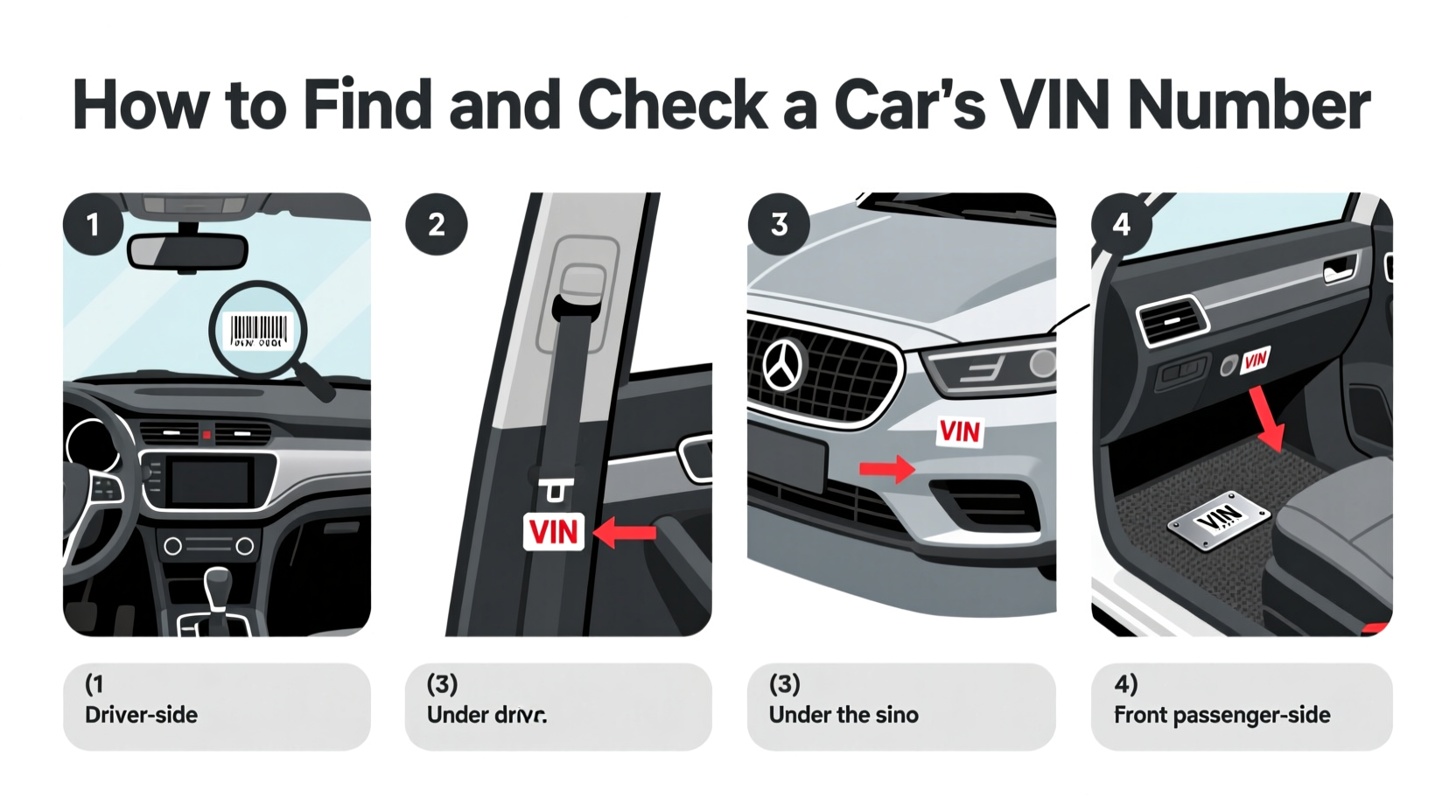
If you're wondering how can I check the VIN number on a car, the answer is simple: locate the 17-digit Vehicle Identification Number typically found on the driver’s side dashboard near the windshield, on the driver’s side door jamb, or in official documents like the title or insurance papers. This unique code unlocks critical details about a vehicle’s history, manufacturer, and specifications—making it essential when buying, selling, registering, or servicing a car. Knowing how to verify a VIN properly helps prevent fraud, confirms recalls, and ensures you’re making informed automotive decisions.
What Is a VIN and Why Does It Matter?
A Vehicle Identification Number (VIN) is a unique 17-character alphanumeric code assigned to every motor vehicle during manufacturing. No two vehicles have the same VIN (except for very old models pre-1981), making it a digital fingerprint for your car. The VIN provides access to vital information such as:
- Manufacturer and country of origin
- Engine type and size
- Model year and assembly plant
- Safety features and trim level
- Recall history and service records
- Accident reports and ownership history
This data is crucial whether you’re purchasing a used car, verifying insurance coverage, or checking for open recalls from the National Highway Traffic Safety Administration (NHTSA). In short, knowing how to check the VIN number on a car empowers you with transparency and protection against hidden issues.
Where to Find the VIN on a Car
The VIN is placed in several standardized locations on most modern vehicles. Here are the most common places to look:
1. Driver’s Side Dashboard (Visible Through Windshield)
The most accessible and visible location is on the lower corner of the windshield on the driver’s side. Stand outside the vehicle and look down at the dashboard where it meets the windshield. You should see a stamped metal plate with the 17-digit VIN. This spot allows law enforcement and inspectors to quickly identify the vehicle without entering it.
2. Driver’s Side Door Jamb
Open the driver’s door and check the edge of the door frame (the jamb). There’s usually a sticker or metal tag that includes the VIN along with tire pressure ratings and other compliance labels. This location is protected from weather and tampering, making it reliable even if the windshield is damaged.
3. Engine Compartment
In some vehicles, especially older models or certain brands like Ford and GM, the VIN may be stamped on a metal plate under the hood—often attached to the firewall or radiator support. Refer to your owner’s manual if you can’t locate it elsewhere.
4. Rear Frame or Trunk Area (Less Common)
Some manufacturers place secondary VIN tags on the rear frame rail, trunk floor, or beneath carpeting in luxury vehicles. These are harder to access but serve as anti-theft measures—if someone replaces the primary VIN, this backup can confirm authenticity.
5. On Paperwork and Digital Records
You don’t need physical access to the car to find its VIN. It appears on multiple official documents:
- Title and Registration Certificate: Always listed clearly.
- Insurance Policy Documents: Found on declarations pages.
- Service Records and Repair Orders: Often included by mechanics.
- Lease Agreements: Listed in contract details.
- Electronic Titles (e-Titles): Available through state DMVs in digital form.
| Location | Visibility | Best For |
|---|---|---|
| Dashboard (windshield) | High – visible from outside | Quick checks, inspections |
| Driver’s side door jamb | Medium – requires opening door | Verifying authenticity |
| Owner’s manual / paperwork | High – no car needed | Remote verification |
| Under the hood | Low – varies by model | Technical verification |
| Rear frame / chassis | Very low – hidden | Fraud detection |
How to Read and Decode a VIN
Understanding what each part of the VIN means adds value when evaluating a vehicle. Since 1981, all VINs follow a standardized ISO 3779 format. Let’s break down a sample VIN: 1G1ZF5ST0H0123456
- Characters 1–3: World Manufacturer Identifier (WMI)
Indicates country, manufacturer, and vehicle type. For example, '1G1' = USA, General Motors, passenger car. - Characters 4–8: Vehicle Descriptor Section (VDS)
Describes model, body style, engine type, and series. 'ZF5S' might indicate a Chevrolet Malibu with a specific trim and engine. - Character 9: Check Digit
Used for validation (mainly North America) to detect fake VINs using a mathematical formula. - Character 10: Model Year
'H' = 2017, 'J' = 2018, etc. Letters I, O, Q, U, Z are skipped to avoid confusion. - Character 11: Assembly Plant
Identifies the factory where the car was built. - Characters 12–17: Sequential Production Number
Unique serial number for the individual vehicle.
You can decode any VIN manually using lookup tables, but it’s easier and more accurate to use free online tools provided by NHTSA, NICB, or reputable third parties like AutoCheck or Carfax.
Why Checking the VIN Is Critical When Buying a Used Car
One of the top reasons people search how can I check the VIN number on a car is because they’re considering a used vehicle purchase. A VIN check reveals red flags that aren’t apparent during a test drive:
- Flood Damage: Some rebuilt salvage cars are resold without disclosure.
- Odometer Rollback: Discrepancies in mileage across service records can be caught via VIN history reports.
- Outstanding Recalls: The NHTSA offers a free recall lookup using the VIN.
- Lemon History: Vehicles bought back by manufacturers due to defects may still appear clean otherwise.
- Theft Records: Confirm the car hasn’t been reported stolen or cloned.
To perform a full background check, enter the VIN into a trusted database. Free options include:
- NHTSA VIN Decoder – Official U.S. government site for recalls and basic specs.
- NICB VINCheck – Free theft and salvage history tool (U.S. only).
Paid services like Carfax or AutoCheck offer deeper insights including accident reports, service history, and previous owners—but always cross-reference with free sources for accuracy.
Common Mistakes When Checking a VIN
Even experienced buyers make errors when verifying a VIN. Avoid these pitfalls:
- Misreading Similar Characters: '0' vs 'O', '1' vs 'I', '8' vs 'B'. Always double-check visually and compare across multiple sources.
- Using an Incorrect VIN: Sellers sometimes provide the wrong number accidentally—or intentionally hide problems. Verify the VIN matches on both the dashboard and door jamb.
- Trusting Only Free Reports: While helpful, free VIN checks often miss detailed maintenance logs or minor accidents not reported to insurers.
- Ignoring Regional Differences: In Canada, some provinces require additional safety certifications. In Europe, the VIN system aligns with EU standards but uses different reporting agencies.
- Not Verifying in Person: Photos can be faked. Always inspect the physical VIN tag before finalizing a deal, especially with private sellers.
VIN Checks Across Different Countries
While the 17-digit VIN standard is global, how you access information varies:
- United States & Canada: Use NHTSA, NICB, provincial registries (e.g., Ontario’s MVSR), and commercial providers like Carfax Canada.
- European Union: Each country maintains its own vehicle registry. Services like HPI (UK), DAT (Germany), or Car-Pass (Belgium) offer paid reports using the VIN or license plate.
- Australia & New Zealand: Use PPSR (Personal Property Securities Register) for free written-off vehicle checks.
- Other Regions: Many developing nations lack centralized databases, increasing risk when importing vehicles. Always consult local authorities or certified inspectors.
If you’re importing a car or verifying a foreign VIN, ensure compatibility with domestic systems. Some older European cars pre-date the 17-digit standard and may require special decoding.
Can You Check a VIN Without the Physical Car?
Yes—provided you have access to documentation. If you’re shopping online or dealing with a remote seller, request photos of:
- The VIN on the dashboard (clear shot through windshield)
- The door jamb label
- The vehicle title or registration
Cross-reference all three to ensure consistency. If the numbers don’t match, treat it as a major warning sign. Scammers often clone VINs from similar-looking vehicles.
Also consider ordering a pre-purchase inspection from a certified mechanic who can verify the VIN independently and inspect for signs of tampering.
Legal and Safety Implications of VIN Verification
Proper VIN verification isn’t just smart—it’s often legally required. Here’s why:
- Registration Renewal: Most DMVs require a VIN inspection for rebuilt, imported, or out-of-state vehicles.
- Insurance Claims: Insurers validate VINs before processing total loss or theft claims.
- Recall Compliance: Manufacturers notify owners via registered VINs. If your VIN isn’t correctly recorded, you might miss life-saving repairs.
- Fraud Prevention: Altered or missing VINs are illegal in most jurisdictions and could result in fines or seizure of the vehicle.
In the U.S., altering a VIN carries federal penalties under 18 U.S.C. § 1028. Law enforcement uses VINs to track stolen vehicles, so ensuring yours is intact protects both legal standing and personal safety.
Final Tips for Accurate VIN Checks
To get the most accurate results when learning how to check the VIN number on a car, follow these best practices:
- Use Multiple Sources: Combine free government tools with paid reports for comprehensive insight.
- Inspect Physically: Never rely solely on photos or verbal confirmation.
- Verify Before Payment: Run a VIN check before handing over cash or signing contracts.
- Keep a Record: Save screenshots or PDFs of VIN reports for future reference or resale.
- Report Suspicious Activity: If you suspect VIN cloning or fraud, contact your local DMV or law enforcement immediately.
Frequently Asked Questions (FAQs)
Can I check a VIN for free?
Yes. The U.S. Department of Transportation’s NHTSA website offers a free VIN lookup for recalls and basic vehicle info. NICB also provides a free theft and salvage check. However, detailed history reports usually require payment through services like Carfax.
Is the VIN the same as the chassis number?
In most modern vehicles, yes. The terms are often used interchangeably, though “chassis number” is more common in commercial or international contexts. Always confirm it’s a 17-digit code matching global standards.
What if the VIN is missing or altered?
A missing or tampered VIN is a serious red flag. Contact your local DMV or law enforcement. Replacing a lost VIN typically requires a formal inspection and documentation to prevent fraud.
Do motorcycles and trailers have VINs?
Yes. All highway-legal vehicles manufactured after 1981—including motorcycles, ATVs, RVs, and trailers—have 17-digit VINs. Locations vary; on trailers, it’s often on the tongue or frame.
How often should I check my car’s VIN-related information?
At minimum, check annually for outstanding recalls via NHTSA.gov. Also verify when buying, selling, insuring, or importing a vehicle. Keeping up-to-date ensures safety and compliance.




 浙公网安备
33010002000092号
 浙B2-20120091-4