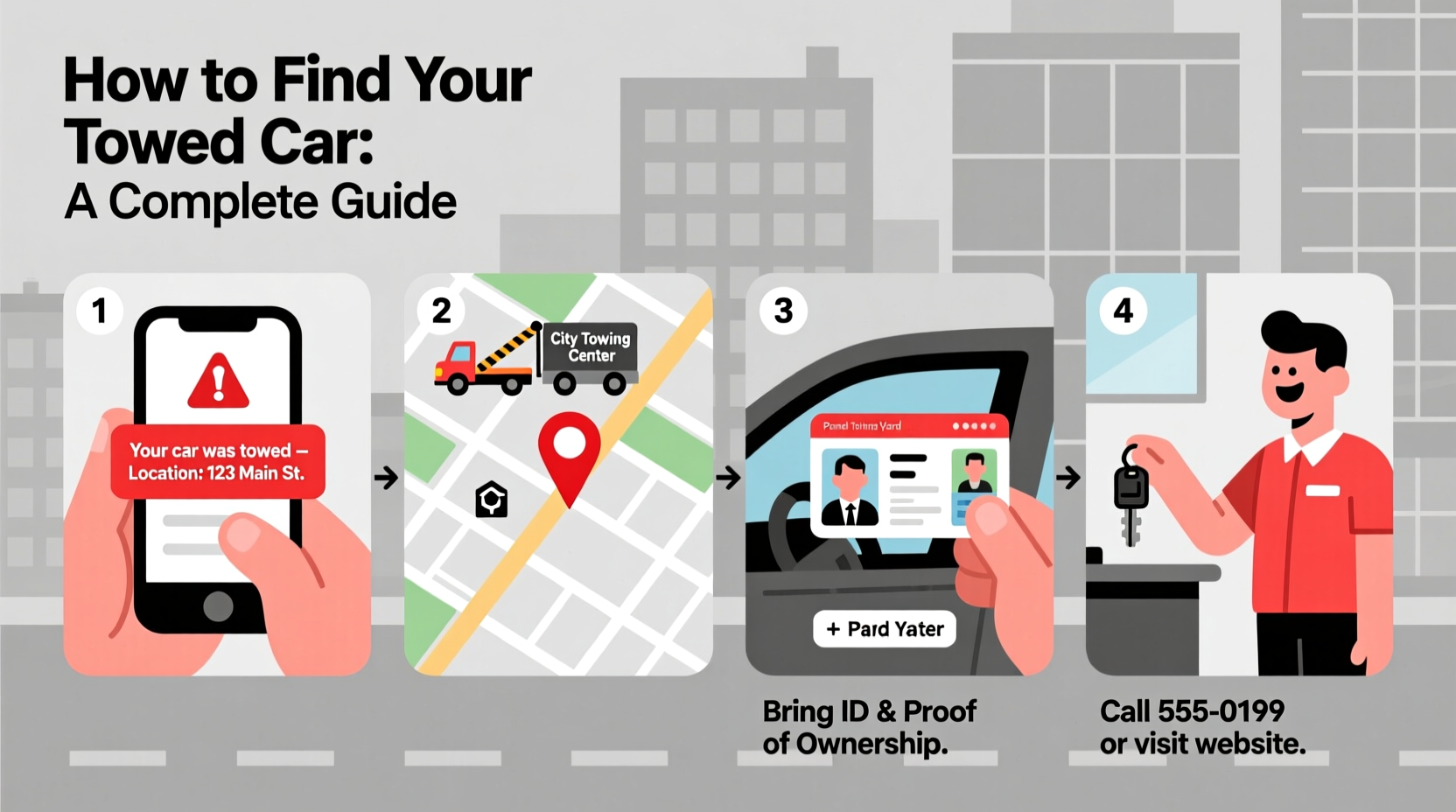
If you're wondering how can I find my car that was towed, start by checking with your city's non-emergency police line or local Department of Motor Vehicles (DMV). Most vehicles are taken to municipal impound lots or private tow yards within hours of being removed. The fastest way to locate your vehicle is by calling your local police department’s tow inquiry line and providing your license plate number, VIN, or address where the car was parked. This guide will walk you through every step—from confirming the tow, identifying the towing company, retrieving your car, and avoiding common mistakes—to help you recover your vehicle efficiently and affordably.
Why Was My Car Towed?
Understanding why your car was towed is the first step toward getting it back. Common reasons include:
- Parked illegally (e.g., blocking a driveway, fire hydrant, or handicap spot)
- Expired registration or excessive parking violations
- Abandoned vehicle on public property
- Towed during a natural disaster or emergency evacuation
- Private property towing (landlords, apartment complexes, shopping centers)
- Post-accident removal by law enforcement
In some cases, especially with private property tows, the vehicle may be removed without prior warning. However, most municipalities require signage indicating that unauthorized vehicles will be towed. Knowing the reason helps determine who authorized the tow and where your car might be stored.
Step-by-Step: How to Locate a Towed Vehicle
Finding your towed car involves systematic steps. Follow this checklist to minimize delays and fees.
1. Confirm That Your Car Was Actually Towed
Before assuming your car was towed, double-check:
- Did you misremember the parking location?
- Was it stolen? File a police report if theft is suspected.
- Could someone else have moved it (family member, valet, rental service)?
Once you’re certain the vehicle is missing due to towing, proceed to locate it.
2. Contact Local Authorities Immediately
The quickest method to find out where your car was towed is to contact your city’s police department or transportation authority. Most cities maintain a centralized database of all towed vehicles.
Call your local non-emergency police line (not 911) and provide:
- Your full name
- License plate number
- Vehicle Identification Number (VIN)
- Make, model, and color of the car
- Where and when you last parked it
They can usually tell you within minutes whether your car was impounded, which agency handled the tow, and the name and address of the impound lot.
3. Check Online Tow Search Systems
Many cities offer online tools to search for towed vehicles. For example:
- New York City: NYC Department of Transportation
- Los Angeles: LA Tow Search Portal
- Chicago: City of Chicago Impound Lookup
These platforms allow users to enter their license plate or VIN and instantly see the status and location of their vehicle. Availability varies by jurisdiction, so always verify through official government websites.
4. Identify the Type of Tow
The type of tow determines who has custody of your car and how quickly you can retrieve it:
| Type of Tow | Who Authorizes It? | Storage Location | Recovery Process |
|---|---|---|---|
| Municipal/Police Tow | Law enforcement | City impound lot | Contact police; pay fines + fees |
| Private Property Tow | Property owner | Private tow yard | Contact tow company directly |
| Accident-Related Tow | Police or EMS | Designated impound facility | Obtain police report first |
| Abandoned Vehicle Tow | City code enforcement | Municipal storage | May require hearing or appeal |
Distinguishing between these types ensures you contact the correct party and avoid unnecessary delays.
5. Visit the Impound Lot (If Necessary)
If phone and online methods fail, visit the suspected impound lot in person. Bring:
- Government-issued ID
- Proof of ownership (registration, title, or insurance card)
- Payment method (cash, credit, or certified check—check accepted forms)
Note: Some facilities only accept cash for initial release. Confirm payment options before arriving.
What Information Do You Need to Retrieve Your Car?
To reclaim your vehicle, you’ll typically need to present:
- Valid photo ID: Driver’s license, state ID, or passport.
- Proof of ownership or authorization: Vehicle registration, title, or notarized letter if you’re not the registered owner.
- Payment for fees: Includes towing, daily storage, administrative costs, and possibly unpaid citations.
Some states allow immediate release if you can prove valid insurance and registration—even if expired at time of tow—but policies vary widely.
How Much Does It Cost to Get a Towed Car Back?
Costs depend on location, duration in storage, and reason for tow. Typical charges include:
- Towing fee: $50–$200
- First-day storage: $20–$50
- Additional days: $25–$75 per day
- Administrative fee: $20–$60
- Citation fines: Vary based on violation
In major cities like Los Angeles or New York, total costs can exceed $500 after just a few days. Fees accrue daily, so prompt action is critical.
Time Limits and Vehicle Disposal Rules
Most jurisdictions impose strict timelines before they auction or scrap unclaimed vehicles:
- California: 30 days for most tows; 4 days for abandoned vehicles.
- New York: 15–20 days depending on city rules.
- Texas: 48 hours for private property tows; up to 20 days otherwise.
- Florida: 10–15 days depending on county.
After the deadline, the impound lot may sell your car at auction or dismantle it. Always act quickly and keep records of all communications.
Common Mistakes When Trying to Recover a Towed Car
Avoid these pitfalls that delay recovery and increase costs:
- Waiting too long: Storage fees grow rapidly—act within 24 hours if possible.
- Not verifying the tow company: Scammers sometimes pose as tow operators. Only deal with licensed, bonded agencies.
- Assuming all fees are negotiable: While some lots offer waivers for low-income individuals, most fees are set by law.
- Going to the wrong lot: Double-check the exact address. Many cities use third-party contractors with multiple locations.
- Bringing incomplete documentation: Without proper ID and proof of ownership, you won’t get your car released.
Regional Differences in Towing and Impound Procedures
Towing laws vary significantly across the U.S. and Canada. Key differences include:
- Signage requirements: In California, private property must display visible “Tow Away” signs; in Texas, no signage is required for certain commercial zones.
- Release conditions: Some states require current registration and insurance; others allow retrieval with backdated documents.
- Fee caps: States like Oregon regulate maximum towing and storage rates; others leave pricing to market forces.
- Notification obligations: In Illinois, owners must be notified within 2 hours of towing; many states have no such rule.
Always research your state or municipality’s specific regulations. Contact your local DMV or consumer protection office for guidance.
Can You Fight a Tow?
Yes, but success depends on circumstances. Grounds for disputing a tow include:
- No visible warning signs on private property
- Your car wasn’t actually violating any rules
- Improper procedure (e.g., towed during posted overnight parking hours)
- Vehicle was marked as disabled or had hazard lights on
To contest a tow:
- Obtain the official tow report
- Gather evidence (photos, witness statements, dashcam footage)
- File an appeal with the city or small claims court
- In private tows, request itemized billing and licensing verification
Some cities offer mediation services. If successful, you may receive a refund of fees or have citations dismissed.
Preventing Future Tows: Practical Tips
To avoid having your car towed again:
- Always check for parking signs and restrictions
- Never park in front of driveways, fire hydrants, or bus stops
- Keep registration and insurance current
- Use designated parking areas in residential neighborhoods
- If renting, confirm parking rules with landlords or HOAs
- Install a GPS tracker to monitor vehicle movement
Consider using apps like ParkMobile or SpotHero to reserve legal spots in advance.
What If My Car Was Towed in Another State or Country?
If your car was towed while traveling, follow similar steps—but adapt to local systems. In Canada, contact provincial transportation ministries. In Europe, many countries have stricter parking enforcement and higher fines. Rental cars towed abroad should be reported immediately to the rental agency, as they often handle disputes.
International tows may involve language barriers and unfamiliar legal processes. Seek assistance from local consulates or expat communities if needed.
Frequently Asked Questions
How long does it take for a towed car to appear in the system?
Most vehicles appear in city databases within 1–3 hours after being towed. Private tows may take longer to register. Call the police or check online portals periodically.
Can someone else pick up my towed car?
Yes, if they have a notarized authorization letter, your ID copy, and all required documents. Policies vary by location, so confirm with the impound lot first.
Do I need insurance to retrieve my towed car?
Some states require proof of active insurance before releasing the vehicle. Others allow retrieval without insurance but may impose penalties later.
What happens if I can’t afford the tow fees?
Some cities offer financial hardship programs or payment plans. Contact the impound lot manager or city social services for options. Delaying increases costs, so seek help early.
Is there a grace period after my car is towed?
Generally, no. Fees start accruing immediately upon arrival at the lot. A few cities offer a 2-hour window to claim the car at reduced cost, but this is rare.




 浙公网安备
33010002000092号
 浙B2-20120091-4