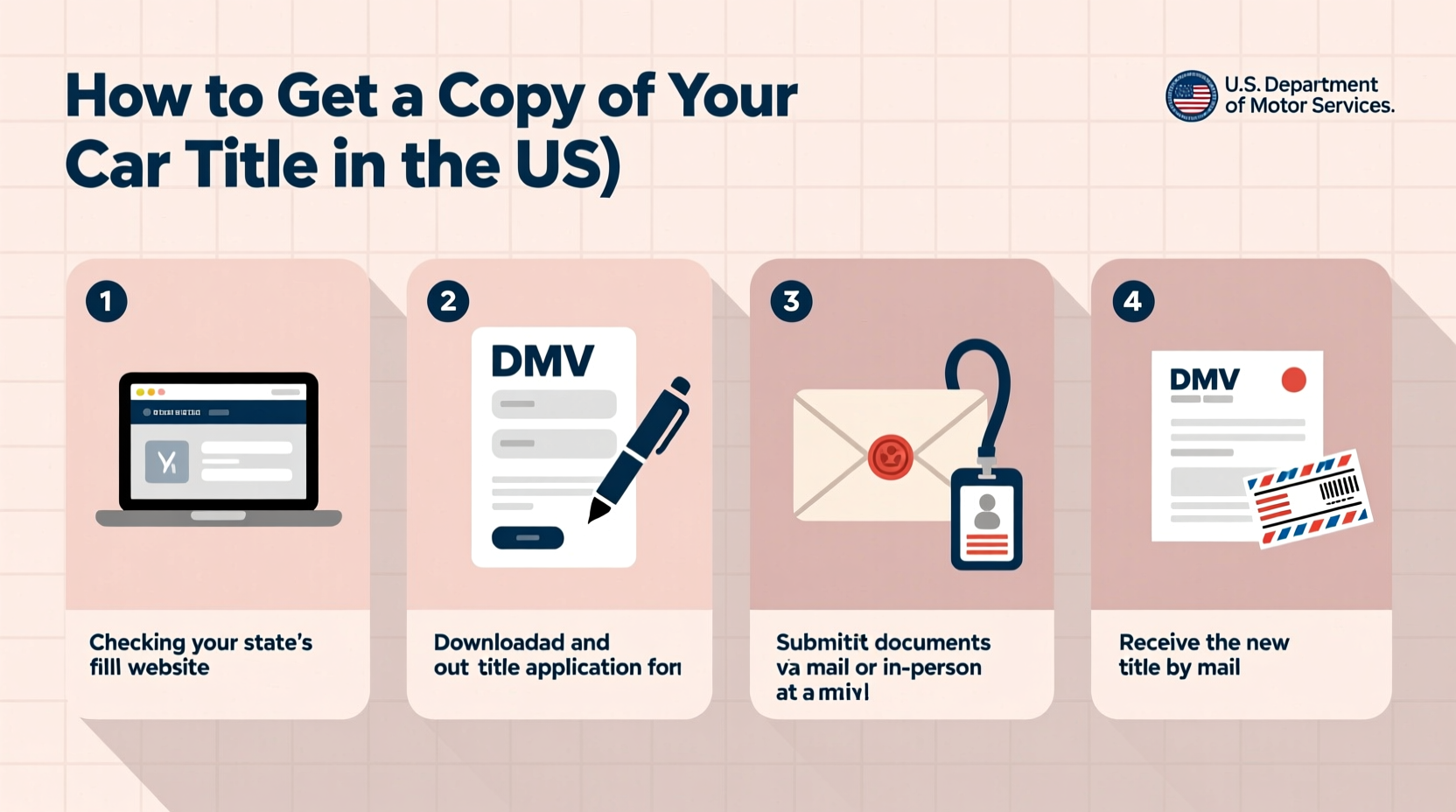
If you're wondering how can I get a replacement car title, the answer depends on your state's Department of Motor Vehicles (DMV) procedures, but generally involves submitting an application—online, by mail, or in person—along with identification, proof of ownership, and a small fee. Most U.S. states allow vehicle owners to request a duplicate car title quickly and securely, often within 7 to 14 business days. This guide breaks down every step, eligibility requirements, processing times, and common pitfalls so you can restore your vehicle documentation efficiently and legally.
Why You Might Need a Duplicate Car Title
A car title, also known as a certificate of title, is a legal document proving ownership of a motor vehicle. Losing it doesn’t mean you’ve lost ownership, but it does complicate key actions like selling, transferring, or registering your car. Common reasons people need to get a copy of my car title include:
- The original was lost, stolen, or damaged
- Moving to a new state that requires re-titling
- Selling the vehicle and needing proof of ownership
- Name change due to marriage, divorce, or legal update
- Refinancing or securing a loan using the car as collateral
Without a valid title, many transactions involving your vehicle become impossible. That’s why knowing how to obtain a duplicate is essential for responsible car ownership.
General Steps to Request a Duplicate Car Title
While each U.S. state manages its own titling system, the process for how to get a copy of your car title follows a similar structure across jurisdictions. Below are the universal steps most drivers will encounter:
- Confirm Eligibility: Only the registered owner(s) listed on the current title record can request a duplicate. If there’s a lienholder (e.g., a bank), they may need to be involved or release their interest first.
- Choose Your Submission Method: Most states offer three options: online, by mail, or in person. Online is fastest where available; in-person allows immediate verification but may require appointments.
- Complete the Application Form: Typically called “Application for Duplicate Title” or similar. This form collects vehicle details (VIN, license plate number), owner information, and reason for replacement.
- Provide Proof of Identity: A government-issued photo ID such as a driver’s license or passport is required. Some states accept notarized affidavits if documents are missing.
- Pay the Required Fee: Fees range from $2 to $25 depending on the state. Expedited service usually costs extra.
- Wait for Processing: Standard processing takes 7–14 business days. Some states issue instant titles at DMV offices.
State-by-State Variations in Obtaining a Duplicate Title
There is no national database for car titles—each state operates independently. Here’s a comparison of policies in five major states:
| State | Online Option? | Fee Range | Processing Time | Notary Required? |
|---|---|---|---|---|
| California | Yes (for eligible vehicles) | $23 | 8–12 business days | No |
| Texas | Yes (via TxDMV portal) | $6.75 + $1.50 convenience fee | 3–5 business days | No |
| New York | No | $20 | 2–4 weeks | Yes (if mailed) |
| Florida | Yes (through FLHSMV website) | $7.75 | 7–10 business days | No |
| Illinois | Limited (in-person preferred) | $95 | 10–15 business days | Yes |
As shown, fees and timelines vary significantly. For example, Texas offers one of the lowest fees and fastest turnaround, while Illinois has higher costs and stricter documentation rules. Always check your state’s official DMV website for the most accurate and updated instructions.
How to Apply Online for a Duplicate Title
Many states now support online applications through secure portals. To get a copy of my car title online, follow these steps:
- Visit your state’s DMV or motor vehicle agency website (e.g., dmv.ca.gov, txdmv.gov).
- Navigate to “Vehicle Services” > “Title Replacement” or use the search function.
- Log in or create an account if required.
- Enter your vehicle identification number (VIN) and personal information.
- Verify ownership details and select the reason for replacement.
- Review and submit the application.
- Pay the fee using a credit/debit card or electronic check.
- Receive confirmation via email; track status online.
Online services are typically available only if:
- There are no liens on the vehicle
- You’re the sole owner or all co-owners apply together
- No recent ownership changes have occurred
- Your address is up to date with the DMV
Note: Not all states allow full online processing. In some cases, you may start online but still need to mail documents or appear in person.
Applying by Mail or In Person
If online options aren’t available or you prefer physical submission, you can request a duplicate car title by mail or in person.
By Mail:
- Download and print the duplicate title application from your state DMV site.
- Fill out all fields accurately; incomplete forms cause delays.
- Include a photocopy of your photo ID.
- Some states require notarization—check local rules.
- Enclose payment via check or money order (no cash).
- Send to the designated DMV mailing address.
- Allow additional time for postal delivery both ways.
In Person:
- Locate your nearest DMV office using the state’s branch locator tool.
- Make an appointment if required (many states now mandate this).
- Bring original ID, completed form, and payment method.
- Staff will verify your identity and process the request.
- In many states, you’ll receive the title before leaving.
Tip: Call ahead to confirm operating hours, required documents, and whether walk-ins are accepted.
Special Cases: What If There’s a Lien on the Vehicle?
If you’re still paying off your car, the lender (lienholder) usually holds the original title. In this case, you cannot get a duplicate directly from the DMV without their involvement.
To get a copy of your car title when there's a lien:
- Contact your lender to confirm if they hold the title.
- Ask if they provide duplicate copies upon request.
- After loan payoff, request a lien release (Form DMV-58 in some states).
- Submit the lien release to the DMV along with your duplicate title application.
- The DMV will then issue a clean title in your name.
Never attempt to sell or transfer a vehicle with an active lien without proper clearance—it could lead to legal issues.
Common Mistakes to Avoid When Requesting a Duplicate Title
Even simple errors can delay your request. Avoid these frequent missteps:
- Using outdated forms: Download the latest version directly from your state DMV site.
- Incomplete information: Double-check VIN, license plate, and owner names for accuracy.
- Incorrect payment: Use exact amounts and acceptable methods (check, money order, card).
- Failing to notarize when required: Some states reject unnotarized mailed applications.
- Ignoring name discrepancies: If your ID doesn’t match the title, bring legal documentation (e.g., marriage certificate).
Pro tip: Take photos of all submitted documents before sending them. Keep records for tracking and dispute resolution.
How Long Does It Take to Receive a Duplicate Title?
Processing times vary widely:
- Same-day: Available in-person in states like Texas and Florida (with expedited service).
- 3–7 business days: Typical for online requests in states with digital systems.
- 2–4 weeks: Common for mailed applications, especially in states like New York and Michigan.
Delays often occur due to high volume, holidays, or incomplete submissions. Track your application using the reference number provided after submission.
Can Someone Else Request a Duplicate Title for Me?
In most cases, yes—but only with proper authorization. If you’re unable to apply yourself, you can authorize another person via a power of attorney (POA) form. Requirements include:
- A notarized POA document naming the agent.
- The agent must present their own ID and a copy of the POA.
- Some states require specific DMV-approved POA forms.
This option is helpful for elderly, disabled, or out-of-state owners who need assistance.
Is a Duplicate Title the Same as the Original?
Yes, in legal standing. A duplicate title has the same validity as the original and grants full ownership rights. However, it will typically be marked “Duplicate” or “Reissue” to distinguish it from the initial document.
Once issued, the previous title is void. If found later, it cannot be used for sale or registration.
What to Do If You Find the Old Title After Receiving a Duplicate
If you locate the original after obtaining a duplicate, destroy it immediately (shred or burn). The newer title supersedes the old one. Keeping both could raise suspicion of fraud during a sale or inspection.
Frequently Asked Questions (FAQs)
Can I get a duplicate car title the same day?
Yes, in many states if you visit a DMV office in person. Texas, Florida, and Arizona often issue duplicates within minutes during regular business hours, provided all documents are in order.
How much does it cost to replace a lost car title?
Replacement fees range from $2 (Alaska) to $95 (Illinois). Most states charge between $10 and $25. Additional fees may apply for expedited service or notary verification.
Do I need a notary to get a duplicate title?
It depends on your state and submission method. Mailed applications in New York, Illinois, and Michigan usually require notarization. Online and in-person requests typically do not.
Can I sell my car without a title?
No. Buyers need a signed title to register the vehicle. If you’ve lost yours, obtain a duplicate before listing the car for sale. Selling without a title is illegal in most states and may result in penalties.
What if my name changed? Can I get a corrected title instead?
Yes. Instead of a duplicate, you’d apply for a corrected or amended title. You’ll need to provide legal proof of the name change (marriage license, court order) and pay a standard title fee.




 浙公网安备
33010002000092号
 浙B2-20120091-4