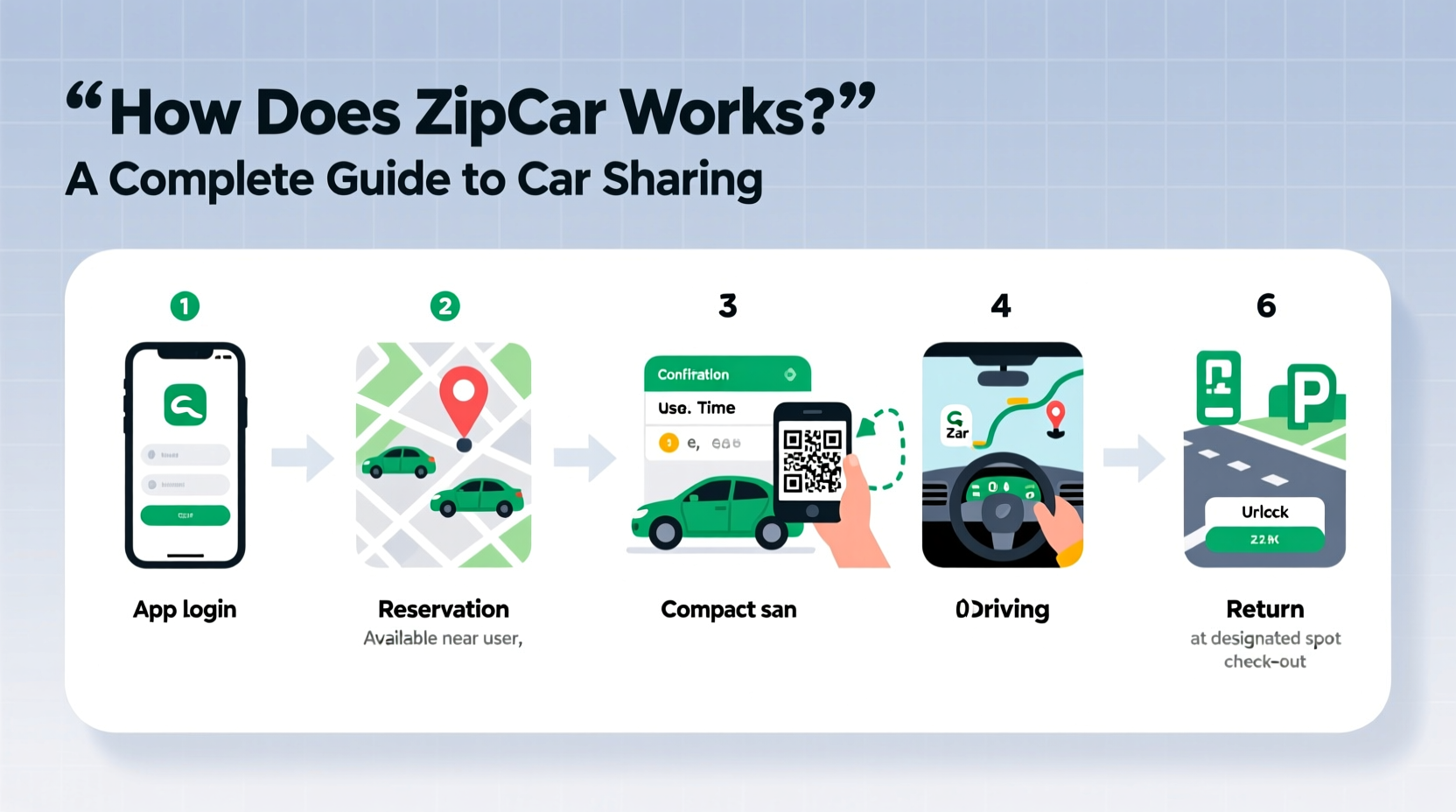
Zipcar is a car-sharing service that allows members to rent vehicles by the hour or day without the long-term commitment of ownership. Understanding how Zipcar works for short-term urban rentals reveals a flexible, cost-effective alternative to traditional car rental or ownershipâespecially in densely populated cities. Members reserve cars online or via the mobile app, unlock them with a key fob or smartphone, and return them to the same location after use. This guide breaks down every aspect of the Zipcar experience, including membership requirements, pricing models, vehicle access, insurance coverage, and common misconceptions.
What Is Zipcar and How Does It Operate?
Founded in 2000 and now owned by Avis Budget Group, Zipcar operates as a membership-based car-sharing network available in major cities across the United States, Canada, the United Kingdom, and parts of Europe. The core idea behind Zipcar is simple: provide convenient, on-demand access to vehicles parked in designated spots throughout urban areas, eliminating the need for personal car ownership for occasional drivers.
Unlike traditional rental agencies like Hertz or Enterprise, Zipcar focuses on short-term usageâoften just a few hours at a time. This makes it ideal for running errands, weekend getaways, or airport trips without paying for an entire dayâs rental. All vehicles are insured, maintained, and fueled (with a gas card provided), reducing logistical burdens for users.
Step-by-Step: How to Use Zipcar
To fully understand how Zipcar works, letâs walk through the user journey from sign-up to drop-off:
- Sign Up for Membership: Visit zipcar.com or download the app. Youâll need a valid driverâs license, a major credit card, and must be at least 21 years old (18 in some U.S. university programs). After submitting your information, Zipcar verifies your driving record, which usually takes 1â2 business days.
- Choose a Plan: Zipcar offers two main plans: Occasional Driving Plan (pay-as-you-go) and Monthly Membership. The former charges a $7 application fee and $7 monthly fee when you drive; the latter costs $7 monthly regardless of use. Both include up to 180 miles per day, with additional miles charged at $0.45 each.
- Reserve a Vehicle: Use the website or mobile app to search for available cars near you. Filters include vehicle type (sedan, SUV, cargo van), transmission (automatic/manual), and amenities (like snow tires or pet-friendly options). Reservations can be made minutes in advance or weeks ahead.
- Access the Car: At your reservation time, go to the parking spot listed in the app. Unlock the vehicle using your Zipcar membership key fob or the mobile appâs Bluetooth unlock feature. The keys are already inside the car, typically mounted on the dashboard or stored in a console.
- Drive: Start the engine and drive as needed. Gas, insurance, and up to 180 miles per day are included. A prepaid gas card is kept in the glove compartment for refueling if necessary.
- Return the Car: Bring the vehicle back to the exact same location before your reservation ends. Refuel if the tank is below a quarter, clean up any mess, and lock the car using the app or key fob. Zipcar automatically bills your account based on time and mileage used.
Pricing Structure: What Does Zipcar Cost?
One of the most frequently asked questions related to how Zipcar works is about cost. Pricing varies by location, vehicle type, and demand. Hereâs a general breakdown:
- Hourly Rates: Typically range from $8 to $15 per hour, depending on city and car class.
- Daily Rates: Usually start around $70â$95 for 24 hours, often offering better value than hourly rates for extended use. \li>Fees: Includes a $50 annual fee for U.S. members, plus potential late return fees ($15+ per hour over limit) and damage fees if applicable.
- Additional Drivers: Can be added for free but must also complete the membership process and pass a driving check.
For example, renting a Honda Civic in Boston might cost $11/hour or $83/day, while a Ford Transit cargo van could run $16/hour or $115/day. Always check real-time pricing in the app for accuracy.
| Vehicle Type | Avg. Hourly Rate (USD) | Avg. Daily Rate (USD) | Miles Included Per Day |
|---|---|---|---|
| Sedan (e.g., Toyota Corolla) | $9â$13 | $70â$85 | 180 |
| SUV (e.g., Honda CR-V) | $12â$16 | $90â$110 | 180 |
| Cargo Van (e.g., Ford Transit) | $14â$18 | $100â$130 | 180 |
| Luxury/Performance (e.g., BMW) | $18â$25 | $140â$180 | 180 |
Where Is Zipcar Available?
Zipcar operates primarily in urban centers and college campuses where parking is limited and public transit is robust. Major markets include New York City, Chicago, Los Angeles, Toronto, London, and Washington D.C. Availability depends on partnerships with municipalities, universities, and private property owners who allocate parking spaces for Zipcars.
In some cities, Zipcar has exclusive zones called âZipcar Lots,â where only members can park their shared vehicles. In others, cars are parked on public streets with special permits. Use the Zipcar map tool in the app to see real-time availability in your area.
Benefits of Using Zipcar
Understanding how Zipcar works reveals several advantages over traditional car ownership or rental:
- Cost Savings: No need to pay for insurance, maintenance, depreciation, or parking fees associated with owning a car.
- Convenience: Cars are located within walking distance in many neighborhoods, and reservations can be made instantly.
- Environmental Impact: Car sharing reduces the number of vehicles on the road, lowering emissions and congestion.
- No Long-Term Commitment: Cancel your membership anytime with no penalty, making it ideal for temporary needs.
- Included Features: Every reservation includes liability insurance, roadside assistance, and a fuel card.
Limitations and Common Misconceptions
Despite its popularity, there are several misunderstandings about how Zipcar works:
- Misconception: Zipcar is cheaper than owning a car for everyone.
Reality: If you drive more than 10,000 miles annually or need a car daily, ownership may still be more economical. - Misconception: You can return the car anywhere.
Reality: All vehicles must be returned to their original reserved location. One-way trips are not allowed except in select pilot programs. - Misconception: Any licensed driver can use Zipcar immediately.
Reality: All drivers must be approved members. Even additional drivers need to complete registration and pass a background check. - Misconception: Zipcar provides unlimited mileage.
Reality: While 180 miles per day are included, exceeding this incurs a $0.45/mile charge.
Tips for First-Time Users
Maximize your Zipcar experience with these practical tips:
- Inspect the Vehicle Before Driving: Take photos of any existing damage and report it in the app to avoid being charged later.
- Refuel Early: If the gas light comes on, refill using the provided cardâeven if youâre not at the end of your trip.
- Watch the Clock: Late returns incur steep fees. Set reminders 15 minutes before your reservation ends.
- Use the App for Support: Need help unlocking the car or reporting an issue? The in-app messaging system connects you directly to customer support.
- Plan Around Peak Times: Weekend and holiday rates are higher, and cars book up quickly. Reserve early for best availability.
Insurance and Liability Coverage
All Zipcar reservations include primary liability insurance coverage, typically up to $100,000 per person/$300,000 per accident in bodily injury and $50,000 for property damage. Collision damage waiver (CDW) is also included, meaning members are generally not responsible for damage to the vehicleâprovided they follow all rules and werenât engaging in prohibited activities (e.g., off-roading, racing).
However, a deductible equivalent applies in case of damageâusually $1,000 for sedans and $1,500 for larger vehicles. This amount is only charged if damage occurs and isnât covered by insurance. Drivers with clean records can qualify for a reduced damage responsibility fee after one year of membership.
Regional Differences in Service
While the core model of how Zipcar works remains consistent, there are regional variations:
- United States & Canada: Most widespread service, with both individual and university-affiliated memberships. Monthly plans vary slightly by city.
- United Kingdom: Operates under similar principles but uses pounds sterling. Some vehicles require manual transmission knowledge.
- Europe: Limited presence in France and Spain, often integrated with local transport systems. Age minimums may be 23 in certain countries.
- University Programs: Many colleges offer discounted Zipcar access to students, faculty, and staff, sometimes with lower age limits (18+).
Always verify local terms on the regional Zipcar website, as pricing, vehicle types, and insurance details may differ.
How Zipcar Compares to Other Car-Sharing Services
While Zipcar is one of the largest car-sharing platforms, competitors exist:
- Turo: Peer-to-peer rental platform; allows owners to rent out personal vehicles. More flexible locations but variable quality and pricing.
- Getaround: Similar to Zipcar but allows one-way trips in some cities and uses smartphone-only access.
- Enterprise CarShare: Corporate-focused, often partnered with employers or universities.
Compared to these, Zipcar stands out for its standardized fleet, predictable pricing, and strong urban presence.
How to Verify Current Information
Because policies, pricing, and availability change over time, always confirm details directly through official channels:
- Visit zipcar.com and enter your ZIP code or city to see real-time vehicle availability and rates.
- Review the latest Member Agreement and Rules of the Road documents on the site.
- Contact customer service via phone or chat for clarification on insurance, fines, or technical issues.
- Check community forums or Reddit threads (e.g., r/Zipcar) for user experiences and tips.
Frequently Asked Questions (FAQs)
Can I take a Zipcar on a road trip?
Yes, you can drive a Zipcar outside the home city, but it must remain within the service area (typically 150â200 miles from the pickup location). Cross-border travel (e.g., U.S. to Canada) requires prior approval.
What happens if I return the car late?
Late returns incur fees starting at $15 per hour. If you exceed your reservation by more than 90 minutes, you may be charged for an additional full day and risk suspension of privileges.
Is gas really free with Zipcar?
Gas isnât free, but itâs included in your reservation cost. Youâre expected to refill the tank using the prepaid fuel card located in the glove compartment if the level drops below a quarter tank.
Can I rent a Zipcar for someone else?
No. Only the member who made the reservation can legally drive the vehicle. Additional drivers must be registered, verified, and present during the trip.
Are Zipcars cleaned regularly?
Professional cleaning crews service vehicles periodically, but cleanliness between users varies. Members are encouraged to leave the car tidy and can request cleaning via the app if needed.





 浙公网安备
33010002000092号
浙公网安备
33010002000092号 浙B2-20120091-4