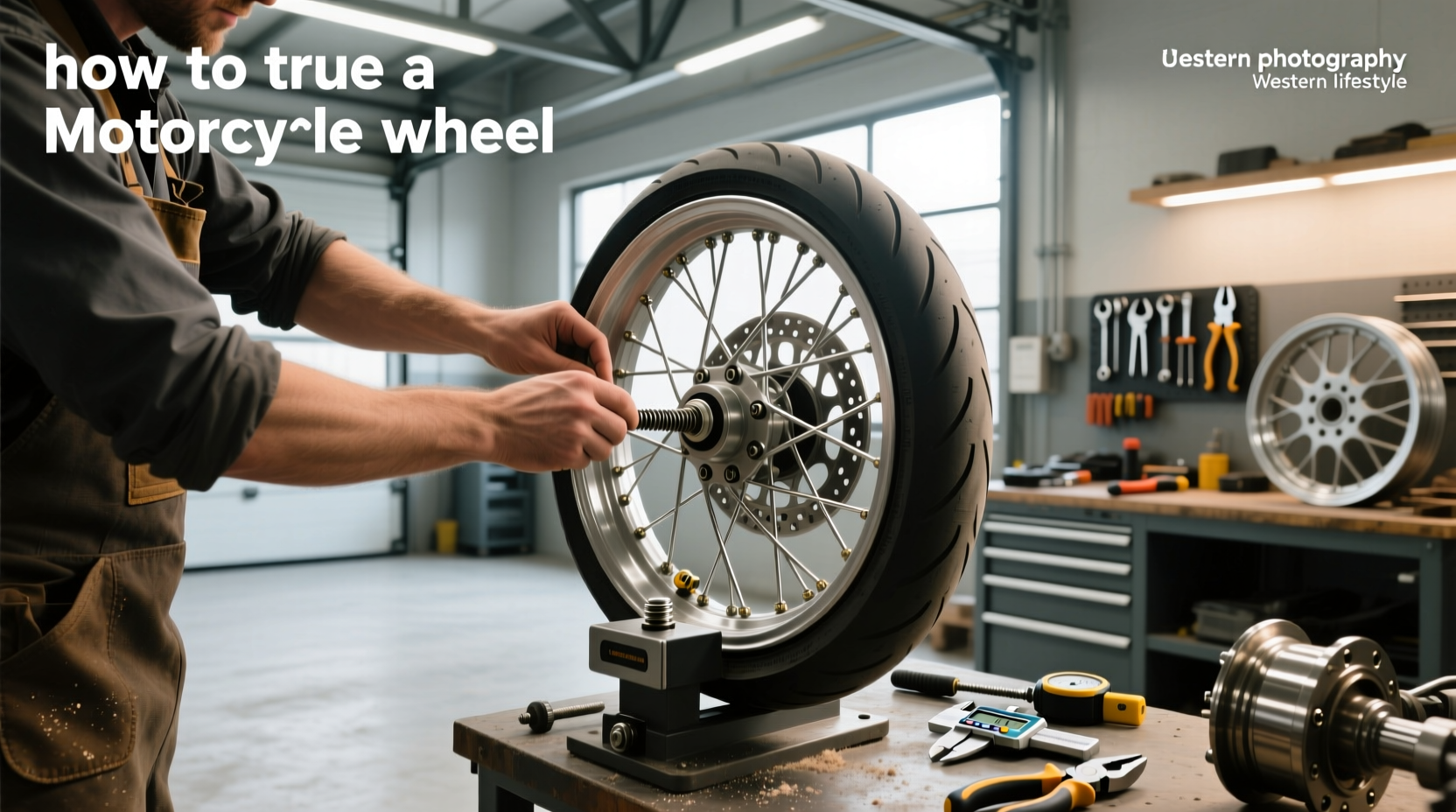
Truing a motorcycle wheel is an essential maintenance task that helps eliminate side-to-side wobble, improves handling, and extends tire lifespan. Whether you're dealing with a bent rim after hitting a pothole or noticing uneven tire wear, learning how to true a motorcycle wheel can save time and money while keeping your bike running smoothly. This comprehensive guide walks through every step—from diagnosing the issue and selecting the right tools to adjusting spokes and verifying alignment—so you can perform accurate truing at home or in your workshop.
Why Truing a Motorcycle Wheel Matters
Motorcycle wheels are precision components designed to rotate evenly under high loads and speeds. Over time, impacts from road hazards, improper storage, or loose spokes can cause the rim to deviate from its ideal plane of rotation. This misalignment results in lateral (side-to-side) or radial (up-and-down) runout, leading to vibrations, poor handling, and accelerated tire wear.
While many riders assume these issues require professional repair or replacement, minor to moderate deviations can often be corrected through spoke adjustment—a process known as wheel truing. Unlike balancing, which addresses weight distribution around the wheel’s circumference, truing corrects physical distortions in the rim's shape.
Understanding Lateral vs. Radial Runout
Before beginning any truing work, it's crucial to identify the type of distortion affecting your wheel:
- Lateral runout: This refers to side-to-side movement of the rim as it spins. It’s typically caused by uneven spoke tension and leads to a noticeable wobble when riding.
- Radial runout: This describes up-and-down deviation, where parts of the rim move closer to or farther from the center axle. It creates a bumpy ride sensation similar to a flat spot on the tire.
A dial indicator mounted on a stable base is the most accurate way to measure both types of runout. However, if one isn’t available, visual inspection against a fixed reference point (like a zip tie taped near the rim edge) can help detect movement.
Tools Required for Truing a Motorcycle Wheel
You don't need expensive equipment to true a wheel effectively. Here’s what you’ll need:
- ✅ Spoke wrench (correct size for your nipples)
- ✅ Clean rag and degreaser
- ✅ Tire deflation tool or valve core remover
- ✅ Stand or axle supports to spin the wheel freely
- ✅ Dial indicator (optional but highly recommended)
- ✅ Marker pen for tracking adjustments
If you frequently maintain bikes, investing in a dedicated motorcycle wheel truing stand can streamline the process. These stands hold the wheel securely and often include built-in measurement arms. Some models even combine truing and static balancing functions ⚙️.
Step-by-Step Process: How to True a Motorcycle Wheel
1. Remove the Tire or Deflate It
To access the rim safely and reduce resistance during adjustment, either deflate the tire completely or remove it entirely. While truing can be done with the tire mounted, removing it eliminates variables like air pressure changes and allows direct inspection of the rim and spokes.
2. Mount the Wheel Securely
Place the wheel in a truing stand or secure it between two solid supports so it can spin freely without wobbling at the axle. Ensure the mounting cones fit snugly into the hub bearings to prevent play.
3. Spin the Wheel and Identify Deviations
Rotate the wheel slowly and observe the gap between the rim and a fixed reference point. For precise results, use a dial indicator set to lightly touch the outer sidewall of the rim. Note areas where the rim moves laterally more than 0.5 mm—this is generally considered the threshold for correction.
4. Locate the High Spot
The point where the rim moves closest to the reference marker is called the “high spot” in lateral truing. To correct it, tighten the spokes opposite this area or loosen those on the same side.
For example: If the rim bulges toward the left side at a certain point, tighten the right-side spokes near that location or loosen the left-side ones.
5. Adjust Spoke Tension Gradually
Use a spoke wrench to make small adjustments—typically 1/4 to 1/2 turn at a time. Focus on groups of 2–3 spokes surrounding the high spot rather than individual spokes to maintain even stress distribution.
Always re-spin the wheel after each adjustment to assess progress. Over-tightening can lead to broken spokes or cracked rims, especially on older or aluminum wheels.
6. Correct Radial Runout (if needed)
If the rim dips inward or rises outward unevenly, adjust spokes uniformly across both sides. Tightening spokes pulls the rim toward the hub; loosening allows it to move away. Address major radial deviations first before fine-tuning lateral alignment.
7. Check True After Each Adjustment
Continue spinning and measuring until lateral runout is within acceptable limits (under 0.5 mm). Repeat the process for radial accuracy if necessary.
8. Final Inspection and Reassembly
Once the wheel runs true, inspect all spokes for consistent tension by plucking them like guitar strings. They should produce a similar pitch across the wheel. Reinstall the tire, inflate to manufacturer specifications, and remount the wheel on the bike.
Common Mistakes When Truing Motorcycle Wheels
Even experienced mechanics can make errors during truing. Avoid these common pitfalls:
- Over-adjusting spokes: Making large turns instead of incremental changes can worsen the problem or damage components.
- Neglecting spoke tension balance: A perfectly round rim with uneven spoke tension is prone to future failure.
- Ignoring damaged rims: Bent or cracked rims may not be salvageable through truing alone.
- Working on a poorly supported wheel: Any play in the axle or stand will give false readings.
Difference Between Truing and Balancing a Motorcycle Wheel
Many riders confuse truing with balancing, but they address different issues:
| Aspect | Truing | Balancing |
|---|---|---|
| Purpose | Corrects physical deformation of the rim | Equalizes weight distribution around the wheel |
| Tool Used | Spoke wrench, dial indicator | Balancer stand, weights |
| Symptom Addressed | Wobble, vibration at low speed | Handlebar shake at higher speeds |
| Performed On | Spoked wheels primarily | All wheel types (spoked, cast) |
| Frequency | As needed after impact or wear | After tire change or every few thousand miles |
Both processes are important for optimal performance. A wheel can be balanced but still wobble due to poor truing, and vice versa.
Can You True a Cast Alloy Wheel?
No—cast alloy or forged wheels cannot be trued because they lack spokes. If such a wheel is bent, it must either be professionally repaired using hydraulic presses or replaced. Attempting to hammer or bend it back risks weakening the metal and creating dangerous failure points.
Spoked wheels, however, are designed for field repairs and regular maintenance, making truing a practical and effective solution.
When to Seek Professional Help
While minor truing can be done at home, consider professional assistance if:
- The rim has visible cracks or deep dents
- Multiple spokes are broken or severely loose
- The hub or bearings show signs of damage
- You lack confidence in interpreting runout measurements
Some shops offer truing services for $50–$100, depending on complexity. This cost may be justified for valuable vintage bikes or complex multi-spoke designs.
DIY Alternatives to Commercial Truing Stands
If you don’t own a truing stand, several low-cost setups can work effectively:
- Jerry-rigged support: Place the wheel between two jack stands or wooden blocks with cutouts to cradle the axle.
- Brake caliper as gauge: On some bikes, the brake pads naturally sit close to the rotor. Use them as a lateral reference by spinning the wheel and watching for contact.
- Zip-tie method: Tape a zip tie to the swingarm or fork leg so its end nearly touches the rim. As the wheel spins, gaps or contacts indicate deviations.
These methods aren’t as precise as a dial indicator setup but are sufficient for basic corrections.
Maintenance Tips to Prevent Wheel Distortion
Prevention is always better than repair. Follow these practices to minimize the need for truing:
- Check spoke tension regularly, especially after new tire installation
- Avoid curbs, potholes, and rough terrain when possible
- Inflate tires to proper pressure to reduce rim stress
- Store the bike on a stand to relieve tire pressure during long periods of inactivity
- Inspect wheels visually after off-road rides or hard landings
Frequently Asked Questions (FAQ)
- Can I true a motorcycle wheel without special tools?
- Yes, you can use improvised supports and visual indicators like zip ties to detect wobble. However, a spoke wrench and stable mounting system are essential for making adjustments.
- How much lateral runout is acceptable?
- Most manufacturers recommend less than 0.5 mm of lateral runout. More than that can affect handling and safety, especially at higher speeds.
- Does truing a wheel affect spoke tension?
- Yes—truing involves adjusting spoke tension to reshape the rim. It's critical to maintain balanced tension across all spokes to avoid future failures.
- Should I true the wheel before or after balancing?
- Always true the wheel first. Balancing assumes the wheel is physically round and straight. Truing ensures the foundation is correct before adding balance weights.
- Is it safe to ride with a slightly untrue wheel?
- Minor wobble (under 0.5 mm) may be tolerable for short distances, but prolonged riding can accelerate bearing wear, tire degradation, and compromise control. Correction is recommended.




 浙公网安备
33010002000092号
 浙B2-20120091-4