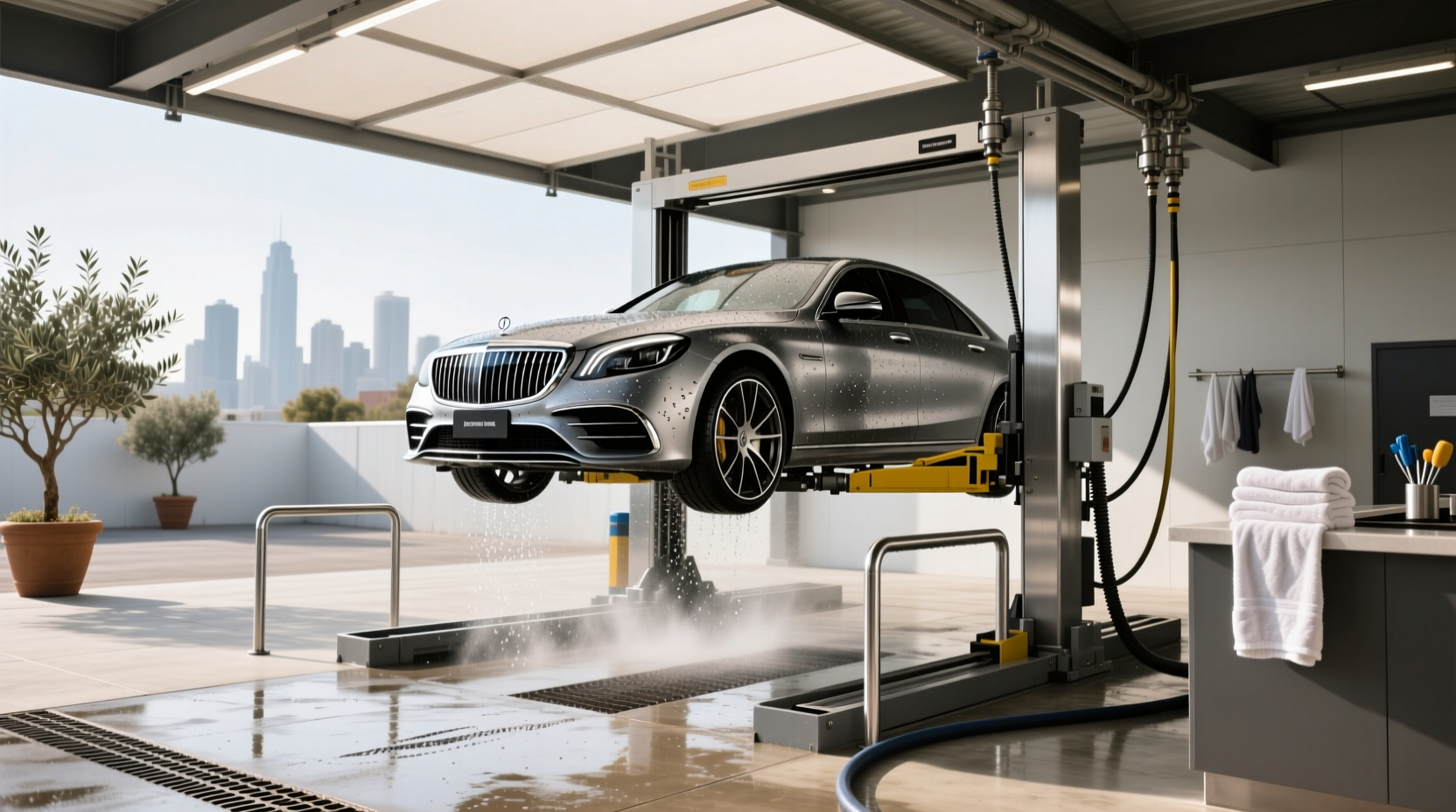
Using a hydraulic lift car wash system allows for thorough, efficient vehicle cleaning—especially underneath the chassis—by elevating the car safely off the ground. These lifts, commonly found in professional detailing shops and DIY wash bays, enable access to areas that are difficult to reach at ground level, such as suspension components, exhaust systems, and frame rails. Whether you're maintaining a personal vehicle or operating a commercial service, understanding how hydraulic lift car wash setups function, their types (like scissor lifts or two-post designs), and safety protocols is essential for effective and secure use.
How Hydraulic Lifts Improve Car Washing Efficiency
One of the biggest challenges in automotive cleaning is accessing the underbody. Mud, road salt, brake dust, and grime accumulate beneath the vehicle, leading to corrosion and mechanical wear over time. A traditional drive-through car wash often misses these critical zones. However, with a hydraulic car washing lift, technicians or owners can raise the vehicle several feet into the air, allowing full 360-degree access.
This elevation makes it possible to perform comprehensive pre-wash treatments, pressure washing, rust inspection, and even touchless foam applications like CARPRO Lift 1. The hydraulic mechanism ensures smooth, controlled lifting using fluid pressure, which is more reliable and stable than mechanical jacks or screw-based systems.
In commercial environments, this translates to faster turnaround times and higher-quality results. For individual users, especially those who frequently drive in harsh climates or off-road conditions, installing a lift at home or using facilities with lifts (such as OKQ8’s self-service halls in Sweden 2) offers long-term maintenance advantages.
Types of Hydraulic Lifts Used in Car Wash Applications
Not all hydraulic lifts serve the same purpose. When discussing car wash hydraulic lift setups, three primary configurations dominate the market: scissor lifts, two-post lifts, and four-post lifts. Each has distinct advantages depending on space, budget, and intended use.
Scissor Lifts ⚙️
Named for their crisscrossing support structure, scissor lifts are compact and ideal for low-ceiling garages. They typically have a lifting capacity between 1.5 to 4 tons, making them suitable for passenger cars and light trucks.
- Pros: Space-efficient, low profile when lowered, easy integration into existing wash bays
- Cons: Limited side access due to central column; not ideal for heavy-duty vehicles
- Best for: Commercial detailing centers focusing on sedans and SUVs
Manufacturers like EZYTEK CLEAN offer models rated for 4-ton capacity with maximum lift heights around 1.8 meters, providing sufficient clearance for undercarriage spraying 3.
Two-Post Lifts 🔧
These consist of two vertical columns anchored to the floor, with adjustable arms that connect to the vehicle's frame or subframe points.
- Pros: Excellent lateral access, widely used in repair shops, compatible with most vehicles
- Cons: Requires precise alignment; potential interference with spray nozzles in automated systems
- Common concern: “Is a 2 post car lift safe for washing?” Yes—if properly installed and used within weight limits.
While primarily designed for mechanical work, many professionals repurpose two-post lifts for deep cleaning tasks. However, they may require additional protective measures against water ingress into hydraulic cylinders.
Four-Post Lifts 🏭
These provide the greatest stability and are often used for storage and extended maintenance. In car wash contexts, they allow complete wheel removal and full underbody exposure.
- Pros: High load capacity (up to 6,000 kg), excellent for lifted trucks and larger vehicles
- Cons: Takes up significant floor space; slower setup compared to scissor lifts
- Ideal scenario: Off-road vehicle owners needing frequent undercarriage decontamination
| Lift Type | Lifting Capacity | Best Use Case | Wash Suitability |
|---|---|---|---|
| Scissor Lift | 1.5–4 tons | Commercial detailing | ✅ High – compact design fits wash lines |
| Two-Post Lift | 3–5 tons | Mechanical & cleaning combo | ✅ Moderate – needs protection from moisture |
| Four-Post Lift | 4–6 tons | Heavy-duty / off-road vehicles | ✅ High – enables full underside access |
Safety Considerations When Using a Hydraulic Lift for Washing
Safety should be the top priority when operating any lifting equipment. While hydraulic lift car wash systems are generally reliable, improper use increases the risk of accidents.
Weight Limits and Vehicle Compatibility ❗
Every lift has a specified maximum load. Exceeding this can cause structural failure. Always check your vehicle’s curb weight and ensure it falls within the lift’s range. For example, a modified truck with oversized tires and aftermarket bumpers may exceed standard ratings.
Additionally, some high-clearance or lifted trucks may not fit under certain scissor lifts due to ground clearance issues. Confirm both minimum entry height and maximum vehicle height before purchase or usage.
Proper Anchoring and Floor Requirements 📊
Hydraulic lifts must be securely bolted to a concrete foundation of adequate thickness (typically 15–20 cm). Uneven or cracked floors compromise stability. Use a laser level during installation to verify alignment.
For mobile units (common in temporary setups), ensure the base remains flat and secured during operation. Never operate a lift on gravel, asphalt, or wooden platforms.
Water and Electrical Hazards ⚡
Since car washing involves water and high-pressure sprayers, there’s a risk of electrical shorts or pump damage. Most modern hydraulic systems are sealed, but prolonged exposure to moisture can degrade seals over time.
To mitigate risks:
- Cover control boxes during wash cycles
- Use GFCI-protected outlets for electric-powered lifts
- Inspect hoses and connections monthly for leaks or wear
Cost Factors and Where to Find Hydraulic Lifts for Car Wash
The price of a hydraulic car washing lift varies significantly based on type, capacity, brand, and certification. On global marketplaces like Alibaba, basic scissor lifts start around $1,000 USD, while heavy-duty four-post systems can exceed $7,000 4.
Key cost influencers include:
- CE Certification: Ensures compliance with European safety standards; adds ~10–15% to cost
- Lifting Capacity: Higher tonnage requires reinforced hydraulics and stronger frames
- Automation Level: Manual vs. electric-hydraulic controls affect pricing
- Delivery and Installation: International shipping and setup services increase total investment
For small businesses or individuals, purchasing through regional suppliers (e.g., ATS ELGI in India or Furatec in India) may reduce logistics costs and simplify after-sales support 5.
Can You Use Any Hydraulic Lift for Car Washing?
A common question asked in forums like Quora and PistonHeads is: “Can I use a 2-post lift for car washing or must I use a scissor lift?” The answer depends on your goals 6.
If you’re only doing occasional underbody rinsing, a two-post lift works fine—as long as you protect sensitive components. However, if you plan regular, high-volume washing (especially with chemical foams or steam), a dedicated scissor or four-post lift designed for wash environments is preferable.
Some manufacturers produce hybrid models specifically labeled as “car lift to wash chassis” or “specialized car lift for efficient car washing and detailing,” which feature enhanced sealing and drainage systems.
Regional Differences and Availability 🌍
Access to hydraulic lift-equipped wash stations varies by region. In countries like Sweden, OKQ8 operates over 100 self-service locations with built-in lifts, promoting preventive maintenance among drivers 2. This model supports sustainability by reducing reliance on disposable wipes and excessive detergent use.
In contrast, North America sees more private ownership of lifts, particularly among enthusiasts and fleet operators. In urban areas, space constraints limit adoption, whereas rural workshops and off-road garages are more likely to install permanent systems.
In developing markets like India, demand for hydraulic washing car lift units is growing alongside the expansion of organized car care chains. Local suppliers now offer CE-certified options tailored to smaller bays and variable power supplies.
Pre-Wash Treatments and Chemical Compatibility ✨
Elevating the vehicle isn’t just about physical access—it also enhances the effectiveness of cleaning chemicals. Products like CARPRO Lift, a concentrated alkaline pre-wash foam, are designed to dissolve contaminants before contact 1.
When applied via foam cannon while the car is on a lift, the solution coats vertical and underside surfaces evenly, breaking down bugs, tar, and oxidized residues. Because the vehicle isn’t moving (as in a tunnel wash), dwell time can be optimized without runoff concerns.
However, always follow dilution guidelines. Over-concentrated formulas can damage paint or corrode rubber bushings, especially on older vehicles. Test new products on inconspicuous areas first.
Common Misconceptions About Hydraulic Lift Car Wash Systems
Despite their benefits, several myths persist:
- Misconception 1: “Lifts are only for mechanics.” False. Many DIYers use lifts for seasonal deep cleans, especially in snowy regions where road salt accelerates rust.
- Misconception 2: “All hydraulic systems leak.” Modern units with double-sealed cylinders rarely leak when maintained properly.
- Misconception 3: “You need a garage to use one.” Portable scissor lifts exist for outdoor use, provided the surface is level and firm.
Maintenance Tips for Longevity 🛠️
To keep your hydraulic lift for car wash functioning safely:
- Perform monthly visual inspections of pins, locks, and hoses
- Lubricate pivot points quarterly with silicone-based grease
- Test safety locks weekly by raising slightly and engaging mechanical stops
- Drain condensation from hydraulic tanks annually
- Keep control panels dry and free of debris
Follow the manufacturer’s recommended service intervals. Skipping maintenance increases downtime and repair costs.
Alternatives to Permanent Hydraulic Lifts 🚚
For those unable to invest in fixed installations, alternatives include:
- Ramps: Affordable and portable, but offer limited clearance
- Axle Stands: Used with jacks; less stable than integrated lifts
- Pit Systems: Installed flush with the floor; excellent access but costly and regulated in many jurisdictions
While these options work for spot cleaning, they lack the efficiency and repeatability of hydraulic lifts.
Final Recommendations: Who Should Use a Hydraulic Lift for Car Washing?
A hydraulic lift car wash setup is most beneficial for:
- Fleet managers wanting consistent underbody sanitation
- Detailed-oriented car owners in corrosive environments (coastal/snowy regions)
- Professional detailers offering premium packages
- Off-road vehicle operators exposed to mud and debris
Before investing, assess your frequency of use, available space, and local regulations. If you only wash your car twice a year, a lift may not be cost-effective. But for monthly or seasonal deep cleans, the long-term value in vehicle preservation is clear.
Frequently Asked Questions
Below are answers to common questions about hydraulic lift car wash systems:
- Can any car go on a hydraulic lift? Most passenger vehicles can, but check weight limits and lifting points. Modified suspensions or damaged frames may pose risks.
- Is it safe to wash a car on a hydraulic lift? Yes, if the lift is rated for the vehicle’s weight and used according to instructions. Avoid spraying directly into hydraulic joints.
- Do I need special training to operate a hydraulic car wash lift? While not legally required in most places, proper training reduces accident risk. Many suppliers offer online guides or on-site instruction.
- Can a lifted truck go through a car wash? That refers to drive-through tunnels. Here, we discuss using a lift TO wash a lifted truck—yes, four-post lifts accommodate most modifications.
- How often should I maintain my hydraulic lift? Inspect monthly, lubricate quarterly, and schedule professional servicing annually.




 浙公网安备
33010002000092号
 浙B2-20120091-4