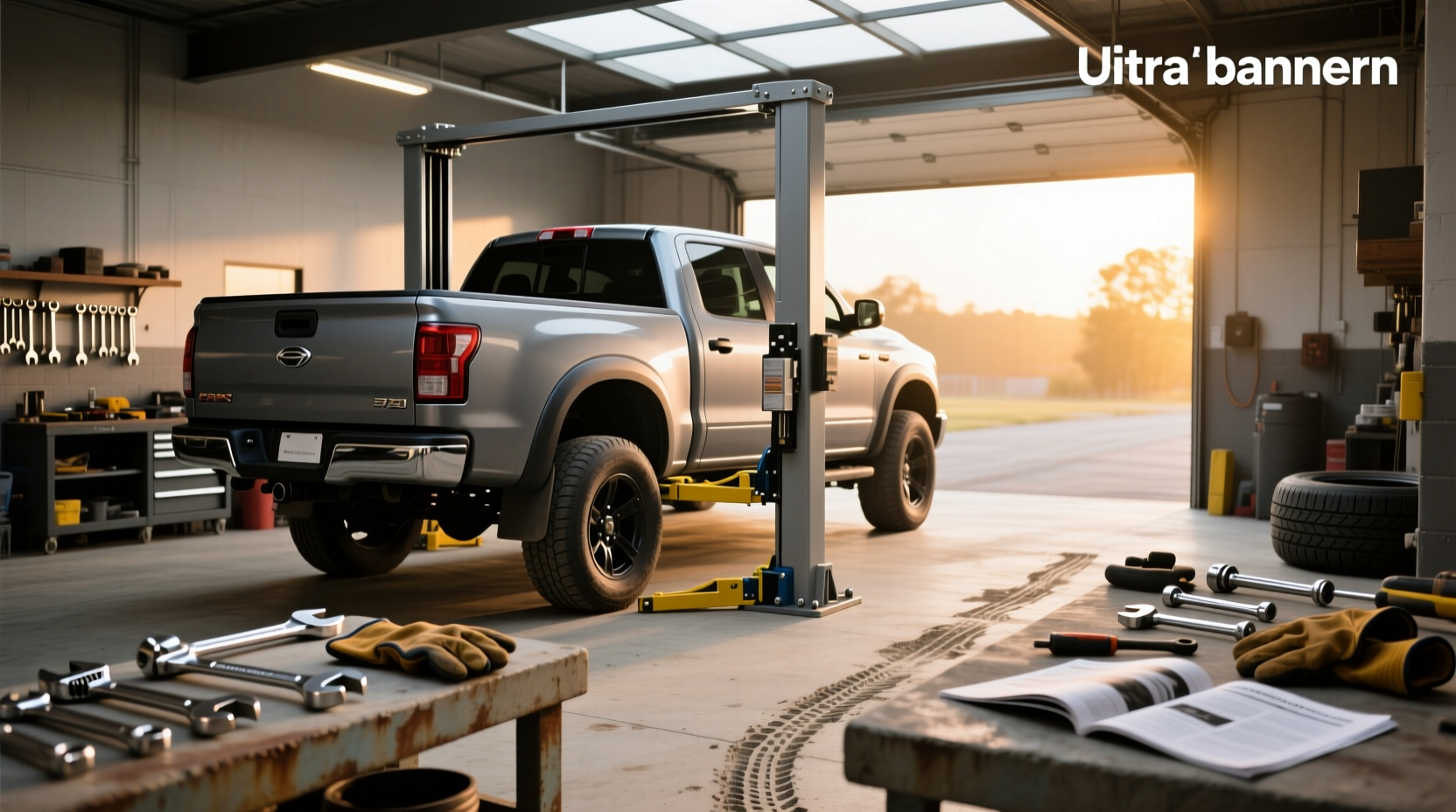
For truck owners seeking enhanced off-road capability or improved ground clearance without compromising ride quality, a hydraulic lift kit for truck offers a dynamic solution. Unlike traditional suspension lifts, these systems allow on-demand height adjustment—enabling drivers to raise the vehicle over obstacles at low speeds and lower it for highway stability and easier entry. This technology is increasingly popular among modified truck enthusiasts, especially those navigating urban environments with lowered suspensions or rugged terrain requiring extra clearance 1. Understanding how these systems work, what components they include, and where they excel—or fall short—is essential before investing in one.
Understanding Hydraulic Lift Kits: Purpose and Functionality
A hydraulic lift kit modifies a truck’s suspension system using pressurized fluid to adjust ride height electronically. These kits are typically integrated into coilover shocks or added as auxiliary systems alongside existing suspension components ⚙️. When activated—usually via a dashboard switch or remote—the system engages a pump that sends hydraulic fluid to actuators or modified struts, lifting the chassis by up to 45 mm (about 1.8 inches), depending on the design 2.
This functionality addresses a common dilemma: balancing aggressive styling or lowered stance with practical drivability. For example, many modern trucks feature sport-tuned suspensions that reduce ground clearance, making speed bumps, steep driveways, or uneven terrain challenging. A hydraulic lift resolves this by providing temporary elevation exactly when needed.
These systems are not intended for continuous high-speed driving in lifted mode. Most manufacturers recommend activation only below 50–80 km/h (30–50 mph) to ensure safety and component longevity. Once deactivated, the system reverts to its standard ride height, maintaining aerodynamics, handling, and fuel efficiency during regular driving.
Key Components of a Hydraulic Lift System
Understanding the internal structure helps buyers evaluate quality, compatibility, and maintenance needs. While configurations vary between brands and models, most complete hydraulic lift kits for trucks contain several core elements:
- Hydraulic Coilovers or Actuators: These replace or augment factory shock absorbers. In systems like KW’s HLS (Hydraulic Lift System), the coilover itself contains an internal piston and chamber that expands under pressure ✨.
- Electronic Control Module (ECM): The brain of the system, the ECM manages pressure delivery, monitors actuator status, and prevents over-pressurization. It often connects to the vehicle’s CAN bus for seamless integration.
- Hydraulic Pump and Reservoir: Mounted discreetly within the frame or engine bay, this unit generates the necessary pressure. It runs on 12V DC power and activates only during lift/deploy cycles ⚡.
- Solenoid Valves and Coils: These control fluid flow direction. Solenoids respond to electrical signals from the ECM, opening or closing channels to extend or retract the lift mechanism 🔧.
- Hoses, Fittings, and Adapters: High-pressure hydraulic lines connect all components. Quality kits use reinforced hoses resistant to abrasion and temperature extremes.
- Activation Switch or Remote: Allows driver input. Some systems offer smartphone app control or automatic activation based on GPS location (e.g., remembering garage entries).
Not all kits include every part. Entry-level or conversion-focused packages may assume you already have compatible coilovers and only provide the pump, valves, and electronics. Always verify whether the kit is complete or requires additional purchases.
Types of Hydraulic Lift Kits: Complete vs Conversion
When shopping for a hydraulic lift kit for truck, two primary categories emerge: complete systems and conversion kits. Each serves different user scenarios and budgets.
Complete Hydraulic Lift Systems
These are turnkey solutions designed for full replacement of factory suspension. They include custom-tuned coilovers with built-in hydraulics, ECM, pump, wiring harness, and controls. Brands like KW Suspension offer such systems under model-specific SKUs (e.g., KW 19280293). Advantages include:
- Factory-calibrated damping and spring rates ✅
- Plug-and-play installation in some cases 🛠️
- Integrated diagnostics and error reporting 📊
However, they come at a premium cost—often exceeding $6,000 AUD—and require professional installation. They’re best suited for performance builds or vehicles regularly driven in varied terrain.
Conversion or Add-On Kits
Designed for users who already have aftermarket coilovers, conversion kits add hydraulic functionality without replacing the entire strut. Examples include the KW HLS2 Universal Conversion Kit. These typically include:
- External hydraulic cylinders
- Mounting brackets
- Pump unit and solenoids
- Wiring and control module
The benefit is cost savings and flexibility. However, integration complexity increases, as alignment with existing suspension geometry must be precise. Misalignment can lead to binding, uneven wear, or failure. These kits demand advanced mechanical knowledge and careful calibration.
| Feature | Complete System | Conversion Kit |
|---|---|---|
| Price Range | $5,000–$20,000+ AUD | $3,000–$7,000 AUD |
| Installation Complexity | Moderate (professional recommended) | High (expert level) |
| Compatibility | Model-specific | Universal or semi-universal |
| Maintenance Needs | Low (sealed units) | Moderate (external hoses/seals) |
| Lift Range | Up to 45 mm | Up to 40 mm |
Benefits and Limitations of Hydraulic Lift Technology
Like any modification, hydraulic lift kits present trade-offs. Evaluating them objectively ensures realistic expectations.
Advantages
- On-Demand Clearance: Raise your truck just when needed—ideal for garages, ramps, or rocky trails 🚗.
- Preserved Handling: Unlike static lifts that alter center of gravity permanently, hydraulic systems return to normal height for safer cornering and braking.
- Customizable Settings: Advanced systems let you program lift height, activation speed, and even auto-lower functions.
- Aesthetic Flexibility: Maintain a sleek, lowered look while having functional utility when required.
Disadvantages
- Cost: High initial investment, both in parts and labor. Even mid-range kits exceed $4,000 AUD.
- Complexity: More moving parts mean more potential failure points—especially seals, pumps, and solenoids.
- Weight Addition: Hydraulic components add 20–40 kg (45–90 lbs), slightly affecting payload and fuel economy.
- Legal and Compliance Issues: In some regions, adjustable ride height systems must meet strict emissions or safety standards. Modifications may void warranties or fail inspection.
Installation Considerations and Professional Support
Installing a hydraulic lift kit for truck is not a DIY project for beginners. Even experienced mechanics should review technical documentation thoroughly. Key steps include:
- Vehicle Compatibility Check: Confirm fitment with your truck’s make, model, year, and existing suspension setup. Some kits work only with certain axle types or brake configurations.
- Space Assessment: The pump and reservoir need secure mounting locations away from heat sources and moving parts. Frame rails or inner fenders are common spots.
- Electrical Integration: Requires tapping into the fuse box and routing wires safely. Improper grounding can damage the ECM or trigger false error codes.
- Hydraulic Line Routing: Lines must avoid sharp edges, exhaust components, and suspension travel paths. Use protective sleeves where necessary.
- Bleeding and Calibration: After assembly, air must be purged from the system. The ECM often requires initialization and sensor calibration.
Professional shops specializing in suspension upgrades typically charge $800–$2,000 AUD for labor. Given the precision involved, expert installation minimizes risk of leaks, misalignment, or electronic faults.
Common Misconceptions About Hydraulic Lift Kits
Several myths persist about these systems, often fueled by marketing claims or incomplete information.
Misconception 1: "It’s Just Like Air Suspension"
While both allow height adjustment, hydraulic systems operate differently. Air suspension uses compressed air bladders; hydraulic systems rely on incompressible fluid. Hydraulics offer faster response and higher force output but lack the softness of air springs.
Misconception 2: "You Can Drive Off-Road in Lifted Mode All Day"
No. These systems are designed for intermittent use at low speeds. Continuous operation strains the pump and overheats fluid, risking seal degradation.
Misconception 3: "All Kits Are Universal"
False. While some claim universality, real-world fitment depends on mounting points, stroke length, and space constraints. Always verify dimensions and consult installers beforehand.
Buying Guide: How to Choose the Right Kit
Selecting the right hydraulic lift kit for truck involves evaluating several criteria beyond price.
Determine Your Use Case
Ask: Will you primarily use the lift for urban obstacle clearance (e.g., speed bumps, parking garages), or do you need it for light off-roading? Urban users benefit from compact, fast-acting systems. Off-road applications may require more robust sealing and corrosion resistance.
Check Component Quality
Look for:
- Anodized aluminum housings (corrosion-resistant)
- Stainless steel fasteners
- Teflon-lined hydraulic hoses
- Sealed solenoid coils rated for moisture exposure
Evaluate Warranty and Support
Reputable suppliers offer at least a 2-year warranty covering defects in materials and workmanship. Technical support availability—especially for troubleshooting ECM errors—is crucial.
Compare Total Cost of Ownership
Factor in:
- Purchase price
- Installation fees
- Maintenance intervals (fluid changes every 30,000–50,000 km)
- Potential repair costs (e.g., solenoid coil replacement ~$50–$80 AUD)
Regional Differences and Legal Compliance
Regulations around adjustable suspension vary significantly. In Australia, for instance, modified vehicles must comply with state-based roadworthiness standards. Queensland Transport requires proof that any lift system does not exceed legal ride height limits when extended 3. Similarly, in the EU, ECE Regulation 46 governs vehicle modifications affecting mass, dimensions, and safety systems.
In the U.S., federal law doesn’t prohibit hydraulic lifts, but individual states may impose restrictions—particularly if the system allows excessive lowering (below minimum ground clearance laws). Always consult local authorities or certified inspectors before installing.
Maintenance Tips for Longevity
To maximize lifespan and reliability:
- Inspect hoses and fittings every 12 months for leaks or abrasion.
- Replace hydraulic fluid per manufacturer schedule (typically every 3–5 years).
- Test system operation monthly—even if unused—to prevent seal drying.
- Store vehicle on level ground to avoid uneven pressure distribution.
Address warning lights immediately. Ignoring error codes can lead to irreversible pump damage.
Frequently Asked Questions (FAQs)
- Can I install a hydraulic lift kit on any truck?
- No. Compatibility depends on suspension design, available space, and electronic architecture. Most kits are made for specific platforms or require extensive customization.
- How much lift do hydraulic systems provide?
- Typically between 30 mm and 45 mm (1.2–1.8 inches), enough to clear most curbs and small obstacles.
- Are hydraulic lift kits reliable over time?
- Yes, if properly installed and maintained. However, they introduce more complexity than passive suspensions, so failure risk is higher than stock setups.
- Do these systems affect ride comfort?
- In standard mode, well-designed kits maintain original damping characteristics. In lifted mode, stiffness may increase slightly due to internal pressure.
- Can I upgrade my current coilovers with hydraulic lift capability?
- Sometimes. Conversion kits exist, but success depends on physical space and structural integrity. Consult a specialist before proceeding.




 浙公网安备
33010002000092号
 浙B2-20120091-4