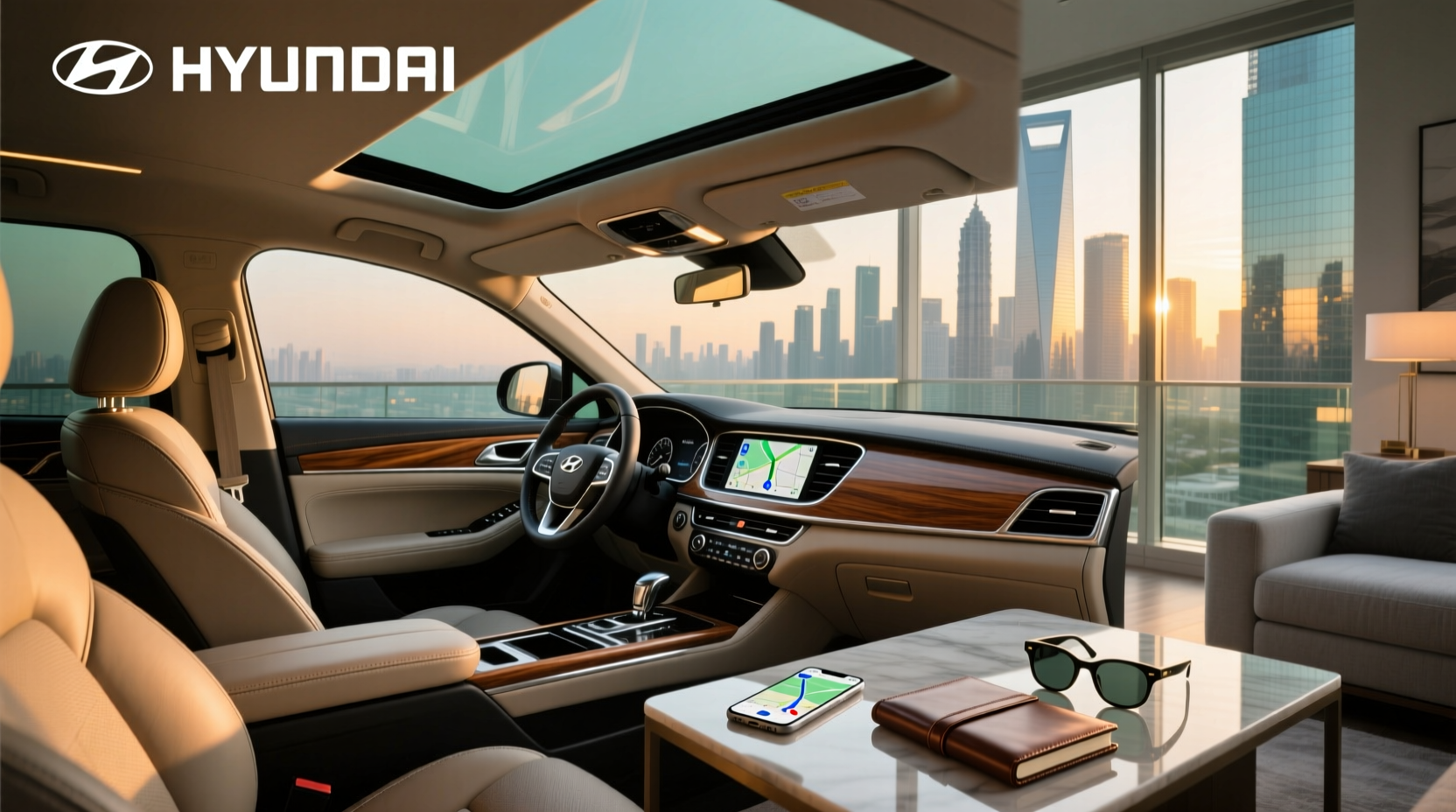
For drivers searching for a spacious, refined sedan with a legacy of comfort, the Hyundai Grandeur interior remains a compelling point of interest—especially as the 2025 and 2026 model years bring updated luxury appointments and modern technology integration. While the Grandeur is not sold in North America, it continues to be a top-tier choice in South Korea and select international markets, often compared to higher-end Genesis models due to its quiet ride, premium materials, and rear-seat focus1. This guide breaks down every aspect of the Grandeur’s cabin—from seating comfort and material quality to infotainment layout and ambient lighting—so you can understand what sets it apart from mainstream sedans and whether it fits your expectations for executive-level transport.
Understanding the Hyundai Grandeur: Market Availability and Naming
The Hyundai Grandeur is primarily marketed in South Korea and parts of Asia, the Middle East, and limited export regions such as Japan and Russia. In many Western markets, including the United States and Canada, the Grandeur was historically sold under the name Hyundai Azera2. Although the Azera was discontinued in the U.S. after 2016, the Grandeur continues to evolve in its home market, serving as Hyundai’s flagship non-luxury brand sedan before the rise of the Genesis lineup.
🛒 Key Insight: If you're researching the 'Hyundai Grandeur interior' from outside Korea, you're likely comparing used or gray-market imports, or evaluating how its design language influences current Hyundai and Genesis vehicles. The 2025–2026 Grandeur retains a conservative yet elegant aesthetic, focusing on passenger comfort over sporty dynamics.
2025–2026 Hyundai Grandeur Interior Layout and Design Philosophy
The most recent iteration of the Grandeur emphasizes a driver-focused but passenger-prioritized cabin. Unlike aggressive, performance-oriented interiors, the Grandeur opts for a serene, lounge-like atmosphere. This is especially evident in higher trims like the Limited and Premium packages.
📍 Main Interior Zones:
- Front Dashboard: Clean, horizontal lines dominate the layout. A wide center stack houses the infotainment screen, climate controls, and ventilation outlets. Physical buttons are retained for key functions (fan speed, defrost), improving usability while driving.
- Center Console: Elevated armrest with storage compartment, cupholders, and available wireless charging pad. Shift-by-wire selector frees up space for additional bins.
- Rear Seat Area: Legroom exceeds 38 inches in long-wheelbase variants, making it ideal for chauffeur-driven use. Some trims include dual rear entertainment screens, seat controls, and individual climate zones.
- Glove Compartment & Storage: Ample hidden storage behind the dashboard, plus door pockets and rear seat fold-down tray tables.
The overall design avoids flashy elements. Instead, it leans into symmetry, soft-touch surfaces, and woodgrain or metallic trim accents (depending on trim level). This approach aligns with traditional luxury preferences in Asian markets, where subtlety and craftsmanship are valued over high-tech minimalism.
Materials and Build Quality: What You Touch Matters
One of the standout aspects of the Grandeur’s interior is its consistent use of high-quality materials. Even base models feature:
- Dash covered in soft-touch synthetic leather or padded vinyl
- Door panels with fabric or leather inserts
- Chrome-ringed air vents and switchgear with solid tactile feedback
✅ Higher Trims Add:
- Nappa leather upholstery (available in black, beige, or burgundy)
- Ultrasuede headliner
- Real wood inlays (walnut or dark piano finish)
- Heated and ventilated front seats with multi-way power adjustment and lumbar support
- Rear-seat sunshades (manual or power-operated)
Independent reviews note that panel gaps are tight and squeak-free, even on rough roads—a testament to improved manufacturing standards at Hyundai’s Ulsan plant3. However, some users report that the leather may show wear more quickly than expected under intense sunlight exposure, suggesting UV-protective window film could extend longevity.
Seating Comfort and Passenger Experience
The Grandeur has always prioritized rear passengers, and the latest models continue this tradition. Front seats offer strong lateral support without being overly bolstered, suitable for long-distance cruising. Rear seats are flat-bottomed with generous cushion length, reducing fatigue on extended trips.
✨ Notable Features:
- Power-adjustable rear seats (on select trims)
- Dual 10.1-inch ceiling-mounted displays for rear passengers
- Individual USB-C ports and 12V outlets for each row
- Four-zone automatic climate control
- Active noise cancellation system to reduce road and engine noise
While the sedan doesn’t offer captain’s chairs, the three-person bench remains well-bolstered and supportive. Taller adults (>6 feet) will appreciate the nearly 40 inches of legroom in top-spec versions. Headroom is also generous thanks to a slightly arched roofline.
Infotainment and Technology Integration
The 2025–2026 Grandeur uses Hyundai’s latest ccNC (connected car Navigation Cluster) system, centered around a 12.3-inch touchscreen display. It runs on a modified version of Android Automotive OS, supporting:
- Hyundai Bluelink connected services
- Apple CarPlay and Android Auto (wireless)
- Over-the-air (OTA) software updates
- Voice recognition with natural language processing
- Integrated parking guidance with 360-degree camera view
⚙️ Display Options:
| Feature | Base Trim | Limited Trim |
|---|---|---|
| Touchscreen Size | 10.25 inch | 12.3 inch |
| Digital Instrument Cluster | 7 inch | 12.3 inch full LCD |
| Head-Up Display | No | Yes (color, 10 inch) |
| Audio System | 6-speaker | 18-speaker Lexicon premium audio |
Users praise the responsiveness of the interface, though some note that menu depth can make accessing secondary functions distracting. Physical volume knobs and HVAC dials remain, which enhances safety during operation.
Ambient Lighting and Atmosphere Control
To elevate the sense of luxury, the Grandeur includes multi-color ambient lighting across several zones:
- Footwell lighting (front and rear)
- Door handle illumination
- Garnish lighting along dashboard and console
- Map pocket and cupholder glow
The system allows customization via the infotainment screen, with options to set color themes or synchronize lighting with audio playback. While not as dramatic as the Heritage Series concept’s retro-futuristic glow4, it contributes meaningfully to nighttime ambiance.
Heritage Series Concept vs. Production Model Interiors
A major source of online confusion stems from the Hyundai Heritage Series Grandeur, an electric concept unveiled in 2024 to celebrate the original 1986 model’s 35th anniversary. This one-off vehicle features a radically reimagined interior with:
- Burgundy velvet and Nappa leather combo
- Parametric pixel lighting elements
- Ultra-wide curved OLED cockpit display
- Minimalist steering yoke
- Reimagined analog gauges with digital overlays
⚡ Important Clarification: The Heritage Series is not a production model. It exists solely as a design study and cannot be purchased. While it showcases Hyundai’s interest in blending nostalgia with EV innovation, none of its interior features are available on the current 2025–2026 Grandeur.
Nonetheless, design cues from the concept—such as cleaner surfaces and integrated screens—may influence future Hyundai and Genesis interiors. For now, buyers seeking the Heritage look will need to consider aftermarket modifications or wait for potential retro-inspired limited editions.
Practicality and Daily Usability
Beyond luxury, the Grandeur scores well in practical metrics:
- Trunk Space: 16.3 cubic feet (462 liters), accessible via power lift trunk on higher trims
- Cupholders: Six total (2 front, 2 rear, 2 folding in rear armrest)
- USB Ports: Four USB-C (2 front, 2 rear), plus one SD card slot
- Wireless Charging: Standard on Limited trim
- Air Filtration: PM1.0 filter with ionizer to reduce allergens
🧼 Maintenance Notes: Leather surfaces benefit from periodic conditioning, especially in humid climates. Floor mats are recommended to protect carpeting from moisture and wear. The cabin air filter should be replaced every 15,000 miles or annually in polluted urban areas.
Regional Differences and Import Considerations
If you're considering importing a Grandeur (e.g., from Korea to North America or Europe), several factors affect interior usability:
- Language: Infotainment defaults to Korean; English may be available but with limited voice recognition support.
- Steering Wheel Position: Right-hand drive models exist for Japan and UK imports, but most are left-hand drive.
- Emissions & Safety Compliance: May not meet EPA or Euro NCAP standards unless modified.
- Warranty: Factory warranty typically voids upon export unless covered by an international service program.
🌐 Tip: Buyers in Australia and New Zealand have reported success importing Grandeurs through specialized dealers who reconfigure software and ensure compliance. Always verify local regulations before purchasing.
Common Misconceptions About the Grandeur Interior
🔍 Myth #1: "The Grandeur is just a rebadged Genesis G80."
While both share platform architecture (older models used Hyundai-Kia Lambda platform), the Grandeur uses less advanced suspension tuning, fewer luxury materials, and simpler electronics. It's positioned below the G80 in refinement and tech.
❗ Myth #2: "You can buy the electric Heritage Series Grandeur."
No. It is a single-show concept car. Hyundai has not announced plans for production.
📌 Myth #3: "The interior is outdated compared to American sedans."
While styling is conservative, the 2025 model includes modern amenities like digital clusters, OTA updates, and advanced driver aids. It trades flashiness for functionality.
How to Evaluate a Used or Imported Grandeur Interior
If you're inspecting a pre-owned Grandeur (common for 2017–2020 Azera/Grandeur hybrids), follow these steps:
- Check for Wear: Inspect driver’s seat bolsters, steering wheel leather, and gear selector for excessive wear.
- Test All Electronics: Verify touchscreen responsiveness, HVAC fan speeds, window operation, and seat heating/cooling.
- Smell for Mold: Older models may develop mildew in climate control ducts if filters aren’t changed regularly.
- Inspect Sunroof Seal: Leaks can occur if drainage tubes clog, leading to wet headliners.
- Review Service History: Look for records of timing belt replacement (if applicable), transmission fluid changes, and battery health (for hybrid variants).
📋 Red Flags: Cracked dash, persistent warning lights, delayed infotainment boot-up, or musty odors suggest poor maintenance.
Future Outlook and Alternatives
With Hyundai shifting focus toward electrification and the Genesis brand absorbing much of the luxury segment, the long-term future of the Grandeur is uncertain. No all-electric version is currently in production, though rumors suggest a plug-in hybrid variant could arrive by 2027.
🔗 Alternatives to Consider:
- Genesis G80: More premium materials, better sound insulation, and advanced suspension (standard AWD).
- Kia K9/K900: Similar size and features, occasionally imported privately.
- Toyota Crown: Now offered in North America with hybrid powertrains and modern interior design.
- Hyundai Palisade (for space): If rear passenger room is the priority, the SUV offers comparable legroom and更强 cargo capacity.
As of 2025, the Grandeur remains a viable option for those valuing quiet, comfortable transportation with a touch of understated elegance. Its interior reflects a philosophy increasingly rare in today’s tech-heavy cabins: prioritize human comfort over gadgetry.
Frequently Asked Questions (FAQs)
- Can you buy the Hyundai Heritage Series Grandeur interior?
- No, the Heritage Series Grandeur is a one-off concept car and not available for sale. Its interior design is not offered on any production model.
- Is the Hyundai Grandeur interior available in English?
- On domestic Korean models, the default language is Korean. Some exported units may support English, but full localization depends on region and trim. Aftermarket software updates may add partial English support.
- Does the 2025 Hyundai Grandeur have ventilated seats?
- Yes, ventilated front seats are standard on the Limited trim and optional on lower trims in certain markets.
- How much legroom does the Hyundai Grandeur have in the back?
- Rear legroom ranges from 37.4 inches in base models to approximately 39.8 inches in long-wheelbase or executive trims.
- Is the Grandeur interior quieter than the Azera?
- Yes, newer Grandeur models include additional sound-dampening materials, active noise cancellation, and tighter seals, resulting in a noticeably quieter cabin than the 2016 Azera.




 浙公网安备
33010002000092号
 浙B2-20120091-4