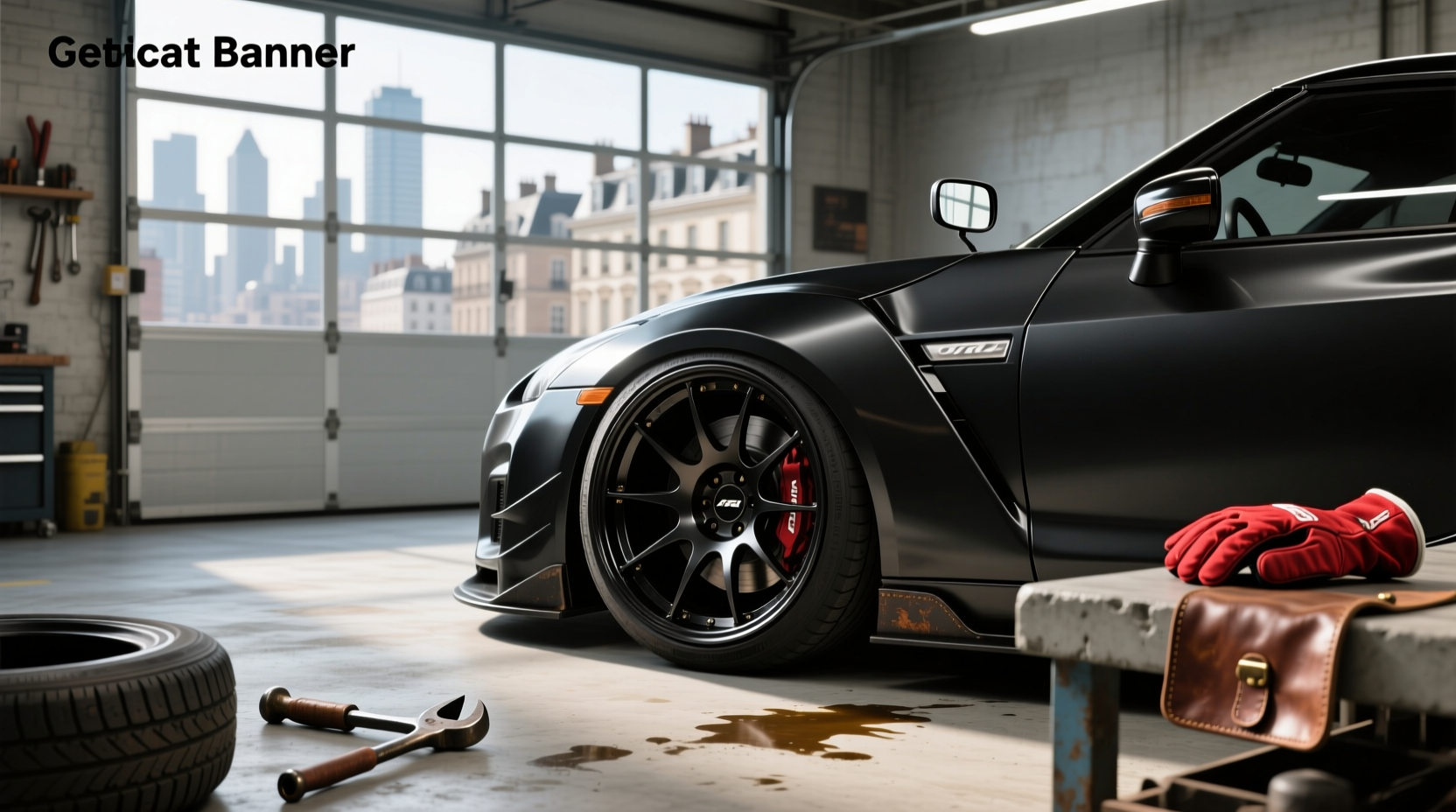
For car enthusiasts across Europe looking to enhance their vehicle's performance and style, JDM wheels in Europe have become a top choice. These Japanese Domestic Market alloy rims are known for their lightweight construction, high strength, and iconic designs that originated from Japan’s tuning and racing culture. Unlike generic aftermarket wheels, genuine JDM wheels—such as those from RAYS, WORK, SSR, or ENKEI—are engineered with motorsport-derived technology and precision manufacturing standards⚙️. However, importing or purchasing them in Europe comes with unique challenges, including fitment verification, compliance with regional regulations, and avoiding counterfeit products. This guide breaks down everything European buyers need to know before investing in authentic JDM wheels.
Understanding JDM Wheels: Origins and Characteristics ✨
The term "JDM" stands for Japanese Domestic Market, referring to parts originally designed and sold for vehicles within Japan. JDM wheels are no exception—they were built to meet the demands of Japan’s vibrant street racing, circuit driving, and drifting scenes. Over decades, brands like RAYS (Volk TE37), WORK Equip, and SSR Type C became legends due to their use in Super Taikyu, D1 Grand Prix, and even Formula Nippon🏎️.
What sets JDM wheels apart is not just aesthetics but engineering principles:
- Lightweight forging or flow-forming processes: Enhances acceleration, braking, and handling⚡
- Tight tolerances and strict QA: Reflects Japan’s focus on craftsmanship and reliability
- Distinctive spoke patterns and finishes: Often associated with 90s/2000s tuner culture (e.g., mesh, basketweave, multi-spoke)
- Smaller diameters and widths: Many classic JDM wheels range from 15” to 17”, ideal for period-correct builds
While some modern replicas mimic these styles, true JDM wheels carry official branding, model numbers, and sometimes JWL/VIA certifications—marks of compliance with Japanese safety standards.
Availability of JDM Wheels in Europe: Key Sources 🌐
Finding authentic JDM wheels in Europe requires navigating several supply channels, each with pros and cons. Unlike North America, where dedicated importers dominate the market, European access depends more on specialized retailers, online platforms, and private imports.
1. Authorized Distributors and Specialty Retailers 🏭
A few European companies act as official distributors for major Japanese wheel manufacturers. For example:
- JDM Garage UK offers a curated selection of RAYS, WORK, and SSR wheels compliant with EU standards✅
- JDM Concept, though based in Australia, ships internationally and provides documentation for EU-bound customers
- WheelsCo Europe partners with select Japanese brands to distribute genuine forged wheels
These vendors typically provide full product specs, load ratings, and technical support. They also ensure wheels meet E-marking requirements when necessary, reducing legal risks upon registration.
2. Online Marketplaces and Export Platforms 🛒
Websites like Alibaba.com list numerous suppliers offering 'JDM-style' or 'TE37 replica' wheels manufactured in China🔍. While cost-effective, buyers must distinguish between:
- Genuine imported JDM wheels – Sourced from Japan, often used but verified
- Replica or homage wheels – Designed to look like popular models but differ in materials and build quality
- Fake branded wheels – Counterfeit items falsely labeled as RAYS or WORK
To avoid deception, always request batch codes, manufacturer stamps, and original packaging photos. Also, verify whether the seller can provide conformity documents needed for customs clearance in EU countries.
3. Importing Directly from Japan 🚚
Some enthusiasts choose to import directly via auction agents or Japanese dismantlers. This route allows access to rare or discontinued models (e.g., SSR GT1, Volk RE30). However, it involves additional steps:
- Locating a reputable export agent familiar with EU import rules
- Paying for shipping, insurance, and potential VAT (typically 20%)
- Clearing customs with proper paperwork (invoice, bill of lading, certificate of origin)
- Ensuring wheels are clean and free of soil or debris (phytosanitary checks may apply)
Import duties vary by country but generally fall between 4–6% for aluminum alloy wheels under HS code 8708.70. Always confirm current rates with local authorities before purchase.
Fitment and Compatibility: Critical Factors in Europe 🔧
One of the most common mistakes when buying JDM wheels in Europe is assuming universal fitment. Even if bolt pattern matches, other dimensions may cause issues.
| Parameter | Description | Common JDM Values | European Considerations |
|---|---|---|---|
| Bolt Pattern (PCD) | Number of bolts and diameter of circle they form | 4x100, 5x114.3, 5x100 | Verify against vehicle; adapters may be needed |
| Center Bore (CB) | Diameter of center hole | 54.1mm (Honda), 73.1mm (Nissan SR20) | Larger bore than European cars? Use hub rings |
| Offset (ET) | Distance from mounting surface to wheel centerline | ET25 to ET45 common | Too low = rubbing; too high = stress on bearings |
| Width & Diameter | Measured in inches | 15x7, 16x8, 17x9 | Check fender clearance and suspension setup |
| Load Rating | Maximum weight per wheel | Usually 550–750 kg | Must match or exceed OEM spec |
Use tools like Wheel Offset Calculator websites or apps to simulate fitment. Additionally, consult forums such as PistonHeads or UK-JDM where members share real-world fitment data for specific makes (e.g., Subaru WRX STI, Nissan Skyline R34).
Legal and Safety Compliance in the EU 📋
In many European countries, changing wheels affects vehicle type approval. Installing non-compliant rims can lead to failed MOT tests (UK), TÜV inspections (Germany), or refusal of insurance claims after an accident.
Key compliance markers include:
- E-Mark Certification: A small 'E' followed by a number inside a circle indicates approval under UNECE Regulation 124. Not all JDM wheels carry this mark.
- JWL/VIA Standards: Japanese certification does not automatically equal EU legality, though it reflects structural integrity.
- Manufacturer Documentation: Reputable sellers should provide test reports or homologation papers upon request.
If your chosen wheels lack E-marking, you may still register them through individual vehicle approval (IVA) processes in certain countries—but expect added time and fees.
Avoiding Common Pitfalls When Buying JDM Wheels ❗
Enthusiasts often overlook critical details that compromise safety or value. Here are frequent issues and how to avoid them:
Fake vs. Authentic Identification 🕵️
Counterfeit wheels flood the market, especially online. Red flags include:
- Unrealistically low prices (e.g., "genuine TE37" for €150/pair)
- Poor font engraving or misspelled brand names
- Absence of model-specific features (e.g., correct valve stem location on TE37)
- No batch number or heat stamp on the back of the rim
Compare images with official catalogs from RAYS1 or WORK Wheels2 to spot inconsistencies.
Used Wheel Condition Checks 🧼
Many imported JDM wheels come from salvage yards or trade-ins. Inspect thoroughly for:
- Curbing damage on inner lips
- Cracks near spokes or valve stem holes
- Bent rims affecting balance
- Corrosion inside barrel (especially in salty climates)
Ask for close-up photos and videos during daylight. If possible, inspect in person before paying final balance.
Shipping and Customs Delays ⏱️
International shipments can take 3–8 weeks depending on origin and destination. Unexpected delays occur due to:
- Incomplete customs declarations
- Missing proof of payment (for duty calculation)
- Random inspections at ports
Choose freight forwarders who specialize in automotive parts and offer tracking with milestone updates.
Performance Benefits and Real-World Impact ⚙️
Upgrading to genuine JDM wheels isn’t just cosmetic—it influences driving dynamics. Due to lower unsprung mass, forged JDM alloys improve:
- Ride comfort: Wheels respond faster to road imperfections
- Fuel efficiency: Reduced rotational weight lowers energy demand
- Braking distance: Less inertia means quicker stops
- Handling precision: Sharper turn-in and reduced understeer
However, benefits depend on wheel construction. Flow-formed wheels offer a middle ground between cast and forged, while fully forged units (like RAYS CE28N) deliver maximum performance at higher cost.
Cultural Appeal and Resale Value 💬
Beyond function, JDM wheels carry cultural significance. Owning a set of Volk TE37s or WORK Meister L1s connects drivers to Japan’s golden era of tuning. In enthusiast circles, original-spec JDM wheels can increase resale value—especially on restored classics like the Honda Integra DC2 or Toyota Chaser JZX100.
That said, overly aggressive fitments (e.g., extreme negative offset) may deter practical buyers, so consider long-term ownership goals when selecting style and size.
Alternatives to Genuine JDM Wheels in Europe 🔄
If authentic JDM wheels prove difficult or costly to obtain, consider these alternatives:
- EU-Homologated Homage Wheels: Brands like OZ Racing or BBS offer similar aesthetics with full compliance
- Reconditioned Original JDM Imports: Companies refurbish used TE37s to like-new condition with warranties
- Custom One-Off Builds: CNC-machined wheels tailored to exact specs (higher price point)
Always weigh authenticity against usability, especially if daily driving is intended.
Summary Checklist Before Purchase 📎
Before committing to a set of JDM wheels in Europe, run through this checklist:
- ✅ Confirm bolt pattern and center bore match your vehicle
- ✅ Verify offset won’t cause rubbing or bearing strain
- ✅ Check for E-mark or plan for IVA if required
- ✅ Authenticate brand/model using official resources
- ✅ Review shipping costs, VAT, and estimated delivery time
- ✅ Inspect condition (if used) with detailed media
- ✅ Ensure seller provides return policy or warranty
Frequently Asked Questions (FAQs) ❓
- Can I legally use JDM wheels on my car in Germany?
- Yes, but only if they have E-mark certification or pass TÜV inspection via individual approval. Always check with your local testing agency before installation.
- Are JDM wheels worth the extra cost compared to regular alloys?
- For performance and collectibility, yes—especially forged models. However, for basic styling upgrades, high-quality EU-made wheels may offer better value.
- How do I tell if a TE37 wheel is real or fake?
- Check the font depth, logo placement, weight (~6.4kg for 17”), and presence of a heat stamp on the rear. Compare with official specs from RAYS’ website.
- Do JDM wheels require special tires?
- No, but ensure tire size matches the wheel width and overall diameter stays within 3% of stock to maintain speedometer accuracy.
- Is it cheaper to buy JDM wheels in the UK or import from Japan?
- It depends. UK retailers include VAT and logistics in pricing, offering convenience. Direct import may save money but adds complexity and risk of unexpected fees.




 浙公网安备
33010002000092号
 浙B2-20120091-4