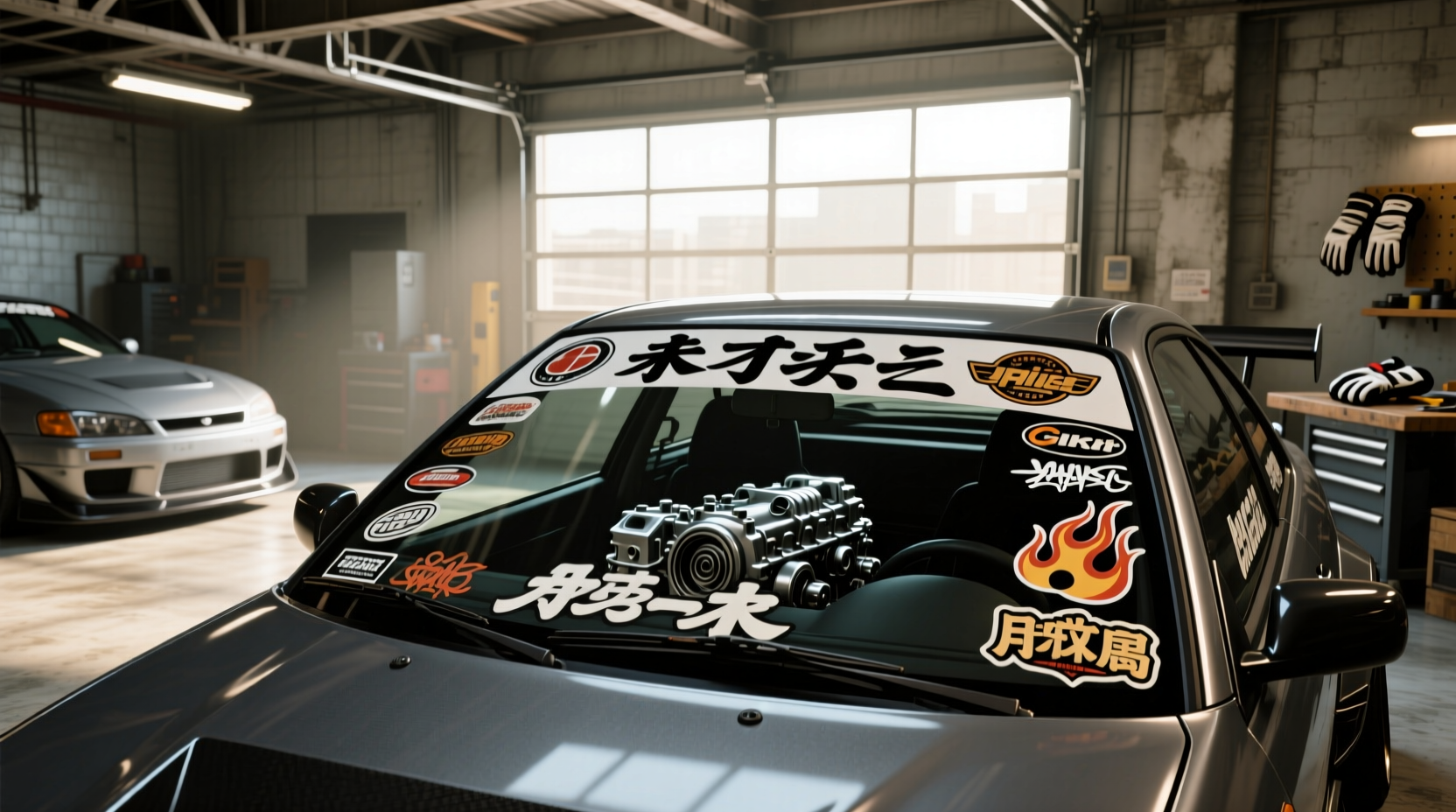
For car enthusiasts looking to express their passion for Japanese automotive culture, JDM stickers for windshields offer a bold and customizable way to personalize vehicles. These decals—often featuring kanji characters, drift motifs, or iconic brand logos—are more than just decorative elements; they represent an identity rooted in Japan's domestic market (JDM) tuning scene. Whether you're modifying a Toyota AE86, Nissan Skyline, or Honda Civic, applying authentic-looking vinyl slaps to your windshield or side windows is a popular trend across the U.S., Europe, and beyond ✅.
However, choosing the right sticker involves more than aesthetics. Factors like durability, legality, placement restrictions, and material quality play critical roles in both appearance and compliance with local regulations 🌐. This guide breaks down everything you need to know about JDM windshield stickers: from understanding what makes a sticker truly 'JDM,' evaluating adhesive types and weather resistance, identifying common design themes, navigating legal boundaries by region, and offering step-by-step application tips that ensure long-term results without bubbles or peeling ⚙️.
What Does 'JDM' Mean in Automotive Culture?
The term Japanese Domestic Market (JDM) originally referred to vehicles and parts manufactured specifically for sale within Japan and not exported. Over time, it evolved into a global subculture celebrating high-performance Japanese cars such as the Subaru WRX STI, Mitsubishi Lancer Evolution, Mazda RX-7, and various Nissans and Toyotas tuned for street racing, drifting, or circuit performance 🔧.
JDM stickers draw inspiration from this culture. They often include Japanese text (kanji or katakana), references to famous circuits like Tsukuba or Wangan, or nods to legendary teams and drivers. Some feature humorous or rebellious slogans like 'If It Shifts, It Drifts' or 'Caution: Drifter at Work.' While many of these designs originated organically in Japan’s underground racing scenes, today most are produced internationally for global fans 👥.
It's important to note that while the aesthetic is inspired by real JDM culture, most commercially available windshield stickers are not officially licensed products from Japanese manufacturers. Instead, they serve as fan tributes or lifestyle expressions rather than OEM components 🏭.
Types of JDM Stickers Commonly Applied to Windshields
Not all JDM decals are designed for windshields. Understanding the different categories helps avoid improper placement or damage:
- Window Stickers (Static Cling or Adhesive Vinyl): Designed specifically for glass surfaces, including windshields, quarter windows, or rear glass. Static cling versions can be repositioned and removed easily, making them ideal for temporary displays or rental vehicles 📍.
- Bumper Stickers: Typically made with thicker vinyl and stronger adhesives, best suited for painted metal or plastic bumpers. Using bumper-grade stickers on windshields may lead to permanent residue or difficulty removing later ❗.
- Slap Stickers ('Slaps'): A slang term for large, eye-catching decals often used in 'sticker bombing'—a style where multiple stickers cover body panels or windows. These are usually printed on flexible, weather-resistant vinyl and marketed toward drift-inspired builds ✨.
- Kanji Stripe Stickers: Long horizontal decals mimicking factory-style racing stripes with Japanese characters. Often placed along the lower edge of the windshield or side windows for a clean, integrated look.
When shopping for JDM stickers suitable for windshields, always verify whether the product description specifies compatibility with glass and indoor/outdoor use. Look for terms like 'UV-resistant,' 'bubble-free adhesive,' or 'removable without residue' to ensure safe application.
Material & Durability: What to Look For
The longevity and appearance of a JDM windshield sticker depend heavily on its construction materials. Here’s a breakdown of common options:
| Material Type | Pros | Cons | Best For |
|---|---|---|---|
| PVC Vinyl (Permanent) | Weatherproof, UV resistant, durable up to 5+ years | Hard to remove; risks damaging tint or leaving glue | Rear window accents, non-windshield areas |
| Static Cling Vinyl | No adhesive; reusable; easy to reposition | Less durable; can peel in heat or rain | Front windshield, short-term decoration |
| Die-Cut Matte Vinyl | Clean finish; resists glare; blends well | Higher cost; requires precise application | Subtle branding, minimalist styles |
| Glitter/Reflective Vinyl | Eye-catching; stands out at night | May attract unwanted attention from law enforcement | Show cars, event promotions |
For front windshield applications, static cling is generally the safest option because it doesn’t use permanent adhesive and won’t interfere with visibility or violate laws restricting obstructions 1. However, if you’re targeting a long-term installation on the rear windshield, high-quality die-cut vinyl with proper lamination offers better protection against sun fading and moisture ingress.
Legal Considerations: Can You Put Stickers on Your Windshield?
This is one of the most frequently asked questions regarding JDM car stickers on windshields: Are they legal? The answer varies significantly depending on your country and even individual states or provinces.
In the United States, federal guidelines defer to state laws under the Federal Motor Vehicle Safety Standard (FMVSS) No. 214, which limits any obstruction in the driver’s forward field of vision. Most states allow small stickers (typically under 7 inches) in the lower corner of the windshield—often the passenger-side bottom quadrant—but prohibit anything near the wiper sweep zone or central line of sight.
Examples include:
- California: Only two stickers permitted—one for registration, one for inspection—plus small manufacturer labels. Aftermarket decals must not exceed 7 square inches and must be placed in the lower left corner (driver’s side) 2.
- Texas: Allows non-reflective stickers in the lower corner outside the driver’s primary view. Prohibits any item that impedes safe operation.
- New York: Bans all non-required stickers unless they are 5 inches or smaller and located in the lower corner farthest from the driver.
In Europe, rules differ by nation. Germany’s StVO (traffic regulations) prohibits any visual obstruction on safety-critical glass areas. The UK’s Highway Code advises against placing anything that restricts vision, though small decals in corners are often tolerated during routine checks.
To stay compliant:
- Check your local DMV or transport authority website before installing.
- Avoid placing stickers within 6 inches of the windshield’s top edge or near sensors (e.g., rain/light detectors).
- Never cover dashcams, HUD projections, or lane-assist cameras.
- Use removable static clings for rentals or shared vehicles.
Popular Themes and Designs in JDM Windshield Decals
JDM sticker designs reflect a blend of nostalgia, humor, and performance pride. Some of the most common motifs seen on windshields include:
- 'Tokyo Drift' / 'Drift King': Inspired by pop culture, particularly the Fast & Furious franchise, these reference drifting legends like Keiichi Tsuchiya.
- Japanese Kanji Characters: Phrases like 漂移 (drift), 無限 (Mugen – “infinity”), or 零 (“zero,” associated with Team Orange) add authenticity.
- Racing Series Logos: Fake or stylized emblems resembling Super Taikyu, D1 Grand Prix, or grassroots time attack events.
- Car Model Tributes: AE86, R32, FD2, or S15-specific decals celebrating iconic chassis.
- Humorous Sayings: 'Slammed Not Legal,' 'Boosted AF,' or 'I Drift To Save Gas' — playful takes on tuner stereotypes.
While these designs enhance personal expression, buyers should research meanings before applying Japanese text. Misplaced or incorrect kanji can lead to unintended messages (e.g., using a character that means “ghost” instead of “speed”). When in doubt, choose bilingual stickers or consult native speakers.
How to Apply a JDM Sticker to Your Windshield Safely
Proper application ensures your decal lasts and looks professional. Follow these steps for best results:
- Clean the Surface: Use isopropyl alcohol and a microfiber cloth to remove oils, dust, and residues. Let dry completely 🧼.
- Test Placement: With static cling stickers, position them without sticking first. Check alignment from inside and outside the vehicle.
- Peel and Align: Slowly remove backing paper. Hold the sticker firmly and align precisely before contact.
- Squeegee Application: Starting from the center, gently press outward using a soft card or squeegee tool to eliminate air bubbles.
- Wait Before Adjusting: Once adhered, avoid moving the sticker. For permanent vinyl, wait 24–48 hours before washing the car.
For curved glass or tinted windows, consider professional installation to prevent creasing or trapping moisture. If bubbles appear after application, carefully lift the affected area and re-smooth—do not puncture the vinyl.
Where to Buy Authentic-Looking JDM Stickers Online
With countless vendors selling JDM-themed decals, finding reliable sources matters. Key indicators of quality sellers include:
- Detailed product descriptions specifying size, material, and intended surface.
- Customer photos showing real-world applications.
- Clear return policies and responsiveness to inquiries.
- Transparent origin information (e.g., designed in the U.S., printed in EU facilities).
Many niche retailers specialize in drift and JDM culture, offering curated collections focused on accuracy and durability. Independent marketplaces also host handmade or custom-designed stickers, allowing for unique creations tailored to specific vehicles or preferences.
Maintenance Tips for Longevity
To extend the life of your JDM windshield sticker:
- Wash your car by hand when possible. High-pressure sprayers can loosen edges over time.
- Avoid abrasive cleaners or ice scrapers near sticker edges.
- Inspect monthly for lifting corners, especially in extreme temperatures.
- Store spare stickers flat in cool, dark places to prevent warping.
If removal becomes necessary, use a hairdryer to warm the adhesive and slowly peel at a 180-degree angle. Residue can be cleaned with rubbing alcohol or commercial adhesive removers.
Common Myths About JDM Windshield Stickers
Several misconceptions persist in the automotive community:
- Myth: All JDM stickers are illegal on windshields.
✅ Reality: Size and location determine legality. Small, non-obstructive decals in designated zones are typically allowed. - Myth: Bigger stickers mean more authenticity.
✅ Reality: True JDM culture values subtlety and function. Oversized 'slap' designs are largely Western interpretations. - Myth: Any vinyl sticker works on glass.
✅ Reality: Only static cling or specially formulated glass-safe adhesives should be used on windshields to prevent damage.
Final Thoughts: Balancing Style, Safety, and Legality
JDM stickers for windshields remain a popular way for enthusiasts to showcase their love for Japanese car culture. From simple kanji strips to full-on sticker bomb aesthetics, these decals let owners personalize their rides while connecting with a global community ⭐.
Yet, successful integration requires careful consideration of material type, placement rules, and maintenance practices. Prioritizing removable static clings for front glass, verifying local laws, and sourcing well-made designs help maintain both visual appeal and legal compliance.
Ultimately, the goal isn’t just to decorate—it’s to do so thoughtfully, safely, and sustainably. Whether you're building a show-winning Datsun or daily-driving a modified Fit, a well-placed JDM sticker can elevate your vehicle’s character without compromising function.
Frequently Asked Questions (FAQs)
Can I put a JDM sticker on my front windshield legally?
Yes, in many regions—but only if it’s small (usually under 5–7 square inches) and placed in the lower corner outside the driver’s main line of sight. Always check your local transportation laws before applying.
Are static cling stickers better for windshields than adhesive ones?
Yes. Static cling stickers don’t use glue, making them safer for glass and easier to remove without residue. They’re ideal for temporary or reversible customization, especially on front windshields.
Do JDM stickers damage the windshield or tint?
Permanent adhesive stickers can leave residue or pull off window tint when removed. To avoid damage, use static cling variants on tinted glass and never install low-quality vinyl that degrades in sunlight.
How do I remove a stuck-on JDM decal from my rear window?
Heat the sticker with a hairdryer, then slowly peel it back. Use adhesive remover or isopropyl alcohol to clean leftover glue. Avoid sharp tools that could scratch glass.
Where can I find realistic JDM-style kanji stickers?
Look for specialty retailers focusing on drift or JDM culture. Ensure designs are vetted for correct character usage. Avoid generic mass-market packs that may contain inaccurate or offensive symbols.




 浙公网安备
33010002000092号
 浙B2-20120091-4