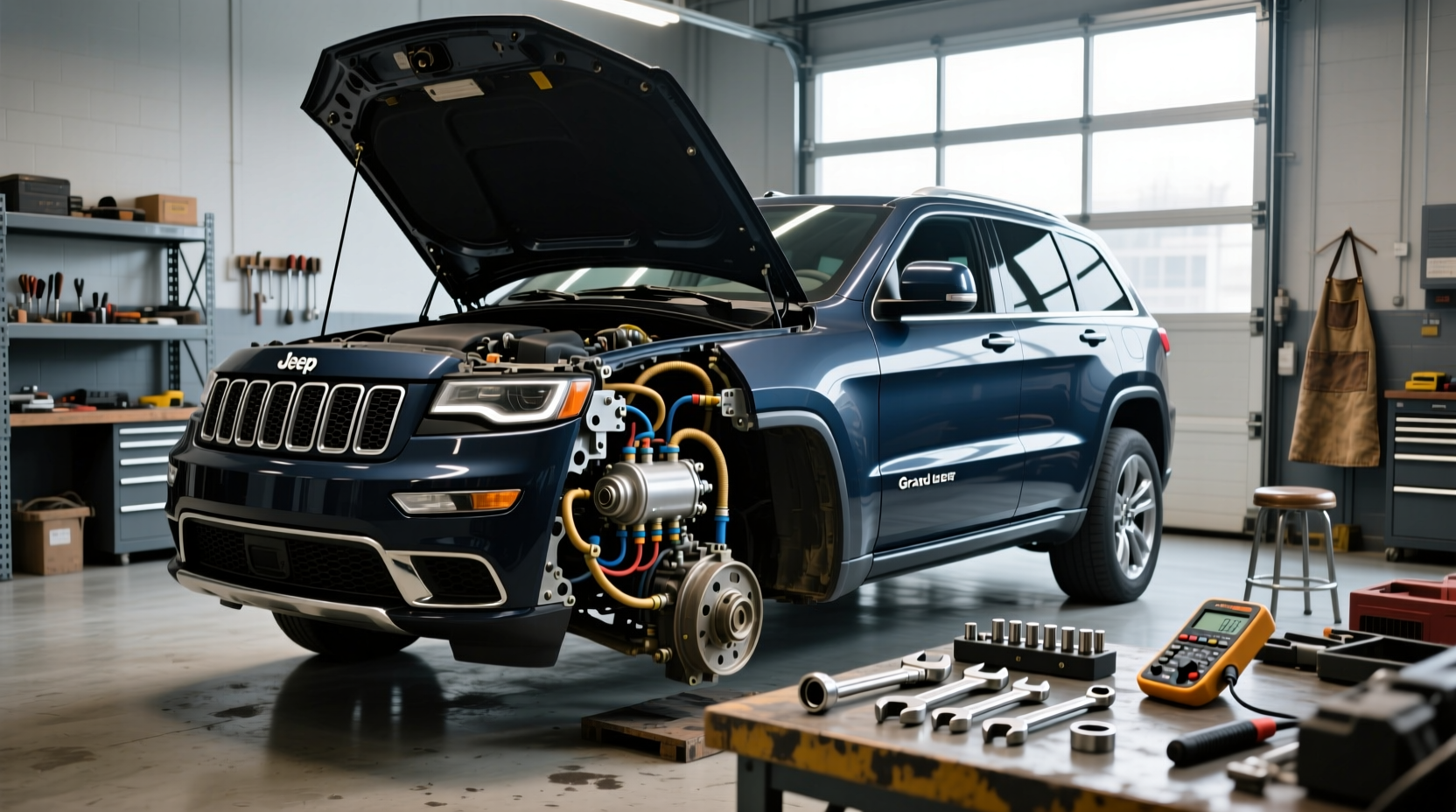
If your Jeep Grand Cherokee is sputtering at high speeds, making a whining noise from the fuel tank, or failing to start after prolonged cranking, you may be dealing with a failing fuel pump — a common issue across multiple model years, especially in 2014–2020 diesel variants that experienced related recalls ⚠️. A Jeep Grand Cherokee fuel pump replacement typically costs between $937 and $1,100 on average, including parts and labor, though DIY efforts can significantly reduce this expense 🔧. This comprehensive guide walks you through everything you need to know: how to diagnose a bad fuel pump, understand model-specific concerns (including recalls), estimate replacement costs, perform the job yourself safely, and avoid common pitfalls during installation.
Why Fuel Pump Failure Happens in Jeep Grand Cherokees
Fuel pumps in modern vehicles like the Jeep Grand Cherokee are electric components located inside the fuel tank ⚡. Their primary role is to pressurize fuel and deliver it consistently to the engine’s fuel injectors. Over time, contamination from sediment, water, or degraded fuel quality can clog filters or damage internal mechanisms. Additionally, continuous operation under high load — especially in larger engines like the 5.7L V8 or diesel variants — increases wear.
Some owners report premature failure as early as 60,000 miles, particularly in models equipped with the VM Motori diesel engine (2014–2020). In these cases, Chrysler issued a safety recall due to potential cracks in the high-pressure fuel pump leading to fuel leaks and fire risk ❗1. Always check your VIN using the NHTSA database to confirm if your vehicle was included.
Symptoms of a Failing Fuel Pump in Your Grand Cherokee
Recognizing early warning signs can prevent roadside breakdowns and costly towing fees 🚗. Here are the most commonly reported symptoms by Jeep Grand Cherokee owners:
- Engine sputtering at highway speeds: As demand for fuel increases, a weak pump struggles to maintain pressure.
- Difficulty starting, especially after sitting: Long crank times before ignition often indicate low residual fuel pressure.
- Whining or buzzing noise from rear of vehicle: An abnormal sound coming from the fuel tank area usually points to a failing motor or worn bearings.
- Stalling under load or acceleration: If power drops when climbing hills or merging onto highways, fuel delivery may be insufficient.
- Engine misfires or rough idle: Inconsistent fuel flow disrupts air/fuel mixture balance.
- Sudden shutdown while driving: Complete pump failure results in no fuel delivery, causing immediate engine stoppage.
While these symptoms suggest fuel pump trouble, they can also stem from other issues such as clogged fuel filters, faulty relays, or sensor malfunctions. Proper diagnosis is essential before proceeding with replacement.
How to Test a Fuel Pump in a Jeep Grand Cherokee
Before investing in a new fuel pump assembly, verify the problem exists. You’ll need basic tools: a fuel pressure gauge, multimeter, and access to the fuel rail test port (typically under the hood near the intake manifold).
- Listen for the priming sound: Turn the key to the “ON” position (without starting). A healthy pump will activate for 2–3 seconds, producing a faint hum from the rear. No sound could mean a dead pump, blown fuse, or relay issue 🔍.
- Check fuses and relay: Locate the fuel pump fuse and relay in the power distribution center (PDC) under the hood. Swap the relay with a known good one (e.g., horn relay) to test functionality.
- Test voltage at the connector: Use a multimeter to confirm 12V reaches the pump wiring harness when the key is turned ON. Absence of power indicates an electrical fault upstream.
- Measure fuel pressure: Attach a gauge to the Schrader valve on the fuel rail. Compare readings to specifications:
- Gasoline models: ~50–60 psi
- Diesel models (CRD): High-pressure system; requires specialized equipment
If all tests point to pump failure, replacement becomes necessary.
Fuel Pump Design & Access: Model Year Differences
One critical factor affecting replacement difficulty is whether your Grand Cherokee uses a serviceable in-tank module or a sealed unit. This varies significantly by generation:
| Model Years | Engine Type | Fuel Pump Location | Access Method |
|---|---|---|---|
| 1993–1998 | 4.0L I6 / 5.2L V8 | In-tank | Drop fuel tank |
| 1999–2004 | 4.0L I6 / 4.7L V8 / 5.9L V8 | In-tank | Drop fuel tank |
| 2005–2010 | 3.7L / 4.7L / 5.7L | In-tank | Drop fuel tank |
| 2011–2021 | 3.6L Pentastar / 5.7L HEMI / 3.0L Diesel | Fuel Module Assembly | Internal access via floor panel (some trims) |
Note: Some late-model Grand Cherokees (particularly Laredo, Limited, and Trailhawk trims) feature a removable interior access panel beneath the rear seat or cargo floor ✅. This allows technicians to remove the fuel pump module without dropping the entire tank — a major time-saver. However, many configurations still require tank removal, increasing labor complexity ⏱️.
Step-by-Step: Replacing the Fuel Pump (2011–2021 Models with Internal Access)
This procedure applies to models where internal access is available. Always disconnect the battery before beginning work ⚠️.
- Relieve fuel system pressure: Remove the fuel pump fuse and start the engine until it stalls. Crank briefly to ensure pressure is fully released.
- Disconnect negative battery terminal: Prevents accidental sparks during fuel line disconnection.
- Remove rear seat or cargo liner: Expose the access cover over the fuel module.
- Unclip electrical connectors and quick-disconnect fuel lines: Use proper tools to avoid damaging O-rings or clips.
- Unbolt the locking ring securing the module: A special fuel pump wrench set is recommended.
- Lift out the old assembly carefully: Avoid spilling residual fuel.
- Transfer sender arm and components (if needed): Some aftermarket units require reuse of OEM sensors.
- Install new pump with fresh seal/O-ring: Never reuse old gaskets.
- Reassemble in reverse order: Ensure all connections are tight and secure.
- Reconnect battery and prime system: Cycle key ON-OFF 3–4 times before attempting startup.
For models requiring tank drop, additional steps include safely supporting the vehicle, disconnecting exhaust components (if in the way), and using jack stands to lower the tank securely 🛠️.
Cost Breakdown: What to Expect When Replacing a Fuel Pump
The total cost depends heavily on labor rates, location, and whether you choose OEM vs. aftermarket parts.
| Component | OEM (Mopar) | Aftermarket (e.g., Delphi, Airtex) | Notes |
|---|---|---|---|
| Fuel Pump Module (Gasoline) | $180–$280 | $70–$150 | Includes sender, strainer, and housing |
| Diesel High-Pressure Pump | $600+ | Limited availability | Requires calibration |
| Professional Labor | $500–$700 | $500–$700 | 3–5 hours depending on access |
| DIY Total Cost | N/A | $80–$160 | Only parts and tools |
Dealerships typically charge higher labor rates but may honor recall repairs at no cost if applicable. Independent shops often offer competitive pricing, especially if only the pump (not full module) needs replacement — though this isn’t always possible.
OEM vs. Aftermarket Fuel Pumps: Which Should You Choose?
When sourcing a replacement, consider longevity, compatibility, and warranty terms.
- OEM (Mopar): Matches factory specs exactly, includes updated designs addressing known flaws. Often comes with longer warranties (up to 3 years). Best choice for diesel models or those in harsh climates.
- Aftermarket brands (Delphi, Spectra, A-Premium): Generally more affordable. Quality varies — some perform well for 80,000+ miles; others fail within 2 years. Research user reviews and look for units with integrated strainers and robust motors.
Avoid ultra-cheap pumps sold under generic labels — many lack proper calibration or durable seals, increasing risk of repeat failures.
Common Mistakes to Avoid During Replacement
Even experienced DIYers make errors that lead to leaks, poor performance, or safety hazards:
- Skipping fuel pressure relief: Can cause dangerous fuel spray when disconnecting lines.
- Reusing old O-rings or seals: Leads to vapor leaks and evaporative emissions faults.
- Forgetting to reset fuel trim values: May cause rough running until ECU relearns parameters.
- Over-tightening the lock ring: Can crack plastic housings or damage threads.
- Not testing before reassembly: Prime the system and listen for operation before reinstalling seats or panels.
Recall Information: Diesel Fuel Pump Fire Risk (2014–2020 Models)
Owners of Grand Cherokees equipped with the 3.0L EcoDiesel engine should be aware of recall Z71, which addressed cracking in the high-pressure fuel pump due to improper heat treatment during manufacturing. Cracks could allow diesel fuel to leak onto hot engine surfaces, posing a fire hazard 🔥.
The recall covers certain 2014–2018 models, though some later production runs were also affected. Affected vehicles received a free replacement pump and updated software to monitor pump health. To check eligibility, visit the official NHTSA website and enter your 17-digit VIN 1.
Can You Drive With a Bad Fuel Pump?
No. While the vehicle may run intermittently, continued use risks complete immobilization, catalytic converter damage from lean conditions, or even fire in extreme cases. Once symptoms appear, limit driving and schedule inspection immediately.
Maintenance Tips to Extend Fuel Pump Life
Unlike mechanical components, fuel pumps rely on fuel for cooling and lubrication. Follow these practices to maximize lifespan:
- Maintain at least 1/4 tank of fuel: Running low causes the pump to run hotter and draw debris from the tank bottom.
- Use Top Tier gasoline: Contains detergents that keep injectors and pumps clean.
- Replace fuel filter regularly (if accessible): Though many modern systems have non-serviceable filters inside the tank, older models benefit from periodic changes.
- Avoid contaminated or old fuel: Especially important if storing the vehicle long-term.
FAQs About Jeep Grand Cherokee Fuel Pump Replacement
- ❓ How long does it take to replace a fuel pump on a Jeep Grand Cherokee?
- For models with internal access: 2–3 hours. For those requiring tank removal: 4–6 hours, depending on mechanic experience.
- ❓ Where is the fuel pump located on a Jeep Grand Cherokee?
- Inside the fuel tank. On select 2011–2021 models, it can be accessed via an interior panel; otherwise, the tank must be lowered.
- ❓ Is there a recall on the Jeep Grand Cherokee fuel pump?
- Yes. Certain 2014–2020 EcoDiesel models are covered under recall Z71 due to high-pressure fuel pump cracking that poses a fire risk.
- ❓ Can I replace the fuel pump myself?
- Yes, if you have mechanical experience, proper tools, and follow safety procedures. Internal access models are easier than those requiring tank drop.
- ❓ What happens if I don’t replace a failing fuel pump?
- You risk being stranded, engine damage from lean operation, and potential fire hazards — especially in diesel models with leaking high-pressure lines.




 浙公网安备
33010002000092号
 浙B2-20120091-4