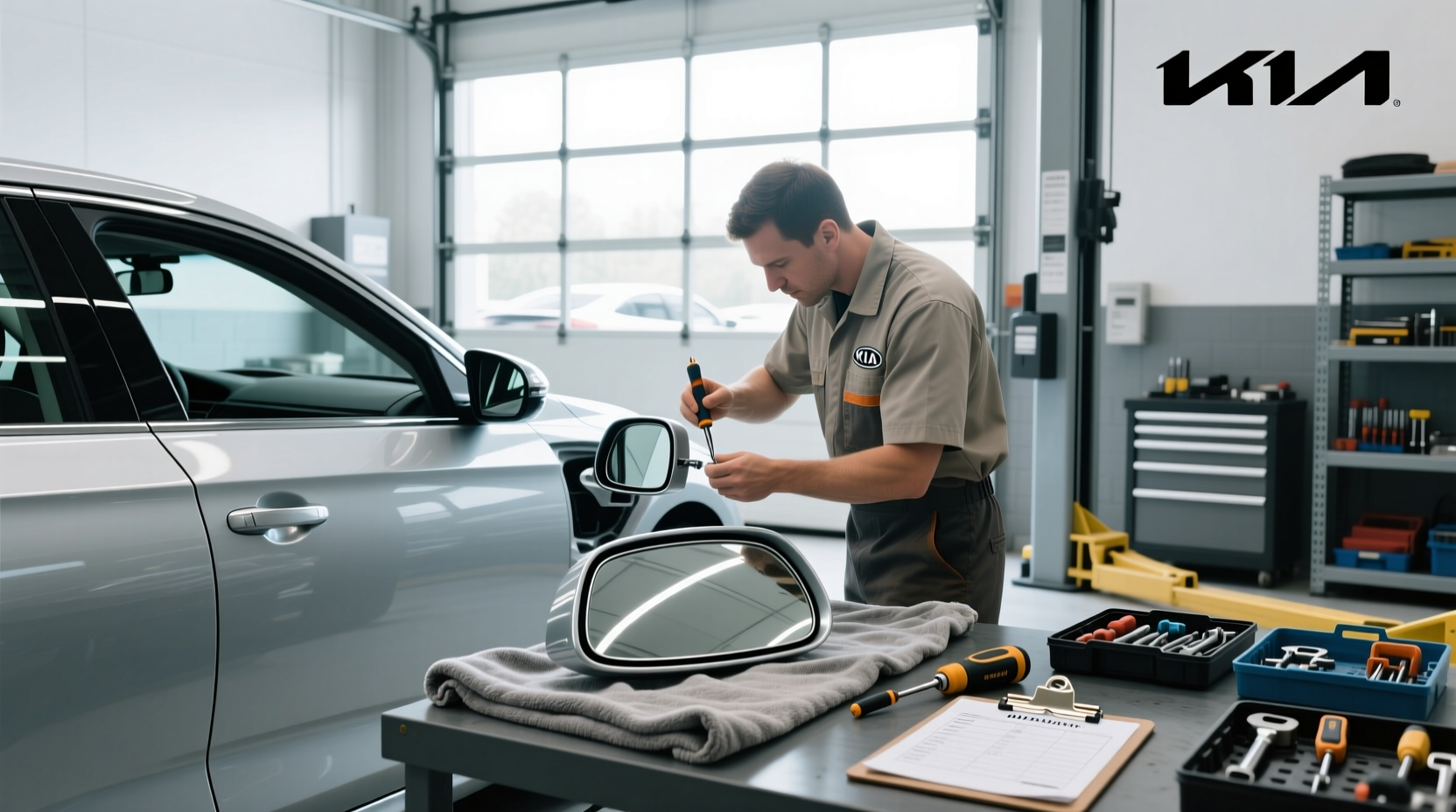
If you're searching for kia mirror replacement, you're likely dealing with a broken, loose, or malfunctioning rear view or side mirror. Whether it fell off, was damaged in an accident, or no longer adjusts properly, replacing it correctly is essential for safety and visibility. The good news? Most Kia interior rearview mirrors can be replaced without professional help using basic tools and compatible parts—especially if you choose an OEM-matched unit that fits your model year and trim. This guide walks you through every step, from identifying your mirror type to installation tips, cost considerations, and avoiding common pitfalls.
Understanding Kia Mirror Types and Features
Kia vehicles come equipped with several types of rear and side mirrors, each serving different functions based on model, trim level, and production year. Knowing which kind your vehicle has is the first step toward a successful kia interior rear-view mirror replacement.
1. Manual vs. Automatic Dimming Mirrors
Many base-trim Kia models use manual dimming mirrors, where a lever at the bottom toggles between day and night settings to reduce headlight glare. Higher trims often feature auto-dimming mirrors, which use sensors to darken automatically when headlights from behind are detected 1. These contain electronic components and may require recalibration after replacement.
2. Mirrors with Integrated Technology
Newer Kia models—like the EV9, K5, and Carnival—offer advanced features such as:
- Digital rearview mirrors (also called Full Display Mirrors)
- Homelink garage door openers
- Compass and temperature displays
- Bluetooth connectivity or microphone integration
Replacing these requires more than just physical fitment; electrical compatibility and software pairing may be necessary. For example, the Kia digital center mirror uses a camera mounted on the rear window and streams video to the mirror display. If you’re replacing one, ensure the new unit supports this function and matches your VIN-specific configuration.
3. Side Mirrors: Heated, Power-Fold, Turn Signal Equipped
Exterior mirrors vary widely across Kia’s lineup. Some include:
- Electric adjustment
- Heating elements to defrost in cold weather
- Power-folding capability
- Integrated turn signals (LED)
- Memory position syncing with driver profiles
When replacing a side mirror assembly, matching all these features ensures full functionality. A mismatched part might adjust electronically but lack heating, creating user frustration down the line.
OEM vs Aftermarket: What You Need to Know
One of the most common decisions during a kia mirror replacement is whether to go OEM (Original Equipment Manufacturer) or aftermarket.
| Factor | OEM Parts | Aftermarket Parts |
|---|---|---|
| Fit & Finish | ✅ Exact match to factory specs | ⚠️ May have minor alignment issues |
| Electrical Compatibility | ✅ Guaranteed to work with existing wiring | ⚠️ Wiring harness may differ; adapters sometimes needed |
| Price Range | $50–$300+ | $20–$150 |
| Warranty | Often covered under dealer warranty | Limited, varies by seller |
| Availability | Can be ordered through dealerships | Widely available online |
OEM mirrors, like part number 85101A4000 used in some Sorento models, are built to Kia’s exact standards and typically plug-and-play. However, they cost significantly more—sometimes over $250. Aftermarket units offer savings but require careful vetting. Look for ones labeled “OEM-compatible” and check reviews specifically mentioning your Kia model and year.
Common Reasons for Kia Mirror Replacement
Understanding why a mirror needs replacement helps determine urgency and repair approach.
📍 Mirror Fell Off the Windshield
This is one of the most frequent issues. The adhesive mount fails due to age, heat exposure, or improper installation. Reattaching it isn’t always enough—you should inspect the metal base plate inside the mirror housing. If it’s cracked or warped, a full replacement is safer.
🔧 Cracked or Foggy Glass
Interior mirrors rarely get physically damaged unless impacted. But exterior mirrors are vulnerable to rocks, doors, and weather. If the glass is cracked or the lens fogs internally (in heated mirrors), moisture has likely entered the housing. This usually means the seal is compromised, and replacement—not repair—is required.
⚙️ Motor or Adjustment Failure
If power mirrors don’t respond to controls, the issue could be the motor, wiring, or switch. Before replacing the entire assembly, test voltage at the connector. However, many owners opt for full replacement due to labor costs and difficulty accessing internal components.
✨ Digital Mirror Malfunction
In models with digital rearview mirrors, problems like frozen screens, poor image quality, or no signal indicate either camera failure, wiring issues, or a faulty display unit. Since these systems integrate with the vehicle’s infotainment network, replacements may need coding via a dealership-level scan tool.
Step-by-Step: How to Replace a Kia Interior Rear View Mirror
Replacing an interior mirror is generally straightforward. Here’s how to do it safely.
🛒 Tools Needed:
- Gloves (to protect against sharp edges)
- Trim removal tool or plastic pry bar
- Screwdriver (Phillips or flathead depending on model)
- New mirror assembly (matched to your VIN if possible)
- Double-sided adhesive tape (if not pre-applied)
⏱️ Estimated Time: 20–45 minutes
- Disconnect the Battery: Always disconnect the negative terminal before working near airbag sensors or electrical systems.
- Remove the Old Mirror: Locate the release tab or screw holding the mirror to its mounting base. On older models, there may be a small cover hiding a screw. Gently pull the mirror straight down to detach it from the bracket glued to the windshield.
- Transfer Components (if applicable): Some mirrors have removable electronics (e.g., Homelink buttons). Carefully unplug and transfer them to the new unit.
- Clean the Mounting Area: Use alcohol wipes to remove old adhesive residue from the windshield. Let dry completely.
- Attach the New Mirror: Align the new mirror with the base plate and push firmly until it clicks. Ensure all electrical connectors are seated if applicable.
- Reconnect Battery and Test: Turn on the ignition and verify all functions (dimming, compass, Homelink).
Note: Never reuse old adhesive. Over time, it loses bonding strength and increases the risk of detachment during impact.
Replacing a Kia Side Mirror: More Complex but Doable
Side mirror replacement involves more disassembly and potential electrical work.
🔧 Steps Overview:
- Remove door panel: Unscrew armrest and speaker covers, then gently pry off the panel using a trim tool.
- Disconnect wiring harness: Unplug cables going to mirror motors, heater, and turn signal.
- Unbolt the mirror: Typically secured by 3–4 bolts accessible from inside the door cavity.
- Install new mirror: Position the new unit, reattach bolts, reconnect wires, and reassemble the door panel.
For models with power-folding mirrors, ensure the mechanism operates smoothly before final reassembly. Misalignment can cause binding or damage.
Cost Breakdown: What to Expect
Prices vary significantly based on mirror type and source.
- Interior Manual Mirror: $20–$60 (aftermarket), $70–$120 (OEM)
- Auto-Dimming Interior Mirror: $80–$180
- Digital Rearview Mirror (e.g., EV9): $250+
- Side Mirror Assembly (manual): $50–$120
- Powered/Heated Side Mirror: $120–$250
Labor at a dealership or auto shop ranges from $80–$150 per hour. DIY saves money but requires confidence in handling interior panels and wiring.
Where to Buy Replacement Mirrors
You have several options, each with trade-offs.
🏭 Dealerships
Best for OEM parts and guaranteed compatibility. You can provide your VIN to ensure correct fitment. Downsides: higher prices and limited availability for older models.
🌐 Online Retailers
Websites like eBay and specialized Kia parts suppliers offer both new and used units. Search using your model name and year (e.g., “2021 Kia Seltos interior mirror”) plus keywords like “genuine,” “OEM,” or “direct replacement.” Check seller ratings and return policies.
👥 Salvage Yards / Used Parts Networks
Used mirrors from totaled vehicles can be functional and affordable. However, inspect for scratches, fogging, and missing buttons. Also, confirm electronic compatibility—used auto-dimming units may retain previous settings or fail prematurely.
Common Mistakes to Avoid
Avoid these pitfalls during your kia mirror replacement project:
- Skipping battery disconnect: Risk of short-circuiting or triggering airbag warnings.
- Reusing old adhesive: Leads to weak bond and future detachment.
- Mismatching trim levels: Not all mirrors fit every trim. For instance, a K5 GT mirror won’t have the same features as a LX version.
- Ignoring calibration needs: Some digital mirrors require post-installation setup via the UVO system or dashboard menu.
- Forcing plastic clips: Door panels break easily. Use proper tools and technique.
When to Seek Professional Help
While many mirror replacements are DIY-friendly, consider professional assistance if:
- The mirror integrates with blind-spot monitoring or lane-change assist.
- Replacement requires camera recalibration (common in digital mirrors).
- You’re uncomfortable removing door panels or handling electrical connectors.
- Your vehicle is under warranty—improper installation could void coverage.
Final Tips for Success
To ensure a smooth kia rear view mirror replacement:
- Verify part compatibility using your VIN whenever possible.
- Compare dimensions and connector types between old and new units.
- Watch tutorial videos specific to your model (e.g., “How to replace Kia Sportage interior mirror 2020”).
- Test all functions before fully reassembling interior panels.
- Keep the original mirror in case returns are needed.
Frequently Asked Questions
- ❓ Can I replace a Kia rear view mirror myself?
- Yes, most interior mirrors can be replaced at home with basic tools. Exterior mirrors require more effort due to door panel removal, but are still manageable for intermediate DIYers.
- ❓ How do I know if my Kia mirror is auto-dimming?
- Look for a small ambient light sensor on the front surface. It automatically darkens when bright lights hit it from behind. Models with this feature usually list “electrochromic mirror” in the owner’s manual.
- ❓ Does a new Kia mirror need programming?
- Basic mirrors do not. However, digital mirrors or those linked to safety systems (like blind-spot cameras) may require calibration or coding using diagnostic tools available at dealerships.
- ❓ Why did my Kia rear view mirror fall off?
- The adhesive bond degrades over time, especially with repeated exposure to extreme temperatures. Sunlight and humidity accelerate this process. Always clean the windshield thoroughly and use fresh adhesive when reinstalling.
- ❓ Are Kia and Hyundai mirrors interchangeable?
- Many Kia and Hyundai models share platforms and parts. Some interior mirrors are cross-compatible, but always verify fitment by comparing part numbers and connector layouts before purchasing.




 浙公网安备
33010002000092号
 浙B2-20120091-4