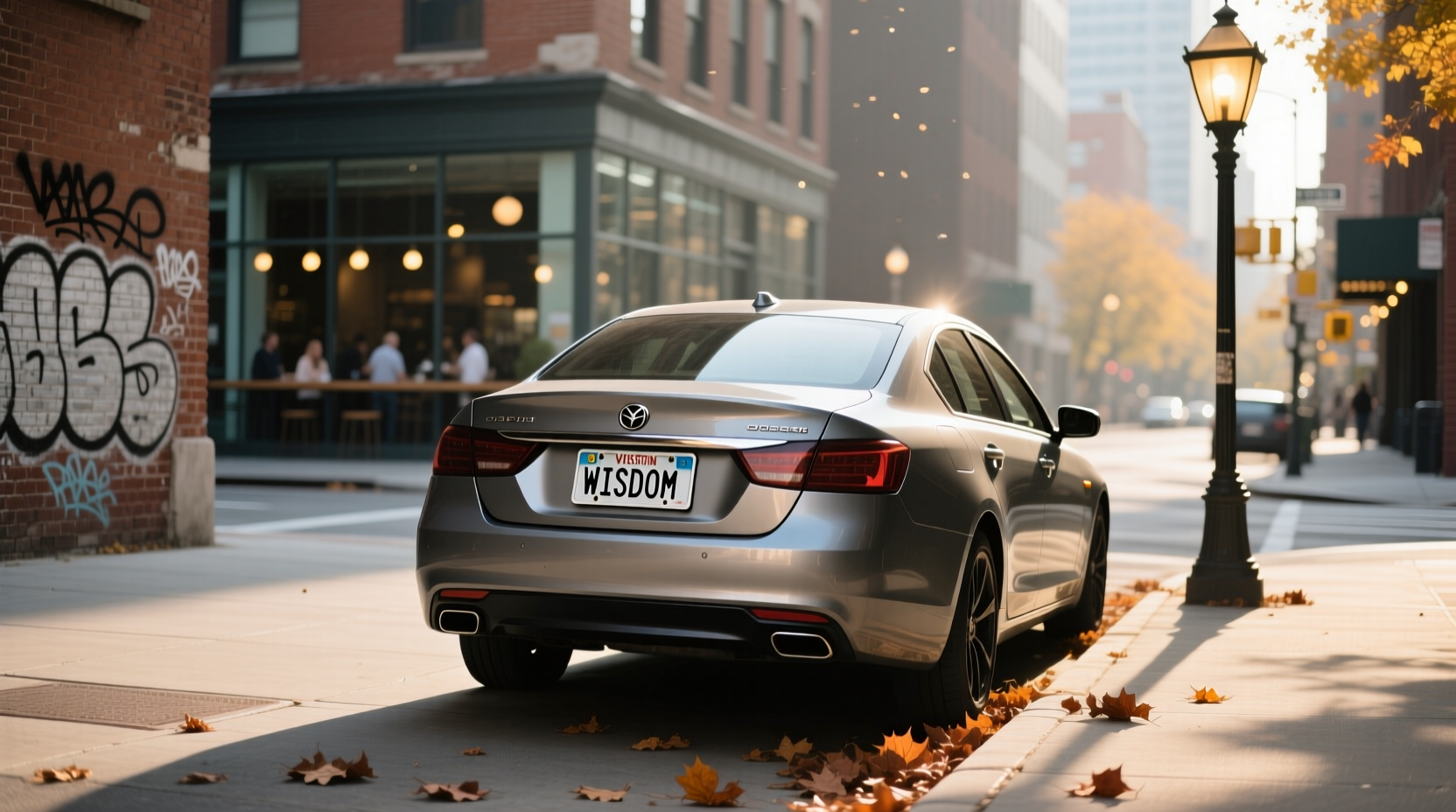
🔍 What do the letters on a license plate mean? Whether you're trying to identify a vehicle's origin in Europe, decode a U.S. state registration, or understand international vehicle codes, this guide breaks down everything about license plate letter meanings. From country identifiers like 'D' for Germany to regional codes such as 'B' for Birmingham or 'R' for Reading in the UK, we’ll explore how governments use letters to classify location, year of registration, and even vehicle type. This comprehensive overview covers global standards, national systems, common misconceptions, and practical tips for interpreting both standard and personalized plates.
Understanding International Vehicle Registration Codes
One of the most standardized uses of license plate letters is found in international vehicle registration codes, also known as the International Registration Letter or Vehicle Registration Identification (VRI) code 1. These are the oval stickers or embossed letters seen on vehicles traveling across borders in Europe and other regions. They indicate the country of registration using 1–3 letters:
| Code | Country |
|---|---|
| D | Germany (Deutschland) |
| F | France |
| I | Italy |
| E | Spain (España) |
| A | Austria |
| B | Belgium |
| NL | Netherlands |
| P | Portugal |
| RUS | Russia |
| GB | United Kingdom |
These codes are governed by the United Nations Geneva Convention on Road Traffic and are required when driving internationally. Unlike domestic plates, these don’t change based on city or county but solely represent the nation.
European License Plate Letter Systems
In many European countries, especially within the EU, license plates follow a semi-harmonized format that includes country-specific prefixes followed by regional or sequential identifiers. For example, German license plates start with a city or district code:
- B – Berlin
- M – Munich
- F – Frankfurt
- K – Cologne (Köln)
This first segment identifies the issuing authority. After that comes a combination of letters and numbers unique to the vehicle. In France, older plates used department numbers, while newer SIV system plates (since 2009) use a format like AA-123-AA, where the letters have no geographic meaning but help avoid duplication.
In contrast, Italian plates use a two-letter provincial code. For instance:
- MI – Milan
- RM – Rome
- NA – Naples
These codes are still active today and can help pinpoint where a car was registered.
U.S. License Plate Formats and Letter Significance
In the United States, there’s no uniform national system, so license plate letter meanings vary significantly by state. However, some patterns emerge based on design trends and serial formats 2.
Most states use a mix of letters and numbers in sequences ranging from six to eight characters. Vanity plates allow up to eight characters in many states, giving owners full control over letter selection.
Some states embed geographical data into their numbering schemes. For example:
- California: Older formats used county codes, though modern plates rely more on randomization.
- New York: Uses a system where the first letter indicates the vehicle class (e.g., 'T' for trailers).
- Texas: Issues plates with optional city or university affiliations (like 'ATX' for Austin), though these are not mandatory.
While most U.S. plates don't encode precise locations through letters anymore, certain combinations may reflect historical regions or be part of specialty plate programs.
UK Number Plates: Area and Age Identifiers
The UK has one of the most structured and informative systems. Since 2001, British license plates follow a clear pattern: XX77 XXX or YX77 XXX, where:
- The first two letters (local memory tag) indicate the region and specific DVLA office.
Example: AB = Anglia, M = Manchester, L = London. - The next two numbers (age identifier) show the year and half-year of registration (e.g., 23 = March 2023, 73 = September 2023).
- The last three letters are random and uniquely identify the vehicle.
For instance:
- BA51 WDW: Registered in Birmingham between September–December 2011.
- SN69 JKL: Registered in Sunderland between March–August 2024.
Earlier systems (pre-2001) used different coding logic, including suffix letters indicating the model year (e.g., 'A' for 1963, 'Y' for 2000). Understanding these helps when buying used cars or verifying authenticity.
How to Read a Number Plate: Step-by-Step Guide
✅ Want to know how to interpret any license plate quickly? Follow this universal checklist:
- Identify the Country Code 🌍 – Look for an oval sticker or prefix (e.g., 'D', 'F', 'I'). This tells you where the car is registered.
- Check the Regional Prefix 📍 – In countries like Germany or Italy, the initial letters often denote cities or provinces.
- Analyze the Structure 🔍 – Is it AA-99-AA? 1ABC234? The pattern reveals whether letters carry meaning or are just placeholders.
- Decode Date Indicators ⏱️ – In the UK, Ireland, and others, numbers correlate with registration periods.
- Determine if It’s Personalized ✨ – If the sequence spells a word (e.g., 'BMW 1'), it’s likely a vanity plate with no official significance.
This method works across continents and avoids misinterpretation due to regional differences.
Common Misconceptions About License Plate Letters
Despite widespread curiosity, several myths persist about what license plate letters actually mean:
❌ Myth 1: All Letters Have Geographic Meaning
In reality, only certain positions in regulated systems (like the UK or Germany) carry location data. Many U.S. states use randomized sequences where letters serve only as unique identifiers.
❌ Myth 2: You Can Track Someone’s Exact Location From Their Plate
No public system allows real-time tracking via plate letters alone. Law enforcement uses databases, not pattern recognition, for identification.
❌ Myth 3: More Letters Mean a Newer Car
Not true. Vehicle age is typically encoded numerically (as in the UK) or not at all. Extra letters usually result from longer serial formats or vanity choices.
❌ Myth 4: International Codes Appear on Domestic Plates
The 'D' on a German plate stands for Dortmund or Duisburg—not Deutschland—within domestic contexts. The international 'D' appears only on cross-border tags.
Vanity Plates vs. Standard Issue: What’s the Difference?
Personalized or “vanity” plates let owners choose their own letter-number combinations, often spelling names, slogans, or inside jokes. While fun, they obscure traditional decoding methods.
Key differences include:
| Feature | Standard Plate | Vanity Plate |
|---|---|---|
| Letter Meaning | Geographic, temporal, or administrative | User-defined; often symbolic |
| Availability | Automatic assignment | By application and fee |
| Length | 6–7 chars (varies by state/country) | Up to 8 chars in many areas |
| Cost | Included in registration | Additional annual fee |
| Regulation | None beyond format rules | Content screening (no offensive words) |
If you see a plate like 'HOT ROD' or 'ECO 1', don’t assume it reflects official categorization—it’s probably personal expression.
Specialty and Government Plates
Beyond civilian registrations, special categories exist:
- Diplomatic Plates: Use codes like 'CD' (Corps Diplomatique) or 'UN' followed by mission number.
- Military Plates: In the U.S., Department of Defense plates use distinct formats without standard state coding.
- Dealer Plates: Often begin with 'Z', 'DLR', or 'TMP' and allow test drives without individual registration.
- Electric Vehicle Plates: Some states (e.g., California) issue green-colored plates with EV-specific codes for toll exemptions or HOV lane access.
These often override standard letter conventions and require separate lookup tools.
How to Verify License Plate Information Legally
You cannot legally trace a plate owner without authorized need (law enforcement, accident reporting, etc.). However, you can verify basic details through official channels:
- Use government-run VIN check services (e.g., NHTSA in the U.S.)
- Contact your local DMV or motor registry for compliance questions
- Report suspicious vehicles to authorities rather than investigating yourself
Third-party apps claiming to “look up” plate owners often violate privacy laws and should be avoided.
Regional Variations and Exceptions
Not all countries follow predictable models. Consider these outliers:
- Japan: Uses a complex system with prefecture names in kanji, followed by a class code and serial number. Letters appear only in romanized export versions.
- Australia: Each state manages its own system. NSW uses 'NSW' prefix; Victoria uses a format like 'ABC 123' with no geographic coding.
- Canada: Provincial abbreviations appear on plates (e.g., 'ON' for Ontario), but internal letters are mostly random.
Always confirm current standards through official transport department websites, as formats evolve.
Practical Tips for Travelers and Car Enthusiasts
Whether you’re touring Europe or importing a classic car, understanding plate letters helps avoid confusion:
- Carry a code reference sheet when driving abroad.
- Photograph foreign plates you find interesting—later research can reveal origins.
- Use online decoders tailored to specific countries (e.g., UK plate calculators).
- Respect local laws—photographing emergency vehicles may raise suspicion in some regions.
Knowledge empowers safer, more informed interactions with international traffic.
Conclusion: License Plate Letters Serve Multiple Purposes
From identifying national origins to revealing registration dates and regional hubs, license plate letters play a critical role in vehicle management worldwide. While systems differ—from Germany’s city-based prefixes to the UK’s time-coded identifiers—each follows logical rules designed for clarity and efficiency. By learning how to read them, you gain insight into automotive culture, regulatory practices, and global mobility standards.
Remember: always distinguish between standardized codes and personalized expressions. When in doubt, consult official transportation resources rather than relying on assumptions.
Frequently Asked Questions
- What do the first two letters on a UK license plate mean?
- The first two letters indicate the region and DVLA office where the vehicle was registered. For example, 'AB' refers to the Anglia region, while 'M' stands for Manchester.
- Can I tell the year of a car from its license plate?
- Yes, in countries like the UK and Ireland, the two-digit age identifier shows the registration period. For example, '51' means September–December 2011, and '73' means September–December 2023.
- Do U.S. license plates use letters to show location?
- Most U.S. states no longer use letters to indicate location. Some older systems did, but modern plates typically use random sequences. Exceptions include specialty plates with city or university codes.
- What does 'D' mean on a European license plate?
- 'D' is the international vehicle registration code for Germany. It appears on oval stickers used when driving across borders, not necessarily on domestic plates.
- How many letters can a license plate have?
- In the U.S., vanity plates can have up to 8 characters in most states. Standard plates usually have 6–7 alphanumeric characters. Length varies by country and vehicle type.




 浙公网安备
33010002000092号
 浙B2-20120091-4