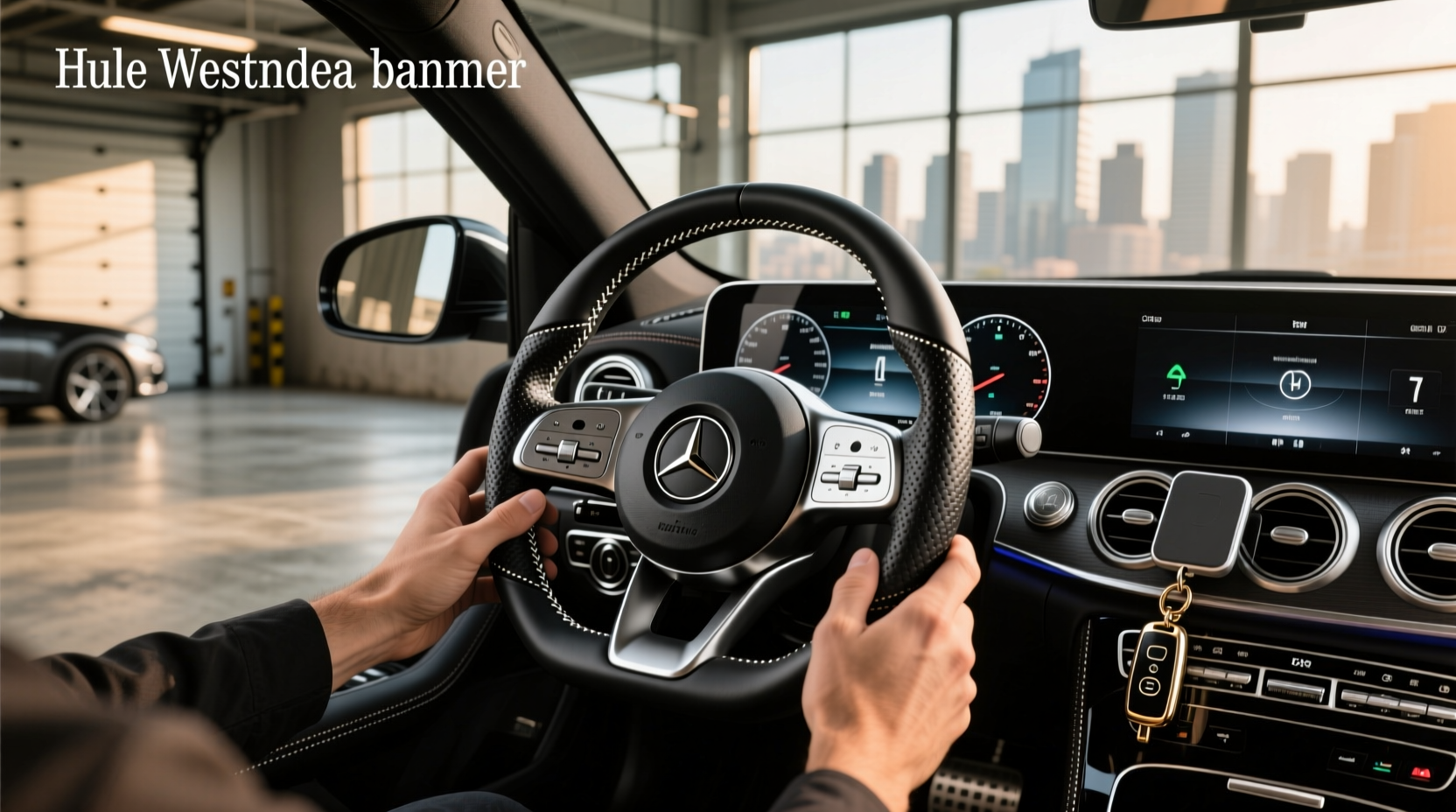
Upgrading your Mercedes steering wheel is more than just a cosmetic change—it can enhance driving comfort, improve control, and refresh the interior’s look. Whether you're considering an OEM AMG steering wheel swap, a custom carbon fiber design, or integrating advanced driver controls, understanding compatibility, wiring integration, and installation requirements is essential. This guide covers everything from model-specific fitment (W205, W213, A-Class, etc.) to retrofitting multifunction systems, ensuring you make an informed decision without costly mistakes.
Why Upgrade Your Mercedes Steering Wheel?
Many Mercedes-Benz owners consider a steering wheel upgrade for several practical and aesthetic reasons. The factory-installed wheel may show wear over time, especially on high-mileage vehicles. Others seek improved ergonomics, better grip materials like Alcantara or perforated leather, or a sportier appearance that matches performance tuning.
Common motivations include:
- Improved aesthetics: Replace aging plastic trims or outdated designs with modern flat-bottom AMG-style wheels ✨
- Better tactile feedback: Upgraded materials offer enhanced grip in hot or cold weather ⚡ \li>
- Integration with driver assistance systems: Newer wheels support cruise control, voice commands, and infotainment navigation ⚙️
- Restoration projects: Replacing worn or damaged original equipment on classic models 🧰
However, not all upgrades are plug-and-play. Some require coding, module pairing, or even airbag system recalibration—steps many DIYers overlook until after purchase.
Types of Mercedes Steering Wheels Available
There are three primary categories of steering wheels suitable for Mercedes-Benz vehicles: OEM replacements, AMG performance wheels, and aftermarket/custom units. Each has distinct advantages and limitations.
OEM Replacement Wheels
These are genuine Mercedes-Benz parts sourced from dealerships or salvage yards. They match factory specifications exactly and typically integrate seamlessly with existing electronics when swapped within the same model generation.
For example, upgrading from a standard C-Class (W205) steering wheel to the optional AMG Performance Steering Wheel (part number A0004604203) is a popular modification. These wheels feature DIN-coded connectors and retain all multifunction buttons including phone, audio, and adaptive cruise control.
Pros:
- Plug-compatible with factory harnesses (in most cases) ✅
- No need for coding or ECU reprogramming 📍
- Maintains resale value and factory warranty eligibility (if applicable)
Cons:
- Limited design variety compared to aftermarket options
- Higher cost than third-party alternatives 🛒
- Availability may be limited for older models
AMG and Factory Performance Wheels
The AMG line offers premium upgrades such as the flat-bottom Nappa leather/Alcantara steering wheels found on higher-trim models like the C63 or E63. These are often retrofitted into non-AMG variants for both visual appeal and improved hand positioning during spirited driving.
Key features:
- Flat-bottom design improves leg clearance ⚙️
- Dual-material wrapping (leather + microfiber) enhances grip
- Integrated paddle shifters on some models
- Heated option available on select post-2017 models
Compatibility note: While AMG wheels fit mechanically across many platforms (e.g., W204, W205, W213), electronic integration depends on whether your vehicle's CAN bus recognizes the new wheel’s signal profile. For instance, adding an AMG wheel to a base engine variant may require STAR diagnosis tool access to activate hidden functions.
Aftermarket and Custom Steering Wheels
Companies like Exclusive Steering, Diversion Automotive, and NTech Performance offer fully customizable solutions using real carbon fiber, forged composites, and bespoke stitching patterns. These are ideal for enthusiasts seeking unique finishes not offered by Mercedes.
Customization options include:
- Material choice: Full carbon, wood-inlay, suede wrap 🌍
- Shape: Round, flat-bottom, D-cut
- Color-matched stitching to interior theme
- Weight reduction for track-focused builds
⚠️ Important: Aftermarket wheels often lack integrated airbags or multifunction modules unless specifically designed for OEM compatibility. Installing one may disable safety systems unless properly engineered.
| Type | Best For | Installation Difficulty | Average Cost (USD) |
|---|---|---|---|
| OEM Standard | Stock replacement, daily drivers | Easy (plug-and-play) | $300–$600 |
| AMG Performance | Sporty feel, enhanced tech | Moderate (may require coding) | $800–$1,400 |
| Aftermarket/Custom | Show cars, track builds | High (wiring/modification needed) | $1,200–$3,000+ |
Model Compatibility & Fitment Guide
Not all steering wheels fit every Mercedes-Benz chassis. Mechanical bolt patterns are standardized across generations, but electrical connectors and clock springs vary significantly.
Below is a breakdown of common platforms and compatible upgrade paths:
C-Class (W205: 2014–2021)
The W205 supports direct swaps between standard and AMG steering wheels provided they share the same airbag module type. Post-facelift models (2018+) use updated multifunction switches that may not communicate with pre-2018 ECUs without software updates.
🔧 Tip: Use part number cross-referencing via Mercedes’ EPC database or verified suppliers like mbparts.mbusa.com to confirm fitment before purchasing.
E-Class (W213: 2017–Present)
Later E-Class models introduced touch-sensitive steering wheel controls. Swapping in a non-touch wheel (like from a GLC) will result in loss of functionality unless remapped. Additionally, heated steering wheel circuits must be enabled in firmware if absent originally.
A-Class (W177: 2019–Present)
Compact models use smaller diameter wheels with unique spoke layouts. Retrofitting larger wheels (e.g., from S-Class) is mechanically possible but affects airbag deployment geometry and is not recommended.
Older Models (Pre-2010)
Vehicles like the W203 or R230 SLK have simpler analog systems. Upgrading to a modern multifunction wheel requires extensive rewiring and potentially replacing the instrument cluster or steering column module.
📌 Always verify:
- Steering column spline count
- Airbag connector type (6-pin vs. 12-pin)
- Clock spring compatibility
- Presence of lane-keeping or Distronic+ controls
Installation Process Overview
Swapping a steering wheel involves more than removing bolts. Safety-critical components like the airbag and torque sensor must be handled carefully.
Tools Required
- Torx T30 or E12 bit (varies by year) 🔧
- Non-conductive trim removal tool
- Memory saver or battery disconnect kit
- OBD2 code reader (optional, for resetting warnings)
Step-by-Step Installation
- Disconnect the battery: Wait at least 15 minutes to discharge capacitors in the SRS system.
- Remove airbag module: Typically secured by two Torx screws behind access holes in the back of the wheel. Label wires before unplugging.
- Unbolt steering wheel hub: Use correct socket size; avoid stripping threads.
- Transfer clock spring (if necessary): On some models, it stays on the column; others require transfer to new wheel.
- Install new wheel and reconnect airbag: Ensure alignment marks line up.
- Reconnect battery and test: Check for warning lights, test horn, cruise control, and infotainment buttons.
If multifunction controls don’t work, coding may be required using Mercedes XENTRY (STAR) diagnostics—a service offered by authorized independents.
Electronics and Coding Requirements
Modern Mercedes vehicles rely on the CAN bus network to identify steering wheel inputs. Simply plugging in a different wheel doesn’t guarantee functionality.
Examples where coding is likely needed:
- Adding paddle shifters to a car without them
- Activating unused features in the instrument cluster
- Enabling heated steering wheel function
- Integrating voice command or Distronic controls
🛠️ Solution: Professional shops use XENTRY/DAS systems to modify ZGW (Gateway) and steering angle sensor settings. DIY users sometimes use third-party tools like Vediamo or DTS Monaco, though these require technical expertise.
❗ Warning: Incorrect coding can disable critical systems or trigger immobilizer faults. Proceed only with proper knowledge or professional support.
Cost Breakdown and Where to Buy
Pricing varies widely based on source and condition.
New OEM wheels from dealers range from $600–$1,500 depending on model and trim. Used units from reputable dismantlers (e.g., usedparts.mercedes-benz.com) offer savings of 30–50%, but inspect for cracks, button responsiveness, and airbag label integrity.
Aftermarket providers like Exclusive Steering or NTech allow full personalization but start around $1,200 and go beyond $3,000 for hand-laid carbon builds.
🌐 When sourcing internationally (e.g., EU-based sellers), factor in shipping delays, import taxes, and potential VAT charges. Delivery times quoted as “2–4 working days” may extend due to customs processing 🚚⏱️.
Common Mistakes to Avoid
Even experienced modifiers make errors during steering wheel swaps. Here are frequent pitfalls:
- Ignoring airbag compatibility: Mismatched airbags won’t deploy correctly and can fail inspection in regulated markets.
- Assuming plug-and-play works always: Especially true when moving between diesel/gasoline trims or pre/post-facelift models.
- Overlooking multifunction button layout: Some wheels place cruise control on spokes instead of stalks—can cause confusion while driving.
- Using improper torque specs: Overtightening the center nut risks damaging the clock spring or column bearings.
Legal and Safety Considerations
In the U.S., FMVSS 208 regulates occupant protection, including airbag systems. Installing a non-certified steering wheel could void insurance coverage or fail state inspections in places like California or New York.
In Europe, ECE R79 governs steering equipment modifications. Any change affecting crashworthiness must undergo homologation testing unless covered under type approval exemptions.
✅ Best practice: Retain original wheel and documentation in case of resale or compliance checks.
Frequently Asked Questions
- Can I upgrade my Mercedes steering wheel myself?
- Yes, if you have mechanical experience and follow proper SRS safety procedures. However, coding and diagnostics usually require professional tools.
- Will an AMG steering wheel fit my non-AMG Mercedes?
- Mechanically yes, in most cases within the same generation. But electronic compatibility depends on your vehicle’s existing modules and software configuration.
- Do I need to reprogram the car after installing a new steering wheel?
- Not always. Basic replacements retaining the same functions usually work immediately. If adding new features (e.g., heating, extra buttons), coding is typically required.
- Are aftermarket steering wheels safe?
- Only if they meet OEM safety standards and include certified airbag systems. Many budget options omit crash testing data and should be avoided for daily-driven vehicles.
- How much does a professional steering wheel upgrade cost?
- Labor ranges from $150–$400 depending on complexity. Total project cost (parts + labor + coding) can reach $2,000 for high-end retrofits.




 浙公网安备
33010002000092号
 浙B2-20120091-4