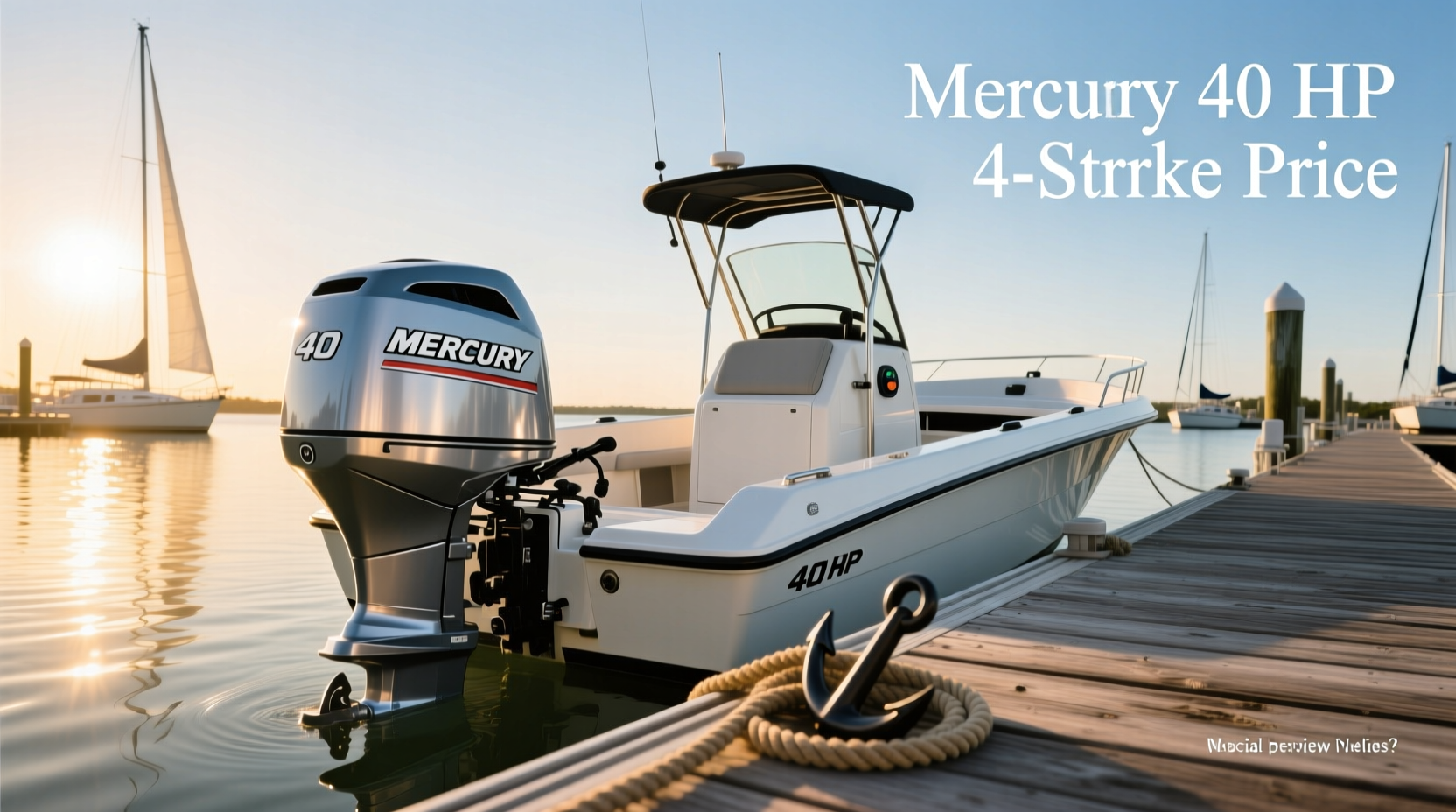
🛒 If you're researching the Mercury 40 hp 4-stroke outboard motor price, you’re likely comparing models for a small fishing boat, pontoon, or inflatable craft. As of 2025, the typical price range for a new Mercury 40 HP 4-stroke engine falls between $5,780 and $6,930, depending on shaft length, control system (tiller vs. remote), dealer location, and included features like electric start or fuel injection (EFI). Some international listings, such as in Australia, show prices from A$8,490, reflecting shipping, taxes, and import duties. This guide breaks down every factor influencing the final cost, compares popular configurations, and helps you avoid overpaying while ensuring reliability and performance match your boating needs.
Why the Mercury 40 HP 4-Stroke Is Popular
📍 The Mercury 40 HP FourStroke outboard is part of a well-regarded family of mid-range engines designed for lightweight to midsize boats ranging from 14 to 19 feet. Its appeal lies in a balance of power, fuel efficiency, and ease of maintenance. Unlike two-strokes, this four-stroke design offers quieter operation, lower emissions, and better torque at low RPMs — ideal for anglers, weekend cruisers, and rental fleets.
⚙️ Key technical features include:
- Available in 3-cylinder or 4-cylinder variants (depending on model year)
- Electronic Fuel Injection (EFI) for reliable cold starts
- Shaft options: 20-inch (long) or 15-inch (short)
- Starting: Electric or manual recoil (on select tiller models)
- Steering: Tiller handle or remote mechanical control
These variations directly impact pricing and suitability for different vessels. For example, a remote-steer model with electric start will cost more than a basic tiller version but offers greater comfort and integration with larger consoles.
Current Mercury 40 HP 4-Stroke Price Range (2025)
📌 Below is a breakdown of real-time U.S.-based pricing pulled from authorized dealers as of early 2025:
| Model | Configuration | Price (USD) | Availability |
|---|---|---|---|
| Mercury 40ELPT | Electric Start, Remote Mechanical, 20" Shaft | $6,928.00 | In stock |
| Mercury 40HP FourStroke EFI | Tiller Start, Long Shaft | $5,780.99 | In stock |
| 2025 Mercury FourStroke 40 EFI | Remote Steer, Electric Start | $6,499.00 | New inventory |
🛒 These figures represent manufacturer suggested retail prices (MSRP) before potential rebates, freight charges, rigging kits, or sales tax. International buyers should expect higher costs due to logistics and local regulations. For instance, one Australian dealer lists the same horsepower class between A$8,490 and A$10,508, which converts to roughly $5,700–$7,100 USD — showing how regional markets can vary significantly 1.
Factors That Influence the Final Price
🔍 Understanding what drives price differences helps prevent confusion when comparing quotes across dealerships or online platforms.
1. Control Type: Tiller vs. Remote Steering ⚙️
The most significant price driver is whether the engine uses a tiller handle or connects to a remote steering system.
- Tiller models are simpler, lighter, and cheaper — often used on smaller aluminum boats, jon boats, or inflatables.
- Remote-controlled versions require additional hardware: cables, helm units, throttle/shift linkages, and sometimes digital gauges. These add $500–$1,000 to total installed cost.
2. Starting Mechanism: Electric vs. Recoil ✨
While all newer Mercury 40 HP models come with electric start as standard in remote setups, some entry-level tiller models may offer pull-start (recoil) options to reduce initial cost. However, electric start improves usability, especially in colder climates or after extended storage.
3. Shaft Length: Short vs. Long 📏
Most 40 HP Mercurys use a 20-inch “long” shaft, suitable for transoms 15–20 inches tall. Using a short shaft on a deep transom can cause cavitation; using a long shaft on a shallow transom reduces efficiency. Ensure compatibility — incorrect sizing affects both performance and resale value.
4. Fuel System: Carbureted vs. EFI ⚡
✅ All current production Mercury 40 HP 4-strokes use Electronic Fuel Injection (EFI), which provides smoother idle, faster starts, and better fuel economy compared to older carbureted designs. Avoid outdated models marketed as 'new' if they lack EFI — it’s a critical upgrade for reliability.
5. Dealer Location and Freight Costs 🚚
Prices can differ by region. Dealers in coastal states (Florida, California, Maine) may have competitive pricing due to volume, while inland or rural locations might charge more due to shipping fees. Always ask if the listed price includes delivery and setup.
Used vs. New: Is a Pre-Owned Mercury 40 HP Worth It?
👥 Buying used can save 30–50% off MSRP, but comes with risks. A 2018–2022 used Mercury 40 HP FourStroke typically sells between $3,500 and $4,800, depending on condition, hours, and maintenance history.
🔧 Before purchasing a used unit:
- Check the hour meter — under 200 hours is considered low usage.
- Inspect for corrosion, especially around water intake ports and lower unit seals.
- Verify service records — regular oil changes and impeller replacements are essential.
- Ask for a sea trial or start test to detect rough idling or starting issues.
- Confirm the serial number matches registration documents.
🧰 YouTube has become a valuable resource for DIY diagnostics. Videos showing fuel pump removal or replacement on Mercury Mariner 40 HP engines highlight common wear points 2. While these repairs are manageable for experienced owners, frequent need for them could indicate poor prior maintenance.
How Does the Mercury 40 HP Compare to Competitors?
📊 To evaluate whether the Mercury 40 HP offers good value, consider how it stacks up against similar models from Yamaha, Honda, Suzuki, and Tohatsu.
Mercury vs. Yamaha 40 HP 4-Stroke
Both brands deliver strong low-end torque and quiet operation. Mercury emphasizes quick acceleration and integrated SmartCraft monitoring systems on higher trims. Yamaha tends to have slightly better fuel economy in steady cruising but may feel less punchy off-idle. Pricing is nearly identical within ±$200.
Mercury vs. Honda BF40
Honda’s BF40 is renowned for durability and smoothness, often cited as the benchmark in its class. However, it only comes in long-shaft configuration and lacks a tiller option, limiting flexibility. It also commands a premium — usually $300–$600 above Mercury’s equivalent model.
Mercury vs. Tohatsu MFS40E
Tohatsu offers a budget-friendly alternative with excellent reliability. Their MFS40E shares many components with Nissan Marine and is often priced $400–$700 lower than Mercury. However, resale value and brand recognition tend to favor Mercury, especially among North American buyers.
✅ Bottom line: Mercury strikes a balance between performance, technology, and dealer support — making it a top contender, though not always the cheapest.
Hidden Costs Beyond the Sticker Price
❗ Many first-time buyers overlook additional expenses that increase total investment:
- Rigging Kit: $300–$600 (control cables, fuel lines, wiring harness)
- Propeller: $150–$300 (aluminum standard; stainless steel upgrades cost more)
- Battery: Required for electric start — marine-grade AGM battery adds $100–$180
- Installation: $200–$500 if not self-installing
- Winterization Service: $100–$200 annually
- Registration & Licensing: Varies by state — check local requirements
📋 When comparing prices online, ensure the quote includes everything needed to run the engine. Some listings advertise “starting at” prices that exclude essential accessories.
Where to Buy a Mercury 40 HP 4-Stroke
🌐 Authorized dealers remain the safest option for warranty coverage and professional advice. Major U.S. retailers include:
- Doug Russell Marine
- Boat Specialists
- Leaders RPM
- West Marine (select locations)
🛒 Online marketplaces like Boat Trader list both new and used Mercury 40 HP EFI motors, allowing side-by-side comparison 3. However, verify seller credibility and inspect in person when possible. Private sales carry no warranty unless within original term and properly transferred.
Warranty and Support Coverage
✅ Mercury offers a standard 3-year limited warranty on its FourStroke engines, extendable through optional plans. This covers defects in materials and workmanship, including major components like the block, head, and lower unit.
🔧 Benefits of buying through authorized channels:
- Warranty activation without delays
- Access to genuine OEM parts (e.g., gaskets, impellers, fuel pumps)
- Technical support from certified technicians
- Easier claim processing for covered repairs
🏭 Aftermarket parts may be cheaper, but improper substitutes can void warranties or lead to premature failure. Always refer to official Mercury part numbers via resources like Boats.net or dealer catalogs 4.
Performance Expectations: How Fast Will a 40 HP Mercury Go?
⚡ A common follow-up question: “How fast will a 40 hp Mercury outboard push my boat?” Top speed depends heavily on hull type, weight, load, and propeller selection.
For reference:
- 16-foot aluminum fishing boat: 28–35 mph with 9.5” pitch prop
- 18-foot pontoon: 18–24 mph (heavier, planing inefficiently)
- RIB or inflatable dinghy: 25–30 mph depending on tube size and passenger count
📈 The Mercury 40 HP delivers strong hole-shot (acceleration from rest), thanks to optimized torque curves. Heavier boats benefit from the 4-cylinder variant, which provides smoother power delivery than the 3-cylinder model.
Common Misconceptions About the Mercury 40 HP
❌ Despite its popularity, several myths persist:
- Myth: “All 40 HP engines perform the same.”
Reality: Torque curve, weight distribution, and gearcase design affect real-world responsiveness. - Myth: “Four-strokes are too heavy.”
Reality: Modern 40 HP four-strokes weigh ~235–265 lbs — comparable to older two-strokes and easily supported by most transoms. - Myth: “You don’t need EFI on a small motor.”
Reality: EFI improves cold starts, fuel economy, and emissions — worth the slight price bump.
How to Get the Best Deal on a Mercury 40 HP 4-Stroke
⏱️ Timing matters. Consider these strategies:
- Shop off-season: Winter months (December–February) often bring discounts as dealers clear old inventory.
- Negotiate package deals: Bundling engine, prop, rigging, and installation can yield 10–15% savings.
- Look for manufacturer rebates: Mercury occasionally runs promotions — check their official site or subscribe to dealer newsletters.
- Compare multiple quotes: Use online tools to request bids from 3–5 local dealers.
- Avoid unnecessary add-ons: Skip extended warranties if you maintain the engine yourself and plan to keep it under 5 years.
Final Considerations Before Purchase
📋 Before committing, ask yourself:
- Do I need remote steering or will a tiller suffice?
- Is my boat’s transom height compatible with the chosen shaft length?
- Will I trailer the boat frequently? (Lighter models easier to transport)
- Am I comfortable performing routine maintenance like oil changes and impeller checks?
- Does my battery system support electric start reliably?
Choosing the right configuration ensures optimal performance and avoids costly retrofits later.
Frequently Asked Questions (FAQs)
- ❓ How much does a Mercury 40 HP 4-stroke outboard weigh?
- A Mercury 40 HP 4-stroke typically weighs between 235 lbs (106.6 kg) for 3-cylinder models and 265 lbs (120.2 kg) for 4-cylinder variants, depending on shaft length and controls.
- ❓ What is the fuel consumption of a Mercury 40 HP 4-stroke?
- At cruising speed (around 30 mph), expect 3–4 gallons per hour. At economical speeds (~20 mph), it can achieve 5–6 mpg. Actual usage varies based on load, sea conditions, and propeller choice.
- ❓ Can I install a Mercury 40 HP myself?
- Yes, experienced DIYers can mount and rig a Mercury 40 HP with proper tools and manuals. However, incorrect alignment or rigging can damage the engine or compromise safety. Professional installation is recommended for remote control systems.
- ❓ Is the Mercury 40 HP reliable?
- Yes, Mercury's 40 HP FourStroke has a strong reputation for durability when maintained properly. Regular oil changes, flushing after saltwater use, and annual impeller replacement are key to longevity.
- ❓ Where can I find OEM parts for my Mercury 40 HP?
- Genuine Mercury parts are available through authorized dealers and online catalogs like Boats.net. Always verify part numbers using the engine’s serial tag to ensure compatibility.




 浙公网安备
33010002000092号
 浙B2-20120091-4