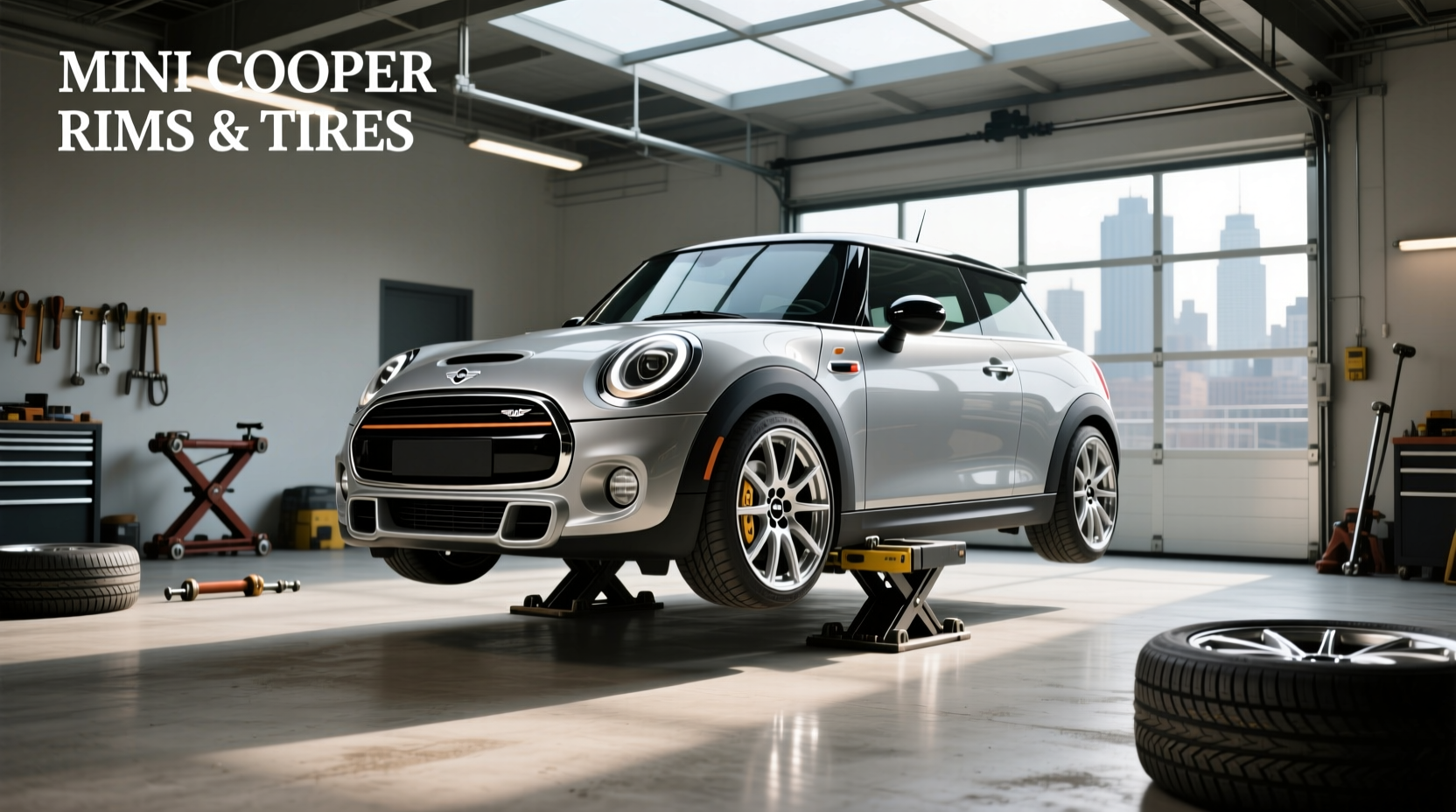
If you're searching for the right Mini Cooper rims and tires, understanding fitment specifications is essential to maintain performance, safety, and warranty compliance. The correct wheel and tire setup depends on your model year, trim level (Cooper, Cooper S, Clubman, Countryman), and driving priorities—whether it's comfort, handling, or winter reliability. Most modern Mini Coopers use a 4x100 bolt pattern with a 56.1mm center bore and wheel offsets ranging from ET40 to ET45, but variations exist across generations (R50, R56, F56, etc.). Choosing incompatible rims can lead to clearance issues, speedometer inaccuracies, or suspension damage. This guide breaks down everything you need to know—from OEM specs to aftermarket upgrades, winter vs. summer setups, and common fitment mistakes to avoid—so you can make an informed decision without guesswork.
Understanding Mini Cooper Wheel Specifications
Before purchasing new rims or tires, it’s critical to understand the technical specifications that determine compatibility. These include bolt pattern, center bore, offset, rim diameter, width, and load/speed ratings for tires. Getting any of these wrong can result in unsafe driving conditions or costly returns.
Bolt Pattern and Center Bore
The most consistent specification across most Mini Cooper models from 2002 to present is the 4x100 bolt pattern. This means the wheel has four lug holes spaced evenly around a 100mm circle. However, some later models like the Countryman (F60) use a 5x112 pattern, so always verify based on your VIN or model designation.
The hub bore—the hole in the center of the wheel that centers it on the axle—is typically 56.1mm for standard Mini Coopers. Wheels must be hub-centric; if they’re not, hub-centric rings are required to prevent vibration at high speeds 🔧.
Wheel Offset (ET)
Offset determines how far the wheel sits in relation to the fender line. Mini Coopers generally use offsets between ET40 and ET45. A lower number (e.g., ET35) pushes the wheel outward, which may cause rubbing against the fender or suspension components. Higher offsets (ET50+) tuck the wheel inward, potentially affecting steering response.
For example, JCW (John Cooper Works) factory wheels often run ET45 to maintain OEM alignment tolerances. Aftermarket enthusiasts sometimes go as low as ET38 for a more aggressive stance, but this usually requires modified suspension or fender liners ⚙️.
Rim Diameter and Width
Factory Mini Cooper wheels range from 15 to 19 inches in diameter:
- Base models: Often come with 15” or 16” wheels
- Cooper S / JCW trims: Typically equipped with 17” or 18” rims
- Aftermarket options: Up to 19” available, though larger sizes reduce ride comfort and increase road noise
Common widths are 6.5”, 7”, and 7.5”. Wider wheels allow for wider tires, improving grip—but only if the suspension and fenders accommodate them.
| Model Year Range | Common Bolt Pattern | Center Bore | Typical Offset (ET) | Stock Rim Sizes |
|---|---|---|---|---|
| R50/R52 (2002–2006) | 4x100 | 56.1mm | ET45 | 15", 16" |
| R56/R57/R58 (2007–2013) | 4x100 | 56.1mm | ET40–ET45 | 16", 17" |
| F56/F55/F54 (2014–2024) | 4x100 | 56.1mm | ET42–ET45 | 16", 17", 18" |
| F60 Countryman (2017–present) | 5x112 | 66.6mm | ET50–ET55 | 17", 18", 19" |
Tire Sizing for Mini Cooper Models
Tire size is just as important as rim compatibility. Using incorrect tire dimensions affects speedometer accuracy, ABS function, fuel economy, and handling dynamics.
Common OEM Tire Sizes by Trim
Different trims and model years come with varying tire sizes. Here are typical factory configurations:
- Mini One / Base Cooper: 175/65R15 or 195/55R16
- Cooper S: 205/50R17 or 225/45R17
- JCW / Performance Trims: 225/40R18 or 235/35R19
- Clubman / Countryman: Larger contact patches due to increased weight and width (e.g., 225/45R18)
When upgrading rims, the overall tire diameter should remain within ±3% of the original to avoid electronic system errors 📊.
Speed and Load Ratings
All Mini Coopers require tires with appropriate load and speed ratings. For instance:
- A H-rated tire handles up to 130 mph (210 km/h)—common on base models
- V-rated or W-rated tires (149–168 mph) are used on Cooper S and JCW variants
- Load index must support at least 1,100 lbs per tire (index 90+)
Using under-rated tires compromises safety, especially under heavy acceleration or cornering.
Run-Flat vs. Conventional Tires
Many Mini Coopers come equipped with run-flat tires (RFT), allowing continued driving up to 50 miles after a puncture. While convenient, they have drawbacks:
- Stiffer sidewalls increase road harshness
- Limited repairability after deflation
- Higher cost than standard tires
Switching to conventional tires is possible, but you’ll need to install a spare tire or mobility kit unless your car already has one. Some owners report improved ride quality after switching to non-run-flats with proper valve stems and TPMS recalibration 🚗.
Seasonal Tire Strategies for Mini Cooper Owners
Your driving environment plays a major role in tire selection. All-season tires may suffice in mild climates, but dedicated winter or summer setups optimize performance.
Winter Tires: Safety Over Convenience
In regions with snow, ice, or sub-freezing temperatures, winter tires significantly improve traction. Even all-wheel-drive Mini Coopers benefit from proper winter rubber.
- Look for the Three-Peak Mountain Snowflake (3PMSF) symbol
- Recommended sizes: 195/55R16 or 205/50R17 for balance of grip and clearance
- Consider using steel rims for winter setups—they’re durable and cheaper to replace if curbed
Running summer tires in winter increases stopping distances dramatically—even on wet roads near freezing 1.
Summer vs. All-Season Tires
Summer tires offer superior dry and wet grip, shorter braking distances, and better handling response compared to all-season compounds. However, they harden below 45°F (7°C), reducing effectiveness in cool weather.
All-season tires provide a compromise but lack the extreme performance of dedicated summer or winter tires. If you prioritize handling and track days, investing in a separate summer wheel and tire package makes sense.
Aftermarket Rims: What Fits and What Doesn’t
Upgrading to aftermarket rims can enhance appearance and performance—if done correctly.
Popular Aftermarket Wheel Brands
Several reputable brands manufacture wheels specifically for Mini Cooper applications:
- konig – Known for lightweight designs like the Konig Hypergram and Oversteer
- fifteen52 – Offers heritage-inspired styles with precise Mini fitments
- Motegi Racing – Budget-friendly forged options in gold, black, and silver finishes
- Ultravision / NM Engineering – Cater to JCW and tuner communities with aggressive offsets
Always confirm that the wheel lists a confirmed fitment for your exact model (e.g., “fits F56 Mini Cooper S 2014–2024”) rather than generic “Mini Cooper” compatibility.
Avoiding Common Fitment Mistakes
Even experienced buyers make errors when selecting rims. Watch out for:
- Incorrect center bore: Non-hub-centric wheels without adapter rings cause vibrations
- Wrong bolt pattern: Especially problematic when mixing European standards (e.g., 5x112 vs. 4x100)
- Too wide or low offset: Causes inner liner or fender rubbing, especially over bumps
- Improper lug seat type: Mini uses ball-seat lugs; conical or flat seats won’t secure properly
Use online tools like Fitment Industries or Discounted Wheel Warehouse to filter by exact model and validate clearances 🔍.
Can You Mix Rim Sizes? Understanding Plus-Sizing
“Plus-sizing” refers to increasing rim diameter while decreasing tire sidewall height to maintain overall diameter. For example:
- Stock: 16” rim + 55-series tire → Upgrade: 17” rim + 50-series tire
- Goal: Improve aesthetics and lateral stiffness without altering gearing
Mini Coopers commonly upgrade from 16” to 17” rims. However, going beyond +2 inches (e.g., 18” or 19”) risks:
- Reduced ride comfort due to less cushioning
- Increased susceptibility to pothole damage
- Potential interference with brake calipers or control arms
Always calculate total diameter using a tire size calculator before ordering 🧮.
OEM vs. Aftermarket Wheels: Pros and Cons
Choosing between original equipment manufacturer (OEM) and aftermarket wheels involves trade-offs.
| Factor | OEM Wheels | Aftermarket Wheels |
|---|---|---|
| Cost | Higher (especially new) | Wider range, including budget options |
| Fitment Guarantee | Perfect match | Varies by brand; research needed |
| Resale Value | Maintains factory appeal | May deter conservative buyers |
| Design Options | Limited to factory styles | Extensive customization |
| Durability | Tested for Mini-specific loads | Depends on manufacturer quality |
Reconditioned OEM wheels are a cost-effective alternative, often sold by specialists who refurbish cracked or scuffed originals to like-new condition 🛠️.
Installation Tips and Best Practices
Proper installation ensures longevity and safety.
Torque Specifications
Mini Cooper lug nuts should be torqued to 89 lb-ft (120 Nm) in a star pattern. Under-tightening risks wheel detachment; over-tightening can damage studs or rotors.
TPMS Considerations
Most Mini Coopers have Tire Pressure Monitoring Systems (TPMS). When changing wheels, ensure sensors are transferred or replaced. Dummy valves or deleted systems trigger dashboard warnings and fail inspections in many areas.
Alignment Check
After installing new rims or lowering the car, get a full alignment. Misaligned wheels lead to uneven tire wear and reduced handling precision.
Where to Buy Mini Cooper Rims and Tires
Purchasing options include dealership parts departments, specialty retailers, and online vendors. Key considerations:
- Dealerships: Guaranteed OEM fitment but higher prices
- Specialty shops (e.g., Mini Parts Direct, ECS Tuning): Curated selections with fitment guides
- Online marketplaces: Broader inventory but verify seller reputation and return policies
Avoid third-party platforms where counterfeit or mislabeled products occur frequently. Look for vendors offering test-fit guarantees or detailed spec sheets 🛒.
Frequently Asked Questions (FAQs)
- Can I put 17-inch rims on my base Mini Cooper with 15-inch stock wheels?
- Yes, but only if the offset, bolt pattern, and center bore match. You’ll also need to ensure brake clearance and update tire size accordingly. Consult a fitment chart first.
- Do Mini Coopers need special tires?
- They don’t require proprietary tires, but they do need correct sizing, speed/load ratings, and often run-flat capability if originally equipped. Always follow the door jamb placard specifications.
- Are wider tires better for Mini Cooper handling?
- Only up to a point. Excessively wide tires can overload suspension components and reduce steering feedback. Stick to widths approved for your trim unless modifications are made.
- How often should I rotate Mini Cooper tires?
- Every 7,500 to 10,000 miles. Regular rotation extends tread life, especially since front tires wear faster due to transverse engine layout and FWD drivetrain.
- Can I use hub-centric rings with aftermarket wheels?
- Yes—and you should if the wheel’s center bore is larger than 56.1mm. Quality rings ensure the wheel centers perfectly on the hub, preventing vibration.




 浙公网安备
33010002000092号
 浙B2-20120091-4