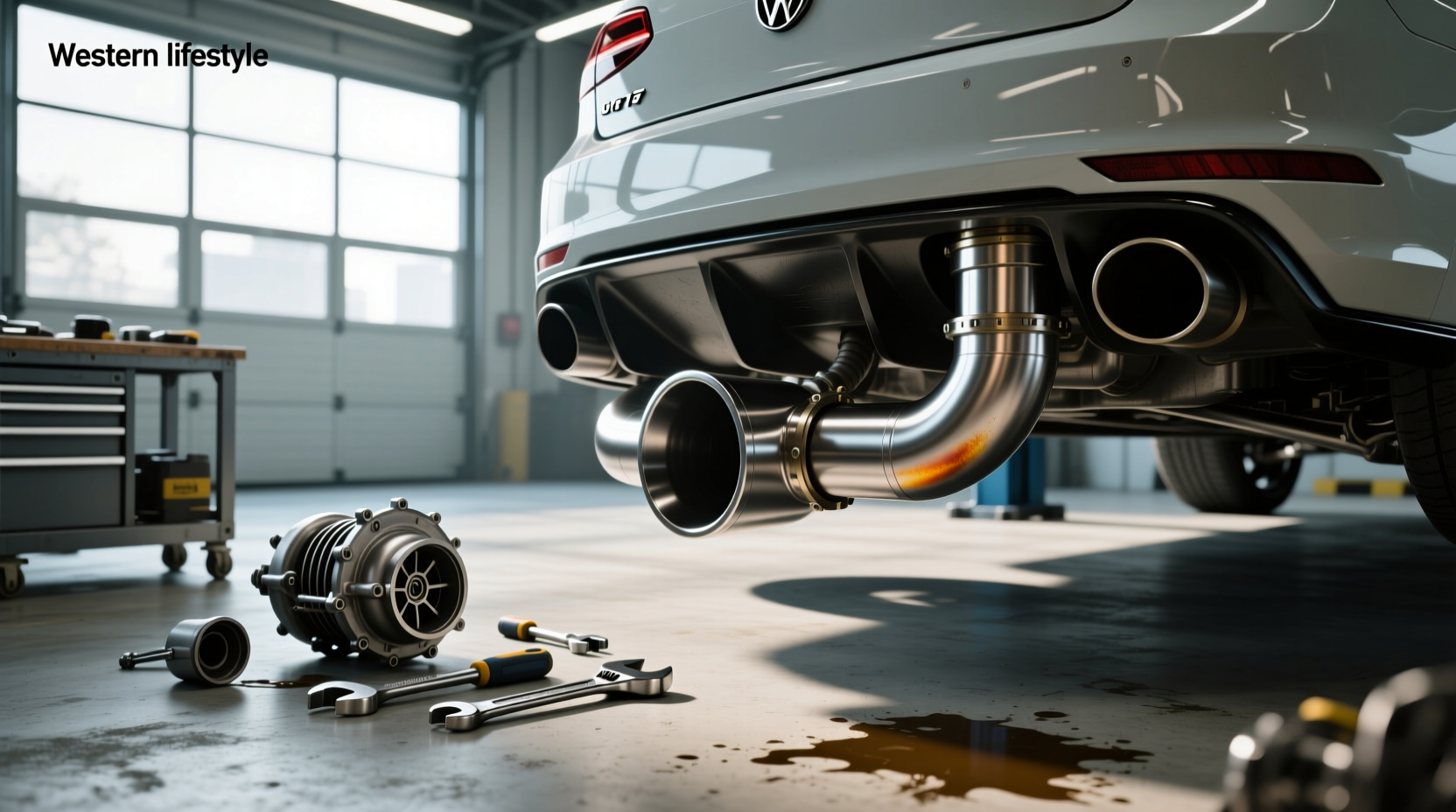
If you're looking to unlock extra horsepower and improve turbo response on your MK7 GTI, installing a performance downpipe for MK7 GTI is one of the most effective modifications available. By replacing the restrictive factory unit with a high-flow aftermarket downpipe, you reduce backpressure, enhance exhaust gas flow, and allow your turbocharger to spool faster—resulting in noticeable gains in power, throttle response, and sound. However, choosing the right downpipe involves more than just picking the cheapest option online; understanding the differences between catted and catless designs, emissions legality, tuning requirements, and compatibility with other upgrades is crucial for making an informed decision that aligns with your driving goals and local regulations.
What Is a Downpipe and Why Upgrade It on a MK7 GTI?
A downpipe is the section of exhaust piping that connects the turbocharger outlet to the rest of the exhaust system, typically leading into the catalytic converter. In stock form, Volkswagen equips the MK7 GTI with a tightly packed 2.0T EA888 engine and a primary catalytic converter integrated into the downpipe itself. This design helps meet strict emissions standards but creates significant flow restriction under higher boost levels.
When you modify your MK7 GTI—especially if you've added a tune or plan to increase boost pressure—the factory downpipe becomes a bottleneck. An upgraded MK7 GTI performance downpipe removes this restriction by using larger diameter piping (commonly 3-inch) and either relocating or eliminating the front catalytic converter. The result? Improved exhaust scavenging, reduced turbo lag, and better overall engine efficiency.
Catted vs. Catless Downpipes: Key Differences
One of the first decisions you'll face when shopping for a MK7 GTI bolt-on downpipe is whether to go with a catted (high-flow catalytic) or catless (decat) version. Each has distinct advantages and trade-offs depending on your priorities.
🔧 Catted Downpipes
A catted downpipe replaces the stock unit with a larger pipe and installs a high-flow catalytic converter instead of the OEM honeycomb. These are designed to be emissions-legal in many regions, including states like California that follow CARB regulations (if certified), and they help prevent check engine lights (CEL) related to oxygen sensor readings.
- Pros:
- Legal for street use in most areas ✅
- No need for a tune in some cases (though recommended) ⚙️
- Balances performance with emissions compliance 🌍
- Less likely to trigger P0420/P0430 codes ❗
- Cons:
- Slightly less power gain compared to catless ✨
- Higher cost due to catalyst material 💰
🔧 Catless Downpipes
Catless downpipes remove the catalytic converter entirely, offering the least resistance to exhaust flow. They’re popular among track-focused builds or owners in regions without strict emissions testing.
- Pros:
- Maximum horsepower and torque gains ⚡
- Best turbo spool and throttle response ⏱️
- Louder, more aggressive exhaust note 🔊
- Cons:
- Illegal for road use in most U.S. states and EU countries 🚫
- May trigger oxygen sensor fault codes without a tune ⚠️
- Risk of failing emissions inspections 📋
For daily-driven vehicles where reliability and legality matter, a catted MK7 GTI downpipe is generally the safer choice. Enthusiasts building race-only or off-road cars may prefer the raw performance of a catless setup.
Performance Gains: How Much HP Does a Downpipe Add to a MK7 GTI?
A common question asked in forums like Reddit’s r/GolfGTI is: “How much HP does a downpipe add to a GTI?” The answer depends heavily on supporting modifications.
On a stock MK7 GTI (DAP-tuned, ~220 hp), a downpipe alone will yield minimal measurable gains—typically 5–10 hp at the wheels—because the ECU limits boost to protect engine components. However, when paired with a proper ECU remap or stage 1/2 tune, gains become significant:
| Setup | Estimated Wheel HP Gain | Torque Increase |
|---|---|---|
| Stock ECU + Downpipe Only | 5–10 hp | Negligible |
| Stage 1 Tune + Catted Downpipe | 30–40 hp | ~40 lb-ft |
| Stage 2 Tune + Catless Downpipe | 50–60 hp | ~60 lb-ft |
The real benefit isn't just peak power—it's how the power feels across the rev range. Users consistently report improved low-end torque, reduced turbo lag, and a more linear power delivery after installing a tuned-downpipe combo. This makes the car feel significantly more responsive during daily driving and spirited runs alike.
Compatibility and Fitment: Will It Work With My MK7 or MK7.5?
Yes, most performance downpipes are compatible with both the MK7 (2015–2017) and MK7.5 (2018–2021) Golf GTI models, as they share the same EA888 Gen 3 engine architecture and front-wheel-drive layout. However, there are subtle differences in engine mounts, heat shielding, and O2 sensor placement that reputable manufacturers account for.
When selecting a downpipe for MK7.5 GTI, ensure the product listing explicitly mentions compatibility with post-2017 models. Some early-design downpipes may require minor adjustments due to revised routing near the transmission or subframe. Brands like Integrated Engineering and MAPerformance often include adjustable hangers or relocation brackets to simplify installation.
Additionally, consider your existing exhaust setup. Many downpipes are designed to mate seamlessly with stock cat-back systems, while others are optimized for pairing with 3-inch performance mid-pipes or full exhaust systems. Always verify flange size (typically 3-inch outlet) and connection type (V-band or donut gasket).
Do You Need a Tune After Installing a Downpipe?
This is another frequently debated topic: Can you run a downpipe without a tune? Technically, yes—but it's not recommended.
While a catted downpipe might not immediately throw codes on a stock ECU, the change in exhaust flow can disrupt oxygen sensor readings, potentially causing long-term fueling issues or triggering a check engine light. A catless downpipe almost always requires a tune to disable catalyst monitoring and adjust fuel trims accordingly.
A proper tune ensures:
- Optimal air/fuel ratio balance ✅
- Prevention of lean conditions that could damage the engine ❗
- Full realization of performance potential ⚡
- Smooth idle and drivability 🛠️
If you're planning a downpipe upgrade, budgeting for a professional ECU flash (via APR, Unitronic, GIAC, etc.) or a handheld programmer is a wise investment. Some shops even offer bundled deals that include both hardware and software calibration.
Installation Overview: Can You DIY a MK7 GTI Downpipe?
Replacing the downpipe on a MK7 GTI is considered a moderate-level DIY job that takes 2–4 hours with basic tools. It requires lifting the vehicle safely and working underneath, so jack stands or a lift are essential.
🛠️ Tools Needed:
- Floor jack and jack stands 🛠️
- Socket set (10mm, 13mm, 18mm common sizes)
- Wrenches and extension bars
- Oxygen sensor socket (helpful but not required)
- New gaskets or sealant
- Second person (recommended for alignment)
📌 Step-by-Step Summary:
- Lift the car securely and support with stands.
- Remove undertray panels for access.
- Disconnect O2 sensor wiring harness.
- Unbolt turbo-to-downpipe flange and mid-pipe/downpipe joint.
- Lower old downpipe carefully (watch for heat shield tabs).
- Install new downpipe, align flanges, and tighten bolts gradually.
- Reconnect O2 sensor and reassemble undercarriage.
- Clear any stored codes and perform a test drive.
Many users report fitment challenges with cheaper eBay-sourced units, requiring slight bending or repositioning of hangers. OEM-style cast units from brands like ARM Motorsports or IE tend to have better tolerances and easier installation.
Emissions and Legality: Is a Downpipe Illegal?
In short: removing or modifying the primary catalytic converter is illegal for street use in the United States under the Clean Air Act. The Environmental Protection Agency (EPA) prohibits tampering with emission control devices, and many states enforce this strictly during smog checks.
California’s Air Resources Board (CARB) maintains an Executive Order (EO) system for aftermarket parts. If a downpipe has a valid EO number, it’s legal for sale and use in CA. Always look for CARB-certified catted downpipes if you live in regulated states.
In Europe, similar rules apply. Most countries require vehicles to pass periodic technical inspections (e.g., MOT in the UK, TÜV in Germany). Running a catless downpipe will likely cause failure unless exempted (e.g., historic vehicle status).
Even if enforcement seems lax, consider the long-term risks: fines, registration issues, or resale complications. For compliant performance, stick with certified high-flow catted systems.
Brand Comparison and Pricing Trends
The market offers a wide range of MK7 GTI downpipe options, from budget-friendly imports to premium engineered solutions. Here's a breakdown of notable brands based on construction, performance, and user feedback:
| Brand | Type | Price Range | Key Features |
|---|---|---|---|
| MAPerformance | Catted / Catless | $500 | Powder-coated, OE-style fitment, CARB-compliant options |
| Integrated Engineering (IE) | Casted Catted | $850 | Thick-wall casting, superior durability, includes mid-pipe |
| ARM Motorsports | Catted | $400 | Includes reducer and adapter, proven fitment |
| CTS Turbo | Catted | $450 | Stainless steel, smooth merge design |
| Budget (eBay/SuncentAuto) | Catless | $130–$180 | Thin gauge metal, mixed fitment reports |
While cheaper units may save money upfront, they often suffer from poor weld quality, inaccurate flange alignment, or thin materials prone to cracking under heat cycles. Investing in a well-made downpipe reduces the risk of leaks, rattles, or premature failure.
Common Misconceptions About MK7 GTI Downpipes
Several myths persist in the VW community about downpipe performance and necessity:
- Myth: “A downpipe adds big power even without a tune.”
- Reality: Without tuning, gains are minimal. The ECU holds back boost to maintain safety margins.
- Myth: “All 3-inch downpipes are the same.”
- Reality: Internal geometry, merge collector design, and material thickness affect flow efficiency.
- Myth: “You’ll definitely get a CEL with a catted downpipe.”
- Reality: Modern high-flow cats work fine with stock ECUs in most cases, especially if installed correctly.
Final Considerations Before Buying
Before purchasing a MK7 GTI exhaust downpipe, ask yourself:
- Will this car remain street-legal? → Choose catted.
- Do I plan to tune the ECU soon? → Timing the install together saves labor.
- Am I upgrading other exhaust components later? → Match diameters for optimal flow.
- Is emissions testing required in my area? → Verify local laws before removing cats.
Also, inspect warranty terms, return policies, and customer service responsiveness—especially when buying from smaller vendors. Look for real-world reviews showing long-term durability, not just initial dyno results.
Frequently Asked Questions (FAQs)
- ❓ Can a downpipe damage my MK7 GTI engine?
- No, a properly installed downpipe does not harm the engine. However, running a tune that induces excessive boost or lean conditions after installation can lead to damage.
- ❓ Do I need a new O2 sensor after installing a downpipe?
- Not necessarily. Most downpipes reuse the factory O2 sensor. However, if the bung is damaged or misaligned, replacement may be needed.
- ❓ Will a downpipe make my MK7 GTI louder?
- Yes, especially with a catless unit. Expect a deeper growl under acceleration and more pronounced turbo flutter on deceleration.
- ❓ Can I install a downpipe myself?
- Yes, with mechanical experience and proper tools. Allow 2–4 hours and refer to installation videos for guidance.
- ❓ Are there any reliability concerns with aftermarket downpipes?
- Poorly made units may crack or leak over time. Opt for stainless steel construction and reputable brands to minimize risk.




 浙公网安备
33010002000092号
 浙B2-20120091-4