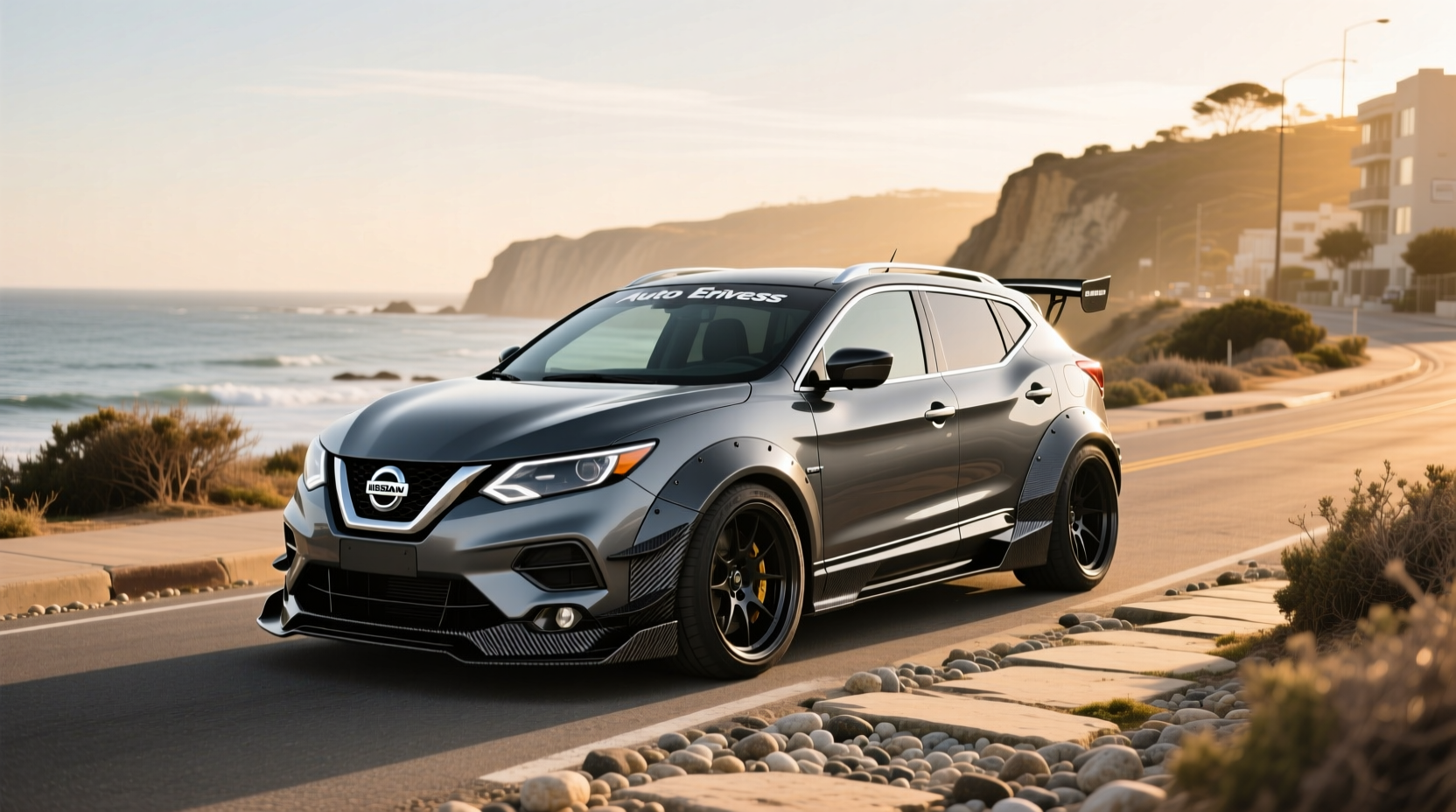
If you're searching for a Nissan Qashqai wide body kit, your goal is likely to enhance your vehicle's stance, improve aerodynamics, or achieve a more aggressive aesthetic. However, choosing the right wide body kit requires understanding key factors such as model-specific fitment (J10, J11, J12), material durability (ABS vs. fiberglass), and whether full bumpers or add-on lips are needed. This guide breaks down everything you need to know before purchasing—covering compatibility, installation complexity, regional availability, cost ranges, and common misconceptions that could lead to costly mistakes.
Understanding the Nissan Qashqai Model Generations
The first step in selecting a proper wide body kit is identifying your Qashqai’s generation. The term “wide body” can be misleading since factory Qashqai models do not come with widened fenders like performance coupes. Instead, most aftermarket kits simulate a wider look using flared side skirts, extended bumpers, or bolt-on fender extensions. There are three main generations:
- J10 (2007–2014): First generation, available in hatchback and +2 seven-seater variants. Often referred to as Qashqai+2. Early tuning parts were designed specifically for pre-facelift (2007–2010) and facelift (2010–2014) versions 1.
- J11 (2014–2021): Second generation with sharper styling. Available in pre-facelift (2014–2017) and post-facelift (2017–2021) trims. Kits vary significantly between these sub-models due to bumper shape changes.
- J12 (2021–present): Third generation with redesigned front fascia, integrated radar sensors, and updated lighting. Requires kits compatible with ADAS systems if replacing bumpers.
Using a J11 kit on a J12 model may result in misalignment or interference with parking sensors. Always verify compatibility based on chassis code and production date—not just model year.
What Does 'Wide Body' Actually Mean for the Qashqai?
Unlike dedicated performance vehicles, the Nissan Qashqai does not have factory wide-body variants. Therefore, any “wide body” appearance comes entirely from aftermarket modifications. These typically include:
- Fender flares or arch extensions
- Extended side skirts
- Front and rear bumper lips or splitters
- Full replacement bumpers with broader profiles
A true wide-body conversion would involve modifying the wheel arches and possibly the frame—a process involving welding, reinforcement, and professional fabrication. Most consumer-level kits are visual enhancements only, creating an illusion of width without altering track width or suspension geometry ⚙️.
Some vendors use terms like “RS Look” or “sport body kit” interchangeably with “wide body,” which can cause confusion. Always check product descriptions for actual components included: a full body kit usually contains front lip, side skirts, rear diffuser, and sometimes fender flares ✅.
Key Components of a Complete Body Kit
A comprehensive body kit aimed at achieving a wider stance generally includes several modular pieces:
| Component | Purpose | Material Options | Installation Difficulty |
|---|---|---|---|
| Front Bumper Lip / Splitter | Extends lower edge for aggressive look and minor airflow management | ABS plastic, polyurethane | Low – attaches with screws/adhesive |
| Rear Diffuser | Covers exhaust area, improves rear aesthetics | ABS, painted plastic | Medium – may require bumper removal |
| Side Skirts / Sill Extensions | Reduces visual gap between wheels and doors | ABS, rubber trim, foam-core composites | Medium – often needs drilling |
| Fender Flares | Adds perceived width; protects against debris | Fiberglass, ABS, flexible TPU | High – may require cutting/painting |
| Full Replacement Bumpers | Most dramatic change; allows integration of larger intakes | FRP, ABS, carbon fiber | High – professional fitment recommended |
Many kits sold online are partial sets—for example, front lip only or side skirts alone. Be cautious when comparing prices across retailers; a €120 listing might only include one piece, while a complete set can exceed €500 📊.
Material Choices: ABS vs Fiberglass vs Carbon Fiber
The material used in a body kit affects durability, weight, finish quality, and ease of installation:
- ABS Plastic: Most common for OEM-style replacements. Durable, paintable, resistant to cracking in cold climates. Used by brands like Maxton Design and Motordrome 🔧.
- Fiberglass (FRP): Cheaper than carbon fiber but brittle. Prone to cracking on impact. Requires skilled painting due to resin absorption. Commonly found on budget kits from Asian suppliers.
- Polyurethane (PU): Flexible, impact-resistant. Ideal for areas prone to scraping (e.g., front lips). More expensive but lasts longer under stress.
- Carbon Fiber: Lightweight and high-end appearance. Real dry carbon is rare; most products are vinyl-wrapped or use wet-lay carbon. Expensive and often overkill for daily-driven SUVs.
For practicality and value, ABS remains the best choice for most owners seeking long-term reliability without constant maintenance 🛠️.
Fitment Challenges Across Markets
One major issue users face is regional variation in Qashqai design. European, UK, Australian, and Middle Eastern models differ slightly in dimensions, sensor placement, and bumper contours. For instance:
- Post-2021 J12 models in Europe have radar-equipped front bumpers for autonomous emergency braking (AEB).
- Kits not designed for sensor integration may block radar signals, triggering dashboard warnings ❗.
- UK-spec cars often have different headlight clusters affecting corner intake designs.
When shopping, confirm whether the kit is labeled for “EU spec,” “UK RHD,” or “global model.” Avoid universal-fit kits unless they explicitly state compatibility with your region’s configuration 🌐.
Installation: DIY vs Professional Help
While some components like front lips or diffusers seem simple to install, real-world fitment often reveals gaps or alignment issues:
- Minor trimming may be required even with direct-fit claims.
- Painting is almost always necessary unless buying pre-painted to your color code.
- Improper adhesive application leads to peeling within months.
Basic installations (lip spoilers, side skirts) can be done at home with basic tools ⏱️. Full bumper swaps or fender flares should be handled by a certified body shop to ensure structural integrity and proper sensor calibration, especially on newer J12 models with ADAS features.
Cost Range and Where to Buy
Prices vary widely depending on brand, completeness, and region:
- Single front lip spoiler: €90–€180
- Complete add-on kit (front lip, sides, rear diffuser): €300–€600
- Full replacement bumpers with custom painting: €800+
Popular European suppliers include Maxton Design (UK/Germany), MagnaTuning (Germany), and DD-Tuning (EU-based). Alibaba offers bulk options from Chinese manufacturers, though quality control varies significantly 🚚.
Shipping costs and import duties must be factored in. A €200 kit from China may incur €100+ in taxes and delivery fees, negating savings. EU-based sellers typically offer faster delivery and easier returns ✈️.
Common Misconceptions About Qashqai Wide Body Kits
Several myths persist among buyers:
- Myth: All J11 kits fit all 2014–2021 models. Reality: Facelift changes in 2017 altered bumper shapes. Pre- and post-facelift kits are not interchangeable.
- Myth: Wider look means better handling. Reality: Visual mods don’t affect dynamics unless paired with wider wheels and tires.
- Myth: Universal fit means it fits all. Reality: “Universal” kits rarely align perfectly and often require extensive modification.
- Myth: You can widen the track legally. Reality: Altering suspension mounting points may violate local road regulations and void insurance.
Always research local laws before making permanent modifications. In many EU countries, protruding body parts beyond factory tolerances require technical inspection approval 📋.
How to Verify Compatibility Before Buying
To avoid ordering the wrong part:
- Check your VIN or registration document for exact model designation (e.g., J12, facelift status).
- Contact the seller directly and provide photos of your current bumpers.
- Ask for installation photos on the same model year.
- Confirm return policy—especially for painted or custom items.
- Look for kits with ABE certification (German technical approval) if in Europe, indicating road legality ✅.
Reputable vendors will ask for your model details before confirming fitment. If a seller doesn't, proceed with caution.
Alternatives to Full Wide Body Conversions
If a full body kit feels too extreme or costly, consider these alternatives:
- Lowering springs or coilovers: Reduces gap between tires and fenders, enhancing stance.
- Aftermarket wheels with negative offset: Pushes tires closer to fender edges for a fuller look.
- Blackout trim packages: Creates contrast and sharpens appearance without adding width.
- Tinted lights and gloss black grilles: Subtle upgrades that modernize the look.
These options are reversible, often cheaper, and maintain factory warranty coverage where applicable.
Maintenance and Longevity Tips
Once installed, body kits require ongoing care:
- Wash regularly to prevent dirt buildup in crevices.
- Use non-abrasive cleaners to preserve paint finish.
- Inspect mounting points every 6 months for looseness.
- Repair stone chips promptly to prevent rust under layers.
- Avoid pressure washing near seams to prevent water ingress.
ABS and PU parts degrade slower than fiberglass in UV exposure. Park in shade when possible to extend lifespan 🌍.
Environmental and Legal Considerations
In several European nations, modified bumpers must meet pedestrian safety standards. Protruding lips exceeding certain angles or hardness levels may fail inspection. Germany’s TÜV system, for example, enforces strict rules on aftermarket parts. ABE-marked components have passed testing and are more likely to pass scrutiny during mandatory inspections 🔍.
Additionally, wider fenders may reduce maneuverability in tight urban spaces or car parks. Measure clearance before committing to large flares.
Final Checklist Before Purchase
Before placing an order, ask yourself:
- Do I know my exact Qashqai generation and facelift status?
- Is this kit confirmed for my region’s specifications?
- Are sensors (radar, camera) accounted for in the design?
- Have I reviewed real user photos, not just renderings?
- Can I install this myself, or will I need professional help?
- What is the return policy if it doesn’t fit?
- Is the kit supplied primed, painted, or unpainted?
Answering these questions reduces risk and ensures satisfaction with your upgrade.
Frequently Asked Questions
- Can I install a wide body kit on a new Nissan Qashqai J12 with ADAS?
- Yes, but only if the kit preserves space for radar sensors and cameras. Full bumper replacements should be professionally calibrated post-installation to maintain AEB and adaptive cruise functions.
- Are Nissan Qashqai wide body kits street legal in Europe?
- They can be, provided they meet regional safety standards. Look for ABE certification in Germany or equivalent approvals in other countries. Avoid excessively protruding parts that compromise pedestrian protection.
- Do body kits increase wind resistance and fuel consumption?
- Minimal effect from add-on lips. Full aerodynamic kits designed for downforce may slightly increase drag, but typical styling kits have negligible impact on fuel economy.
- Can I paint the body kit myself?
- You can, but professional painting ensures color matching and durable clear coat. Primed kits require sanding, primer sealing, base coat, and clear coat—best done in a dust-free environment.
- Will installing a body kit void my car’s warranty?
- It depends on the manufacturer and dealer. Nissan may deny warranty claims related to affected components (e.g., front bumper sensors). Cosmetic modifications typically don’t void the entire vehicle warranty unless damage is caused during installation.




 浙公网安备
33010002000092号
 浙B2-20120091-4