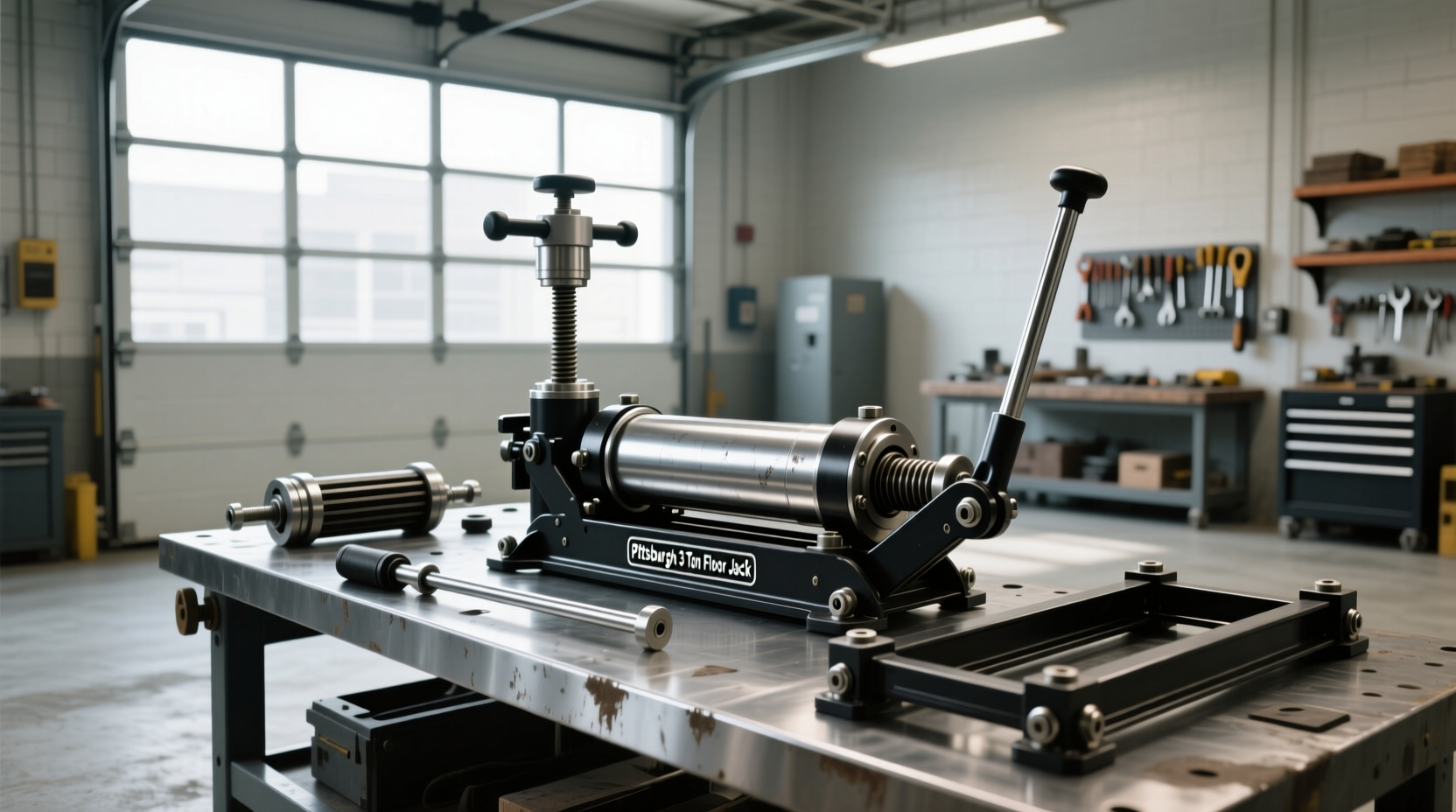
If you're searching for a Pittsburgh 3 ton floor jack parts diagram, you're likely trying to repair a hydraulic jack that's lost pressure, won't lift, or leaks fluid. The good news is that most common issues—like seal failure, piston damage, or pump malfunction—can be diagnosed and fixed with the right parts and guidance. This comprehensive guide provides a detailed breakdown of the internal components of a Pittsburgh 3 ton floor jack, explains how to interpret a parts diagram, and walks you through identifying, sourcing, and replacing key elements like seals, check valves, plungers, and release mechanisms. Whether you're maintaining a Craftsman-style rebuildable jack or troubleshooting a no-name model sold under the Pittsburgh label, this article equips you with actionable steps to restore full function without replacing the entire unit.
Understanding the Pittsburgh 3 Ton Floor Jack Design
The Pittsburgh brand, historically associated with Sears and later distributed through various retailers, often labels jacks that mirror designs from major OEMs like Allied or BPS (Better Performance Sales). These 3-ton (6,000 lb) floor jacks are typically low-profile hydraulic models used in home garages and light commercial settings. While Pittsburgh doesn’t publish official service manuals or exploded diagrams online, many of these units share interchangeable components with widely supported brands such as Arcan, Torin, or Sunex 1.
🔧 Most Pittsburgh 3 ton jacks follow a standard vertical hydraulic cylinder design with a saddle, handle, base, and pump mechanism. Knowing this layout helps when interpreting generic parts diagrams that apply to your unit—even if labeled under a different brand name.
Common Problems with Hydraulic Floor Jacks
Before diving into a parts diagram, it’s essential to understand what might be wrong. Users often search for repair kits after experiencing one or more of the following:
- Jack won’t lift or creeps down under load: Usually caused by worn or damaged seals, air in the system, or debris blocking the check valve.
- Handle feels soft or requires excessive pumping: Indicates internal leakage past the piston seal or a failed inlet check ball.
- Oil leaking from the main cylinder or pump housing: Points to compromised O-rings, gaskets, or cracked casting.
- Handle won’t retract or binds during operation: Often due to bent linkage, dry pivot points, or corrosion inside the plunger tube.
⚙️ Identifying the root cause begins with disassembly and inspection—but first, you need to know which parts are involved.
Key Components in a 3 Ton Floor Jack Parts Diagram
A typical 3 ton hydraulic floor jack parts diagram includes both structural and functional elements. Below is a breakdown of the primary components found in most Pittsburgh-style models:
- Main Cylinder (Ram Housing): Contains the lifting piston and reservoir oil. Often marked with fill plug and bleed screw locations.
- Lifting Piston (Plunger): Moves upward when hydraulic pressure is applied. Sealed with an outer O-ring and inner lip seal.
- Pump Plunger Assembly: A small-diameter rod driven by the handle lever. Compresses fluid into the main cylinder on each stroke.
- Inlet Check Valve: Allows oil to flow from the reservoir into the pump chamber but prevents backflow.
- Discharge Check Valve: Directs pressurized oil into the main cylinder during pumping; fails if jack drops under load.
- Release Valve (Bleed Screw): When loosened, allows oil to return to the reservoir, lowering the jack.
- Seals and O-Rings: Found at multiple points: piston head, pump shaft, valve seats. Common failure points due to age or contamination.
- Handle and Linkage: Transfers user force to the pump plunger. Includes pivot pins and springs.
- Base and Wheels: Structural support and mobility. Rarely fail unless physically damaged.
- Fill Plug and Breather: Allows access for adding hydraulic fluid (typically ISO 32 or AW32).
| Component | Function | Common Failure Signs |
|---|---|---|
| Piston Seal | Prevents oil bypass around lifting piston | Jack lowers slowly under load |
| Inlet Check Ball | Allows one-way flow into pump chamber | Soft handle, slow rise |
| Discharge Check Ball | Directs high-pressure oil to ram | Jack won’t hold height |
| Pump Shaft Seal | Keeps oil from leaking at plunger entry | Oil seepage near handle pivot |
| Release Valve O-Ring | Seals adjustment screw | Leak at knob, inability to lower |
How to Interpret a Generic 3 Ton Floor Jack Parts Diagram
Since Pittsburgh rarely releases official schematics, users must rely on universal or OEM-specific diagrams. Look for terms like "Allied 3 ton floor jack exploded view" or "BPS hydraulic jack parts layout." Many third-party suppliers—including Lazzar’s HCRC and Pro Eagle—offer downloadable PDFs or interactive diagrams for compatible models 2.
📌 Key tips for reading any parts diagram:
- Match physical features: Compare your jack’s shape, wheel type, and saddle design to the image.
- Check capacity rating: Ensure the diagram specifies 3-ton (6,000 lb), not 2-ton or 4-ton variants.
- Verify orientation: Some diagrams show horizontal jacks; Pittsburgh units are usually vertical.
- Note part numbers: Even if unlabeled, cross-reference dimensions with aftermarket kits.
Finding Replacement Parts for Your Pittsburgh Jack
You won’t find “Pittsburgh”-branded repair kits on major platforms, but universal seal kits fit most 3-ton hydraulic jacks. Search for phrases like:
- "17-piece hydraulic floor jack seal kit"
- "vertical 3 ton jack repair set"
- "floor jack piston and check valve replacement"
🛒 These kits typically include:
- O-rings of various sizes
- Lip seals and backup rings
- Steel snap rings
- Check balls and springs
- Instruction sheet (sometimes)
Many kits are marketed as compatible with Craftsman, Husky, or Proform models—brands that share manufacturing lines with Pittsburgh. Alibaba suppliers often list them as "non-OEM replacement sets," emphasizing broad compatibility 3.
Step-by-Step: Rebuilding a Pittsburgh 3 Ton Floor Jack
Rebuilding is feasible with basic tools and patience. Here’s a proven process:
Tools Needed
- Wrench set
- Screwdrivers
- Pliers
- Rubber mallet
- Clean rags
- Hydraulic fluid (ISO 32 recommended)
- Container for old oil
Procedure
- Drain the oil: Place the jack upright, remove the fill plug, then slowly lower the saddle to expel fluid into a pan.
- Remove the saddle and handle: Detach the handle pin and set aside. Unscrew the saddle from the piston rod.
- Extract the piston assembly: Depending on model, this may require removing a retaining ring or cap at the top of the cylinder.
- Inspect seals and valves: Remove the piston head and examine the O-ring and lip seal. Check for nicks or flattening.
- Access the pump chamber: Disassemble the handle linkage to reach the pump plunger and check valves.
- Clean all components: Use brake cleaner or mineral spirits to remove sludge and old grease.
- Replace all seals: Install new O-rings and lip seals using the included kit. Lubricate with fresh hydraulic oil before reassembly.
- Reassemble carefully: Reverse the disassembly steps. Ensure check balls seat properly and springs are oriented correctly.
- Refill and test: Add 10–12 oz of ISO 32 hydraulic fluid. Pump the handle 20–30 times to purge air. Test lift with no load first.
⏱️ Allow 1–2 hours for a full rebuild. Success depends on attention to detail, especially ensuring clean parts and proper seal seating.
When to Rebuild vs. Replace
❓ Is it worth repairing an older Pittsburgh 3 ton jack?
The answer depends on several factors:
- Cost: A quality seal kit costs $15–$30. A new jack starts around $80. If labor is free, rebuilding saves money.
- Safety: Never use a jack with a cracked cylinder or bent piston rod. Structural damage means replacement.
- Availability of parts: If no compatible kit exists, sourcing individual seals becomes impractical.
- Frequency of use: For occasional home use, a rebuilt jack suffices. For daily shop work, consider upgrading to a newer, warrantied model.
✅ In most cases, replacing seals and valves restores performance equal to new—provided the metal components remain intact.
Troubleshooting After Rebuild
Even with correct parts, issues can arise post-repair:
- Jack still won’t lift: Air trapped in system. Continue pumping or tilt jack forward to help bleed.
- Leak at piston base: Likely a misaligned or pinched seal. Disassemble and inspect.
- No resistance on handle: Check valve ball missing or stuck. Confirm spring tension and ball seating.
- Handle hard to push: Could indicate overfilled reservoir or wrong viscosity fluid.
Where to Source Reliable Repair Kits
While some marketplaces sell branded kits, focus on technical compatibility rather than labeling. Trusted sources include:
- Alibaba.com: Offers bulk and individual kits from verified suppliers. Search “3 ton floor jack seal kit vertical” for best matches.
- Lazzar’s HCRC: Specializes in Allied-compatible parts and provides diagrams for reference.
- Summit Racing: Stocks professional-grade components, including pump rebuild kits for industrial jacks.
- YouTube tutorials: Channels like sixtyfiveford and Muddy Ruttzz offer visual guides that help identify parts during teardown.
🌐 Always verify supplier ratings and request dimension specifications before ordering. Measure your existing seals if possible.
Preventative Maintenance Tips
To extend the life of your jack:
- Store indoors to prevent rust.
- Use only clean hydraulic fluid—never substitute motor oil.
- Lubricate pivot points annually with light grease.
- Operate on flat, solid surfaces to avoid frame stress.
- Bleed air monthly if used infrequently.
Final Thoughts
Finding a Pittsburgh 3 ton floor jack parts diagram may seem challenging due to lack of official documentation, but practical solutions exist. By understanding the standard hydraulic jack architecture, recognizing common failure modes, and using universal repair kits, you can effectively maintain or restore your equipment. Focus on component compatibility, follow safe disassembly procedures, and prioritize seal quality over brand names. With the right approach, a rebuilt jack performs reliably for years—saving cost and reducing waste.
Frequently Asked Questions
- Can I use a generic seal kit for my Pittsburgh 3 ton floor jack?
- Yes, most 3 ton vertical hydraulic jacks use standardized seal sizes. Verify dimensions match your piston and pump shaft before installation.
- Why does my floor jack drop under load after repair?
- This usually indicates a faulty discharge check valve or improperly seated piston seal. Double-check valve cleanliness and seal compression during reassembly.
- Where can I find a free parts diagram for a Pittsburgh floor jack?
- Try searching for "Allied 3 ton floor jack exploded diagram" or visit specialty sites like hcrcnow.com that host OEM-style schematics for compatible models.
- What type of oil should I use in my Pittsburgh 3 ton floor jack?
- Use ISO 32 hydraulic fluid or AW32 oil. Avoid automotive brake fluid or motor oil, as they degrade seals and reduce performance.
- Is it safe to rebuild a floor jack myself?
- Yes, if you follow proper procedures and inspect all parts for damage. Never use a jack with a compromised cylinder or piston rod, as failure could cause injury.




 浙公网安备
33010002000092号
 浙B2-20120091-4