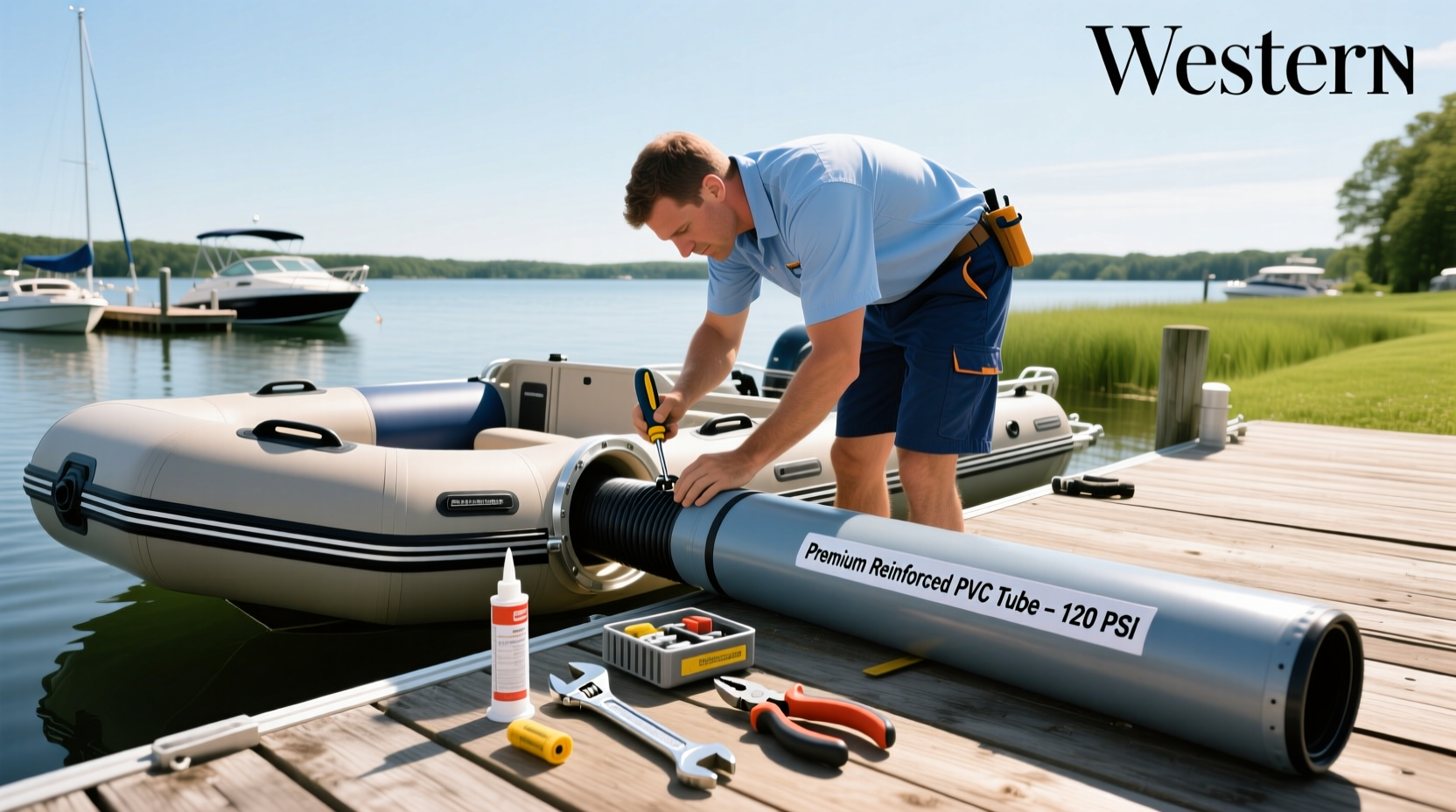
Replacing pontoon tubes is a critical maintenance task that ensures your boat remains buoyant, stable, and safe on the water. Whether you're dealing with corrosion, leaks, or upgrading from a two-tube to a tri-toon configuration, understanding pontoon tube replacement procedures can save time, prevent structural damage, and extend your vessel’s lifespan. This comprehensive guide walks through every step—from diagnosing when replacement is needed to selecting the right aluminum logs or inflatable floats—and addresses key concerns like compatibility, cost factors, and DIY feasibility.
Why Pontoon Tube Replacement Becomes Necessary
Pontoon boats rely on sealed aluminum logs (also called tubes or floats) for buoyancy. Over time, these tubes can degrade due to environmental exposure, impact damage, or manufacturing defects. Common signs indicating the need for pontoon float log replacement include:
- Visible dents or cracks: Especially near the bow or keel where stress concentrates
- Water accumulation inside the tube: Detected by tapping sounds or confirmed via moisture meters
- Loss of stability or uneven ride height: One side sitting lower than the other suggests compromised buoyancy
- Rusting at weld points or end caps: Aluminum corrodes when protective coatings fail
- Aging beyond 15–20 years: Even well-maintained pontoons lose structural integrity over decades
Ignoring early warning signs can lead to catastrophic failure while underway. Regular inspection—especially after winter storage or prolonged submersion—is essential for safety.
Types of Pontoon Tubes: Round vs. Straked, Single vs. Center Tri-Toon
Not all pontoon tubes are interchangeable. The design affects performance, handling, and replacement options.
Round Tubes vs. Straked (Performance) Tubes
🔸 Round tubes are the most common type, offering simplicity in manufacturing and smooth planing in calm waters1. They provide consistent buoyancy but may slide laterally during sharp turns.🔸 Straked tubes feature longitudinal ridges along the bottom that improve tracking and cornering grip. These are often labeled as 'performance' or 'tracking' logs and are ideal for higher-speed operation or rougher lakes.
| Feature | Round Tube | Straked Tube |
|---|---|---|
| Buoyancy Distribution | Even across length | Slightly forward-biased |
| Turning Stability | Moderate | High |
| Fuel Efficiency | Good | Better at speed |
| Cost | Lower ($800–$950) | Higher ($950–$1,200) |
| Replacement Availability | Widely available | Select suppliers only |
Single Logs vs. Center Tri-Toon Conversions
Some owners opt for pontoon third tube installation to convert their standard two-log setup into a tri-toon (three-tube) system. Benefits include:
- Improved weight distribution and reduced porpoising
- Enhanced lift for heavier motors or upgraded decks
- Better wake-cutting ability in choppy conditions
However, adding a center tube requires precise alignment and reinforcement of the cross-member frame. Kits such as polyurethane center pods or custom-welded aluminum inserts are available from specialty fabricators2.
Measuring Your Existing Tubes: Critical Dimensions for Accurate Replacement
To ensure proper fit, measure the following dimensions before ordering new tubes:
- Length: From bow tip to stern end cap (common sizes: 18', 20', 22', 24')
- Diameter: Typically 23", 24", or 25"; measured at widest point
- Wall thickness: Standard is 0.050" or 0.063" marine-grade aluminum (6061-T6 alloy recommended)
- Mounting bracket spacing: Distance between transom mounts and midship supports
- Baffle configuration: Number and location of internal chambers (affects repairability)
📏 Use a flexible tape measure and record measurements at multiple points—tubes can warp over time. If replacing only one log, match it exactly to the undamaged side.
Material Choices: Aluminum vs. Inflatable vs. Composite Logs
The choice of material impacts durability, weight, and long-term maintenance.
Aluminum Logs (Most Common)
⚙️ Nearly all factory-built pontoons use welded aluminum extrusions. Advantages include:
- Permanent buoyancy with no risk of puncture
- Structural integration with deck frame
- Resistant to UV degradation
⚠️ However, they are susceptible to galvanic corrosion if not properly grounded, especially in saltwater environments.
Inflatable Pontoon Tubes
🛒 Used primarily in portable rafts or retrofitted utility platforms, inflatable PVC or Hypalon tubes offer lightweight transportability. While cheaper upfront ($200–$500), they require regular pressure checks and carry puncture risks from debris.
They are not suitable as direct replacements for rigid aluminum pontoons due to lack of structural rigidity and inconsistent load-bearing capacity.
Composite or Polyethylene Pods
🔧 Some aftermarket kits use rotationally molded polyethylene center tubes. These are corrosion-proof and easy to install but typically serve as auxiliary lifts rather than primary flotation devices.
Where to Buy Replacement Pontoon Tubes
Purchasing options vary based on availability, budget, and customization needs.
OEM vs. Aftermarket Suppliers
📍 Original Equipment Manufacturer (OEM) tubes guarantee perfect fit but come at premium prices (often $1,000+ per log). Aftermarket suppliers offer competitive pricing and faster delivery, though dimensional tolerances may vary slightly.
Online Retailers and Marine Surplus Stores
🌐 Reputable online vendors specializing in pontoon boat float log replacement include:
- Great Lakes Skipper: Offers full sets and individual logs in various lengths and strake configurations
- Pontoon Wholesalers: Known for tri-toon conversion kits and custom-fit solutions
- American Pontoon Company USA: Provides made-to-order center tubes and motor pods
🚚 Many offer drop-shipping with freight delivery to residential or marina locations.
Local Fabrication Shops
👥 For rare or discontinued models, local aluminum welding shops experienced in marine work can build custom logs using certified materials. Ensure they follow AWS D1.2 structural welding standards and pressure-test completed units.
Cost Breakdown: What to Expect When Replacing Pontoon Tubes
💰 Pricing depends on size, material, and whether labor is included.
| Item | Average Cost Range | Notes |
|---|---|---|
| Single 22' Aluminum Log | $900 – $1,100 | With dual strakes, 0.063" wall |
| Full Set (Pair) | $1,700 – $2,300 | Discounts often apply |
| Center Tri-Toon Kit | $1,200 – $1,800 | Poly or aluminum insert |
| Professional Installation | $400 – $800 | Labor + rigging adjustment |
| DIY Tools & Sealants | $100 – $200 | Hoist, gaskets, marine silicone |
Shipping costs can add $150–$400 depending on distance and carrier. Consider bundling purchases or picking up locally to reduce expenses.
Step-by-Step Guide to Replacing Pontoon Tubes
🛠️ While professional help is recommended for complex installations, experienced boat owners can perform replacements with proper tools and precautions.
Tools and Materials Needed
- Engine hoist or gantry crane (rated for 1,000+ lbs)
- Socket set and torque wrench
- Marine-grade sealant (e.g., 3M 5200)
- Alignment jigs or wooden spacers
- Safety gear (gloves, eye protection)
Removal Process
- Remove all deck panels and furniture obstructing access.
- Disconnect wiring, fuel lines, and motor mounts connected to the frame.
- Support the deck with jack stands placed under strong cross-members.
- Unbolt mounting brackets securing the old tube to the hull.
- Carefully lower the tube using a hoist; inspect interior for water ingress or corrosion.
Installation Steps
- Clean mounting surfaces and replace worn rubber gaskets.
- Lift new tube into position using a hoist; align with bracket holes.
- Insert bolts hand-tight; gradually torque to manufacturer specs (usually 25–35 ft-lbs).
- Apply bead of marine sealant around end caps and seams.
- Reinstall deck components and test levelness with a bubble gauge.
⏱️ Allow 24 hours for sealant to cure before launching. Conduct a shallow-water test to verify stability and check for leaks.
Common Mistakes to Avoid During Replacement
❌ Improper alignment: Misaligned tubes create drag and uneven wear.
❌ Skipping sealant: Leads to moisture intrusion and accelerated corrosion.
❌ Over-torquing fasteners: Can strip threads or crack aluminum flanges.
❌ Using non-marine hardware: Standard steel bolts will rust quickly.
❌ Ignoring baffle integrity: Damaged internal chambers compromise safety even if exterior looks fine.
Can You Tow a Tube Behind a Pontoon Boat?
While unrelated to physical tube replacement, many users confuse this term. Tubing behind a pontoon refers to recreational towing of inflatable riders. This requires sufficient horsepower (typically 90+ HP) and proper tow point placement aft of the stern. Always use a dedicated tow bar, not the boarding ladder.
Environmental and Regulatory Considerations
🌊 If operating in saltwater, consider additional cathodic protection (zinc anodes) to prevent electrolysis. Some states require documentation of major structural repairs, so consult local maritime authorities before extensive modifications.
When to Repair vs. Replace Pontoon Tubes
Sometimes, minor damage doesn’t require full replacement.
- Repair if: Small dents without creasing, isolated pinhole leaks, surface oxidation
- Replace if: Longitudinal cracks, widespread delamination, failed welds, or >10% volume loss due to waterlogging
Repairs should be performed by certified marine welders using TIG methods and post-weld heat treatment where applicable.
Final Tips for Longevity After Replacement
✨ Extend the life of new tubes with these practices:
- Wash regularly with freshwater, especially after saltwater use
- Inspect end caps and vent plugs annually
- Store boat on level ground with even support
- Use fendering to prevent dock-side abrasion
- Monitor for electrolytic activity using a multimeter
Frequently Asked Questions (FAQ)
- Can I replace just one pontoon tube?
- Yes, if the other tube is structurally sound and matches in age, diameter, and wall thickness. Mismatched logs can cause imbalance.
- How long do pontoon tubes last?
- Typically 15–25 years with proper care. Saltwater exposure reduces lifespan by up to 40%.
- Are used pontoon tubes a good option?
- Only if verified dry, undamaged, and compatible. Hidden corrosion makes them risky investments.
- Do I need to remove the deck to replace tubes?
- In most cases, yes. Full access to mounting brackets is required for safe removal and reinstallation.
- Can I upgrade to larger diameter tubes?
- Generally not advisable. Frame geometry and weight distribution are designed for original specs. Consult an engineer before deviating.




 浙公网安备
33010002000092号
 浙B2-20120091-4