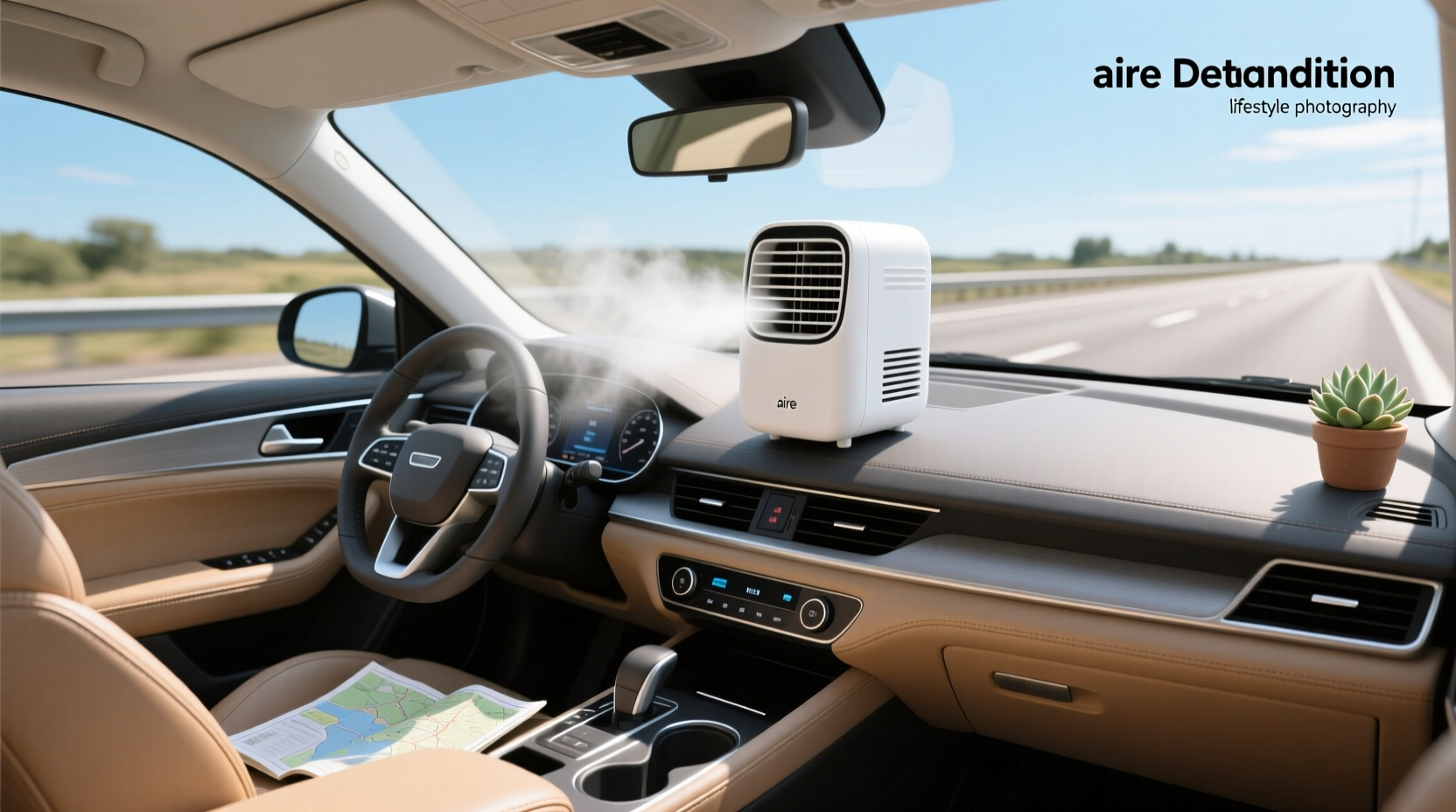
When searching for effective cooling solutions during hot weather, many drivers ask: can a universal portable air conditioner for car actually lower the cabin temperature? Unlike built-in automotive AC systems, most portable units on the market today—especially those powered by 12V or USB—do not use traditional compressor-based refrigeration. Instead, they rely on evaporative cooling or thermoelectric (Peltier) technology, which has significant limitations in high-heat environments. This means while these devices can provide personal spot cooling and increase airflow, they won’t chill your entire vehicle like factory-installed air conditioning. Understanding this distinction is crucial before investing in a aire acondicionado portátil para carro universal, as unrealistic expectations often lead to disappointment.
What Is a Universal Portable Air Conditioner for Car?
A universal portable air conditioner for car refers to a compact, mobile cooling device designed to fit in any vehicle regardless of make or model. These units are typically marketed as plug-and-play solutions that connect to a car’s 12V power outlet (cigarette lighter), USB port, or an external battery pack. They aim to deliver targeted relief from heat, especially when the vehicle’s original air conditioning is broken, inefficient, or absent—as in older models or certain utility vehicles.
🔧 Unlike permanent installations, these devices require no professional setup. Most attach via suction mounts, clip onto vents, or sit on dashboards or seats. Their universal design allows use across multiple vehicles, making them appealing for families with several cars, delivery drivers, or outdoor workers who spend long hours parked in direct sun.
How Do Portable Car Air Conditioners Work?
There are three primary technologies used in portable car cooling devices:
1. Evaporative Coolers (Swamp Coolers)
These units draw in warm air through a wet filter or pad. As water evaporates, it absorbs heat from the air, lowering its temperature slightly. The cooled air is then blown into the cabin.
✅ Pros: Low energy consumption, quiet operation, adds humidity (helpful in dry climates)
❌ Cons: Effectiveness drops sharply in humid conditions; requires frequent refilling of water tank; does not significantly reduce ambient temperature
2. Thermoelectric (Peltier) Coolers
Using the Peltier effect, these devices pass an electric current through semiconductor materials to create a temperature difference between two sides. One side gets cold and cools passing air, while the other releases heat—usually dissipated via heatsinks or fans.
✅ Pros: No refrigerants, compact size, relatively low noise
❌ Cons: Very limited cooling capacity (typically only 5–10°F below ambient), inefficient at high temperatures, generates waste heat inside the vehicle
3. Compressor-Based Portable Units
True air conditioners use a refrigerant cycle with a compressor, condenser, and evaporator—similar to home or car AC systems. However, due to power and space constraints, fully functional compressor-based portable units for cars are rare and usually expensive.
⚡ A few high-end models, such as the ZERO BREEZE Mark 3, integrate lithium batteries and mini-compressors to offer real cooling (up to 5,280 BTU). These can reduce local temperatures noticeably but come with trade-offs: high cost (~$2,500), long recharge times, and limited runtime (3–6 hours).
| Technology Type | Cooling Method | Power Source | Max Temp Drop | Best Use Case |
|---|---|---|---|---|
| Evaporative | Water evaporation | 12V/USB | 5–10°F | Dry climates, short commutes |
| Thermoelectric | Peltier effect | 12V/USB/Battery | 5–15°F* | Personal spot cooling |
| Compressor-Based | Refrigerant cycle | Battery/AC Inverter | 20–30°F | Extended stops, camping |
*Only effective if ambient temperature is below 90°F (32°C)
Why Most 'Portable ACs' Aren't True Air Conditioners
The term aire acondicionado portátil para carro universal is often misleading. Many products labeled as “portable air conditioners” are actually enhanced fans with minimal cooling capabilities. True air conditioning requires removing heat from the environment, not just circulating air.
❗ Evaporative and thermoelectric units do not remove heat—they redistribute it or add moisture to create a sensation of coolness. In fact, thermoelectric coolers generate more heat than they absorb unless properly vented, which most car models lack.
This explains why user reviews frequently mention phrases like "it feels cooler near my face" but also note "the rest of the car still gets hot." Realistic expectations are essential: these devices improve comfort locally but cannot replace OEM air conditioning.
Key Features to Evaluate Before Buying
When considering a universal portable air conditioner for your car, focus on measurable performance indicators rather than marketing claims.
Cooling Capacity (BTU Rating)
📌 Look for actual BTU (British Thermal Unit) specifications. Units under 5,000 BTU are suitable only for personal cooling. Over 9,600 BTU suggests potential for small-space conditioning—but verify whether the rating applies to cooling output or just airflow.
🔍 Be cautious of vague terms like "powerful cooling" without numerical data. Some sellers inflate performance metrics using peak burst modes that last only minutes.
Power Requirements & Runtime
🔌 Most portable units run on 12V or USB, drawing 5–15 watts. While this won’t drain your battery during engine operation, prolonged use when the engine is off can deplete it. Battery-powered models should specify runtime at different fan speeds.
⏱️ For example, a unit claiming "6-hour battery life" may only achieve that on the lowest setting. Check independent test results or user reports for real-world usage patterns.
Ventilation & Heat Dissipation
⚙️ True cooling requires exhausting hot air outside the cabin. Without an exhaust hose (like window units have), waste heat remains trapped inside. Most portable car units lack this feature, limiting their efficiency.
If you're using a compressor-based system, ensure it includes a way to vent heat externally—otherwise, net cooling gains will be negligible.
Noise Level (dB Rating)
🔊 Operating noise matters, especially during phone calls or quiet drives. Look for decibel ratings below 50 dB for comfortable use. Fans without compressors tend to be quieter (<40 dB), while compressor models range from 45–60 dB.
Portability & Mounting Options
🛒 Universal compatibility means the device should fit securely in various vehicles. Common mounting methods include:
- Suction cups for windshields or windows
- Vent clips for air conditioning outlets
- Dash stands or seat-back holders
Ensure stability during driving—loose units become hazards in sudden stops.
Common Use Cases and Scenarios
Understanding where these devices perform best helps set realistic expectations.
Urban Commuters in Traffic Jams
In stop-and-go traffic, factory AC may struggle due to idling engine limits. A portable unit can supplement airflow, especially if directed at the driver. However, it won’t compensate for a failing compressor.
Delivery Drivers and Rideshare Workers
👥 People who enter and exit vehicles frequently benefit from immediate cooling upon re-entry. A portable fan with misting function can provide quick relief, though sustained comfort still depends on the main AC system.
Camping or Overlanding with Parked Vehicles
⛺ For campers using vans or trucks as sleeping quarters, battery-powered compressor units (like ZERO BREEZE) offer viable overnight cooling. These require pre-charging and careful energy management but can maintain livable temperatures in moderate climates.
Older Cars Without Factory AC
Some classic or budget vehicles lack built-in air conditioning. In such cases, a portable evaporative cooler may offer marginal improvement in dry regions, but users should understand its limitations in humidity or extreme heat.
Misconceptions About Portable Car AC Units
Several myths persist about what these devices can do:
- Myth: "It cools the whole car like regular AC."
Reality: Only compressor-based models with proper ventilation can achieve meaningful cabin cooling—and even then, coverage is limited. - Myth: "It works equally well everywhere."
Reality: Performance varies drastically by climate. Evaporative coolers fail in humidity; thermoelectric units lose effectiveness above 90°F. - Myth: "Plugging into the cigarette lighter gives full AC power."
Reality: 12V outlets typically supply 10–15 amps max. That’s enough for fans or small Peltier modules, but not sufficient for compressor-driven cooling without voltage drops or fuse risks.
Alternatives to Portable Air Conditioners
If your goal is genuine cabin cooling, consider these alternatives:
Window Tinting
🌐 Professional window film can block up to 60% of solar heat gain, reducing interior temperatures by 20–30°F. Combined with reflective sunshades, this is one of the most cost-effective passive cooling strategies.
Remote Start Systems
🚗 Allows you to start the engine and activate factory AC before entering the vehicle. Modern systems integrate with smartphone apps for scheduling or geofencing.
Aftermarket Fixed AC Installations
🏭 In vehicles without factory AC, complete retrofit kits exist—but they are complex, costly ($1,500+), and require professional installation. Not all vehicles support conversion due to space or electrical limitations.
Passive Cooling Techniques
🧼 Simple habits help: parking in shade, cracking windows slightly (where safe), using ventilated seat covers, and wiping down hot surfaces with damp cloths to encourage evaporative cooling.
Regional Considerations
Climatic conditions heavily influence the usefulness of portable cooling devices.
In arid regions like Arizona or Nevada, evaporative coolers perform better due to low humidity. Conversely, in coastal areas like Florida or Louisiana, high moisture content in the air renders them nearly useless.
Similarly, thermoelectric coolers work best when ambient temperatures are below 90°F. Above that threshold, their efficiency plummets. Users in tropical or desert climates should prioritize compressor-based solutions—if budget allows—or rely on hybrid approaches combining shading, ventilation, and supplemental airflow.
Final Recommendations: Who Should Buy One?
✅ Buy if:
- You need temporary personal cooling and accept limited results
- You drive in mild climates and want airflow enhancement
- You already have working AC but want extra breeze in rear seats
- You camp in a van and can invest in a high-end battery-powered unit
❌ Don’t buy if:
- You expect it to replace broken factory AC
- You live in a hot, humid region and need real temperature reduction
- Your vehicle lacks reliable power sources (e.g., weak alternator or old battery)
- You’re looking for whole-cabin cooling on a tight budget
Before purchasing, check product specifications for actual BTU output, power draw, noise levels, and customer feedback focused on real-world performance—not just convenience features like LED lights or remote controls.
Frequently Asked Questions
Can a portable air conditioner cool an entire car?
Generally, no. Most portable units only provide spot cooling. Only high-end compressor models with external heat exhaust can meaningfully reduce cabin temperature, and even then, coverage is limited.
Do 12V portable ACs drain the car battery?
When the engine is running, 12V units pose little risk. However, extended use with the engine off—especially compressor models—can deplete the battery. Always monitor voltage if using while parked.
Are USB-powered car coolers effective?
USB-powered devices are the least powerful. They typically deliver mild airflow with negligible cooling. Best suited for creating a breeze, not lowering temperature.
What is the best type of portable car AC for camping?
Battery-powered compressor units (e.g., those around 5,000 BTU) are ideal for camping. They offer real cooling but require recharging and proper ventilation for optimal performance.
Can I install a permanent AC in a car that doesn’t have one?
Yes, but it’s complex and expensive. Retrofitting involves adding a compressor, condenser, evaporator, and refrigerant lines. Professional installation is required, and compatibility depends on vehicle design.




 浙公网安备
33010002000092号
 浙B2-20120091-4