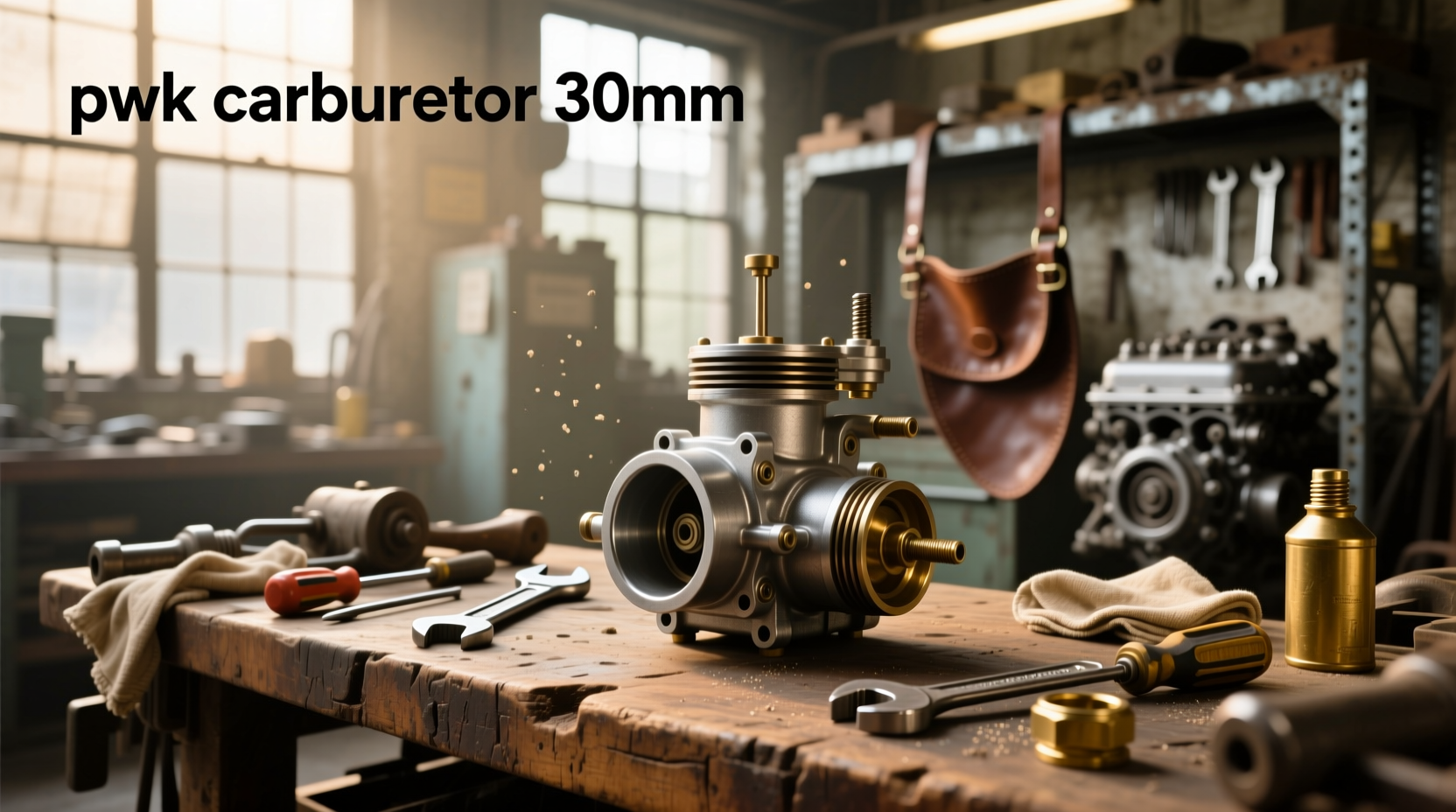
If you're searching for a reliable high-performance carburetor upgrade for a 2-stroke engine, the PWK carburetor 30mm is one of the most frequently discussed options in motocross, pit bike, and ATV performance circles. Known for its flat-slide design, improved airflow, and precise fuel delivery, the Keihin-style PWK 30mm carb delivers better throttle response and power across the RPM range compared to many stock diaphragm-slide units. This guide breaks down everything you need to know—from installation and jetting to troubleshooting common problems—so you can make informed decisions about whether this carb fits your build and how to get the most out of it.
What Is a PWK Carburetor?
The term PWK refers to a type of flat-slide carburetor originally developed by Keihin, now produced under license or as replicas by various manufacturers including Nibbi Racing, Stage6, and Sudco. The name comes from "Power Wedge Karb," highlighting its wedge-shaped slide that opens horizontally rather than vertically like traditional round-slide carbs 1.
Unlike conventional CV (constant velocity) carbs that use a vacuum-operated plunger, the PWK uses a direct mechanical linkage between the throttle cable and the flat slide. This results in faster air intake response and more immediate power delivery—especially beneficial in racing applications where throttle precision matters.
The 30mm bore size makes it ideal for mid-sized 2-stroke engines ranging from 85cc to 170cc, commonly found in:
- Pit bikes (e.g., SSR, TaoTao, ROKETA)
- Mini motocross bikes (KX85, YZ85)
- ATVs and go-karts
- High-performance scooters
- Custom motorized bicycle builds
Key Features of the PWK 30mm Carburetor
⚙️ Understanding the internal design helps explain why the PWK is favored over OEM carbs. Here are the core components and features that define its performance:
Oval (D-Shaped) Flat Slide
Instead of a circular hole, the slide has an oval or "D" shape. When opened, this allows more cross-sectional area for airflow at partial throttle positions, improving low- and mid-range torque.
Power Jet System
One of the standout traits of the PWK series is the inclusion of a power jet—a secondary fuel circuit activated at high RPMs. While the main jet handles baseline fuel flow, the power jet kicks in during wide-open throttle (WOT), preventing lean conditions that could lead to overheating or engine damage.
Tunable Circuits
The PWK offers independent adjustment for multiple fuel circuits:
- Pilot jet: Controls idle and off-idle fuel mixture (0–25% throttle)
- Needle jet & tapered needle: Manages mid-range (25–75%) performance
- Main jet: Governs full-throttle output
- Mixture screw: Fine-tunes idle air/fuel ratio
Float Bowl Design
The float bowl ensures consistent fuel delivery regardless of orientation, making it suitable for off-road riding with aggressive leans. However, improper float height can cause flooding or lean running—common setup errors we’ll address later.
Why Choose a 30mm PWK Over Other Sizes?
📏 Carburetor sizing directly affects engine breathing efficiency. Too small restricts top-end power; too large hurts low-end responsiveness. The 30mm diameter strikes a balance for engines around 100–150cc.
| Carb Size | Typical Engine Range | Best For | Risk If Mismatched |
|---|---|---|---|
| 26mm | 50–90cc | Mini bikes, scooters | Overbore = poor low-end |
| 28mm | 80–125cc | Street pit bikes | Moderate lag or bog |
| 30mm | 100–170cc | Racing, trail ATVs | Requires proper jetting |
| 34–38mm | 175cc+ | Pro motocross | Too rich if undersized cam |
A 30mm unit provides enough airflow headroom for modified engines without sacrificing rideability. It’s often chosen when upgrading from a 28mm on a tuned 110cc or stroked 140cc engine.
Common Applications: What Engines Use a PWK 30mm?
📍 While not all engines come with a PWK factory-installed, they’re widely adapted due to standardized flange patterns and availability of intake manifolds. Common setups include:
- KTM 125 SX / 150 SX: Aftermarket upgrade path for improved midrange punch
- Husqvarna TC85 / TC110: Tuners swap OEM Mikuni TM carbs for PWKs for easier tuning
- GY6-based pit bikes: Especially those with 110cc–140cc big bore kits
- Kawasaki KLX110 (modified): With reed valve and exhaust upgrades
- Yamaha TTR110 / TT-R125: When converted to 2-stroke or heavily ported
- DIY mini choppers or motorized bicycles: Using Zenoah or Predator clones
🔧 Important: Always verify throttle cable compatibility, manifold ID, and air filter clearance before purchasing. Some models require custom linkages or offset clamps.
How to Set Up and Tune a PWK 30mm Carburetor
🛠️ Installing a new PWK isn’t plug-and-play. Even with correct jetting specs, final adjustments depend on altitude, temperature, exhaust system, and air filter type. Follow this step-by-step process:
Step 1: Pre-Installation Checks
- Confirm bore size matches intake manifold (typically 30mm silicone or aluminum reducer)
- Inspect float height using a gauge or ruler (standard: ~15–16mm from gasket surface)
- Clean all jets with carb cleaner and compressed air
- Ensure throttle cable moves smoothly without binding
Step 2: Initial Jetting Guidelines
There’s no universal setting, but here’s a starting point for a typical 110–140cc 2-stroke:
- Pilot jet: #35–#40
- Needle clip position: Middle groove (3rd from top)
- Main jet: #150–#160
- Power jet: #40–#45 (if equipped)
- Idle mixture screw: 1.5 turns out from lightly seated
Note: These values vary based on modifications. A free-flowing exhaust may require richer mains; a restrictive air filter might need leaner pilots.
Step 3: Starting the Engine
- Prime the carb gently (don’t flood)
- Open choke if cold
- Adjust idle speed screw so engine runs steadily at ~1,800 RPM
- Let warm up for 3–5 minutes
Step 4: Tuning Each Range
Use the “blip test” method: accelerate briefly in neutral and observe behavior.
- Idle Circuit (0–10%): Adjust the mixture screw. Turn in (clockwise) to lean, out to richen. Optimal is highest stable idle after turning screw in until RPM drops, then backing out.
- Low-to-Mid (10–50%): Affected by pilot jet and needle tip. Hesitation or burble suggests lean pilot; popping on decel means too lean.
- Mid-Range (50–75%): Controlled by needle taper and clip position. Move clip down (richer) if flat spots occur.
- Top End (75–100%): Main jet determines WOT performance. Lean condition causes overheating or two-stroking; rich leads to fouled plugs and sluggish acceleration.
Step 5: Plug Reading
After a full-throttle run, shut off engine with kill switch and remove spark plug. Color indicates mixture:
- Light tan/brown: Ideal
- White/ashy: Too lean — risk of seizure
- Black/dry soot: Too rich — poor performance
- Shiny black/wet: Severe over-rich or oiling issue
PWK vs. Other Carb Types: PE, PHBG, Bofeng
🔍 Comparing alternatives helps clarify why someone might choose a PWK 30mm.
PWK vs. PE (Keihin PE Series)
The PE is also a flat-slide carb but designed primarily for 4-strokes with different venturi shapes and jetting curves. PWKs have a stronger emphasis on 2-stroke power bands and include a dedicated power jet—absent in most PE models.
PWK vs. PHBG (Mikuni)
Mikuni PHBG carbs are premium race units with billet bodies and adjustable accelerator pumps. They offer finer control but cost significantly more. For budget-conscious racers, the PWK offers 80% of the performance at half the price.
PWK vs. Bofeng/Chinese Copy Carbs
Many cheap carbs sold online mimic the PWK design but use inferior brass, inconsistent drilling, and poor tolerances. Users report issues like sticking slides, warped flanges, and inaccurate float bowls. Genuine Keihin or reputable brands like Nibbi Racing ensure consistency.
Where to Buy a Reliable PWK 30mm Carb
🛒 Availability ranges from eBay sellers to specialty shops. Consider these factors when choosing:
- Brand authenticity: Look for “Keihin-style” or licensed reproductions. Avoid listings claiming “OEM Keihin” unless verified.
- Included accessories: Reputable vendors include jet kits, gaskets, and instructions.
- Return policy: Some sellers don’t accept returns on used carbs.
- Price range: Expect $100–$170 for quality units (vs. $40 knockoffs).
Popular sources include nibbiracing.com, Studz Racing, and Sudco. Forums suggest avoiding unbranded Chinese imports unless used as temporary replacements.
Common Problems and Troubleshooting
❗ Even well-set-up PWK carbs can develop issues. Here’s how to diagnose them:
Engine Won’t Start or Floods Easily
- Check float height: too high = overflow
- Clogged vent tube: prevents pressure equalization
- Warped bowl gasket: replace immediately
Hesitation or Bogging Off Idle
- Lean pilot jet — try increasing size by 2.5 numbers (e.g., #35 → #37.5)
- Needle too lean at tip — polish slightly or replace
- Air leak at manifold — test with carb spray around joints
Two-Stroke Popping on Deceleration
- Lean condition in transition — enrich pilot or adjust mixture screw
- Exhaust leak upstream of muffler
- Improper ignition timing
Overheating at High RPM
- Insufficient power jet flow — increase power jet size
- Main jet too small — check plug color after WOT run
- Poor cooling (airflow, fan, etc.) may compound issue
Maintenance Tips for Longevity
🧼 Regular upkeep prevents performance drop-offs:
- Clean the carb every 10–15 hours of operation
- Drain fuel after storage to prevent varnish buildup
- Replace inline fuel filter monthly under dusty conditions
- Inspect O-rings and gaskets for cracks
- Store with fogging oil if unused for >30 days
Frequently Asked Questions (FAQs)
Can I install a PWK 30mm on a 4-stroke engine?
Yes, but only if properly matched. Many riders retrofit PWK carbs onto modified 4-strokes like Honda CRF70 or Yamaha PW80. However, 4-strokes typically need different jetting profiles and may benefit more from CV carbs unless highly tuned.
Do I need a jet kit with my PWK 30mm?
Highly recommended. Most engines require fine-tuning beyond stock jets. A jet kit with multiple pilots, mains, and needles lets you dial in performance across conditions.
Is there a difference between Keihin and replica PWK carbs?
Yes. Original Keihin units (made in Japan) have tighter manufacturing tolerances, smoother slides, and better corrosion resistance. Replicas work well but may need more frequent maintenance.
Why does my PWK carb leak fuel?
Most often due to incorrect float height, debris in the needle seat, or a worn float valve. Never overtighten the bowl—this warps the seal and worsens leaks.
How do I know if my carb is too big?
Symptoms include poor low-end torque, hesitation off idle, and difficulty idling smoothly. If your engine feels ‘flat’ until higher RPMs, consider stepping down to a 28mm.




 浙公网安备
33010002000092号
 浙B2-20120091-4