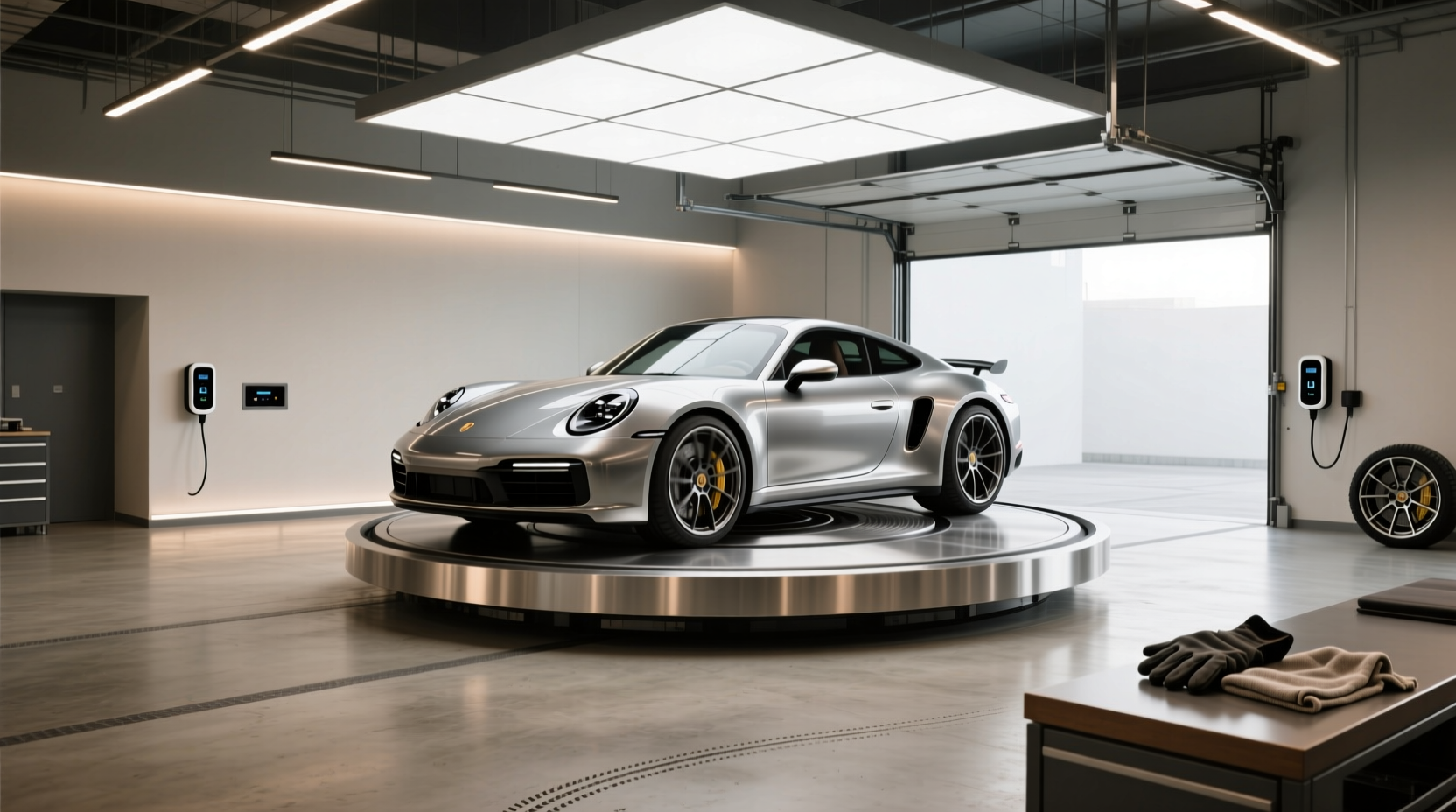
For car owners with limited garage or driveway space, a rotating platform for cars offers a practical solution to improve parking efficiency and vehicle display. These motorized turntables allow drivers to rotate their vehicles up to 360 degrees, making it easier to enter and exit tight spaces without repeated forward-and-reverse maneuvers. Commonly known as car turntables or vehicle rotators, these systems are increasingly popular in residential garages, auto showrooms, and exhibition spaces where space optimization and visual appeal matter 1. Understanding the core features—such as load capacity, rotation range, power source, and customization options—is essential before investing in one.
What Is a Car Rotating Platform?
A rotating platform for cars, often referred to as a car turntable or vehicle turntable system, is a mechanical device embedded into the ground or installed at surface level that rotates horizontally to change a vehicle’s orientation. The driver simply drives onto the platform, centers the car, and activates the rotation mechanism via remote control, wall switch, or smartphone app. Once rotated, the vehicle faces the desired direction—typically toward the exit—allowing for safer and more convenient departure.
These platforms vary in design and application. Some are built for private use in home garages or driveways, while others serve commercial purposes in dealerships, museums, or luxury car displays. Residential models typically support vehicles up to 3–4 tons, which covers most sedans, SUVs, and even high-performance sports cars. Commercial versions may accommodate heavier loads and integrate with lighting or automation systems for enhanced presentation 2.
Common Applications of Car Turntables
The versatility of rotating platforms makes them suitable across multiple environments:
🏠 Residential Parking Solutions
In homes with narrow driveways or deep garages, backing out can be stressful and risky. A driveway-mounted turntable eliminates this issue by rotating the car 180 degrees after parking, so the front faces outward when leaving. This reduces wear on the transmission, improves safety, and enhances convenience—especially in urban areas with limited turning radius.
📍 Showroom and Exhibition Displays
Automotive retailers and collectors use electric rotating platforms to showcase vehicles dynamically. A slowly spinning car draws attention and allows viewers to see all angles without walking around it. These display turntables often include LED lighting, quiet motors, and smooth start-stop functions to create an elegant effect.
🔧 Repair Shops and Inspection Bays
Some service centers install rotating platforms to streamline inspections and undercarriage work. Technicians can rotate the vehicle incrementally instead of repositioning jacks or lifts, saving time and improving ergonomics during maintenance tasks.
🏭 Private Collections and Museums
Car enthusiasts with multi-vehicle collections may use turntables to maximize storage layout. In compact indoor spaces, rotating platforms help position cars optimally within limited footprints, preserving floor space for other uses.
Key Features to Evaluate Before Buying
Selecting the right rotating platform involves assessing several technical and environmental factors. Here's what matters most:
🛒 Load Capacity (Vehicle Weight)
Most consumer-grade turntables support between 2.5 and 4 metric tons (5,500–8,800 lbs). Ensure your chosen model exceeds your heaviest vehicle’s weight—including passengers and cargo. For example, a standard sedan weighs about 1.5 tons, but full-size SUVs like the Chevrolet Suburban can exceed 2.8 tons. Always add a 20% safety margin when selecting capacity.
⚙️ Rotation Range and Direction
While many assume full 360-degree rotation is standard, some budget models only offer 180-degree turns—sufficient for reversing parking but not ideal for display. Check whether the unit supports bidirectional rotation (clockwise and counterclockwise) and if it allows stopping at intermediate positions. Adjustable speed controls enhance usability, especially in tight installations.
⚡ Power Source and Motor Type
Electric motorized platforms dominate the market due to reliability and ease of integration. They require access to a standard electrical supply (usually 110V or 220V), though solar-powered bases exist for small-scale or decorative models 3. Battery-operated systems are rare due to high torque demands. Look for IP-rated enclosures if installing outdoors to protect against moisture and dust.
📏 Platform Diameter and Surface Design
Diameters typically range from 4 meters (13 ft) to 5 meters (16.4 ft). Measure your vehicle’s wheelbase and track width to ensure adequate clearance. Fishbone-pattern surfaces improve grip and prevent tire slippage during rotation, especially in wet conditions. Non-slip coatings or textured steel plates are preferable over smooth finishes.
🔧 Installation Requirements
Most permanent turntables require excavation and concrete foundation work. Depth varies by model but often ranges from 300mm to 500mm (12–20 inches). Consider soil type, drainage, and proximity to utilities before installation. Retrofit kits exist for surface-level mounting, though they may affect aesthetics and accessibility.
✨ Automation and Control Options
Modern units offer various activation methods: handheld remotes, wall-mounted switches, mobile apps, or integration with smart home systems (e.g., Alexa or Apple HomeKit). Advanced models provide programmable presets—for example, rotating to face the street every morning—or motion sensors that trigger rotation upon approach.
| Feature | Residential Use | Commercial/Display Use |
|---|---|---|
| Typical Load Capacity | 2.5–4 tons | 3–5+ tons |
| Rotation Range | 180°–360° | 360° continuous |
| Platform Diameter | 4m (13ft) | 4.5–5m (15–16.4ft) |
| Control Method | Remote/Wall Switch | App/Sensor/Automation |
| Surface Finish | Fishbone/Grip Coating | Polished Steel + LED Lighting |
Potential Drawbacks and Limitations
Despite their benefits, rotating platforms aren't universally suitable. Be aware of the following limitations:
- High Initial Cost: Prices range from $3,000 to over $16,000 depending on size, brand, and features. Entry-level models start around $2,900, while custom-engineered solutions for large estates or commercial venues can exceed $25,000 4.
- Complex Installation: Requires professional site assessment and structural preparation. DIY attempts risk misalignment, water pooling, or mechanical failure.
- Maintenance Needs: Sealed bearings and gearboxes need periodic inspection. Outdoor units must resist corrosion and debris accumulation.
- Space Constraints: Even with rotation, surrounding clearance is still needed. Avoid placing near walls, fences, or landscaping features that could interfere with movement.
Cost Breakdown: What to Expect When Purchasing
The price of a rotating platform for cars depends on multiple variables:
- Standard 4m Diameter Models: Typically cost between $3,600 and $6,000. These are mass-produced units with moderate load ratings (2.5–3 tons) and basic controls.
- Heavy-Duty or Custom Sizes: Platforms exceeding 4.5 meters or rated above 4 tons often sell for $8,500 to $15,000 due to reinforced materials and engineering.
- Premium Brands and Smart Integration: Systems with app control, silent operation, or aesthetic enhancements (like illuminated edges) command higher prices, sometimes reaching $20,000+
- Installation Fees: Not always included. Professional setup can add $1,000–$3,000 depending on site complexity and local labor rates.
When comparing quotes, verify whether warranties cover both parts and labor (commonly 12 months), and check return policies—especially for imported units from global suppliers.
DIY vs. Pre-Built Solutions
Some users explore building their own turntable using industrial rotary stages or repurposed machinery. While technically feasible, homemade versions lack safety certifications and long-term durability. Commercially available platforms undergo stress testing and comply with CE or ISO standards for load distribution and electrical safety. Unless you have mechanical engineering expertise and access to precision components, opting for a pre-built, tested system is strongly advised.
Regional Differences and Regulatory Considerations
Regulations regarding structural modifications vary by country and municipality. In the UK and EU, installing a turntable may require planning permission if altering external property features 5. In the U.S., local zoning laws or homeowners’ association (HOA) rules might restrict visible mechanical installations in driveways. Always consult local authorities before beginning construction.
Additionally, climate affects performance. Cold regions may experience snow or ice buildup on the platform, requiring heating elements or manual clearing. Areas with high rainfall need proper drainage beneath the unit to prevent waterlogging and motor damage.
How to Verify Product Quality and Reliability
With numerous suppliers offering similar products—especially on international marketplaces like Alibaba or Made-in-China—it's crucial to evaluate quality indicators:
- Certifications: Look for CE, ISO, or UL marks indicating compliance with international safety and manufacturing standards.
- Material Specifications: High-strength steel or aluminum alloys are preferred. Ask for material thickness and anti-corrosion treatments.
- Warranty Terms: Reputable vendors offer minimum 12-month coverage. Extended warranties suggest confidence in longevity.
- Customer Reviews: Focus on verified buyer feedback mentioning real-world usage, noise levels, and after-sales support.
- After-Sales Service: Confirm availability of spare parts, technical manuals, and responsive customer service, particularly for imported equipment.
Future Trends in Vehicle Rotation Technology
As smart homes and autonomous driving evolve, rotating platforms are integrating with broader ecosystem technologies. Emerging trends include:
- AI-Assisted Positioning: Sensors detect vehicle dimensions and automatically center the car on the platform.
- Energy Recovery Systems: Regenerative braking during deceleration feeds power back into batteries or grid-tied systems.
- Modular Designs: Interlocking panels allow easier transport and assembly in constrained locations.
- Integration with EV Charging: Platforms combine rotation with wireless charging pads, enabling simultaneous repositioning and battery replenishment.
Conclusion: Is a Rotating Platform Right for You?
A rotating platform for cars can significantly enhance convenience, safety, and visual appeal in specific scenarios. It’s most beneficial for homeowners with challenging garage layouts, collectors wanting dynamic displays, or businesses aiming to impress clients. However, careful evaluation of load requirements, space constraints, budget, and local regulations is essential before purchase. Prioritize certified, professionally installed systems over DIY alternatives to ensure long-term reliability and safety.
Frequently Asked Questions
- ❓ What is a car rotating platform called?
- A car rotating platform is commonly known as a car turntable, vehicle turntable, or rotating driveway system. In technical contexts, it may be referred to as a motorized vehicle rotator or 360-degree parking assist platform.
- ❓ How much does a car turntable cost?
- Prices typically range from $3,000 to $16,000 for standard models. Heavy-duty or custom-designed units can exceed $25,000. Installation fees are usually additional and vary by region.
- ❓ Can I install a rotating platform myself?
- While surface-mounted kits exist, most systems require professional installation due to excavation, leveling, and electrical wiring needs. Incorrect setup risks mechanical failure or safety hazards.
- ❓ Do car turntables work in snowy climates?
- They can function in cold weather, but snow and ice must be cleared from the platform surface. Some models offer optional heating elements to prevent freezing.
- ❓ Are there any maintenance requirements?
- Yes. Regular inspection of bearings, seals, and electrical connections is recommended. Clean the surface periodically and ensure drainage channels remain unobstructed, especially for outdoor units.




 浙公网安备
33010002000092号
 浙B2-20120091-4