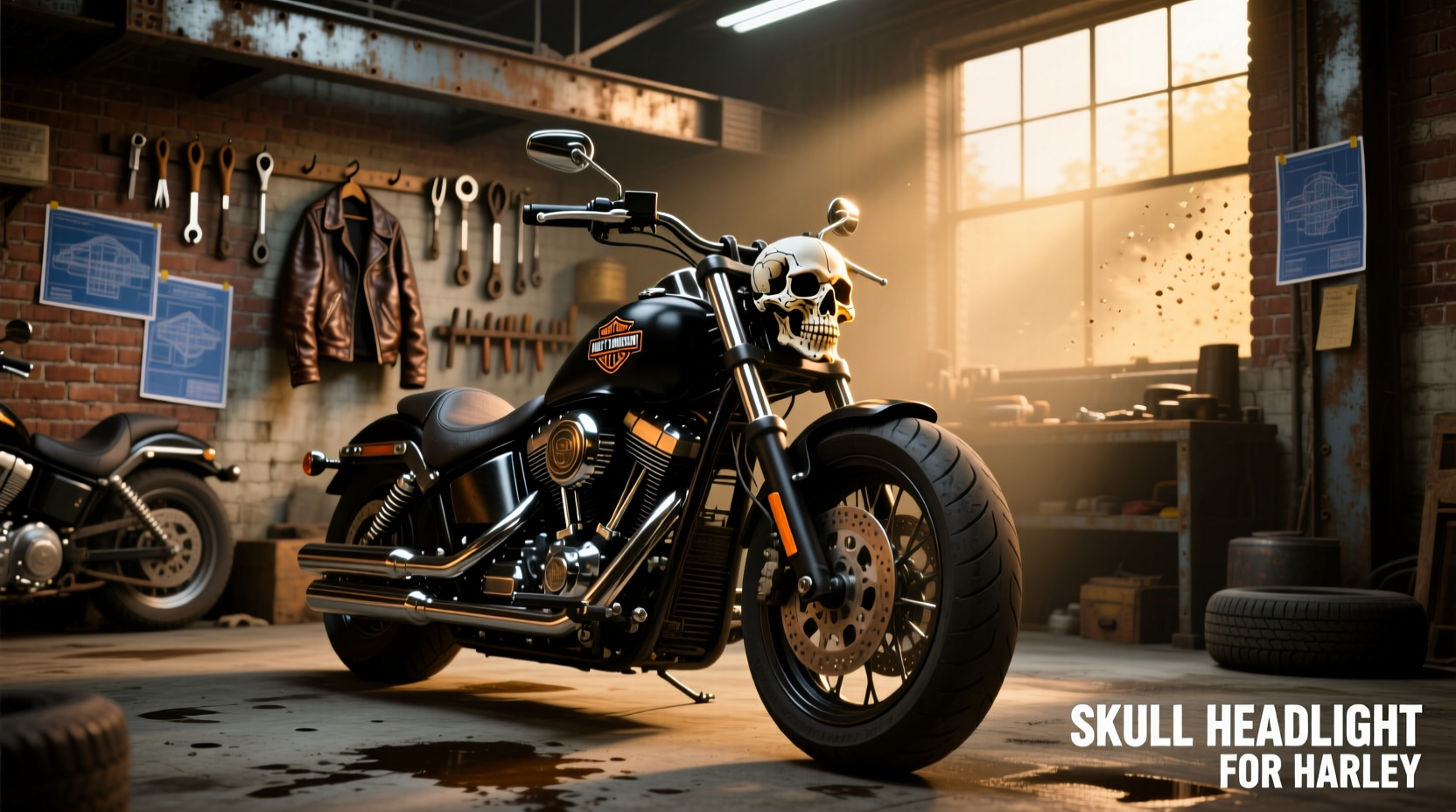
If you're searching for a skull headlight for Harley that combines aggressive style with reliable performance, you’re not alone. Customizing your Harley-Davidson with a skull-themed headlight is one of the most popular ways riders personalize their bikes—especially among touring, softail, and custom chopper owners. But not all skull headlights are created equal. The right choice depends on bulb type (LED vs halogen), housing material, beam pattern, mounting dimensions, and weather resistance. This guide breaks down everything you need to know before buying, including fitment standards, legal considerations, and real-world durability tips—so you avoid costly mistakes and ensure your upgrade enhances both visibility and curb appeal.
Why Riders Choose Skull Headlights for Harley Models
Harley-Davidson motorcycles have long been associated with bold customization. The skull motif, deeply rooted in biker culture, symbolizes rebellion, individuality, and a fearless attitude. A custom skull headlight for Harley takes this expression to the front end of the bike, replacing the factory headlamp with a statement piece that turns heads at rallies, bars, and highway stops.
However, beyond aesthetics, many riders want functional upgrades. Factory headlights on older or base-model Harleys can be dim, especially on long night rides. Upgrading to a modern LED skull headlight often improves illumination while adding character. This dual benefit—style + function—is what drives demand for products like universal-fit 7-inch skull projectors or CNC-machined aluminum housings with integrated DRLs (Daytime Running Lights).
Understanding Compatibility: Will It Fit Your Harley?
One of the top concerns when searching for a skull headlight for Harley is fitment. While many listings claim 'universal' compatibility, actual fit varies significantly between models and years. Here’s how to verify compatibility:
- Measure Your Stock Housing: Most Harley models use either a 5", 6", or 7" round headlight bucket. Measure the diameter of your current headlight assembly (not just the lens) to determine size.
- Check Mounting Style: Touring models (like Road King or Street Glide) often use a three-point bracket system, while Softails and Sportsters may use two lower bolts and a top trim ring. Aftermarket skull lights must match this configuration or include adapter brackets.
- Bulb Type Matters: Older Harleys use H4 dual-filament halogen bulbs. Newer models and LED replacements may require CANBUS-compatible drivers or resistors to prevent error codes.
- Wiring Harness Alignment: Some skull headlights come with pigtail connectors; others require splicing into the OEM harness. Check whether the product includes polarity markings and waterproof connectors.
For example, a 1998 Heritage Softail might accept a universal 7" LED skull light with minor trimming, while a 2020 Fat Boy requires precise alignment due to its integrated fairing and sensor placement.
LED vs Halogen: Which Bulb Type Is Better?
The two main lighting technologies used in motorcycle skull headlights are LED and halogen. Each has pros and cons depending on your priorities.
| Feature | LED Skull Headlights | Halogen Skull Headlights |
|---|---|---|
| Brightness (Lumens) | 2,500–4,000 lm | 1,000–1,500 lm |
| Power Draw | 20–35W | 55–65W |
| Lifespan | 30,000–50,000 hours | 500–1,000 hours |
| Heat Output | Low (efficient heat sink) | High (glass gets hot) |
| Cost | $$–$$$ ($80–$200+) | $–$$ ($35–$80) |
| Durability | Resistant to vibration | Filament sensitive to shock |
✅ Choose LED if: You prioritize visibility, longevity, and energy efficiency. LEDs also allow for design flexibility—many include built-in DRL rings or sequential turn signals.
🔧 Stick with halogen if: You own an older Harley without CANBUS diagnostics and want plug-and-play simplicity. Halogen-based skull lamps are cheaper and easier to replace in remote areas.
Material Quality: What Makes a Durable Skull Headlight?
Because motorcycles face constant vibration, moisture, and temperature swings, the build quality of a skull headlight for Harley is critical. Look for these features:
- Housing Material: Die-cast aluminum or ABS plastic with UV coating resists cracking and corrosion. Avoid thin sheet metal that dents easily.
- Lens Type: Polycarbonate (PC) lenses are impact-resistant and less likely to yellow than acrylic. Ensure the lens is sealed with silicone gaskets.
- IP Rating: At minimum, choose IP65-rated units (dust-tight and protected against water jets). Higher ratings like IP67 add submersion protection.
- Mounting Hardware: Stainless steel screws and rubber isolators reduce vibration fatigue. Poor mounts lead to misalignment over time.
Some premium skull headlights integrate hand-welded bone details or layered metal overlays for a 3D effect. These are typically made by specialty shops and cost more but offer unique craftsmanship 1.
Installation Tips for a Clean Finish
Installing a skull headlight isn’t just about bolting it on—it affects alignment, beam pattern, and safety. Follow these steps for best results:
- Disconnect Battery: Always disconnect the negative terminal before working on electrical systems.
- Remove Old Headlight: Use appropriate tools (usually 8mm or 10mm sockets) to remove mounting hardware. Take photos during disassembly for reference.
- Test Fit First: Place the new skull unit without wiring to check clearance with handlebars, gauges, or windshields.
- Wire Carefully: Match colors: black (ground), red (low beam), blue (high beam). Use butt connectors and heat shrink tubing—not electrical tape.
- Align Properly: After installation, aim the beam so the cutoff line hits just below eye level at 25 feet. Misaligned lights blind other drivers.
- Seal Exposed Wires: Apply dielectric grease inside connectors to prevent moisture ingress.
⏱️ Allow 45–90 minutes for full replacement, depending on experience level.
Legal and Safety Considerations
While a fierce-looking skull LED headlight for Harley grabs attention, it must still meet road legality standards. In the U.S., FMVSS 108 governs motorcycle lighting requirements:
- Headlights must emit white or selective yellow light (no blue, green, or red beams).
- Must have both high and low beam functions.
- Beam pattern must not exceed specified glare limits.
- DRLs cannot interfere with main beam operation.
Some decorative skull lights only provide accent lighting and lack proper optics—these should be used as auxiliary lights, not primary headlights. Using non-compliant lights can result in fines or failed inspections in states like California or New York.
Always look for DOT or SAE certification labels on the housing. These indicate the unit meets federal safety standards.
Common Mistakes to Avoid When Buying
Many riders rush into purchasing a skull headlight for Harley based on looks alone, only to face issues later. Here are frequent pitfalls:
- Ignoring Vibration Resistance: Cheap LEDs with poor internal potting fail within months on rough roads.
- Assuming All 'Universal' Fits Work: Some housings protrude too far forward and hit the speedometer or fork tubes.
- Overlooking Heat Dissipation: High-output LEDs need aluminum heat sinks. Plastic-bodied units overheat and dim prematurely.
- Buying RGB Color-Changing Lights for Primary Use: While flashy, multicolor modes aren't street-legal for main beams.
- Skipping Beam Adjustment: Even perfect-fit lights need aiming after installation.
Where to Buy Reliable Skull Headlights
You’ll find skull headlights across various platforms—from eBay sellers to niche fabricators. However, reliability varies widely. Consider these sourcing options:
- Specialty Motorcycle Parts Sites: Reputable vendors focusing on cruiser accessories often carry tested, compliant units with clear specs.
- Custom Fabricators: Artists and metalworkers on platforms like Etsy create handmade skull lights with welded detailing. Ideal for show bikes but may lack DOT approval.
- Direct-from-Manufacturer: Brands that specialize in LED lighting often provide better warranty support and technical documentation.
When shopping, read reviews carefully. Look for feedback mentioning long-term durability, ease of installation, and actual brightness—not just photos.
Maintenance and Longevity Tips
To keep your custom skull headlight for Harley performing well:
- Clean the lens monthly with mild soap and water—avoid abrasive cleaners.
- Inspect seals annually for cracks or compression loss.
- Check wiring connections every few thousand miles, especially if riding in rain or off-road.
- Apply a UV-protectant coating to prevent polycarbonate yellowing.
- Carry a spare fuse and test bulbs if using halogen setups.
Alternatives and Complementary Upgrades
If a full skull headlight doesn’t suit your needs, consider these alternatives:
- Skull Lens Covers: Snap-on decorative covers that fit over existing headlights—lower cost, reversible.
- Skull Bulb Inserts: Internal LED bulbs shaped like skulls that glow when lit—subtle but thematic.
- Handlebar End Weights with Skull Caps: Adds matching styling without modifying lighting.
- Skull-Shaped Auxiliary Lights: Mount fog lights or driving lights with skull themes to complement a standard headlight.
These options let you maintain OEM compliance while still expressing your style.
Final Thoughts: Balancing Style and Function
A skull headlight for Harley can be more than just a cosmetic tweak—it can enhance nighttime visibility, reflect your personality, and become a signature element of your ride. But success depends on informed decisions: verifying fitment, choosing quality materials, ensuring legal compliance, and installing correctly.
Don’t let aggressive styling compromise safety or reliability. Prioritize units with solid construction, proper beam patterns, and weather sealing—even if they cost slightly more. Your night rides depend on it.
Frequently Asked Questions
- Can I install a skull headlight on any Harley model? Most skull headlights are designed for universal fitment, but compatibility depends on headlight bucket size, mounting style, and wiring. Always measure your stock unit and compare specifications before purchasing.
- Are LED skull headlights street legal? Yes, if they are DOT/SAE certified, emit white or selective yellow light, and have functional high/low beams. Decorative-only units without proper optics are not legal for primary use.
- Do skull headlights affect my bike's electrical system? LED models draw less power than halogen, reducing load on the stator. However, some may trigger CANBUS errors on newer Harleys unless equipped with load resistors.
- How do I clean a skull headlight without damaging it? Use mild soap, water, and a microfiber cloth. Avoid pressure washers or harsh chemicals. For metal accents, wipe with a dry cloth to prevent moisture buildup.
- Can I retrofit a skull headlight onto a non-Harley motorcycle? Yes, many universal-fit models work on cruisers from Honda, Yamaha, Suzuki, or Kawasaki, provided the mounting dimensions align and voltage is 12V DC.




 浙公网安备
33010002000092号
 浙B2-20120091-4