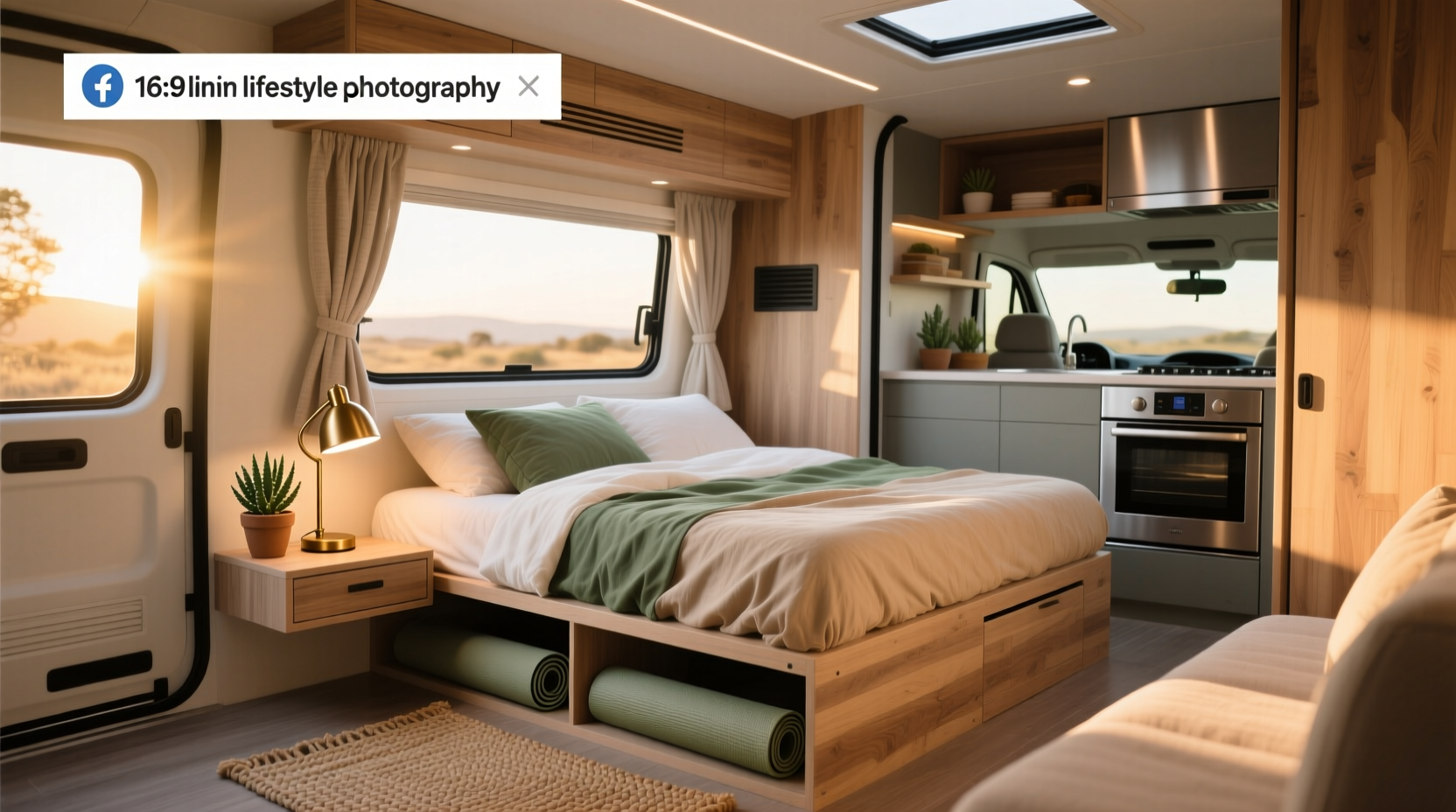
If you're searching for campervan bed ideas, you're likely in the middle of a van conversion or planning one—and maximizing comfort while minimizing space loss is your top priority. The right bed setup can transform how you live on the road, balancing rest, storage, and daily usability. From sliding and foldable beds to L-shaped and rock-and-roll designs, this guide breaks down every practical option, material choice, and layout strategy used by experienced van lifers. Whether you’re building DIY or buying pre-made, we’ll help you make informed decisions based on real-world use cases, structural needs, and long-term livability.
Why Campervan Bed Design Matters More Than You Think
Your bed isn’t just where you sleep—it’s the largest fixed structure in most campervans. A poorly designed bed wastes precious floor space, limits seating, reduces storage, and makes your van feel cramped. On the other hand, a well-thought-out campervan bed idea can double as seating, hide storage compartments, and even convert into a workspace or kitchen area during the day ✅.
The key challenge? Balancing comfort (a full-size mattress), accessibility (easy entry/exit), and versatility (multi-functional use). Many first-time builders focus only on sleeping width but overlook headroom, leg clearance, weight distribution, and ease of assembly ⚠️. This leads to regrets down the road—like not being able to stand up near the bed or losing all rear storage.
Common Types of Campervan Beds: Pros & Cons
There are several proven campervan bed configurations that address different vehicle sizes, budgets, and lifestyles. Let’s explore the most popular ones with their trade-offs.
Foldable & Sofa Beds (Convertible Seating)
🔧 Idea: A bed that folds up against the wall or converts from a daytime sofa.✅ Best for: Small vans, solo travelers, or those who want maximum open space during the day.⚙️ How it works: Hinges allow the mattress platform to lift vertically or pivot from horizontal to vertical. Some include spring-loaded arms or gas struts to assist lifting.📌 Pros:
- Saves floor space when not in use
- Doubles as seating during the day
- Can integrate under-bed drawers when lowered
- Limited mattress thickness (usually ≤4 inches)
- Requires strong hinges and support frame
- May reduce headroom when folded up
Sliding Beds (Rail-Based Systems)
🚚 Idea: A bed mounted on rails that slides out from the side or rear of the van.✅ Best for: Medium to large vans, taller individuals, or those prioritizing under-bed access.⚙️ How it works: The bed platform runs on heavy-duty drawer slides or custom steel rails. It pulls out like a drawer, allowing access to storage underneath or behind.
📌 Pros:- Full mattress support (can accommodate thicker foam)
- Unobstructed access to rear storage when retracted
- Can be built low to improve standing room
- Requires precise alignment of rails
- Needs robust anchoring to van floor/walls
- May limit rear door opening if extended too far
Rock-and-Roll Beds (Front-to-Back Movement)
⚡ Idea: A bed that rolls forward over cabinetry to reveal a lower storage compartment.✅ Best for: Short-wheelbase vans, DIY builders, budget-conscious converters.⚙️ How it works: Mounted on wheels or sliders, the entire bed moves forward during the day, exposing a deep storage tray beneath—ideal for bulky items like propane tanks or tools.
📌 Pros:- Maximizes under-bed utility
- Simple construction with basic materials
- Preserves rear door access
L-Shaped & Extendable Beds
📍 Idea: A corner-mounted bed that wraps around two walls, often extending over the wheel arches.✅ Best for: Maximizing sleeping area in compact spaces, dual-purpose layouts.
⚙️ How it works: One section runs along the side wall, another extends across the rear. Can include pull-out extensions for extra length. 📌 Pros:- Optimizes awkward corners and wheel wells
- Can sleep two adults comfortably
- Allows separate seating area in front
- Complex framing required
- May block side windows or vents
- Less flexible for daytime reconfiguration
Material Choices: Wood vs. Metal Frames
The frame material affects durability, weight, cost, and insulation. Here’s a breakdown of common choices.
| Material | Weight | Cost | Durability | Insulation |
|---|---|---|---|---|
| Wood (Birch Plywood) | Medium | $$ | High (if sealed) | Good (natural insulator) |
| MDF (Pre-fab kits) | Heavy | $ | Low (swells if wet) | Poor |
| Steel Frame | High | $$$ | Very High | Poor (conducts cold) |
| Aluminum Alloy | Light | $$$$ | High | Moderate |
Wood remains the most popular choice due to its balance of strength, workability, and thermal performance. Pre-cut MDF kits (like those from Camit Design) offer affordability but require sealing against moisture. Metal frames are durable but conduct cold—always add insulation layers between metal and sleeping surface.
DIY vs. Pre-Made Campervan Beds: What’s Right for You?
One of the biggest decisions is whether to build your own or buy a ready-made system.
DIY Campervan Beds
🛠️ Best if: You have basic carpentry skills, want full customization, or are on a tight budget.✅ Advantages:
- Total control over dimensions and layout
- Can integrate with other furniture (kitchen, storage)
- Lower material cost (typically $100–$300)
- Time-consuming (8–20+ hours depending on complexity)
- Risk of misalignment or instability if not engineered properly
- No warranty or customer support
Pre-Made Campervan Beds
🏭 Best if: You lack tools/skills, want faster installation, or prefer guaranteed fit.✅ Advantages:
- Faster setup (often flat-pack with instructions)
- Engineered for stability and load capacity
- Some offer modularity (e.g., BikeStow Bed Module)
- Higher cost ($250–$750+)
- Limited flexibility in design
- May not fit non-standard van shapes
Space-Saving Features That Make a Difference
The best campervan bed ideas go beyond just sleeping—they enhance daily living.
- Integrated Storage: Drawers, lift-up hatches, or roll-out bins underneath keep gear organized ✨.
- Removable Mattress Toppers: Allows quick cleaning and improves airflow to prevent mold.
- Hidden Lighting: LED strips under bed edges aid nighttime navigation.
- Ventilation Gaps: Leave small air channels between mattress and base to reduce condensation.
- Quick-Release Mechanisms: Useful for removing the bed entirely for cargo transport.
Avoiding Common Mistakes in Campervan Bed Builds
Even experienced builders make these errors—here’s how to avoid them.
- Ignoring Mattress Thickness: Thicker mattresses (≥4”) are more comfortable but reduce headroom. Measure total height including base + foam.
- Overlooking Entry/Exit Path: Ensure there’s enough clearance to sit up and swing legs out without hitting cabinets.
- Using Untreated Wood: In humid climates, untreated plywood delaminates. Seal all surfaces with marine varnish or paint.
- Skipping Weight Testing: Load test the bed with sandbags or people before finalizing. Check for sagging or wobbling.
- Blocking Ventilation: Never seal off roof vents or fans behind the bed frame.
Real-World Inspiration: Popular Campervan Bed Setups
Looking at what others have done can spark new ideas.
- Slide-Out Minivan Bed: Used in family conversions, this design extends from the side door area, freeing up the rear for kids’ play space.
- Loft Bed Over Rear Axle: Elevates the sleeping area, leaving floor space usable below—common in adventure vans.
- Dinette-to-Bed Conversion: Combines a table with bench seating that flattens into a sleeping surface—ideal for couples.
- Airbed Integration: Some opt for inflatable beds stored during the day, though comfort and durability vary.
Final Checklist Before Building or Buying
Before committing to a design, ask yourself:
- 📏 What are your van’s interior dimensions?
- Measure width, height, and usable length—account for wheel arches and HVAC units.
- 🛌 Who will sleep in it?
- Solo traveler? Couple? Kids? This determines size and layout.
- 🛋️ Do you need daytime seating?
- If yes, prioritize convertible or fold-up designs.
- 📦 How much storage do you need?
- Choose sliding, rock-and-roll, or lift-up beds with internal compartments.
- 🔧 Are you comfortable with basic carpentry?
- If not, consider pre-fabricated kits or professional help.
Frequently Asked Questions
Here are answers to common follow-up questions about campervan bed ideas.
Can I use an IKEA bed frame in my campervan?
Yes, many builders adapt IKEA components like the Skubb box or Scoria bed beams for sliding mechanisms. Just ensure they’re securely anchored and modified for vibration resistance.
What’s the most space-efficient campervan bed?
Foldable sofa beds and sliding designs tend to be the most space-efficient, especially in shorter vans. They free up floor area during the day while maintaining full sleeping comfort at night.
How thick should a campervan mattress be?
Aim for 4–6 inches. Thinner mattresses (<3”) may feel hard; thicker ones (>7”) reduce headroom and increase weight.
Are pre-made campervan beds worth it?
They can be worth it if you value time, precision, and reliability over customization. However, they’re rarely cheaper than DIY when factoring in shipping and taxes.
How do I prevent my bed from moving while driving?
Use positive locking mechanisms—such as drop pins, cam locks, or latches—that physically secure the bed in travel position. Never rely solely on friction or gravity.




 浙公网安备
33010002000092号
 浙B2-20120091-4