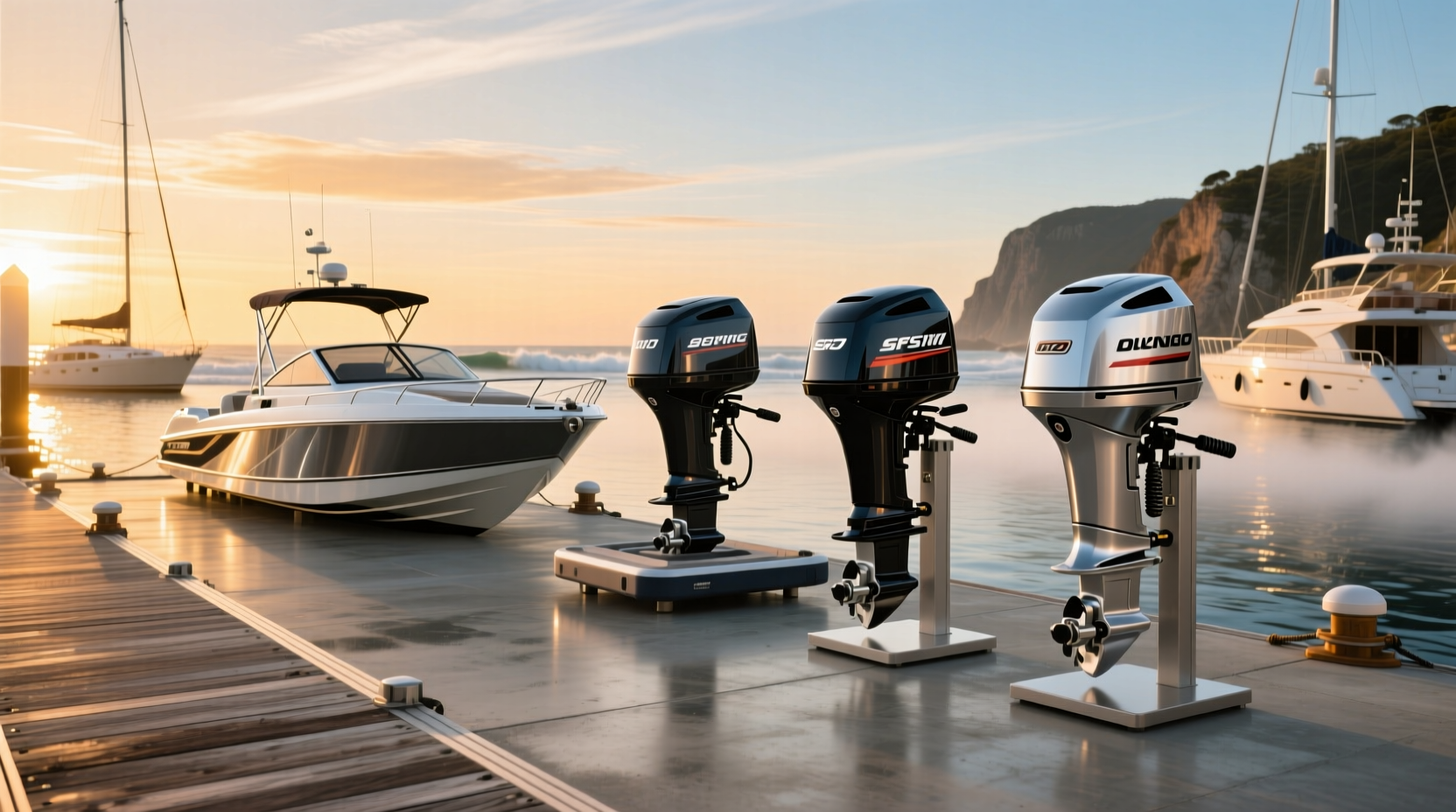
When researching outboard motor brands, boat owners often face confusion over which brand offers the best balance of reliability, performance, and long-term value. The most widely recognized manufacturers—Mercury Marine, Yamaha Outboards, Honda Marine, Tohatsu, Suzuki Marine, and emerging electric leaders like Torqeedo—each bring distinct engineering philosophies to the market. Understanding their core differences in technology, service networks, fuel efficiency, and suitability for specific boating applications is essential before making a purchase decision. This guide breaks down each major brand’s strengths, common user concerns, and real-world performance to help you choose wisely based on your needs, whether you're powering a small fishing skiff or a large offshore cruiser.
Why Brand Choice Matters for Outboard Motors
Selecting the right outboard motor isn't just about horsepower—it's about long-term ownership experience. Unlike car engines, outboards operate in harsh marine environments, exposed to saltwater, temperature swings, and constant vibration. A reputable brand typically invests heavily in corrosion-resistant materials, precision manufacturing, and durable gearcase designs that withstand these conditions ⚙️. Moreover, brand choice affects parts availability, dealer support, resale value, and warranty coverage. For example, some brands offer global service networks, while others may have limited regional presence, impacting repair turnaround times 📍.
Another critical factor is technological integration. Modern outboards increasingly feature digital controls, engine diagnostics, fuel management systems, and compatibility with multifunction displays (MFDs). Brands differ significantly in how seamlessly they integrate with navigation systems and autopilots ✨. Therefore, evaluating not just raw power but also electronic architecture and upgrade paths becomes crucial when comparing options.
Overview of Major Outboard Motor Manufacturers
The global outboard market is dominated by Japanese and American companies, each with decades of marine engineering expertise. Below is an analysis of the leading brands based on product range, innovation, customer feedback, and service infrastructure.
Mercury Marine: Performance and Innovation Leader
Mercury Marine, headquartered in Wisconsin, USA, is one of the largest and most recognizable names in the industry. Known for high-performance models like the Verado series (250–600 hp) and Pro XS line (115–300 hp), Mercury emphasizes speed, torque, and advanced propulsion technologies ✅. Their FourStroke lineup covers smaller applications from 2.5 hp up to 300 hp, catering to both recreational and commercial users.
One standout feature is Mercury’s integrated control systems such as SeaCore corrosion protection and SmartCraft digital networking, allowing full engine monitoring via touchscreen displays. However, some users report higher maintenance costs compared to competitors, especially on supercharged models like the Verado, due to complex supercharger and intercooler systems 🔧.
Mercury also produces jet drives for shallow-water operation, appealing to anglers in marshy or riverine environments. While generally reliable, older two-stroke models (now largely phased out) required more frequent servicing than modern four-strokes.
Yamaha Outboards: Reliability and Fuel Efficiency Focus
Yamaha Motor Corporation has built a strong reputation for durability and low operating costs. Their F-series four-stroke engines (e.g., F250, F350) are frequently cited in owner surveys for exceptional longevity and minimal downtime ⏱️. Yamaha emphasizes simplicity in design, reducing the number of moving parts and potential failure points.
Their V6 High Output and Z Series engines deliver competitive power while maintaining excellent fuel economy, making them popular among long-range offshore fishermen. Yamaha also leads in electric-start reliability, even in cold weather conditions.
On the downside, some users find Yamaha’s digital interface less intuitive than Mercury’s SmartCraft or Honda’s Lean Burn system. Additionally, while parts are widely available in North America and Europe, remote regions may experience delays in sourcing certain components 🌐.
Honda Marine: Refinement and Smooth Operation
Honda Marine stands out for its focus on quietness, vibration reduction, and refined engine behavior. Leveraging automotive-grade engineering, Honda’s BF series (e.g., BF250, BF300) features technologies like Lean Burn Control, which optimizes air-fuel mixture for improved fuel efficiency across various RPM ranges ⚡.
Honda outboards are often praised for their ease of starting, consistent idle quality, and smooth throttle response—qualities appreciated by family boaters and luxury pontoon owners. They also rank highly in emissions compliance and environmental friendliness.
However, Honda’s model range is narrower compared to Mercury or Yamaha, particularly above 300 hp. Some mechanics note that Honda engines can be more difficult to service due to tighter internal layouts, potentially increasing labor time and cost 🔧. Also, dealership coverage is less extensive than competitors in rural areas.
Tohatsu: Value-Oriented and OEM Supplier
Tohatsu Corporation, based in Japan, is one of the oldest outboard manufacturers and supplies engines to several other brands under private label agreements. Their own-branded four-stroke engines—from 2.5 hp to 140 hp—are known for solid build quality at competitive prices ✅.
Tohatsu focuses on lightweight aluminum construction, compact designs, and fuel-efficient operation. Many entry-level boats come factory-equipped with Tohatsu motors because of their reliability and low price point. Independent dealers often recommend Tohatsu for auxiliary (kicker) motors or small craft where budget matters.
A limitation is the lack of high-horsepower options beyond 140 hp, making them unsuitable for larger vessels. Additionally, while Tohatsu has improved its digital integration, it lags behind leaders in terms of networked controls and smart features.
Suzuki Marine: Understated Engineering Excellence
Suzuki Marine offers a balanced blend of performance, efficiency, and innovation. Their DF series includes models from 2.2 hp to 350 hp, featuring patented technologies like Dual Injector System for better combustion and reduced emissions 🌍. Suzuki’s Variable Valve Timing (VVT) on select V6 engines enhances mid-range torque, beneficial for planing heavier boats.
Owners frequently highlight Suzuki’s robust alternators, useful for running electronics-heavy setups. The company also offers a corrosion protection program called Suzuki Dual-Phase Paint, enhancing saltwater resistance.
Despite strong technical merits, Suzuki has lower brand visibility than Yamaha or Mercury, which can affect resale perception. Dealer density varies regionally, so pre-purchase research into local service access is advised.
Torqeedo: Pioneering Electric Outboard Technology
As environmental regulations tighten and battery technology advances, electric outboards are gaining traction. Torqeedo, a German company acquired by BMW Group, leads this segment with innovative products like the Deep Blue series (up to 80 kW / ~100 hp equivalent) and Cruise series for smaller boats ⚡.
Electric motors eliminate exhaust emissions, reduce noise pollution, and require far less maintenance than gasoline engines—no oil changes, spark plugs, or carburetors. They’re ideal for lakes with emission restrictions, silent fishing operations, or eco-conscious consumers.
Limitations include shorter range, longer recharge times, and higher upfront costs. Most electric outboards max out around 100 hp equivalents, restricting use on larger or faster vessels. Battery weight and charging infrastructure remain practical challenges for extended cruising.
Key Factors to Consider When Comparing Outboard Brands
Beyond brand reputation, several measurable factors should influence your decision:
- Fuel Type: Most outboards run on gasoline, but ethanol content (E10 vs E0) affects engine longevity. Some brands recommend fuel stabilizers or ethanol treatment additives.
- Two-Stroke vs Four-Stroke: Modern four-strokes dominate due to better fuel economy and lower emissions. Direct-injected two-strokes (like Mercury’s OptiMax) exist but are being phased out.
- Weight and Shaft Length: Proper shaft length (S = 15", L = 20", XL = 25") must match transom height. Heavier motors may affect boat balance.
- Warranty Terms: Standard warranties range from 3 to 5 years. Extended coverage may require registration or scheduled maintenance.
- Dealer Support: Local technicians trained by the manufacturer ensure proper installation and service.
| Brand | Horsepower Range | Engine Type | Notable Features | Best For |
|---|---|---|---|---|
| Mercury | 2.5–600 hp | 2/4-stroke | Verado supercharging, SmartCraft | High-performance & offshore |
| Yamaha | 2.5–425 hp | 4-stroke | V6 HO, Offset driveshaft | Durability & fuel economy |
| Honda | 2.3–300 hp | 4-stroke | Lean Burn, BLAST | Smooth operation & efficiency |
| Tohatsu | 2.5–140 hp | 4-stroke | OEM supplier, compact design | Budget-friendly & small boats |
| Suzuki | 2.2–350 hp | 4-stroke | Dual Injector, VVT | Mid-range torque & reliability |
| Torqeedo | 1–100 hp equiv. | Electric | Deep Blue, Cruise | Eco-use & quiet operation |
Common Misconceptions About Outboard Brands
Several myths persist in the boating community that can mislead buyers:
- “All Japanese brands are equally reliable”: While generally true, differences in design philosophy and component sourcing lead to varying field performance. For instance, Honda’s emphasis on refinement sometimes sacrifices serviceability.
- “Higher horsepower always means better performance”: Overpowering a boat can cause structural stress, poor handling, and increased fuel consumption. Always follow hull manufacturer recommendations.
- “Electric outboards are only for tiny boats”: Advances like Torqeedo’s Deep Blue show viability for 25–30 ft cruisers, though range remains limited.
- “Big-name brands are overpriced”: Premium pricing often reflects R&D investment, corrosion protection, and warranty depth—not just branding.
Maintenance Practices That Vary by Brand
All outboards require routine care, but intervals and procedures differ slightly between manufacturers ✅. Common tasks include:
- Flushing with fresh water after every saltwater use 🧼
- Changing gear lube annually or every 100 hours
- Inspecting anode (zinc) wear and replacing as needed
- Replacing fuel filters and checking for water separation
- Following break-in procedures for new engines
Mercury recommends using their proprietary QuickSilver lubricants, while Honda specifies JASO-FC rated oils. Using non-approved fluids may void warranty. Similarly, Yamaha advises against aftermarket propellers that alter pitch or diameter significantly, as this affects engine loading.
How to Verify Local Service Availability
Before purchasing, confirm that a certified technician services your chosen brand nearby. Use official dealer locators from manufacturer websites:
Call the shop directly to ask about typical wait times for diagnostics and repairs, availability of loaner motors, and whether they stock common spare parts. In remote locations, consider carrying a basic toolkit and spare impeller.
Resale Value and Long-Term Ownership Costs
Some brands retain value better than others. According to industry data, Yamaha and Honda typically lead in depreciation curves, holding 10–15% more value after five years than average 1. Mercury follows closely, especially for high-demand models like the 300XS. Tohatsu and Suzuki tend to depreciate faster, partly due to lower brand recognition.
Long-term costs include not only fuel and maintenance but also winterization, storage, and insurance. High-output supercharged engines consume more fuel and may incur higher insurance premiums. Electric models reduce fuel and oil expenses but involve battery replacement every 5–8 years (~$3,000–$7,000).
Final Recommendations Based on Use Case
No single brand is best for everyone. Here’s a summary by application:
- Fishing Boats (Inshore/Offshore): Yamaha or Mercury for proven durability and power-to-weight ratio.
- Pontoons & Family Cruisers: Honda or Mercury for smooth, quiet operation and passenger comfort.
- Small Dinghies & Tenders: Tohatsu or Suzuki for affordability and portability.
- Lake-Only or Eco-Friendly Use: Torqeedo electric models for zero emissions and silent running.
- Commercial Applications: Yamaha or Suzuki for ruggedness and lower total cost of ownership.
Frequently Asked Questions
- What is the most reliable outboard motor brand?
- Based on owner surveys and independent studies, Yamaha and Honda consistently rank highest for long-term reliability, particularly in four-stroke models. Both exhibit low rates of major mechanical failures when properly maintained.
- Which outboard brand has the best fuel efficiency?
- Honda’s Lean Burn technology and Yamaha’s optimized fuel injection systems deliver top-tier fuel economy. In real-world testing, Honda BF250 and Yamaha F250 achieve similar MPG under comparable loads, with slight advantages depending on operating RPM.
- Are there any American-made outboard motors?
- Mercury Marine manufactures many of its engines in the United States, including the 150–600 hp Verado and Pro XS series produced in Fond du Lac, Wisconsin. Lower-horsepower models may be assembled globally using mixed components.
- Can I mix different brands of outboard motors on the same boat?
- Yes, multi-engine setups (e.g., twin or triple installations) can use different brands, but doing so complicates maintenance, control integration, and warranty claims. For optimal performance and diagnostics, using identical models is strongly recommended.
- Do electric outboard motors require special charging equipment?
- Most electric outboards use standard AC charging (110V/220V). Torqeedo and other manufacturers provide compatible chargers. Larger systems may benefit from shore power or solar-assisted recharging, especially for extended trips.




 浙公网安备
33010002000092号
 浙B2-20120091-4