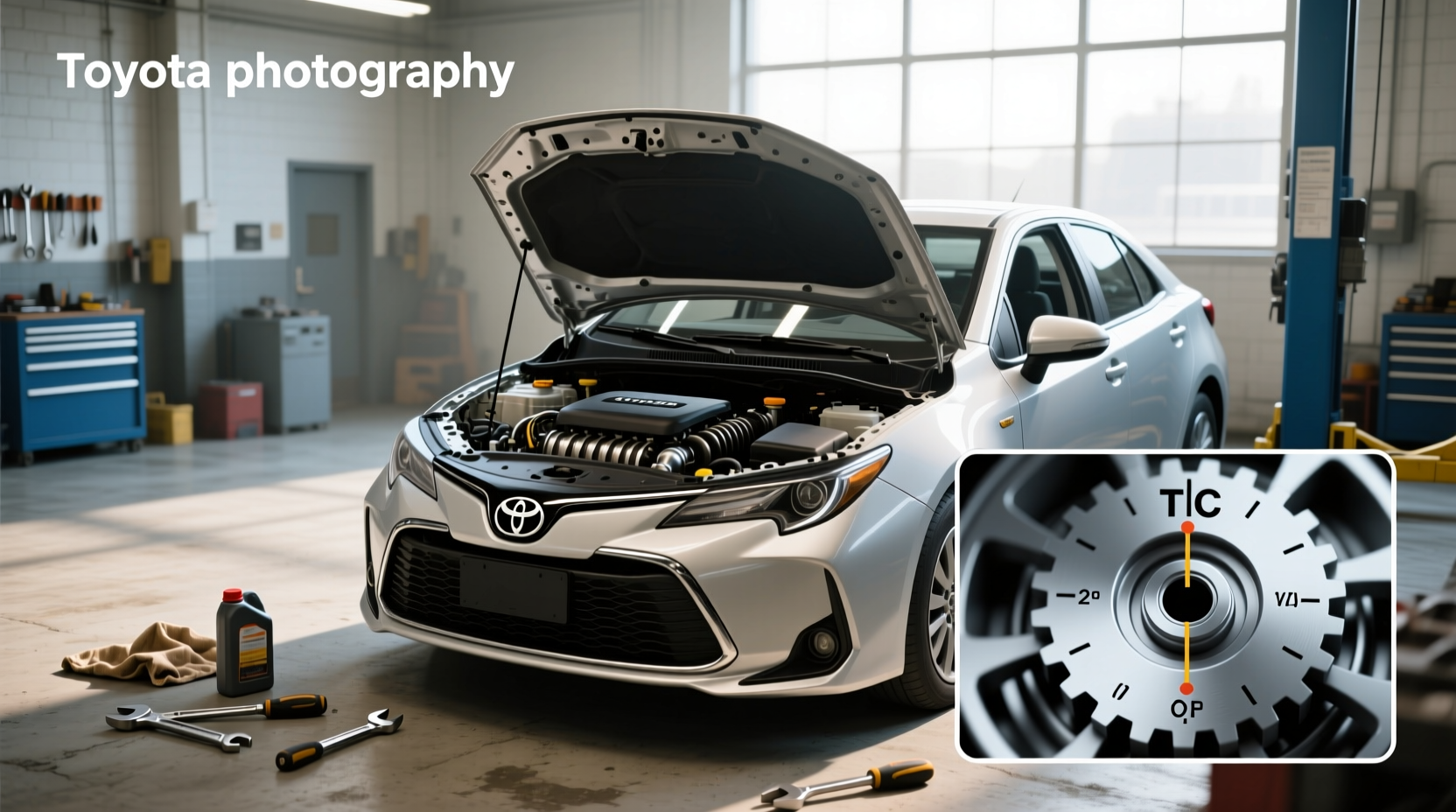
If you're searching for a Toyota Corolla timing marks diagram, especially for the 2ZR-FE 1.8L engine, you're likely preparing for a timing chain replacement or diagnosing a misfire, rough idle, or check engine light issue. Proper alignment of the camshaft and crankshaft timing marks is critical to avoid internal engine damage. This comprehensive guide provides accurate timing mark locations, step-by-step alignment procedures, common pitfalls, and verification techniques for 2009–2019 Toyota Corolla models equipped with the 2ZR-FE engine ⚙️.
Why Correct Timing Marks Alignment Matters
Incorrect timing marks alignment during a timing chain service can lead to bent valves, piston-to-valve contact, poor performance, or complete engine failure ❗. The 2ZR-FE engine in the Toyota Corolla uses a dual overhead cam (DOHC) design with variable valve timing (VVT), making precise sprocket positioning essential. Unlike older engines with timing belts that visibly wear out, the 2ZR-FE uses a timing chain designed for longevity—but when maintenance is needed, correct setup is non-negotiable ✅.
The primary components involved in timing alignment include:
- Crankshaft sprocket and keyway
- Oil pump timing mark
- Intake camshaft sprocket (VVT actuator)
- Exhaust camshaft sprocket
- Timing chain tensioner and guides
Each has specific alignment indicators that must line up precisely when cylinder #1 is at top dead center (TDC) on the compression stroke 🔧.
Locating the Timing Marks: 2ZR-FE Engine Breakdown
The following describes the exact location and orientation of each timing mark used in the 2ZR-FE engine found in 2009–2019 Toyota Corolla models. While no single official 'diagram' is printed on the engine itself, factory service manuals and technical videos confirm standardized positions.
Crankshaft Sprocket and TDC Position
To begin, rotate the engine clockwise using a socket on the crankshaft pulley bolt until the notch on the crankshaft sprocket aligns with the arrow or pointer on the oil pump housing 📍. This position corresponds to Top Dead Center (TDC) for piston #1.
Key detail: The crank sprocket has a small machined groove or dimple that lines up vertically with a stamped arrow on the lower timing cover or oil pump body. Some mechanics use a bright paint marker to highlight this once found.
Oil Pump Housing Mark
The front face of the oil pump, located behind the crankshaft sprocket, features a raised triangular index mark. When the crankshaft is at TDC, this triangle should point directly upward and align with the groove on the crank sprocket. This serves as the foundational reference point for all other alignments ✨.
Camshaft Sprocket Marks
With the valve cover removed and the timing chain cover partially off, observe both camshafts:
- Exhaust Camshaft Sprocket: Look for a gold-painted link or punch mark on the timing chain. The exhaust cam sprocket has a corresponding notch or dot that must align with this link. Additionally, the word “UP” cast into the sprocket should face upward.
- Intake Camshaft Sprocket (VVT): This sprocket connects to the VVT-i actuator. It has two alignment points: one between the actuator and the camshaft hub, and another where the chain links meet the sprocket teeth. A silver or gold chain link should sit between two teeth directly aligned with a mark on the sprocket.
When both camshafts are correctly positioned, the flat surfaces on their ends (visible when looking at the end of the cams) should be parallel to the cylinder head surface—this is an additional verification method used by technicians 🔍.
| Component | Timing Mark Feature | Alignment Reference |
|---|---|---|
| Crankshaft Sprocket | Notch or dimple | Aligns with arrow on oil pump housing |
| Oil Pump Housing | Triangular index mark | Points upward at TDC |
| Exhaust Cam Sprocket | Dot or notch | Lines up with gold chain link |
| Intake Cam Sprocket | VVT actuator mark | Aligned with timing plate and chain link |
Step-by-Step Procedure: Setting Timing Marks on 2ZR-FE
Follow these steps carefully to ensure accurate timing chain installation:
- Remove necessary components: Disconnect battery, remove air intake, alternator, serpentine belt, crankshaft pulley, and timing cover bolts 🔧.
- Rotate engine to TDC: Use a breaker bar on the crankshaft bolt to turn the engine clockwise until the crank sprocket notch aligns with the oil pump arrow.
- Verify piston position: Insert a long screwdriver or dial indicator through the spark plug hole of cylinder #1 to confirm it's at peak height (TDC).
- Check cam positions: Inspect both cam sprockets. If they’ve moved, loosen the VVT actuator or use a cam holding tool to reposition them.
- Align chain links: Most OEM and aftermarket kits include a timing chain with painted or plated master links. Position the gold link over the exhaust cam mark and silver over the intake.
- Install tensioner last: Do not install the timing chain tensioner until after the sprockets are secured. Premature tensioning can shift alignment.
- Double-check before rotating: Manually rotate the engine two full revolutions by hand. Recheck all marks. If any are off, disassemble and realign.
This process typically takes 6–10 hours for a DIYer with moderate experience ⏱️. Professional shops may complete it faster but charge $800–$1,500 depending on labor rates.
Common Mistakes and How to Avoid Them
Even experienced mechanics make errors when working on the 2ZR-FE timing system. Here are frequent issues and solutions:
- Mistake 1: Assuming the engine is at TDC without verification.
Solution: Always confirm piston position with a physical tool—not just the crank mark. - Mistake 2: Forgetting to lock the VVT actuators during assembly.
The intake cam’s VVT gear can rotate freely unless locked with a pin or special tool. Misalignment here causes immediate performance issues. - Mistake 3: Using incorrect chain links as reference.
Not all chains have consistent coloring. Verify alignment using factory specifications, not just paint. - Mistake 4: Overtightening camshaft bolts.
These are torque-to-yield (stretch) bolts. Replace them and follow the manufacturer’s sequence and torque specs exactly.
Do All Toyota Corollas Have Interference Engines?
Yes—the 2ZR-FE engine in the Toyota Corolla is an interference design. This means that if the timing chain jumps or breaks, the pistons can strike open valves, causing catastrophic engine damage ❗. Unlike non-interference engines, there is zero tolerance for timing errors. This underscores why precise alignment using a verified Toyota Corolla timing marks diagram is crucial.
Signs of Incorrect Timing or Chain Wear
Before diving into a timing job, understand the symptoms that may indicate a problem:
- Rattling noise from the front of the engine (especially at startup)
- Check engine light with codes P0016, P0017, or P0008 (cam/crank correlation)
- Difficulty starting or rough idling
- Reduced power and fuel economy
However, these symptoms can also stem from faulty VVT solenoids or oil flow issues. Diagnose thoroughly before replacing parts.
Timing Chain vs. Timing Belt: What’s the Difference?
Unlike many older vehicles that use rubber timing belts requiring replacement every 60,000–100,000 miles, the Toyota Corolla 2ZR-FE uses a timing chain housed inside the engine. Chains are lubricated by engine oil and generally last much longer—but they are not immune to wear.
While Toyota does not specify a replacement interval for the timing chain under normal conditions, severe driving (frequent short trips, towing, neglected oil changes) can accelerate wear. There is ongoing debate among owners about whether proactive replacement is wise, especially beyond 150,000 miles.
Can You Replace the Timing Chain Without Removing the Engine?
Yes, the 2ZR-FE engine allows timing chain replacement without pulling the engine, though access is tight 🔧. Some forums cite Haynes manuals suggesting otherwise, but modern procedures confirm it’s possible with proper tools 1. Key steps include removing the right-side engine mount and carefully maneuvering the water pump and AC compressor for clearance.
Aftermarket vs. OEM Timing Chain Kits
Many users search for affordable options like those listed on eBay or auto parts websites. While third-party kits (e.g., MAHLE, Aisin, Dorman) can be reliable, inconsistencies in chain link coloring or sprocket markings have been reported. OEM kits from Toyota ensure exact match tolerances and clear alignment indicators.
When purchasing, look for kits that include:
- Upper and lower timing chains
- Chain tensioner and guides (often wear items)
- VVT-i sprocket locking pins (helpful but not always included)
- New crankshaft bolt (torque-to-yield)
Pricing varies widely—from $60 budget kits to $400+ OEM sets. However, skimping on quality can result in premature failure or misalignment due to inconsistent manufacturing tolerances.
Regional and Model Year Variations
The 2ZR-FE engine was used globally across Corolla, Scion xD, and Matrix models from 2007 to 2019. While timing mark locations remain consistent, minor differences exist:
- Pre-2010 models may lack certain VVT refinements
- European-spec Auris models share the same engine and procedure
- Some late-model Corollas (2020+) use the M20A-FKS engine, which has a different timing layout
Always verify your engine code (stamped on block near cylinder head) before proceeding.
Tools Needed for the Job
You’ll need specialized tools to do this correctly:
- Socket set and torque wrench
- Camshaft holding tool (Toyota SST 09248-55010 or equivalent)
- VVT-i actuator locking pin
- Dial indicator (optional, for TDC verification)
- Engine turning socket (for crankshaft rotation)
- New RTV sealant for covers
Investing in these tools (~$100–$150) pays off if you plan future engine work.
When to Seek Professional Help
If you’re unsure about any step—especially cam alignment or tensioner installation—it’s better to consult a certified technician. One misaligned sprocket can destroy an otherwise healthy engine. Independent shops often offer lower labor rates than dealerships while still using OEM procedures.
Conclusion: Accuracy Over Speed
Setting the timing marks on a Toyota Corolla 2ZR-FE engine isn’t inherently complex, but it demands precision. Whether you’re referencing a Toyota Corolla timing marks diagram from a repair manual or following a video tutorial, always cross-verify alignment using multiple methods: visual marks, chain links, and cam end positioning. Rushing leads to costly mistakes.
Regular oil changes and avoiding prolonged idling help extend timing chain life. And remember: even though the chain is “lifetime,” mechanical wear eventually occurs. Stay vigilant for warning signs and address concerns early.
Frequently Asked Questions
Q: Can I replace the timing chain myself?
A: Yes, if you have mechanical experience, the right tools, and patience. It’s a challenging job best attempted after studying detailed guides and videos.
Q: What happens if timing is off by one tooth?
A: Even a single tooth misalignment can cause poor performance, increased emissions, or engine damage due to valve timing mismatch. Always double-check before final assembly.
Q: How do I know if my timing chain is stretched?
A: Use a dial gauge on the crankshaft sprocket to measure play, or inspect for excessive slack in the chain. Diagnostic trouble codes related to camshaft timing are also strong indicators.
Q: Do I need to replace the water pump when doing the timing chain?
A: Not required, but highly recommended since it’s located behind the timing cover. Replacing it now saves significant labor later.
Q: Are timing marks the same on all 2ZR-FE engines?
A: Yes, timing mark locations are standardized across all vehicles using the 2ZR-FE engine, including Corolla, Matrix, and Scion xD models from 2007–2019.




 浙公网安备
33010002000092号
 浙B2-20120091-4