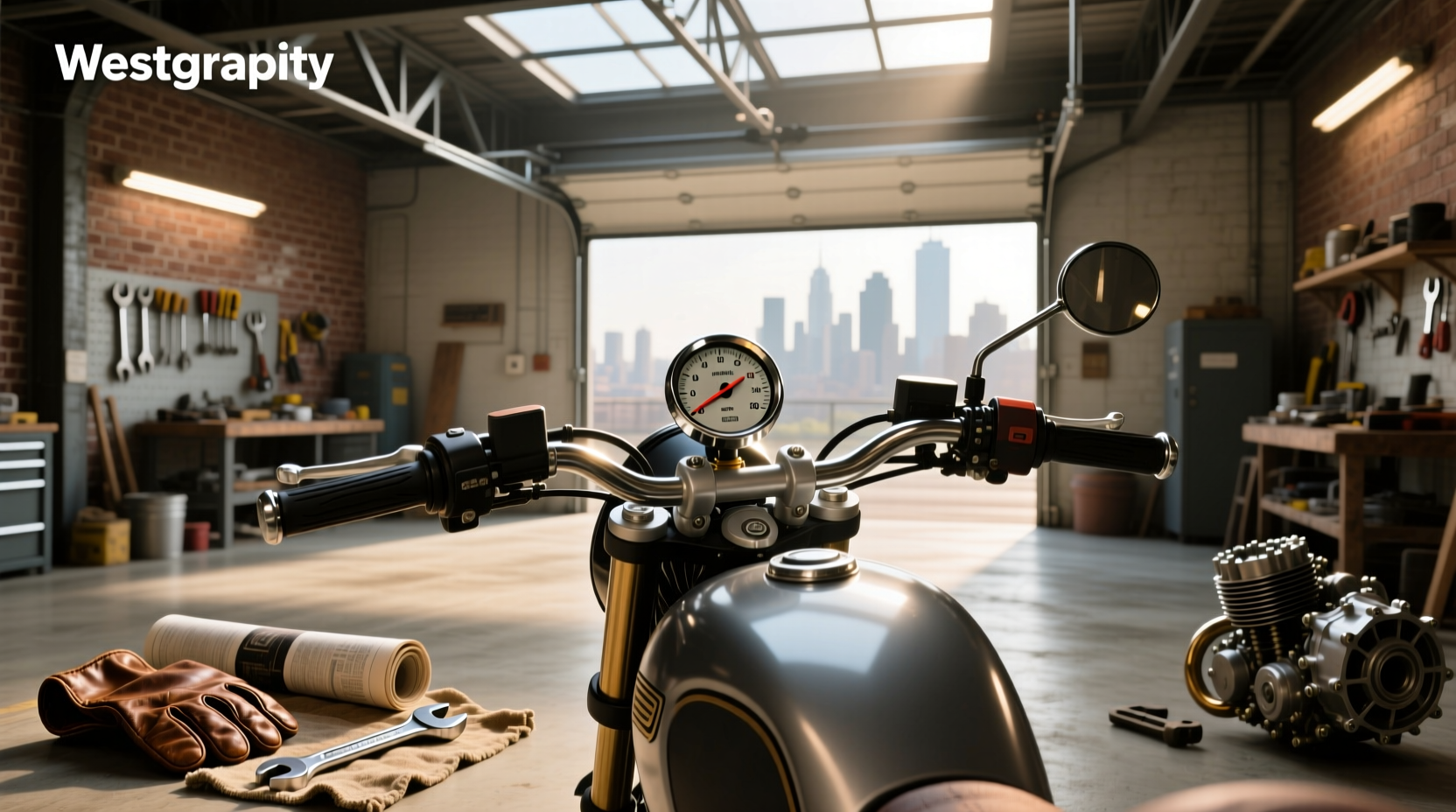
When upgrading or replacing your bike's instrumentation, a universal motorcycle tachometer offers flexibility across different engine types and models. Unlike OEM-specific gauges, these aftermarket units are designed to work with various ignition systems, voltage outputs, and sensor configurations—making them ideal for custom builds, older motorcycles, or performance tuning projects. But not all universal tachometers are created equal. Choosing the right one depends on understanding your bike’s electrical system, signal type (inductive vs. hall effect), power requirements, and mounting options.
What Is a Universal Motorcycle Tachometer?
A universal motorcycle tachometer measures engine revolutions per minute (RPM) and displays it on an analog dial or digital screen. The term “universal” means it’s engineered to be compatible with multiple motorcycle makes, models, and engine types—not limited to a specific brand or ECU protocol. These devices typically connect directly to the ignition system or use a separate RPM sensor to detect spark pulses or crankshaft rotation.
Unlike factory-installed tachs that rely on proprietary communication buses like CAN (Controller Area Network), universal units usually accept raw signals from spark plug wires, ignition coils, or magnetic pickups. This independence from vehicle-specific data networks is what gives them their broad compatibility—but also introduces potential setup challenges if mismatched with the bike’s output signal type.
Why Riders Use Universal Tachometers
- Custom Builds: Choppers, cafe racers, and scramblers often replace stock clusters with minimalist or retro-style gauges. A universal tach fits seamlessly into these designs without relying on original wiring harnesses ✅
- Older Motorcycles: Pre-1990s bikes lack modern digital instrument panels. Adding a reliable RPM gauge enhances rideability and engine monitoring 🏍️
- Performance Tuning: Mechanics and tuners use standalone tachs during dyno runs or carburetor adjustments where precise RPM tracking is essential ⚙️
- Diagnostics & Testing: Temporary installation helps identify misfires, idle instability, or ignition timing issues 🔍
Types of Universal Tachometers
There are two primary categories: analog and digital. Each has distinct advantages depending on application and user preference.
Analog (Mechanical or Electromechanical)
These feature a traditional needle display driven by internal circuitry that converts electrical pulses into mechanical movement. They’re valued for their classic look and smooth needle sweep. However, they may require calibration and are generally less accurate at low RPM ranges.
Digital (LED/LCD Display)
Digital tachs offer higher precision, backlighting options, and additional functions such as hour meters, shift lights, or even Bluetooth connectivity. Many include programmable settings for different engines (e.g., 2-cylinder vs. 4-cylinder) and can auto-detect signal types in some cases.
| Feature | Analog Tach | Digital Tach |
|---|---|---|
| Display Type | Needle-based dial | LED/LCD numeric readout |
| Accuracy | Moderate (~±100 RPM) | High (~±50 RPM) |
| Signal Compatibility | Limited (often single input type) | Broad (multi-mode support) |
| Additional Features | Rarely includes extras | Hour meter, shift light, data logging |
| Installation Complexity | Simple but may need manual calibration | May require programming via buttons/menus |
Understanding Signal Input Types
One of the most critical factors when selecting a universal tachometer is matching its input type to your motorcycle’s ignition system. Mismatched signals lead to inaccurate readings or complete failure to operate.
Inductive Pickup (Spark Pulse Sensing)
This method uses a clip-on sensor placed around a spark plug wire. It detects the electromagnetic field generated each time the spark plug fires. Most universal tachs support this mode because it doesn’t require direct wiring into the ECU or coil pack.
Pros:
- No permanent modification to ignition system
- Easy to install temporarily
- Works on most gasoline engines regardless of make
- Susceptible to interference from nearby high-voltage sources
- Less reliable on modern waste-spark or coil-near-plug systems
- Can degrade over time due to insulation breakdown
Hall Effect Sensor Input
Hall effect sensors detect changes in magnetic fields caused by rotating metal components (like reluctor rings on crankshafts). Some universal tachs accept signals from external Hall sensors mounted near the flywheel or camshaft.
Pros:
- High accuracy and reliability
- Immune to electrical noise
- Ideal for EFI-equipped bikes or race applications
- Requires physical mounting of sensor
- Must align properly with target gear teeth
- Not all universal tachs support this input natively
ECU or Ignition Module Signal Tap
In some installations, especially on fuel-injected bikes, the tach receives a square-wave signal directly from the ECU or ignition control module. This requires identifying the correct output pin (often labeled “TACH,” “RPM OUT,” or “IGF”) and splicing into it.
⚠️ Caution: Incorrect tapping can damage sensitive electronics. Always consult a service manual before attempting this connection.
Voltage and Power Requirements
Most universal tachometers operate on 12V DC, which matches standard motorcycle electrical systems. However, ensure the unit specifies a wide enough operating range (typically 9–16V) to handle fluctuations during startup and high-load conditions.
Key considerations:
- Power Source: Connect to switched ignition power (not constant battery) so the tach turns off with the engine ⚡
- Grounding: Use a clean, unpainted metal surface close to the tach location to prevent erratic behavior 🧱
- Current Draw: Check amperage rating—most draw under 100mA, but integrated backlighting or shift lights increase load slightly 🔋
Mounting and Physical Installation
Universal tachs come in standard sizes: 52mm and 60mm diameter being the most common. Measure your dash cutout or desired pod size before purchasing.
Popular mounting methods include:
- Dashboard Pod: Single or dual-gauge pods mount in front of the handlebars or within the headlight shell 📍
- Handlebar Clamp: Secures via a bracket around the handlebar, useful for temporary setups or test rigs 🛠️
- Panel Mount: Installed directly into a custom dashboard using included bezel and nuts 🔧
Ensure adequate clearance behind the mounting surface for wiring and connectors. Avoid placing near heat sources like exhaust headers or radiators.
Calibration and Setup
Even after correct wiring, many universal tachs require calibration to display accurate RPM values. Calibration steps vary by model but generally involve setting cylinder count and adjusting sensitivity.
For example:
- Start the engine and bring it to a steady idle.
- Enter calibration mode (usually by holding a button while powering on).
- Select number of cylinders (e.g., 2, 4).
- Adjust gain or threshold until displayed RPM matches known value (can verify with another gauge or smartphone app).
- Save settings and exit.
Digital models may offer automatic calibration or self-learning modes, reducing setup complexity.
Common Compatibility Issues
Despite being labeled “universal,” several pitfalls can prevent proper operation:
Cylinder Count Mismatch
Ignition cycles differ between 2-stroke and 4-stroke engines, and between single, twin, triple, and inline-four configurations. A tach set for a 4-cylinder engine will double-read on a single-cylinder bike unless adjusted.
Wasted Spark Systems
Many modern twins (e.g., Harley-Davidson, Ducati L-twins) use wasted-spark ignition, where both plugs fire simultaneously—one on compression, one on exhaust. This produces twice the expected pulse rate, causing the tach to read double the actual RPM unless compensated.
✅ Solution: Use a tach with a built-in divider circuit or enable “wasted spark mode” in menu settings.Electronic Fuel Injection (EFI) Integration
Bikes with CANbus systems (e.g., late-model BMW, Yamaha, Suzuki) may not output a usable tach signal on standard pins. In such cases, you’ll need a CAN decoder module to extract RPM data digitally.
🌐 Alternative: Consider GPS-based speedometers/tachs that derive RPM indirectly through gear mapping and speed data.Waterproofing and Durability
Since motorcycles operate in wet and dusty environments, look for tachs rated at least IP65 (dust protected and water resistant). Fully sealed units with gasketed lenses and conformal-coated circuit boards perform better long-term.
Check for UV-resistant housing materials if mounting in direct sunlight. Yellowing or fading can impair readability over time.
Top Features to Look For
Modern universal tachometers go beyond basic RPM display. Consider these value-added features based on your needs:
- Hour Meter: Tracks engine runtime for maintenance scheduling ⏱️
- Shift Light: LED warning illuminates near redline to optimize shifting ⚡
- Backlighting: Adjustable brightness for night riding ✨
- Dampened Needle (Analog): Reduces vibration-induced jitter
- Data Logging (Digital): Records peak RPM or session stats via USB/app
- Programmable Alarms: Audible or visual alerts for overheating or overspeed
Installation Tips and Best Practices
To ensure reliable performance:
- Route signal wires away from alternator leads and ignition coils to minimize electromagnetic interference.
- Use shielded cable for long signal runs (>3 ft).
- Secure connections with solder and heat shrink tubing rather than crimp-only terminals.
- Test functionality before final mounting.
- Label wires at both ends for future troubleshooting.
Cost vs. Performance Trade-offs
Pricing for universal tachometers ranges from $15 for basic digital models to over $200 for premium branded units with advanced diagnostics. While budget options work well for simple applications, higher-end models offer better build quality, longer warranties, and technical support.
📌 Note: Price does not always correlate with accuracy. Independent reviews and user feedback are more reliable indicators than brand name alone.
DIY and Arduino-Based Solutions
For tech-savvy users, building a custom tach using microcontrollers like Arduino is a viable option. Projects often combine a hall sensor or inductive pickup with an LCD or LED display, programmed to interpret pulse frequency and convert it to RPM.
Advantages:
- Fully customizable interface
- Integration with other sensors (temperature, voltage)
- Low cost for component parts
Challenges:
- Requires coding and electronics knowledge
- No waterproof enclosure out-of-the-box
- Limited durability compared to commercial products
🔧 Example: An Arduino Nano reading pulses from a hall sensor on the kickstarter gear can drive a 0.96" OLED display showing real-time RPM—ideal for vintage restorations.
Legal and Safety Considerations
In most jurisdictions, adding a tachometer does not affect road legality since it’s a passive monitoring device. However, modifying ignition wiring may void emissions compliance or insurance coverage in regulated regions (e.g., California Air Resources Board zones).
❗ Recommendation: Keep original wiring intact where possible and use non-invasive pickup methods when feasible.Where to Buy and What to Watch For
Universal tachometers are widely available through online retailers specializing in motorcycle parts. When shopping, verify:
- Compatibility with your engine type and cylinder count
- Inclusion of necessary sensors or adapters
- Return policy and warranty terms
- Customer reviews focusing on real-world reliability
Avoid listings that only show generic images or lack detailed specifications. Reputable sellers provide datasheets, wiring diagrams, and response to technical inquiries.
Final Recommendations
Choosing the right universal motorcycle tachometer comes down to matching three core elements: signal type, physical fit, and functional needs. Start by identifying how your bike generates RPM data—whether through spark pulses, ECU output, or mechanical rotation. Then select a tach that supports that input natively or via adapter.
For casual riders and custom builders, a mid-range digital tach with hour meter and shift light offers excellent value. For professional mechanics or racers, invest in a ruggedized unit with high sampling rates and diagnostic capabilities.
Always test the installation before sealing up fairings or dash panels. A working tach improves both safety and enjoyment by helping you stay within optimal power bands and avoid lugging or over-revving the engine.
Frequently Asked Questions
- ❓ Can I install a universal tachometer on a fuel-injected motorcycle?
- Yes, but you must locate a compatible RPM output signal from the ECU or use a CANbus decoder. Some FI systems do not expose a tach signal, requiring alternative solutions like GPS-based gauges.
- ❓ How do I know if my tachometer is reading correctly?
- Compare readings against a known-good gauge, use a smartphone OBD2 scanner (if supported), or check idle RPM specs in your owner’s manual. Sustained highway cruising at known engine speeds (e.g., 70 mph in 5th gear) can also help validate accuracy.
- ❓ Do universal tachometers work on single-cylinder engines?
- Yes, provided the tach allows configuration for one-cylinder 2-stroke or 4-stroke operation. Misconfiguration leads to incorrect scaling—for example, doubling or halving actual RPM.
- ❓ Why is my tachometer fluctuating at idle?
- Causes include poor grounding, electromagnetic interference, loose pickup clips, or unstable idle RPM. Check connections first, then isolate signal wires from high-voltage sources.
- ❓ Can I use a car tachometer on a motorcycle?
- Sometimes, but caution is needed. Car tachs may expect different signal frequencies or voltages. Motorcycle-specific units are optimized for smaller engines and harsher environmental conditions.




 浙公网安备
33010002000092号
 浙B2-20120091-4