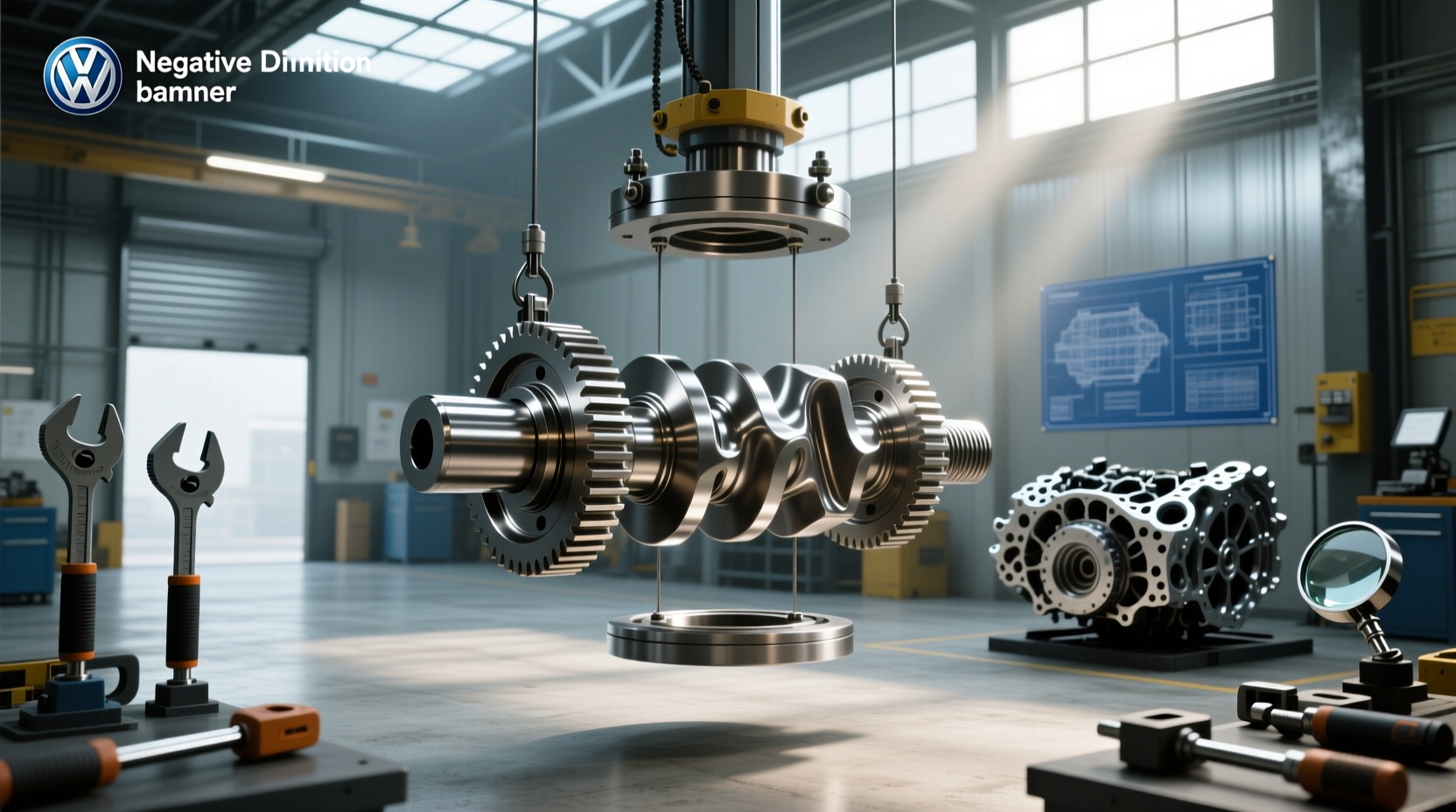
When rebuilding or upgrading an air-cooled Volkswagen engine, one of the most critical components to get right is the VW crankshaft. Whether you're restoring a classic Beetle, building a performance street engine, or overhauling a vintage Bus, understanding the differences between stock, reconditioned, stroker, and counterweighted crankshafts can make or break your engine's reliability and power output. This comprehensive guide covers everything from OEM specifications to aftermarket upgrades, helping you choose the right crankshaft based on your engine type, budget, and performance goals—without falling into common pitfalls like mismatched stroke lengths or incorrect journal sizing.
Understanding the Role of the Crankshaft in Air-Cooled VW Engines
The crankshaft is the central rotating component of any internal combustion engine. In air-cooled Volkswagen Type 1 (Beetle), Type 2 (Bus), and Type 3 engines, it converts the linear motion of the pistons into rotational force that powers the drivetrain ⚙️. Because these engines rely on precise balance and durable materials due to their rear-mounted, air-cooled design, the crankshaft must withstand high stress over long periods with minimal lubrication compared to modern water-cooled systems.
For decades, Volkswagen used forged steel crankshafts in their 1600cc models, known for durability and serviceability. However, as these vehicles age, wear on main and rod journals becomes common, especially if oil changes were irregular or overheating occurred frequently. A worn crankshaft can lead to excessive bearing clearance, oil pressure loss, knocking noises, and eventual engine failure 🔧.
Stock VW Crankshaft Specifications: What You Need to Know
The standard crankshaft found in most 1600cc air-cooled VW engines has a stroke of 69mm, which contributes to the engine’s displacement when combined with the cylinder bore size (typically 85.5mm). This configuration produces approximately 1584cc, often rounded up to “1600” for marketing purposes. These original equipment (OE) crankshafts are designated by part numbers such as 043 105 101 or 113 105 101A, depending on year and model.
Key features of stock VW crankshafts include:
- Forged steel construction (in most 1600 models)
- 69mm stroke length
- Standard journal diameter: 54mm (main), 50.8mm (rod)
- Cross-drilled oil passages for improved lubrication ✅
- No counterweights (non-counterbalanced design in early versions)
It's important to note that not all 1600 engines used identical cranks. Some later models introduced slight variations in fillet radii and oil hole placement to improve fatigue resistance. Always verify compatibility with your specific case and connecting rods before installation.
Reground vs. New Aftermarket Crankshafts: Pros and Cons
As original VW crankshafts wear down, two primary options exist: regrinding or replacing with a new unit. Reground crankshafts are original forgings machined to undersized journals—commonly labeled as .010" or .020" under—to restore proper surface finish and geometry. These are often more affordable than brand-new units and retain the proven strength of OEM forging processes 🏭.
| Feature | Reground OEM Crankshaft | New Aftermarket Crankshaft |
|---|---|---|
| Cost | Lower ($100–$180) | Higher ($180–$400+) |
| Material Quality | Proven forged steel | Varies (cast iron, nodular iron, 4140/4340 chromoly) |
| Availability | Limited by supply of used cores | Widely available in multiple configurations |
| Stroke Options | Fixed at 69mm (stock) | Available in stroker lengths (74mm, 76mm, etc.) |
| Longevity | Good if properly inspected | Better with upgraded materials and design |
While regrinds offer cost savings, they require careful inspection. Cracks, improper grinding angles, or insufficient material removal can compromise integrity. If considering a regrind, ensure it comes from a reputable supplier who performs magnetic particle testing and precision micrometer checks.
Aftermarket Upgrades: When to Consider a Performance Crankshaft
Many enthusiasts seek increased displacement and torque through stroker kits, which involve installing a crankshaft with a longer stroke. Common upgrades include:
- 69.5mm: Slight increase, often used to correct undersized 1584cc engines to true 1600cc
- 74mm: Popular stroker option, increases displacement to ~1776cc
- 76mm: High-performance build, yields ~1835cc with 85.5mm bore
- 82mm: Extreme race applications, requires custom rods and clearanced cases
These stroker crankshafts are typically made from 4140 or 4340 chrome-molybdenum steel, offering superior tensile strength and fatigue resistance compared to stock forgings. They also often feature counterweights to balance the rotating assembly, reducing vibration at higher RPMs ⚡.
However, upgrading isn’t plug-and-play. A longer stroke requires:
- Piston-to-valve clearance checks
- Rod bolt angle adjustments
- Case milling or flycutting for rod clearance
- Matching camshaft profile for optimal breathing
Additionally, stroker builds generate more heat and mechanical load, so supporting mods like dual oil pumps, full-flow filtration, and upgraded cooling become essential for longevity.
Counterweighted vs. Non-Counterweighted Crankshafts: Is It Worth It?
A frequent debate among VW builders centers around whether a counterweighted crankshaft is necessary for a stock-replacement or mild performance build ❓. Stock 1600 engines use non-counterweighted designs, relying on external balancing via the flywheel and pulley.
Counterweighted cranks integrate mass near the throws to internally balance the rotating assembly, theoretically improving smoothness and allowing higher RPM operation. Benefits include:
- Reduced main bearing wear
- Smoother idle and mid-range operation
- Better suitability for performance cams and higher compression
But there are trade-offs:
- Increased weight (~2–3 lbs heavier)
- Higher cost (often $100+ more than non-counterweighted)
- Potential fitment issues in narrow-case engines
For daily drivers or show cars where smoothness matters, a counterweighted crank may be worthwhile. For lightweight dune buggies or budget restorations, the added expense might not justify the benefit.
How to Identify Your Current Crankshaft: Part Numbers and Visual Cues
If you’re unsure what crankshaft is in your engine, identification starts with visual inspection and part number lookup. Key identifiers include:
- Part Number: Usually stamped near the front or rear flange (e.g., 043 105 101)
- Stroke Measurement: Measure TDC to BDC piston travel using a dial indicator
- Journal Diameter: Use a micrometer to check main and rod journal sizes
- Oil Holes: Stock cranks have cross-drilled passages; some aftermarket ones do not
- Counterweights: Presence indicates upgraded or performance model
You can differentiate a 1200cc crank (54mm stroke) from a 1600cc (69mm) simply by measuring stroke or comparing physical length. Mixing them leads to incorrect displacement and imbalance.
Installation Best Practices: Measuring Clearance and Alignment
Installing a new or reconditioned crankshaft requires meticulous attention to detail. Follow these steps to ensure reliability:
- Clean the case thoroughly – Any debris can damage bearings during assembly.
- Check main bearing bores – Use a bore gauge to confirm roundness and size.
- Install main bearings – Ensure proper orientation (oil holes aligned).
- Measure journal diameters – Use a micrometer at multiple points on each journal 🔍.
- Determine bearing clearance – Plastigage or calculated method (bore minus journal).
- Rotate freely? – The crank should turn smoothly without binding.
- Torque case bolts correctly – Follow manufacturer sequence and specs (usually 22–25 ft-lbs).
Main bearing clearance should generally fall between 0.0015" and 0.003". Too tight risks seizure; too loose causes oil pressure drop and accelerated wear.
Common Mistakes to Avoid When Replacing a VW Crankshaft
Even experienced mechanics can make errors during crank replacement. Watch out for these frequent issues:
- Using mismatched rod bolts – Old or stretched bolts reduce clamping force.
- Over-tightening rod caps – Can distort big-end bore and cause premature failure.
- Ignoring endplay – Must be set between 0.003" and 0.007" using shims.
- Skipping blueprinting – Precision measurement ensures balanced, efficient operation.
- Assuming all '1600' cranks are the same – Variations exist across years and production batches.
Always inspect connecting rods for straightness and cap alignment when the crank is out. Misaligned rods accelerate crankshaft wear.
Where to Buy Reliable VW Crankshafts: Trusted Suppliers and Price Ranges
Given the wide range of options online—from eBay sellers to specialty shops—it’s crucial to source from reputable vendors. Look for suppliers who provide:
- Detailed product descriptions with material specs
- Clear return policies and warranties
- Customer reviews focused on fit and durability
- Support for technical questions
Based on market data, typical price ranges for VW crankshafts are:
- Regrind OEM (undersized): $100–$180 🛒
- New stock replacement: $180–$250
- Aftermarket forged (4140/4340): $270–$400
- Stroker or counterweighted: $350+
Popular U.S.-based suppliers include SoCal Imports, JBugs, CB Performance, and AA Performance Products—all offering technical support and verified parts sourcing.
Maintenance Tips to Extend Crankshaft Life
Once installed, prolonging crankshaft life depends largely on operating habits and maintenance:
- Change oil regularly – Every 3,000 miles or annually, using high-zinc oil for flat-tappet lifters.
- Avoid sustained high RPMs – Especially before full warm-up.
- Monitor oil pressure – Sudden drops indicate potential bearing wear.
- Keep engine cool – Overheating accelerates oil breakdown and metal fatigue.
- Use quality filters – Prevents abrasive particles from circulating through journals.
Frequently Asked Questions About VW Crankshafts
- Can I reuse my old VW crankshaft?
- Yes, if it passes inspection for cracks, journal wear, and straightness. Micrometer measurements should show minimal taper or out-of-round conditions. Reground units are viable if professionally serviced.
- What’s the difference between a cast and forged crankshaft?
- Forged crankshafts are stronger because the grain structure follows the shape of the part, making them ideal for performance or heavy-duty use. Cast cranks are cheaper but more brittle and prone to cracking under stress.
- Do I need to balance my engine when replacing the crank?
- Yes, especially with aftermarket or regrind cranks. Internal balancing ensures smooth operation and reduces wear on bearings and seals. Balance the entire rotating assembly (crank, rods, pistons, flywheel).
- How much horsepower can a 1600cc VW engine make with a stroker crank?
- A 1776cc (74mm stroke) build can produce 90–110 hp with proper heads, carburetion, and ignition. High-compression, dual-carb setups may exceed 120 hp in race trim.
- Is a counterweighted crankshaft necessary for a stock rebuild?
- Not strictly necessary. Stock engines ran reliably for years without them. However, a counterweighted crank improves smoothness and durability, especially if you plan future upgrades.




 浙公网安备
33010002000092号
 浙B2-20120091-4