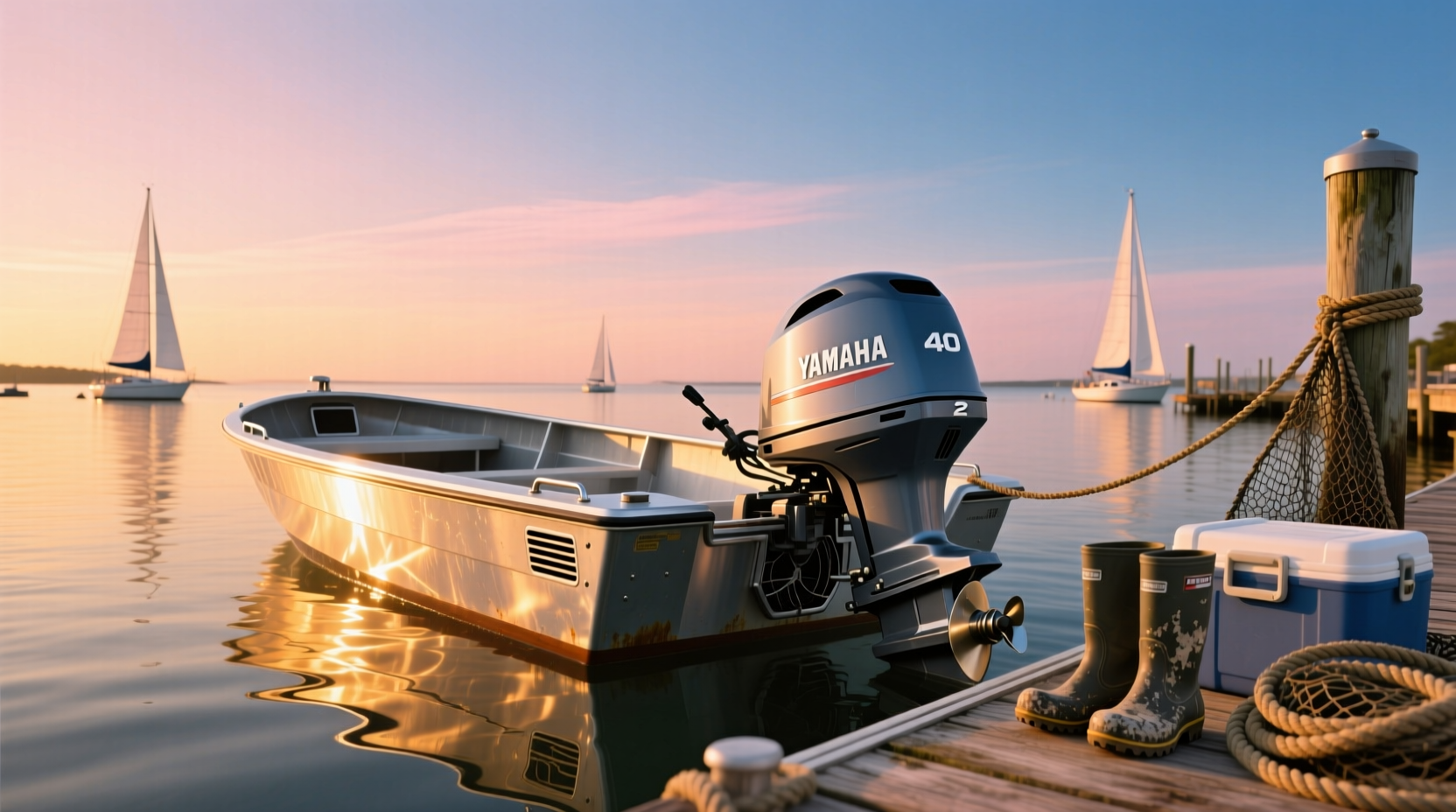
If you're searching for a reliable midrange outboard motor known for durability in commercial and recreational use, the Yamaha 40 hp 2-stroke outboard remains a popular choice among boaters despite its discontinuation. Models like the E40X, E40G, and E40J were part of Yamaha’s Enduro series, designed for heavy-duty marine applications such as fishing boats, work skiffs, and small charter vessels 🛥️. These air-cooled or water-cooled two-stroke engines offered strong power-to-weight ratios, simple mechanics, and long service life when maintained properly ✅. However, identifying the correct model year, verifying authenticity, and sourcing parts today can be challenging due to their age and phase-out after stricter emissions regulations took effect ⚠️.
Understanding the Yamaha 40 HP 2-Stroke Lineup
The Yamaha 40 horsepower 2-stroke outboard was primarily produced under the Enduro series, which targeted professional users who needed rugged, no-frills performance from their equipment. Unlike consumer-focused models, these motors prioritized reliability over advanced features 🔧. The most commonly referenced variants include:
- E40X – Standard shaft (20”), remote control compatible
- E40G – Gear-shift version, often used on tiller setups
- E40J – Jet pump variant for shallow-water operation
- E40XMHS – Higher thrust model with modified gearcase
These models typically featured a 703cc displacement, twin-cylinder layout, and operated within a 4,500–5,000 RPM range depending on propeller selection and load conditions ⚙️. They ran on pre-mixed fuel at a 50:1 ratio or used an oil injection system (depending on configuration), making them easier to maintain than carbureted four-strokes that require complex fuel management systems.
Production Years and How to Identify Your Model
One of the most frequent questions online is: “What year is my Yamaha 40 hp 2-stroke?” ❓ This confusion arises because Yamaha did not always stamp full model-year designations directly on visible plates. Instead, they used alphanumeric codes where the last letter corresponds roughly to the production year.
For example:
| Model Year | Last Letter Code |
|---|---|
| 1990 | R |
| 1991 | S |
| 1992 | T |
| 1993 | U |
| 1994 | Z |
| 1995 | A |
| 1996 | B |
| 1997 | C |
| 1998 | D |
So if your motor ends in “Z,” it likely dates to 1994; “D” would place it around 1998 1. To confirm, locate the serial number tag near the transom mount and cross-reference it with Yamaha’s official documentation or contact authorized dealerships for verification.
Key Technical Specifications
Knowing the technical details helps assess compatibility with your vessel and expected performance levels. Below are typical specs for the E40XMH and similar Enduro 40 hp models:
- Engine Type: Two-stroke, inline twin-cylinder
- Displacement: 703 cc
- Bore x Stroke: 80 mm × 70 mm
- Compression Ratio: 6.0:1
- Max Power Output: 40 hp @ 5,000 RPM
- Ignition System: CDI (Capacitor Discharge Ignition)
- Starting Method: Manual recoil or electric start (on select models)
- Weight (dry): ~118 lbs (53.5 kg) – varies by shaft length
- Shaft Length: 20” (standard/L) or 25” (long/XL)
- Fuel Mix: 50:1 pre-mix or automatic oil injection
- Propeller Options: Aluminum or stainless steel, various pitch ranges (9" to 13")
These motors were engineered for saltwater environments with corrosion-resistant materials and robust cooling systems. Their low compression ratio makes them less sensitive to poor-quality fuel, beneficial in remote regions where refined gasoline may not be readily available.
Why Yamaha Phased Out 2-Stroke Outboards
Although powerful and mechanically straightforward, all major manufacturers—including Yamaha—discontinued traditional carbureted two-stroke outboards by the early 2000s due to environmental regulations 🌍. The primary reason was unburned hydrocarbon emissions, which contributed significantly to water and air pollution.
In response, Yamaha shifted focus to cleaner technologies:
- Four-stroke engines: More fuel-efficient, quieter, and far cleaner in emissions output
- High-Pressure Direct Injection (HPDI) two-strokes: A transitional technology that injected fuel directly into the combustion chamber, reducing waste and improving efficiency
- Digital Fuel Injection (DFI): Used in newer models for precise metering and cold-start reliability
As a result, finding a brand-new Yamaha 40 hp 2-stroke is impossible through official channels today. Most available units are either used, refurbished, or imported secondhand from Japan via specialty suppliers.
Where to Buy Used or Refurbished Units
Despite being discontinued, there's still active demand for these motors, especially in developing markets and among budget-conscious buyers 👥. Here are common sources:
1. Online Marketplaces (eBay, Facebook Marketplace)
Websites like eBay list both complete engines and spare parts. Prices vary widely based on condition:
- Non-running project motors: $800–$1,500
- Running, used condition: $1,800–$2,500
- Rebuilt or professionally restored: $2,500–$3,500+
When buying online, request clear photos of the lower unit, carburetors, and spark plugs. Ask for compression test results and verify whether the oil injection system works.
2. Japanese Export Dealers
Japan has strict vessel registration cycles, meaning many well-maintained outboards are retired early and exported globally 🚚. Companies specializing in Japanese marine exports often offer CE-certified, tested units with recent servicing records.
On platforms like Alibaba.com, verified suppliers list Yamaha 40 hp outboards from Japan priced between $900 and $2,500 depending on age and condition 2. Look for terms like “export grade,” “tested before shipment,” and “complete with gearcase.”
3. Local Marine Yards and Auctions
Check local boatyards, marinas, or government auctions where decommissioned patrol boats or fishing vessels are sold. These often come bundled with original equipment, including older Yamahas that saw regular maintenance.
Common Issues and Maintenance Tips
While durable, aging 2-stroke outboards face predictable wear points. Knowing what to inspect can prevent costly breakdowns.
Fuel System Degradation
Old fuel lines, deteriorated carburetor diaphragms, and varnish buildup in float bowls are common after years of storage. Always drain old gas and replace rubber components during reconditioning 🧼.
Water Pump Impeller Wear
The impeller should be replaced every 2–3 years or 100 operating hours. A failed impeller leads to overheating and engine damage. Inspect annually even if the motor appears to cool normally.
Powerhead Corrosion
If operated in saltwater without proper flushing, internal corrosion can develop. Check for pitting inside cylinder sleeves and scored piston rings. Compression tests below 90 psi indicate significant wear.
Shift Linkage Adjustment
Wear in the shift rod mechanism causes difficulty engaging gears. Lubricate pivot points and adjust free play according to the service manual. Misalignment can lead to clutch dog damage.
Performance Comparison: 2-Stroke vs. Modern 4-Stroke
How does the classic Yamaha 40 hp 2-stroke stack up against modern alternatives? Let’s compare key factors:
| Feature | Yamaha E40X (2-Stroke) | Yamaha F40 (4-Stroke) |
|---|---|---|
| Weight | ~118 lbs | ~135 lbs |
| Fuel Efficiency | Lower (~4 gph at WOT) | Higher (~3 gph at WOT) |
| Top Speed | Slightly faster acceleration | Smoother but slower initial thrust |
| Maintenance Complexity | Simple, fewer moving parts | More complex valve train, oil changes required |
| Noise Level | Louder, characteristic two-stroke bark | Quieter, smoother idle |
| Emissions | Higher HC output | Meets EPA Tier 3 standards |
| Availability of Parts | Limited, mostly aftermarket or salvage | Widely available from dealers |
While the 2-stroke offers lighter weight and simpler mechanics, the 4-stroke wins in fuel economy, noise reduction, and regulatory compliance. Choose based on your priorities: vintage reliability or modern convenience.
Is a Used Yamaha 40 HP 2-Stroke Right for You?
Consider this motor if:
- You operate in remote areas with limited access to parts and service
- You value mechanical simplicity and DIY repairability
- Your boat is lightweight (<20 ft) and doesn’t require electronic integration
- You’re restoring a vintage vessel and want period-correct propulsion
Do not choose it if:
- You live in a region with strict emissions laws (e.g., California, EU)
- You plan to use it daily or commercially without backup support
- You expect modern features like digital gauges, Bluetooth diagnostics, or electric tilt
- You cannot source or afford replacement parts locally
Final Thoughts and Recommendations
The Yamaha 40 hp 2-stroke outboard represents a golden era of marine engineering—simple, tough, and effective. While no longer in production, it continues to serve boaters worldwide thanks to its robust design and global availability through secondary markets.
Before purchasing one, ensure you can verify the motor’s history, perform a compression test, and secure a supply chain for critical spares like carb kits, gaskets, and water pumps. If you're technically inclined and prioritize function over form, a rebuilt E40X or E40G could deliver years of dependable service.
Frequently Asked Questions (FAQ)
- Can I still get parts for a Yamaha 40 hp 2-stroke outboard?
- Yes, but availability is limited. Many parts are sourced from third-party suppliers, salvage yards, or Japanese exporters. Common wear items like impellers and carb rebuild kits are still manufactured by aftermarket brands.
- How much does a used Yamaha 40 hp 2-stroke cost?
- Prices range from $800 for non-running units to $2,500+ for tested, operational models from Japan. Rebuilt motors may exceed $3,000 depending on labor and component quality.
- Are Yamaha outboards made in Japan?
- Many Yamaha outboards, especially older models like the 40 hp 2-stroke, were manufactured in Japan. Today, some production occurs in other countries, but high-end models are still built in Japanese facilities.
- What’s the difference between E40X and F40?
- The E40X is a 2-stroke Enduro model designed for commercial use, while the F40 is a modern 4-stroke engine with better fuel economy and lower emissions. The F40 is heavier and more complex but meets current environmental standards.
- How do I identify the year of my Yamaha 40 hp 2-stroke?
- Check the model number suffix—the last letter indicates the approximate year (e.g., Z = 1994, D = 1998). Confirm using the serial number via Yamaha’s dealer network or reference guides.




 浙公网安备
33010002000092号
 浙B2-20120091-4