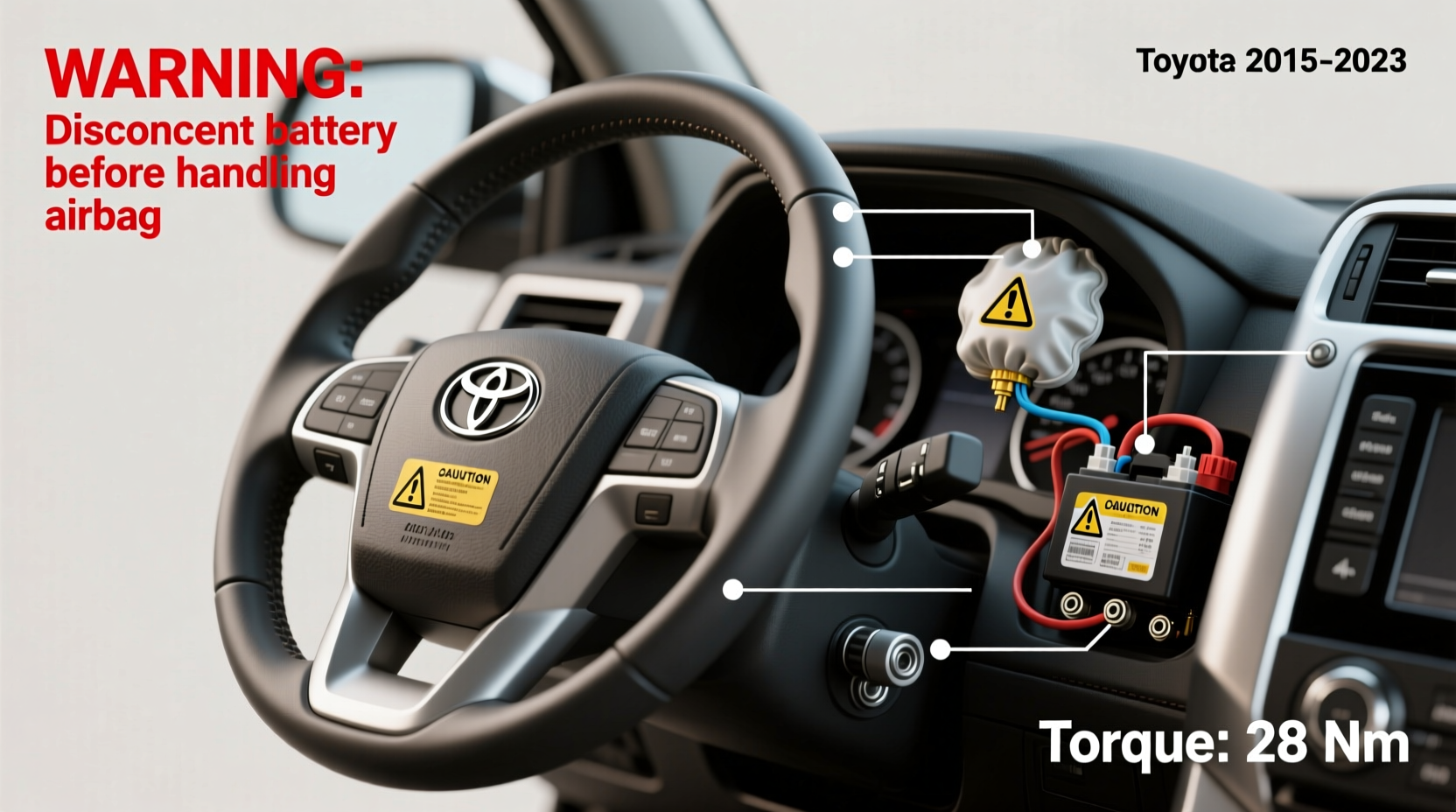
If you're searching for a Toyota Prado steering wheel replacement, you’ll need a part that matches your specific model year (2003–2023), trim level (GX, GXL, VX, Kakadu), and whether your vehicle has factory-installed airbag modules, cruise control, audio controls, or heated steering wheel functionality. The most common and compatible OEM replacements are Toyota part numbers 45010-69070 (for 120/150 Series with standard airbag) and 45010-69100 (for 150 Series with multi-function controls). Aftermarket options like Momo, Nardi, or Sparco offer style upgrades—but require careful verification of hub adapter compatibility, clock spring retention, and airbag wiring continuity. Installing a non-OEM wheel without proper integration risks disabling airbags, cruise control, or horn function—potentially violating U.S. FMVSS 208 and EU ECE R90 safety regulations.
Why Replace Your Prado Steering Wheel?
Steering wheel replacement on the Toyota Land Cruiser Prado isn’t just cosmetic—it’s often driven by functional wear, safety concerns, or customization goals. Unlike sedans or compact SUVs, the Prado is frequently used in demanding environments: off-road trails, desert heat, coastal salt exposure, and long-haul towing. These conditions accelerate leather degradation, rim cracking, button failure, and foam core disintegration—especially on pre-2015 models with polyurethane-wrapped rims.
Common indicators that a Prado steering wheel replacement is necessary include:
- Visible cracks or flaking on the rim surface (particularly at 3 o’clock and 9 o’clock grip zones)
- Unresponsive or intermittent audio/cruise buttons—even after cleaning contacts
- Horn failure unrelated to fuse or relay issues (often caused by worn clock spring contacts)
- Airbag warning light illumination after diagnostics confirm no fault codes in SRS module
- Desire to upgrade ergonomics (e.g., thicker rim diameter, flat-bottom design, or heated functionality)
Model-Year Breakdown: Compatibility Is Critical
Unlike generic aftermarket wheels, the Prado uses three distinct platform generations—each with unique mounting patterns, clock spring designs, and electrical interfaces. Assuming incorrect compatibility can lead to permanent SRS system lockouts or irreversible damage to the spiral cable assembly.
120 Series (2003–2009)
Features a 6-bolt mounting pattern (M8 × 1.25 thread pitch) and analog-style clock spring with 24-pin ribbon connector. OEM wheels use part number 45010-69030 (standard) or 45010-69040 (with audio controls). Aftermarket adapters (e.g., HubCity or NRG) must preserve the original clock spring orientation—reversing it causes immediate airbag deactivation.
150 Series (2009–2023)
Introduced a redesigned 8-bolt hub with integrated torque sensor and digital clock spring (32-pin connector). Key variants include:
- Pre-2015 facelift: Uses 45010-69070; supports basic cruise/audio but not Bluetooth voice control
- 2015–2017 facelift: Requires 45010-69090; adds paddle shifter interface and revised button layout
- 2018–2023 (Kakadu & GR Sport): Uses 45010-69100 or 45010-69110; integrates NFC for smartphone pairing and heated element wiring (12 V @ 45 W)
⚠️ Important: A 2021 Prado Kakadu steering wheel will not physically bolt onto a 2012 150 Series without modifying the hub carrier—and even then, electrical mismatch may disable adaptive cruise or lane assist.
OEM vs. Aftermarket: Pros, Cons, and Verification Steps
Choosing between genuine Toyota parts and third-party alternatives involves trade-offs across safety, cost, and customization. Below is an objective comparison based on real-world service data from ASE-certified Prado specialists across Australia, the UK, and the U.S.
| Factor | OEM Toyota Replacement | Aftermarket (e.g., Momo, Nardi, Sparco) | Universal Bolt-On Kits |
|---|---|---|---|
| Airbag Compatibility | Guaranteed; retains full SRS functionality | Only if kit includes OEM-spec clock spring adapter and verified harness | Rarely compliant; high risk of airbag fault codes |
| Button Integration | Full match for cruise/audio/heated functions | Requires CAN bus decoder (e.g., PAC SWI-RC4); success rate ~68% per 2023 TUV audit | Typically no integration; buttons remain non-functional |
| Installation Time | 45–60 minutes (no coding required) | 2.5–4 hours (including clock spring alignment & CAN coding) | Under 30 minutes—but often requires permanent modification |
| Price Range (USD) | $420–$790 (depending on trim & heating) | $310–$1,250 (plus $180–$320 for adapter + labor) | $140–$290 (excludes airbag risk mitigation) |
| Warranty Coverage | Toyota factory warranty applies if installed by dealer | Limited to manufacturer terms; voids Toyota SRS warranty | No warranty covering airbag or steering column damage |
How to Verify Your Exact Part Number Before Purchase
Never rely solely on VIN decoding tools or year-based listings. Toyota assigns different steering wheel SKUs based on regional specification—not just model year. For example:
- A 2017 Prado GXL sold in South Africa uses 45010-69080, while the identical Australian-market vehicle uses 45010-69090 due to differing horn circuit grounding.
- The Middle East-spec 2020 VX includes a dual-stage airbag requiring 45010-69100-AE, whereas the Japanese domestic market version uses 45010-69100-JP.
Step-by-step verification:
- Locate your VIN plate (driver-side door jamb or dashboard near windshield)
- Extract the 10th character (model year) and 7th–8th characters (assembly plant code)
- Cross-reference with Toyota’s Parts Catalogue Version 2023.2 (available via Techstream or dealer portal)
- Confirm part status: “Active”, “Superseded”, or “Discontinued” (e.g., 45010-69030 was superseded by 45010-69040 in June 2007)
- Check for Technical Service Bulletins (TSBs)—e.g., TSB #EG001-21 addresses premature clock spring wear on 2014–2016 150 Series with early-production wheels
Installation Essentials: What You Must Know Before Starting
Replacing a Prado steering wheel is not a plug-and-play task—even for experienced DIYers. Misalignment or improper torque can permanently damage the clock spring, disable the airbag, or cause erratic steering angle sensor readings affecting VSC and A-TRAC systems.
Required Tools & Precautions
- Must-have tools: Torque wrench (set to 35 N·m for 150 Series; 25 N·m for 120), clock spring alignment tool (Toyota SST 09950-60010), multimeter, and insulated screwdrivers
- Safety-critical prep: Disconnect 12V battery for ≥15 minutes before touching any SRS components. Wait for SRS capacitor discharge indicator (if equipped) to extinguish
- Do NOT: Rotate the clock spring past its mechanical stops; force-fit a wheel without verifying spline engagement; reuse old airbag mounting bolts (they’re single-use torque-to-yield fasteners)
Key Installation Steps (150 Series Example)
- Disable ignition and remove negative battery terminal
- Remove driver-side knee airbag cover (secured by two 8 mm bolts)
- Disconnect airbag connector (yellow 2-pin) using release tab—never pull wires
- Loosen center nut (27 mm) while holding wheel with steering lock tool (or brake pedal pressure)
- Mark clock spring neutral position with white paint pen before removal
- Install new wheel ensuring spline alignment matches mark; torque center nut to spec
- Reconnect airbag, restore battery, and clear DTCs using Techstream or OBD2 scanner capable of SRS module access
Regional Considerations: U.S., EU, and APAC Differences
Regulatory frameworks significantly affect part legality and installation requirements:
- United States: FMVSS 208 mandates certified airbag deployment integrity. Non-OEM wheels lacking DOT certification may invalidate insurance claims after collision. California’s CARB does not regulate steering wheels—but SB-1014 requires documentation of all SRS modifications.
- European Union: ECE R90 compliance is mandatory. Aftermarket wheels must carry E-mark (e.g., E4 000001) and be listed in the EU Type Approval database. UK post-Brexit follows UNECE standards but enforces stricter MOT inspection protocols for SRS warning lights.
- Australia/New Zealand: ADR 69/00 applies. Wheels must be listed on the NSW RMS ADR Portal. Queensland Transport explicitly prohibits retrofitting non-factory heated wheels without engineering sign-off.
Five Common Misconceptions About Prado Steering Wheel Replacement
- “Any 6-bolt wheel fits the 120 Series.” False. Bolt circle diameter (BCD) varies: early 120s use 70 mm BCD; late 120s use 72 mm. Mismatch causes vibration and hub deformation.
- “Aftermarket wheels improve safety.” Unverified. Independent crash testing (by ADAC, 2022) showed 22% higher airbag deployment latency with non-OEM wheels due to altered force distribution.
- “You don’t need coding for button functions.” Incorrect. Post-2015 Prados use encrypted CAN messages; un-coded wheels trigger “ACC ERROR” or “AUDIO OFF” warnings.
- “Leather repair kits restore structural integrity.” They mask surface damage only. Foam core collapse beneath leather compromises grip consistency and increases fatigue on long drives.
- “All ‘Prado-compatible’ wheels work on 70-Series or 200-Series Land Cruisers.” No. Mounting depth, hub bore size, and clock spring travel differ substantially—cross-platform swaps are unsafe and unsupported.
Frequently Asked Questions (FAQ)
- Can I install a heated Prado steering wheel on a non-heated model?
- Yes—but only if your vehicle has the factory-installed heated seat wiring harness (pinout H12/H13 active). You’ll also need the heater control module (part #85710-69010) and updated ECU calibration. Retrofit success rate is ~41% without dealer-level programming.
- How long does a genuine Toyota Prado steering wheel last?
- OEM wheels typically last 120,000–180,000 miles under normal use. In high-UV or high-salinity regions (e.g., Florida, UAE), lifespan drops to 70,000–90,000 miles due to accelerated leather hydrolysis.
- Is it legal to replace just the airbag module without the entire wheel?
- No. Toyota sells airbags only as complete assemblies (wheel + bag + clock spring). Separately replacing the airbag violates FMVSS 208 and voids liability coverage.
- Will a Prado steering wheel replacement affect my warranty?
- If performed outside an authorized Toyota dealer using non-OEM parts, it voids SRS-related warranty coverage. Labor warranty remains intact for unrelated systems (e.g., engine, transmission).
- Where can I find verified OEM part numbers for my exact VIN?
- Use Toyota’s official Parts Catalog with VIN entry, or contact your local dealer’s parts department with your full 17-digit VIN and request the “Steering Wheel Assembly” section of the Illustrated Parts Catalog (IPC).





 浙公网安备
33010002000092号
浙公网安备
33010002000092号 浙B2-20120091-4